
.png)




.webp)
TL;DR – How to Choose the Best NP Programs in 2026
- The nursing career outlook is booming: The Bureau of Labor Statistics projects 40% job growth for nurse practitioners by 2033—making now the ideal time to become a nurse practitioner and step into a rewarding career with long-term security.
- Online nurse practitioner programs are more accessible than ever: Many accredited programs now offer flexible online degree program formats designed for working nurses, but here's the catch: clinical placement support varies widely, and most schools leave that responsibility to you.
- Clinical placements are the hardest part: Most NP students spend months searching for preceptors on their own, delaying graduation and adding unnecessary stress. That's exactly why services like NPHub exist—to handle the search, paperwork, and coordination so you can focus on your nursing education.
- Program choice goes beyond rankings: Look at accreditation, certification exam pass rates, clinical support, and state practice authority to find an NP program that truly fits your goals.
- Financial planning is essential: Tuition, clinical travel, credentialing fees, and living costs add up fast. Explore every financial aid option early—scholarships, employer tuition reimbursement, and strategic budgeting can make all the difference.
- Don't let clinical placements delay your graduation. Thousands of NP students have secured their rotations through NPHub's network of 2,000+ vetted preceptors. Create your free account and browse available preceptors in your area →
The career outlook for nurse practitioners has never been stronger. With the Bureau of Labor Statistics projecting 40% growth through 2033, registered nurses considering advanced practice have a clear path toward expanded autonomy, higher earning potential, and meaningful patient care.
This surge in demand is driven by a growing need for primary care providers, especially in underserved communities where nurse practitioners with full practice authority can independently diagnose patients, prescribe medication, and manage both acute and chronic conditions. For many healthcare systems, NPs have become essential to closing gaps in access and improving patient outcomes.
Today's NP programs offer diverse pathways to match your professional goals. Family nurse practitioner programs prepare you to deliver care across the lifespan in primary care settings. Psychiatric mental health tracks focus on behavioral health assessment and treatment. Adult gerontology and women's health nurse practitioner specializations offer focused expertise for those drawn to specific patient populations. Whether you choose an MSN FNP program, a DNP pathway, or a specialized certificate, each program prepares graduates with advanced clinical training, evidence-based practice skills, and the knowledge to sit for national certification through organizations like the American Nurses Credentialing Center or the Nurse Practitioners Certification Board.
But here's what most rankings won't tell you: the biggest factor in your success often isn't prestige, it's whether your program actually supports you when it's time to complete clinical hours.
Most graduate nursing students are surprised to learn that securing clinical placements falls almost entirely on their shoulders. While schools deliver rigorous coursework, many offer little help connecting students with qualified preceptors. For NP students already balancing full-time jobs, coursework, and family responsibilities, this can turn into months of cold calls, unanswered emails, and mounting frustration, often delaying graduation and adding unexpected tuition costs.
If you're already feeling the weight of that search, you're not alone. Thousands of NP students have been exactly where you are—and that's why NPHub was built. We connect students with vetted preceptors across every specialty, handle all the paperwork and coordination, and support you from your first rotation to your last.
.webp)
This guide breaks down everything you need to know to find the best NP programs for your goals—program types, accreditation, costs, specialty tracks, and how to navigate the clinical placement challenge so you can graduate on time and launch the nursing career you've worked so hard for.
Understanding Your NP Program Options: Traditional vs. Online Pathways

Choosing between traditional and online nurse practitioner programs is a crucial decision that impacts your educational journey and future career. Each pathway offers unique advantages and challenges, requiring careful consideration of your learning style, schedule, and professional goals.
Traditional On-Campus Programs
Traditional nurse practitioner programs offer immersive learning experiences through face-to-face instruction and direct interaction with faculty. These programs, offered by respected institutions like Duke University, provide structured environments where nursing students can develop clinical judgment through hands-on laboratory sessions and immediate feedback from experienced nurse practitioners.
Key benefits include:
- Direct mentorship from advanced practice registered nurses
- Strong local networks for clinical placements
- In-person collaboration with fellow students
Online NP Programs
The evolution of online nurse practitioner programs has transformed advanced practice nursing education, offering unprecedented flexibility for registered nurses seeking career advancement while maintaining their clinical positions. These programs deliver comprehensive education, meeting the same rigorous standards as traditional nursing education.
Fully Online vs. Hybrid Programs
Fully Online Programs
Online nurse practitioner programs deliver all coursework through sophisticated distance education platforms. Students complete their advanced practice nursing education remotely, except for clinical placements. These programs integrate:
- Virtual simulations and case studies
- Interactive learning modules
- Digital assessment tools
Hybrid Programs
These programs blend online convenience with strategic in-person sessions, offering:
- Weekend or week-long campus residencies
- Hands-on advanced health assessment training
- Direct faculty observation opportunities
- In-person peer networking
- Physical assessment skills practice
Keys to Success in Online Learning
Successful online learning in nurse practitioner programs requires specific strategies and skills. Time management becomes crucial when balancing online coursework with clinical hours and professional responsibilities. Most successful students excel through:
- Structured study schedules
- Regular engagement with course materials
- Consistent participation in virtual discussions
- Proactive communication with instructors
- Strategic planning for clinical placements
Program Support and Resources
Leading online programs offer comprehensive support systems including:
Academic Support:
- Virtual office hours with experienced nurse practitioners
- Digital library access for research
- Online tutoring services
- Virtual study groups
Clinical Support:
- Preceptor matching assistance (varies by program)
- Clinical placement coordination
- Electronic clinical logging systems
- Virtual simulation labs
When evaluating online nurse practitioner programs, consider:
- Clinical placement assistance
- State authorization requirements
- Practice authority alignment
- National certification preparation
- Financial aid availability
- Career support services
The exponential growth of online np programs has made advanced practice nursing education more accessible than ever. Explore a comprehensive listing of accredited online nurse practitioner programs across the United States by clicking here.
Now, traditional and online pathways prepare students for national certification through organizations like the American Nurses Credentialing Center, ensuring graduates are well-equipped for advanced practice nursing.
What You Need to Know Before Applying to NP Schools
Before embarking on your advanced practice nursing journey, understanding the core requirements of advanced practice nurse practitioner programs is essential. These components determine your eligibility and your path to becoming a licensed nurse practitioner.
Admission Requirements
The journey to becoming a nurse practitioner begins with meeting rigorous admission standards that ensure students are prepared for advanced practice nursing education.
Core Prerequisites:
- Active RN license with verifiable clinical experience
- Bachelor's degree in nursing (BSN) from an accredited program
- Minimum undergraduate GPA (typically 3.0)
- Professional references from nursing supervisors
- Personal statement outlining career goals
Some programs may require additional qualifications:
- GRE scores (many schools now offer GRE waivers based on experience)
- 1-2 years of direct patient care experience
- Specific prerequisite coursework in advanced health assessment
- Current BLS/ACLS certification
- Background check and drug screening
Program Length
Nurse practitioner programs offer various timelines to accommodate different student needs and circumstances. Understanding these options helps you plan your educational journey effectively.
Full-time Study Options: MSN programs typically require:
- 2-3 years of dedicated study
- 40-50 credit hours
- Clinical rotations concurrent with coursework
DNP programs generally involve:
- 3-4 years for BSN to DNP
- Additional research components
- Extended clinical practice hours
Clinical Requirements
Extensive clinical practice experience is the cornerstone of nurse practitioner education, essential for developing advanced clinical judgment and expertise.
Required Clinical Hours: Different specialties require varying levels of clinical exposure:
- Family Nurse Practitioner: 500-700 hours
- Adult-Gerontology: 500-600 hours
- Psychiatric Mental Health: 500-600 hours
- Pediatric: 500-600 hours
Essential Clinical Rotations Include Primary Care Settings:
- Family practice clinics
- Internal medicine offices
- Community health centers
Specialty Rotations:
- Emergency departments
- Urgent care facilities
- Specialty clinics aligned with the chosen focus
Clinical Support Systems: Many nursing schools offer varying levels of placement assistance:
- Preceptor network access
- Documentation support
- Site verification services
- Ongoing clinical coordination
Studies consistently cite finding and securing quality clinical placements as one of the most challenging aspects of NP education. While a few programs provide placement assistance, most students face this challenge alone—spending months searching for preceptors while juggling coursework and current nursing responsibilities. This often leads to delayed graduation dates and increased program costs.
At NPHub, we understand these challenges firsthand and have developed a nationwide network of over 2,000 qualified preceptors ready to support your clinical education journey. Our streamlined placement services connect NP students with experienced preceptors across various specialties, handling all the paperwork and coordination so you can focus on your education. Learn more about how we can help secure your clinical placements.
Best NP Programs by Specialty in 2026
Choosing the right nurse practitioner specialty aligns your career with your passion for patient care, whether in primary care, mental health, pediatrics, or other specialized areas. While selecting your specialty is crucial, finding a top NP program within that specialty can significantly impact your clinical preparation and career opportunities. Let's explore some of the nation's leading NP programs across the most sought-after specializations:
Best Psychiatric-Mental Health NP Programs
These top-ranked PMHNP programs stand out for their comprehensive psychiatric care education, strong clinical partnerships, and flexible learning options.
1. University of Pennsylvania – Philadelphia, PA
Ranked among the top psychiatric-mental health programs in the nation, Penn’s PMHNP track blends neuroscience with advanced psychotherapy training.
Program Overview:
- Tuition:
- Full-time: $103,526
- Part-time: $105,814
- Accreditation: CCNE
- Location: Hybrid
- Pace: Full-time or Part-time
- Duration:
- Full-time: 14 months
- Part-time: 3 years
2. Rush University – Chicago, IL
Rush University’s fully online PMHNP program leads to a DNP and is ideal for students seeking a high-quality remote option with a curriculum that emphasizes both behavioral and biological sciences.
Program Overview:
- Tuition: $66,056 - $97,648
- Accreditation: CCNE
- Location: Online
- Pace: Part-time or Full-time
- Duration: 3-4 years
- Class Size: 34 students
- Pathway & Credit Hours:
- BSN-DNP: 68
- MSN-DNP (APRNs): 41
- MSN-DNP (non-APRNs): 56
3. University of Washington – Seattle, WA
UW’s PMHNP offering is structured as a graduate certificate for current or former doctoral students. While it requires in-person attendance, the program is backed by one of the country’s top-ranked nursing schools
Program Overview:
- Tuition:
- In-State Tuition: $105,192
Out-of-State Tuition: $150,111
- In-State Tuition: $105,192
- Accreditation: CCNE
- Location: Hybrid (primarily in-person)
- Pace: Full-time
- Duration: 9 quarters
Best Family Nurse Practitioner Programs
FNPs are advanced practice nurses specialized in providing primary healthcare services across the lifespan. These professionals diagnose and treat acute and chronic conditions, prescribe medications, and focus on health promotion and disease prevention. FNP programs prepare nurses for roles in various settings, from private practices to community health centers.
1. Thomas Jefferson University – Philadelphia, PA
Jefferson’s FNP program blends online coursework with in-person learning and clinical experiences, offering a flexible hybrid format. Students benefit from strong clinical partnerships and hands-on practice in top-tier healthcare facilities.
Program Overview:
- Degree Awarded: MSN
- Tuition: $1,568 per credit hour
- Program Length: 36 credits and 672 clinical hours
- Accreditation: CCNE
- Location: Hybrid
2. Duke University – Durham, NC
Duke’s top-ranked FNP program offers rigorous academic training and hands-on clinical experiences through some of the nation’s most reputable health systems. Students can specialize in areas such as cardiology, palliative care, endocrinology, and more, while benefiting from simulation-based learning and clinical placements.
Program Overview:
- Degree Awarded: MSN
- Tuition: $2,250 per credit hour
- Program Length: 49 credit hours and 728 clinical hours
- Accreditation: CCNE
- Location: Distance-based with in-person clinicals
3. University of Rochester – Rochester, NY
Rochester’s FNP program stands out for its emphasis on evidence-based practice and real-time clinical insights from a faculty composed of practicing NPs. With ties to the prestigious University of Rochester Medical Center, students gain robust clinical training while learning from industry leaders.
Program Overview:
- Degree Awarded: MSN
- Tuition: $1,740 per credit hour
- Program Length: 55 credits and 672 clinical hours
- Accreditation: CCNE
- Location: Hybrid (in-person and online)
Best Pediatric Nurse Practitioner Programs
Pediatric Nurse Practitioners specialize in providing comprehensive healthcare to children from birth through adolescence. PNP programs prepare advanced practice nurses to conduct pediatric assessments, diagnose and treat various conditions, and work collaboratively with families to promote children's health and well-being across various healthcare settings.
1. Duke University - Durham, NC
Duke offers top-ranked programs in both Pediatric Primary Care (PNP-PC) and Pediatric Acute Care (PNP-AC). Coursework is delivered primarily online with required in-person clinical rotations.
Program Overview:
- Program Type: MSN
- Tuition: $2,345 per credit
- Duration: Approximately 2.5 years
- Accreditation: CCNE
- Location: Distance-based with clinical requirements
- Pathways: PNP-PC and PNP-AC
2. University of Pennsylvania – Philadelphia, PA
UPenn’s PNP program is consistently ranked among the top in the country. Students can choose between primary or acute care tracks and graduate with an MSN.
Program Overview:
- Program Type: MSN
- Tuition: $67,210 - $69,832 annually
- Accreditation: CCNE
- Duration: 1 year (full-time)
- Location: Primarily in-person
- Pathways: Primary or Acute Care PNP
3. Johns Hopkins University – Baltimore, MD
Johns Hopkins offers a DNP program focused on pediatric primary care. Students engage in a hybrid format that blends online courses with onsite immersions. The program emphasizes preventive care, pediatric diagnostics, and leadership in clinical practice.
Program Overview:
- Program Type: DNP
- Tuition: $56,088 annually
- Accreditation: CCNE
- Duration: 3 years
- Clinical Hours: 1,000
- Credits: 81
- Location: Hybrid (online + in-person immersions)
Best Women's Health Nurse Practitioner Programs
Women's Health Nurse Practitioners provide specialized care focused on women's health and reproductive services across the lifespan. WHNP programs prepare advanced practice nurses to conduct gynecological examinations, provide prenatal care, offer family planning services, and promote comprehensive women's health through preventive care and specialized treatments.
1. University of Pennsylvania School of Nursing – Philadelphia, PA
UPenn’s WHNP program offers more than a top-tier Ivy League education. It emphasizes women’s and gender-related healthcare with clinical experiences that extend globally
Program Overview:
- Program Type: MSN
- Tuition: $86,000 to $97,000
- Accreditation: CCNE
- Duration: 2-3 years
- Format: Hybrid
- Global Electives: Thailand, Honduras
2. Duke University – Durham, NC
Duke offers the only WHNP program in North Carolina and prepares students for practice with hybrid learning, on-campus intensives, and international clinical opportunities.
Program Overview:
- Program Type: MSN
- Tuition: $2,345 per credit hour
- Duration: 2.5 years
- Accreditation: CCNE
- Format: Hybrid (online with on-campus intensives)
- Global Opportunities: Short-term international placements
3. Vanderbilt University – Nashville, TN
Vanderbilt’s WHNP program is dual-focused on women’s and gender-related care. With only 15 students accepted each year, this selective program blends modified distance learning with on-campus opportunities, ideal for students who want flexibility without sacrificing access to top-tier facilities like Vanderbilt University Medical Center.
Program Overview:
- Program Type: MSN
- Tuition: $2,057 per credit hour
- Duration:
- Full-time: 12 months
- Part-time: 24-36 months
- Accreditation: CCNE
- Format: Hybrid (distance learning + local clinicals)
- Class Size: 15 students per year
State Practice Authority: Understanding NP Practice Laws Across the U.S.
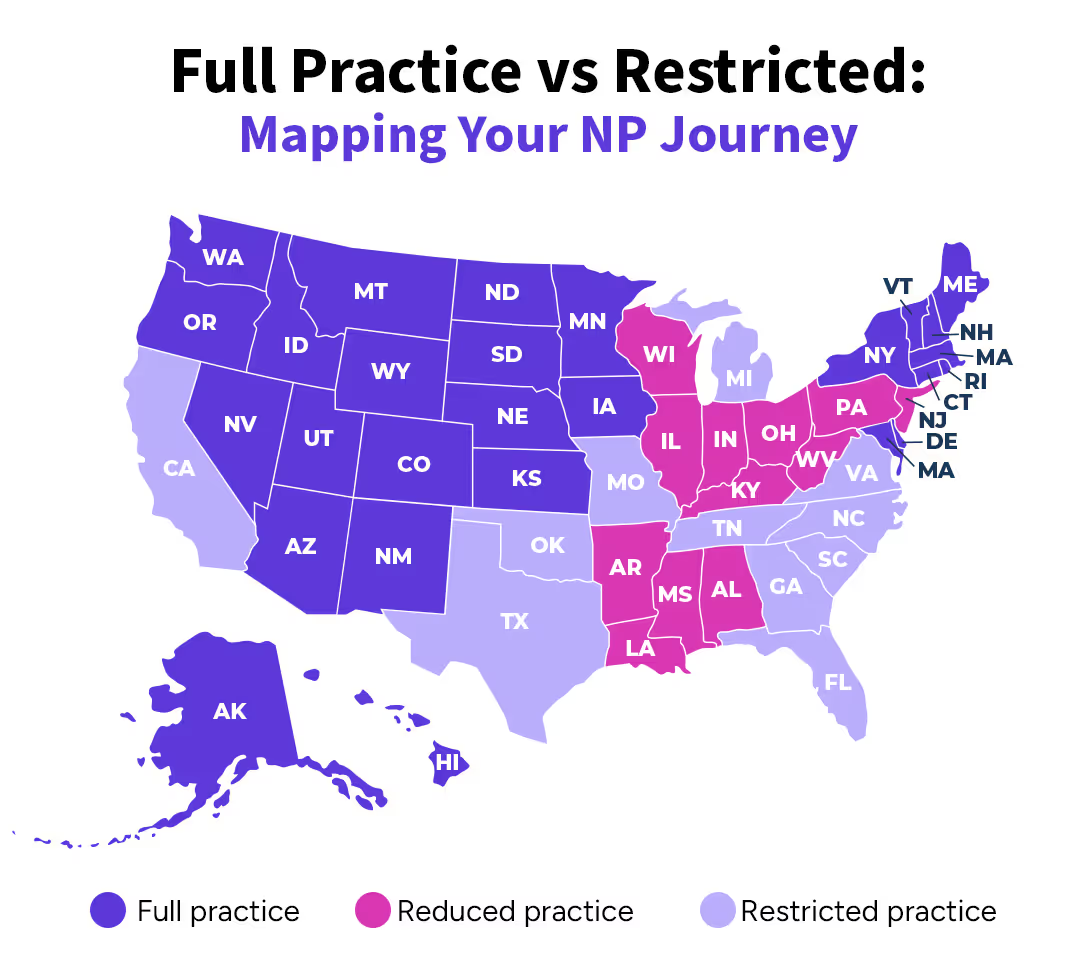
Understanding nurse practitioner practice authority is crucial when planning your career path, as these regulations directly impact your ability to provide care and career mobility across states.
Full Practice Authority States
In states with full practice authority, nurse practitioners enjoy the highest level of practice independence. These states allow NPs to:
- Evaluate and diagnose patients independently
- Order and interpret diagnostic tests
- Initiate and manage treatments
- Prescribe medications, including controlled substances
- Practice without physician oversight
As of 2026, 27 states and the District of Columbia grant NPs full practice authority (FPA), allowing them to:
This model, endorsed by the National Academy of Medicine, enables nurse practitioners to utilize their advanced practice nursing education and clinical expertise fully.
The full practice authority states are: Alaska, Arizona, Colorado, Connecticut, Delaware, Hawaii, Idaho, Iowa, Kansas, Maine, Maryland, Massachusetts, Minnesota, Montana, Nebraska, Nevada, New Hampshire, New Mexico, New York, North Dakota, Oregon, Rhode Island, South Dakota, Utah, Vermont, Washington, and Wyoming, plus Washington, D.C.
The trend is steadily expanding. Delaware, Massachusetts, New York, and Kansas all moved to full practice authority in recent years, and active legislation in several reduced and restricted states could grow the list further. Because these laws change session to session, always confirm current status on the AANP State Practice Environment map.
These legislative changes reflect a growing recognition of the vital role NPs play in expanding access to quality healthcare.
Reduced Practice States
In 12 states, NPs operate under reduced practice authority, which requires a collaborative agreement with a physician for at least one element of NP practice. Common limitations include:
- Required physician collaboration for specific treatments
- Limited prescriptive authority
- Restricted practice settings
- Ongoing documentation of physician collaboration
Restricted Practice States
The remaining 11 states impose the most stringent limitations, mandating:
- Constant physician supervision
- Team-based care models
- Limited prescribing capabilities
- Restricted scope of practice
- Mandatory physician oversight for most decisions
Such constraints can significantly hinder NPs' ability to deliver comprehensive care independently.
Impact on Career Mobility
Your choice of practice location significantly influences your:
- Professional autonomy
- Earning potential
- Practice opportunities
- Ability to establish independent practices
- Long-term career growth
When selecting an NP program, consider how state practice authority aligns with your career goals. Many nurse practitioners choose to:
- Begin their careers in full-practice states
- Gain experience before moving to restricted states
- Advocate for expanded practice authority
- Focus on specialties less affected by restrictions
How to Evaluate NP Schools: Beyond Program Rankings
When researching nurse practitioner programs, it is crucial to look beyond basic rankings to find the right fit. Your choice will significantly impact your educational experience, career preparation, and long-term professional success.
Accreditation: Your Foundation for Success
Accreditation status serves as the cornerstone of program quality. Programs accredited by the Commission on Collegiate Nursing Education (CCNE) or the Accreditation Commission for Education in Nursing (ACEN) ensure your your collegiate nursing education meets rigorous national standards.
Why Accreditation Matters:
- Eligibility for national certification exams
- State license recognition
- Access to federal financial aid
- Credit transfer capabilities
- Future employment opportunities
Program Performance Metrics
Strong nurse practitioner programs demonstrate their value through measurable outcomes that indicate graduate success.
Certification Success Rates:
These numbers reflect program quality and graduate level program preparedness:
- National certification exam pass rates
- American Nurses Credentialing Center certification outcomes
- State board examination performance
- First-time pass rate trends
Graduate Achievement Data:
Understanding alumni success provides insight into program effectiveness:
- Employment rates within 6 months
- Average starting salaries
- Leadership positions obtained
- Continued education pursuits
Understanding Program Costs and ROI
Making an informed financial decision requires careful consideration of both immediate costs and long-term returns.
Total Program Investment:
- Tuition per credit hour (ranging from $500-1,500)
- Technology and resource fees
- Clinical documentation systems
- Required equipment and materials
- Travel expenses for clinical rotations
Financial Support Options:
- Federal and private loans
- Merit-based scholarships
- Need-based grants
- Employer tuition reimbursement
- Graduate assistantships
Clinical Education Support
The level of clinical placement assistance varies dramatically among programs, often becoming the defining factor in student success and graduation timelines.
Traditional School Support Models: Many programs offer limited assistance:
- Basic preceptor directories
- Documentation templates
- Site requirement guidelines
Comprehensive Support Programs: Some schools provide enhanced services:
- Active preceptor networks
- Clinical coordination assistance
- Site evaluation services
- Placement scheduling support
Student Success Resources
A robust support system is essential for navigating the complexities of advanced practice nursing education.
Academic Support Services: Programs should offer:
- One-on-one faculty mentorship
- Writing and research assistance
- Advanced health assessment practice labs
- Simulation facilities
- Comprehensive digital libraries
Career Development Resources: Look for programs providing:
- Professional networking events
- Interview preparation services
- Resume review assistance
- Leadership development opportunities
- Alumni mentorship programs
When evaluating potential programs, consider reaching out to current and recent graduates. Their firsthand experiences often provide valuable insights into program strengths and challenges that may not be apparent from official materials.
Financial Planning for Your NP Education:
Making the investment in a nurse practitioner or nursing degree also requires thorough financial planning. Understanding both obvious and hidden costs help you create a realistic budget for your educational journey and avoid financial surprises.
Core Program Expenses
Tuition varies significantly between institutions, with public universities typically offering more affordable rates than private schools. Program location and length directly impact your total investment.
Basic Academic Fees Include:
- Technology and online learning platforms
- Clinical documentation systems
- Simulation lab access
- Required textbooks and digital resources
- Equipment and supply fees
- Student services
Clinical Preparation Costs
Most NP programs require multiple clinical rotations, each bringing associated expenses. Many students underestimate these crucial costs.
Clinical Requirements:
- Professional liability insurance
- Health screenings and immunizations
- Background checks and drug testing
- Clinical placement fees
- Required uniforms and equipment
- Travel expenses for rotations
Professional Credentialing
The journey to becoming a licensed nurse practitioner involves several certification steps. Each milestone requires financial planning.
Certification Process:
- National certification examination
- State licensing applications
- DEA registration, if applicable
- Specialty certifications
- Professional organization memberships
Educational Investment Returns
Advanced practice nursing offers significant financial benefits over an RN career. Consider both immediate and long-term advantages.
Career Advancement Opportunities:
- Clinical leadership positions
- Private practice potential
- Academic teaching roles
- Research opportunities
- Consulting positions
Financial Support Options
Multiple funding sources exist for NP students. Research and apply early for maximum benefit.
Federal Aid:
- Direct unsubsidized loans
- Graduate PLUS loans
- Work-study opportunities
- Federal grant programs
Employer Benefits:
- Tuition reimbursement programs
- Educational partnerships
- Professional development funds
- Flexible scheduling options
- Continued employment benefits
Strategic Planning Tips
Success requires careful financial management throughout your program.
Before Enrollment:
- Build an emergency fund
- Research program-specific costs
- Connect with current students
- Explore institutional payment plans
During Program:
- Track expenses meticulously
- Maintain part-time work if possible
- Apply for ongoing scholarships
- Network for future opportunities
Why Finding NP Clinical Placements Is So Hard—And How to Solve It
If you've spent weeks sending emails, making cold calls, and hearing nothing back, you already know: securing clinical placements is the most stressful part of NP education.
The reality most NP students face:
- Limited preceptor availability, especially in high-demand specialties like psychiatric mental health and family nurse practitioner
- Fierce competition from multiple nursing programs targeting the same clinical sites
- Complex paperwork, compliance requirements, and facility onboarding
- Scheduling conflicts with work, coursework, and family responsibilities
- Preceptors hesitant to take students due to burnout, productivity concerns, or past negative experiences
The cost of delays adds up fast:
Extended timelines mean additional tuition, postponed certification eligibility, and months of lost NP-level income. For working nurses already stretched thin, it's exhausting—and it shouldn't be this hard.
There's a Better Way
NPHub was built for exactly this moment.
We've helped thousands of graduate nursing students secure clinical rotations when their programs couldn't. Our network includes over 2,000 vetted preceptors across every NP specialty track—and we handle all the coordination, paperwork, and school requirements so you can focus on your nursing education.
What you get with NPHub:
- Access to experienced preceptors ready to support your advanced clinical training
- Complete documentation and compliance management
- Flexible scheduling that works around your life
- Ongoing support from placement to completion
You've worked too hard to let clinical placements delay your rewarding career.

Frequently Asked Questions About NP Programs
1) What matters most when choosing a nurse practitioner school in 2026?
The five factors that matter most are accreditation, certification exam pass rates, clinical placement support, total cost (including hidden costs), and whether the program aligns with where you want to practice. Rankings are a starting point, but for working registered nurses, clinical placement support is often the difference between graduating on time and sitting out a semester.
2) Are online NP programs actually legit?
Yes. Online nurse practitioner programs are fully legitimate as long as they hold accreditation from the Commission on Collegiate Nursing Education (CCNE) or ACEN and meet your state's authorization requirements. The real difference between online and on-campus formats is flexibility, not the quality of your nursing education. Coursework, clinical hours, and national certification eligibility are held to the same standard.
3) What’s the catch with online nurse practitioner programs and hybrid programs?
The clinical rotations usually still fall on you. Most nurse practitioner programs deliver strong online coursework, but placement support varies widely, and many schools hand you a directory rather than an actual preceptor. Confirm in writing how clinical placements are handled before you enroll.
4) What should I look for besides rankings?
Look past the "best NP programs" lists at the things that actually shape your experience:
- Accreditation (CCNE or ACEN)
- Board pass rates (first-time pass rate, if published)
- How clinical placements are handled, and who is responsible for finding clinical sites
- Graduation timelines and on-time completion rates
- Student support (academic advisor access, simulation labs, faculty availability)
5) How early should I start planning clinical placements?
Start at least 6 months ahead, and earlier if you're in a competitive metro or a high-demand specialty like psychiatric mental health or women's health. Preceptors in these areas are claimed quickly, and early planning is the single best way to protect your graduation date.
6) Why do so many NP students struggle to find preceptors?
Demand for clinical placements far outpaces the supply of available preceptors. Clinics field requests from multiple nursing programs at once, many preceptors are cautious after past experiences or burnout, and most NP students are coordinating all of this around a full-time job. That combination turns the preceptor search into a bottleneck fast.
7) What happens if I can’t secure a preceptor on time?
Usually a delayed rotation, which cascades into a delayed graduation, added tuition, postponed national certification, and months of lost NP-level income. The financial cost is real, but for most students the harder part is the stress of watching a finish line move because of something outside their control.
If that's where you are right now, you don't have to keep searching alone. NPHub connects NP students with rigorously vetted preceptors across every specialty and handles the paperwork and coordination from your first request to the end of your rotation. Create your free account → and see which preceptors are available in your area.
8) Do any NP programs guarantee placements?
A few programs offer structured placement support, but many provide only a directory or limited help, and very few "guarantee" anything in a binding way. Always confirm the exact level of support in writing before you commit, so you know what you're responsible for.
9) How do I know if a program is accredited?
An accredited program will list its accreditation clearly, almost always CCNE or ACEN, on its official site. You can also verify it directly through the accreditor's database. If a school is vague or makes it hard to confirm, treat that as a red flag, because accreditation determines your eligibility for national certification exams and financial aid.
10) Should I choose a program based on Full Practice Authority states?
It depends on your career goals. Full practice authority lets nurse practitioners evaluate, diagnose, and prescribe without physician oversight, which can expand your autonomy and your NP job options. But you can still build a strong career in a reduced or restricted practice state with the right setup, so weigh it as one factor among several rather than the deciding one.
11) What are the real costs most students underestimate?
Beyond tuition (often quoted per credit hour), the costs that surprise students most are:
- Clinical travel (gas, hotels, sometimes flights)
- Background checks and drug screens
- Immunizations and titers
- Professional liability insurance
- Testing and licensing fees after graduation
Budget for these early so they don't derail you mid-program.
12) Is becoming an NP still worth it in 2026?
For many people, yes—especially with projected growth, broader specialty options, and expanding roles in underserved communities. The key is choosing a program that supports your path and keeps you on track to graduate.
13) What if I want flexibility but can’t risk clinical delays?
That’s where placement planning matters most. If your program offers limited support, students often use a placement partner to protect their timeline.
14) What’s the simplest next step if I’m overwhelmed and unsure?
Make a shortlist of 5-7 programs, then compare:
- Accreditation
- Clinical support level
- Total cost (with hidden costs)
- Specialty fit
- State practice alignment
Key Definitions
Nurse Practitioner (NP)
An advanced practice nurse with graduate-level training who can diagnose, treat, and prescribe (rules vary by state).
Advanced Practice Registered Nurse (APRN)
A category of nurses with advanced education, including NPs, CNMs, CNSs, and CRNAs.
Family Nurse Practitioner (FNP)
An NP specialty focused on primary care for patients across the lifespan (kids to older adults).
Psychiatric-Mental Health NP (PMHNP)
An NP specialty focused on mental health assessment, diagnosis, medication management, and therapy support.
Adult-Gerontology NP (AGNP)
An NP specialty focused on adults and older adults, either in primary care or acute care tracks.
Women’s Health Nurse Practitioner (WHNP)
An NP specialty focused on women’s and reproductive health across the lifespan.
Pediatric Nurse Practitioner (PNP)
An NP specialty focused on healthcare for infants, children, and adolescents (primary or acute care).
MSN vs DNP
MSN (Master of Science in Nursing) is the common NP degree.
DNP (Doctor of Nursing Practice) is a doctoral-level pathway with more leadership and clinical systems focus.
Accreditation (CCNE / ACEN)
A quality “stamp” that helps ensure your program meets national standards and supports licensing + certification eligibility.
National Certification (ANCC, AANPCB, etc.)
The exam and credentialing process NPs complete after graduation to become certified in their specialty.
Clinical Rotations
Your hands-on training in real healthcare settings, completed under a licensed preceptor.
Preceptor
A licensed clinician (often an NP, MD, or DO depending on rules) who supervises and teaches you during rotations.
Clinical Placement Support
Help a school (or service) provides to find rotation sites/preceptors and coordinate approvals and paperwork.
Full Practice Authority (FPA)
A legal practice model where NPs can evaluate, diagnose, treat, and prescribe without physician supervision (state-specific).
Reduced / Restricted Practice
States where NPs must have physician collaboration or supervision for certain parts of practice.
Clinical Hour Requirements
Most NP tracks require 700+ hours minimum, depending on specialty and program.
Hidden Program Costs
Costs beyond tuition, like travel for rotations, background checks, immunizations, drug screens, liability insurance, and licensing fees.
Article details
- Last updated
Jan 3rd, 2026 - Fact-checked by
NPHub Clinical Placement Experts & Student Support Team - Sources and references
- https://www.bls.gov/ooh/healthcare/nurse-anesthetists-nurse-midwives-and-nurse-practitioners.htm
- https://nurse.org/education/nurse-practitioner-programs-state/
- https://nurse.org/articles/online-nursing-class-success/
- https://www.npschools.com/profiles
- https://www.nphub.com/
- https://www.aanp.org/advocacy/state/state-practice-environment
- https://www.nursepractitioneronline.com/articles/nurse-practitioner-practice-authority-updates/?utm_source=chatgpt.com
- https://nurse.org/education/nurse-practitioner-programs-state/
- https://www.aacnnursing.org/ccne-accreditation/find-accredited-programs
- https://www.acenursing.org/search-programs
- https://www.nphub.com/blog/np-preceptor-shortage
- https://www.nphub.com/blog/the-hefty-cost-of-delaying-np-graduation
- https://www.nphub.com/blog/best-preceptor-matching-service
- https://www.nphub.com/blog/np-full-practice-authority
- https://www.nursingworld.org/ancc/
- https://practicetestgeeks.com/np/can-nurse-practitioners-prescribe-medication
Find a preceptor who cares with NPHub
Book a rotation.webp)
.jpeg)

.webp)
.jpeg)


%20(3)%20(2).svg)
.webp)