
.png)



.webp)
TL;DR — Is Being a Nurse Practitioner Worth It?
For most NPs, the answer is a clear yes. Here's the short version of why becoming a nurse practitioner pays off — professionally, financially, and personally:
- Real professional autonomy. With full practice authority in a growing number of states, NPs can diagnose, prescribe medication, and manage treatment plans independently — an advanced practice role that goes far beyond what a registered nurse can do.
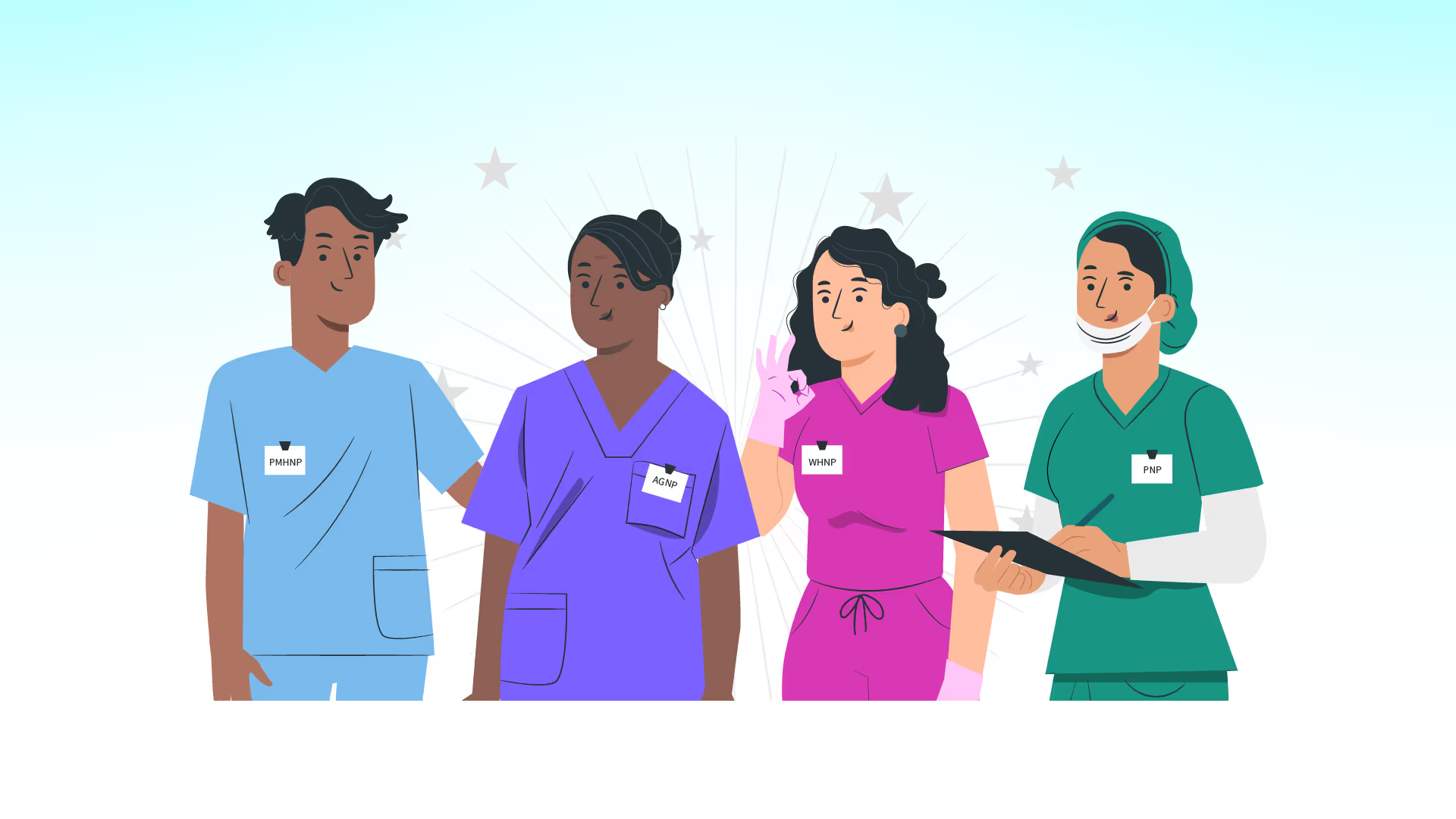
- Specialty flexibility that fits your life. Family nurse practitioner, psychiatric mental health, adult gerontology, women's health, acute care — you choose the patient population and setting that align with your values, not the other way around.
- A path to your own practice. In full practice authority states, NPs open private practices, lead telehealth clinics, and build careers on their own terms — without a medical school price tag.
- Strong pay and serious job security. Most NPs earn six figures, and the U.S. Bureau of Labor Statistics projects 46% job growth by 2033 — driven by a widening physician shortage and an aging population.
- Work that genuinely matters. NPs improve patient outcomes, expand healthcare access, and build the kind of long-term patient relationships that drive real job satisfaction.
The honest tradeoff: getting there takes graduate school, clinical hours, and the often-frustrating reality of securing your own clinical rotations. That last part is where most NP students get stuck — and it's exactly where NPHub helps. Create your free NPHub account → and skip the cold-emailing entirely so you can focus on becoming the NP you've worked this hard to be.
Why Becoming an NP Is Worth Every Late Night and Clinical Hour
Becoming a nurse practitioner is no walk in the park.
Between juggling intense coursework, endless clinical hours, working (because bills still exist, unfortunately), and somehow maintaining a social life or at least pretending to, the struggle is real. Balancing a job with graduate school for a nurse practitioner degree adds another layer to the challenge, and many nursing students keep working full-time anyway because life doesn't pause for an advanced degree. But ask almost any NP if they'd do it again, and you'll hear the same answer: it's worth it.
The long nights, the stress, the caffeine-fueled study sessions? They lead to a nursing career that's not just demanding, it's deeply rewarding professionally, financially, and personally.
According to the U.S. Bureau of Labor Statistics and the American Association of Nurse Practitioners (AANP), the NP profession is one of the fastest-growing careers in healthcare. Translation? There has never been a better time to step into this role, whether you're drawn to family practice, women's health, psychiatric-mental health, or acute care.
So the real question most nursing students are quietly asking themselves is this: is being a nurse practitioner worth it in today's ever-changing healthcare field?
The short answer is yes, but only when you walk in with eyes wide open. Let's break down the honest reasons becoming a nurse practitioner is a solid (and genuinely fulfilling) career move, plus the tradeoffs no one talks about until you're already deep into NP school.
The Current State of the NP Profession: Growth and Demand
Before we dive into the personal wins (like job satisfaction and financial perks), let's take a pulse check on the state of the NP profession. Spoiler alert: It's thriving.
- According to the AANP, the NP workforce grew by 8.5% in just one year. That's 30,000+ new NPs hitting the field between 2022 and 2023, bringing the total to 385,000 licensed NPs. If you're thinking of joining the ranks, you're in good company.
- The Bureau of Labor Statistics projects a jaw-dropping 46% growth by 2033. Translation? The demand is skyrocketing, and employers need NPs—badly.
- Over half of NPs (56%) rake in $100,000–$150,000 a year, while nearly a quarter (23%) pull in $150,000+. And here's the kicker 61% of top earners only hold a master's degree.
- A solid 36% of NPs boost their income through per diem gigs, overtime, or side hustles (because let's be honest, one paycheck is never enough).
- The majority of NPs (63%) are happy with their careers, and 45% would enthusiastically recommend the profession to others.
- When asked directly if becoming an NP was "worth it," a resounding 72% said yes. That's a powerful endorsement from those who've been there, done that, and thrived.
These numbers tell us one thing: The NP profession isn't just growing—it's thriving. But let's be real—there's more to this career than just stats. Let's talk about why becoming an NP goes beyond job security and a solid paycheck.
The Added Value of the Nurse Practitioner Role
The role of Nurse Practitioners (NPs) in healthcare extends far beyond clinical duties. Recent research has highlighted the “added value” that NPs bring to the system, emphasizing their unique skill set, expanded professional capabilities, impact on patient outcomes, and contributions to the broader healthcare system. Advanced practice registered nurses (APRNs), including NPs, play a crucial role within the nursing field by diagnosing and treating medical conditions and providing primary healthcare.
The NP role is not just about filling gaps in healthcare, they're transforming the way care is delivered. Here's an in-depth look at the core dimensions that define the unique value of Nurse Practitioners.
1. Unique Skills and Competencies
NPs bring a specialized blend of nursing and medical expertise, making them distinct from both Registered Nurses and physicians. Their training and approach position them to deliver comprehensive, patient-centered care while integrating advanced clinical skills. Completing NP education and training enhances their medical knowledge and confidence, helping practitioners develop a more advanced skill set and increased self-assuredness in their roles within the medical team.
Core Competencies that Define the NP Advantage
- Holistic patient-centered care: Unlike traditional models that often focus narrowly on symptoms and disease management, NPs treat the whole person. They consider the full scope of physical, emotional, social, and environmental factors affecting health, leading to more comprehensive and effective treatment plans.
- The best of nursing and medicine: NPs integrate the compassionate, relationship-driven approach of nursing with the diagnostic, pharmacologic, and interventional capabilities of medicine, allowing them to balance technical expertise with patient advocacy.
- Advanced problem-solving and critical thinking: The complexity of modern healthcare requires rapid decision-making, adaptability, and innovative thinking. NPs excel in navigating challenging cases, analyzing data, and tailoring treatments to individual needs.
- Expert clinical knowledge: Through graduate-level education, specialized training, and clinical practice, NPs develop expertise in specific populations and conditions, allowing them to manage acute and chronic conditions with confidence and precision.
- Leadership and advocacy: NPs frequently hold leadership positions within healthcare organizations, serve as policy advocates, and drive system-wide improvements in patient care quality, safety, and access.
- Superior communication skills: Effective communication is essential for patient education, interdisciplinary collaboration, and health advocacy. NPs bridge gaps in understanding, ensuring that patients and families make informed decisions about their health.
2. Expanded Professional Activities
The NP role offers a broader scope of practice and professional opportunities compared to traditional nursing roles.
This expanded capacity allows NPs to engage in higher-level decision-making, practice independently in certain states, and take on leadership roles in healthcare delivery. Additionally, NPs have numerous opportunities for career advancement, such as leadership roles and management positions, which can significantly enhance their prospects in the healthcare field.
Key Professional Functions of NPs
- Comprehensive direct patient care: NPs assess, diagnose, treat, and manage patients across the lifespan, functioning as primary care providers, specialty clinicians, and acute care specialists.
- Prescriptive authority: In all 50 states and the District of Columbia, NPs have the authority to prescribe medications, though the level of independence varies. In states with Full Practice Authority (FPA), NPs can diagnose and prescribe without physician oversight.
- Care Coordination and Case Management – NPs play a pivotal role in coordinating care across multiple providers and specialties, ensuring continuity of care and improving health outcomes.
- Health promotion and disease prevention: Beyond treating illnesses, NPs emphasize preventive care by educating patients on risk factors, lifestyle changes, and long-term health maintenance.
- Autonomy and independent practice: Depending on state regulations, many NPs operate independently in private practices or clinics, expanding healthcare access in communities facing provider shortages.
3. Positive Patient Outcomes
The effectiveness of NPs is well-documented, with numerous studies confirming that NPs provide care that is equivalent to or superior to physician-led care across various quality indicators. Research consistently finds that NPs deliver care that meets physician-led care. NPs serve a broad patient population, which contributes to their effectiveness.
Impact of NP Care on Patient Outcomes
- High-quality care: NPs can deliver care that meets or exceeds physician-led care in clinical effectiveness, patient adherence, and health improvement measures.
- Superior patient satisfaction: Studies show that patients under NP care report higher satisfaction rates, often citing more time spent with providers, better explanations, and a stronger patient-provider relationship.
- Continuity of care: Unlike some physician-led models where patients see multiple providers over time, NPs build long-term relationships with their patients, leading to better chronic disease management and improved health outcomes.
- Timely access to care: NPs help reduce wait times, fill gaps in primary care, and increase healthcare access, particularly in rural and underserved areas where physician shortages persist.
- Cost-effective care: Studies indicate that NPs contribute to lowering overall healthcare costs by reducing emergency visits, hospital readmissions, and unnecessary procedures, all while maintaining high-quality care.
4. Healthcare System Benefits
Beyond individual patient care, NPs play a vital role in strengthening healthcare systems by improving team collaboration, resource efficiency, and service delivery innovation. Nurse practitioners are recognized as key medical professionals who enhance team collaboration and resource efficiency.
How NPs Contribute to Healthcare System Efficiency
- Enhanced team collaboration: NPs improve communication and interdisciplinary teamwork, creating more streamlined and efficient care models.
- Education and mentorship: Many NPs serve as educators, mentors, and preceptors, shaping future healthcare providers and advancing clinical best practices.
- Resource optimization: By reducing unnecessary tests, hospitalizations, and specialist referrals, NPs help optimize healthcare spending while maintaining high-quality patient care.
- Innovation in care delivery: From telehealth to nurse-led clinics, NPs pioneer new models of care that expand access and improve patient outcomes.
Financial Rewards and Nursing Career Stability
While many NPs enter the profession driven by a passion for patient care, the financial and job security aspects are undeniably strong. Competitive salaries for NPs are often accompanied by comprehensive benefits, including health insurance.
Competitive Compensation
The average nurse practitioner (NP) salary in the United States is $130,060 per year, with reported ranges from $91,837 to $184,192, based on aggregated job posting data from Indeed (updated April 2026).
When evaluating the true worth of becoming an NP, the financial return on investment remains compelling—driven by strong base salaries, additional earning potential (including overtime), and consistent demand across the healthcare market.
Additional certifications, specialized practice areas, and per diem work provide further earning potential.
Job Security and Growth Opportunities
- The NP profession is projected to grow by 46% by 2033, a rate that far outpaces most other occupations.
- NPs remain in high demand across all healthcare settings, particularly as the shortage of primary care physicians continues to expand opportunities. Pursuing a nursing career and attaining NP credentials is highly rewarding, offering pride, satisfaction, and numerous specializations.
- Advanced practice nursing has proven to be recession-resistant, maintaining stability even during economic downturns.
Flexible Career Paths
- Diverse work settings: NPs practice in hospitals, private clinics, community health centers, corporations, schools, and more.
- Wide range of specialties: From family practice and acute care to psychiatric mental health and neonatal care, NPs can specialize based on their interests and expertise.
- Flexible work schedules: Many positions offer part-time, compressed workweeks, and self-scheduling options.
- Entrepreneurial opportunities: In many states, NPs can establish independent practices or explore consulting, education, and telehealth roles.
The Honest Pros and Cons of Being a Nurse Practitioner
Becoming a nurse practitioner is one of the bigger career investments in healthcare, and pretending it's all upside doesn't do anyone any favors. Here's what genuinely makes it worth it, and what to walk in prepared for.
What Makes the NP Path Genuinely Worth It
You get to actually practice medicine: Unlike a registered nurse, an NP can diagnose conditions, build treatment plans, run physical exams, order diagnostic tests, and prescribe medication. In states with full practice authority, you do all of that with full professional autonomy — no physician oversight required. That shift in scope of practice is what most NPs describe as the moment the whole investment finally clicks into place.
You spend real time with patients: NPs typically get longer appointment windows than physicians, which means more space for patient education, more continuity, and stronger patient relationships. That's not a soft benefit. It's what consistently improves patient outcomes and what most NPs cite when they say the work feels meaningful.
Career flexibility is genuinely rare: Few healthcare careers let you move between primary care, acute care, family nurse practitioner roles, women's health, psychiatric mental health, adult gerontology, telehealth, academia, and your own practice, often without going back to school. You can shape the work around your life instead of the other way around.
You join a community that takes you seriously: Becoming a nurse practitioner means stepping into a respected medical team with a strong professional network, mentors, policy voices, researchers, and other NPs who've walked the same road. That community matters more than people expect, especially in your first few years.
Leadership and entrepreneurship are real options: Many NPs eventually move into leadership positions, policy work, education, or advanced specialties like pain management or dermatology. In full practice authority states, opening a private practice or building a specialized clinic isn't a fantasy — it's a regular career step.
What to Walk in Prepared For
The financial investment is real: An advanced nursing degree takes time, energy, and money. Most nursing students juggle coursework, clinical hours, and full-time work, and tuition for NP programs isn't trivial. Salaries make the math work over a career, but student debt is part of the conversation early on.
State laws aren't consistent: Practice authority varies by state. Some give NPs full independence; others require physician collaboration that can limit career flexibility and it's worth knowing the rules in any state you're considering before you commit.
Patient loads and paperwork are heavier than expected: Depending on the setting, you may carry significant caseloads, complex cases, and a steady stream of documentation. The work is rewarding, but burnout is real if you don't actively protect your work-life balance.
Securing clinical rotations is the hardest part most students don't see coming: Unlike medical students who are placed into residencies, NP students are often expected to find their own preceptors. That usually turns into months of emailing clinics, chasing approvals, and watching graduation timelines slip because the system leaves nursing students to figure it out on their own.
Continuing education never really ends: You'll renew certifications, complete ongoing education, and stay current with clinical advances throughout your career. It's a long-term commitment of time and financial resources, fair to know up front.
The Bottom Line
Becoming a nurse practitioner is worth it for the right person, someone drawn to advanced practice nursing, long-term career growth, and the kind of patient-centered care that traditional roles don't allow. But it's not a casual decision, and you shouldn't make it on autopilot. The honest framing is this: the rewards compound over a career, and the hardest stretches, especially the clinical rotation phase, are survivable when you don't try to navigate them alone.
Conclusion: A Career of Impact and Opportunity
Becoming a nurse practitioner is no casual career move. It's a serious investment of time, financial resources, and energy and at times, it may test your patience (and your caffeine tolerance). But for those who push through? The rewards are undeniable.
The NP role is a profession where you call the shots, build real patient relationships, and deliver patient-centered care that genuinely improves outcomes. It's financial stability without medical school debt. It's professional autonomy without losing the nursing touch. And it's the kind of career flexibility across primary care, acute care, family nurse practitioner roles, women's health, psychiatric mental health, adult gerontology, and beyond that lets you shape your own path instead of squeezing into someone else's.
As the NP profession continues to grow, so does its influence on the future of healthcare. NPs are expanding healthcare access, easing the strain of the physician shortage, and proving every day why advanced practice registered nurses are essential to the medical team. Whether you dream of running your own practice, leading in a specialty that excites you, or becoming a trusted provider in your community, this nursing career opens doors that traditional roles simply don't.
That said, we'll be honest with you: the hardest part of becoming a nurse practitioner usually isn't the coursework or the boards, it's finding the clinical rotations that stand between you and graduation. Emailing dozens of clinics, chasing down approvals, and watching the calendar tick while your start date slips is one of the most stressful parts of NP school, and it has nothing to do with how capable you are. It's a gap in how the system supports nursing students.
That's the gap NPHub was built to close. You stay in control of your training, choosing the specialty, location, and schedule that fit your life while we handle the parts that drain your time and energy. Create your free NPHub account → to browse vetted, licensed preceptors across the country and move forward with the kind of clarity this stage of your career deserves.
Your NP journey is challenging, rewarding, and completely worth it — and you don't have to figure out the hardest parts alone.
Key Definitions: The NP Career Glossary
Nurse Practitioner (NP): An advanced practice clinician with a graduate-level nursing degree who can perform physical exams, diagnose conditions, build treatment plans, and prescribe medication. Unlike a registered nurse, an NP manages patient care directly rather than supporting another provider.
Advanced Practice Registered Nurse (APRN): The broader category that includes nurse practitioners, nurse midwives, nurse anesthetists, and clinical nurse specialists. All APRNs hold an advanced nursing degree.
Full Practice Authority (FPA): A state-level designation that allows NPs to evaluate, diagnose, prescribe, and practice independently — without physician oversight. FPA is the foundation of true professional autonomy.
Primary Care: Long-term, relationship-based care focused on prevention, chronic conditions, and overall wellness — often delivered by family nurse practitioners or adult gerontology NPs.
Acute Care: Care for serious, sudden, or complex conditions, usually in hospitals or specialty clinics. Acute care NPs often work alongside a wider medical team.
Specialty Certification: National board certification in a focused area like family practice, psychiatric mental health, women's health, or pediatrics. It's how you move from generalist to specialist.
Graduate Nursing Education: The MSN or DNP coursework required to become an NP — combining classroom learning with the clinical hours that prepare you for direct patient care.
Scope of Practice: What an NP is legally allowed to do in a given state, including prescriptive authority and whether physician collaboration is required.
Preventive Care: Health promotion, screenings, patient education, and early-intervention services — a cornerstone of how NPs improve patient outcomes and lower overall healthcare costs.
Private Practice: A clinic owned and operated by an individual provider. In FPA states, many NPs build their own practice as a long-term career path.
Patient Population: The specific group an NP primarily serves — children, adults, women, an aging population, or a broad patient population across the lifespan.
Advanced Clinical Training: The hands-on portion of NP education — completed during clinical rotations under a licensed preceptor — where you learn to run diagnostic tests, manage real cases, and step into the NP role.
Healthcare Access: How easily patients can get the care they need. NPs play a major role in expanding access, especially in underserved areas affected by the physician shortage.
Frequently Asked Questions About Becoming a Nurse Practitioner
Is being a nurse practitioner worth it long-term?
For most NPs, yes and the data backs it up. Surveys consistently show that the majority of nurse practitioners would recommend the profession to others, citing strong job satisfaction, meaningful patient care, and long-term career growth across primary care, acute care, and specialty roles. The honest tradeoff is the upfront investment in graduate school and clinical hours, but the rewards, autonomy, income, and impact tend to compound over time.
How long does it take to become a nurse practitioner?
Most NP programs take 2 to 4 years after earning a BSN, depending on whether you pursue an MSN or DNP and how aggressively you study. Many nurses balance NP school with full-time work, which extends the timeline but keeps income flowing. The non-negotiable piece in every program is the clinical rotations, that's where you build the skills employers actually pay for.
What specialties can nurse practitioners pursue?
Plenty. Family nurse practitioner, adult gerontology, psychiatric mental health, women's health, pediatrics, acute care, and neonatal are among the most in-demand. Each specialty serves a different patient population and opens different job opportunities from hospitals and private practice to telehealth and community health organizations.
Do nurse practitioners actually practice independently?
In many states, yes. Full practice authority gives NPs the legal scope to evaluate patients, run physical exams, order diagnostic tests, build treatment plans, and prescribe medication without physician oversight. In other states, NPs work within a collaborative agreement; both paths can lead to a fulfilling career, but FPA states offer the most professional autonomy.
Can a nurse practitioner open their own practice?
Yes, particularly in full practice authority states, where many NPs build their own practice from the ground up. It's a real entrepreneurial path: you choose your patient population, set your standards of patient-centered care, and shape the kind of healthcare experience you've always wanted to deliver.
What's the career outlook for nurse practitioners?
Excellent. The Bureau of Labor Statistics projects 46% job growth for NP roles by 2033 — one of the fastest-growing careers in the country. Demand is fueled by an aging population, an ongoing physician shortage, and the rising emphasis on preventive care and disease management.
Is NP school manageable with work and family?
Challenging, but doable. Many NP programs are designed for working nurses with part-time, online, and hybrid options that protect work life balance. The hardest stretch is usually the clinical rotation phase, where coordinating clinical hours with a job and personal life can feel overwhelming.
How hard is it to find clinical rotations during NP school?
Harder than most students expect. Unlike medical residencies, NP students are typically responsible for finding their own preceptors, which often means cold-emailing clinics, chasing approvals, and racing against the clock. It's not a reflection of your ability; it's a gap in how the system supports nursing students. Create your free NPHub account → to browse vetted, licensed preceptors across specialties, so you can stay focused on learning, not chasing.
Why are nurse practitioners so important in healthcare today?
NPs expand healthcare access, especially in underserved communities, and play a central role in lowering overall healthcare costs without compromising quality. By emphasizing health promotion, preventive care, and continuity, advanced practice registered nurses consistently improve patient outcomes, making them an increasingly essential part of every medical team.
Article details
- Last updated
April 6th 2026 - Fact-checked by
NPHub Clinical Placement Experts & Student Support Team - Sources and references
- https://www.nphub.com/blog/5-ways-nurse-practitioners-improve-access-to-care
- https://aanp.org/advocacy/state/state-practice-environment
- https://www.nphub.com/blog/why-nurse-practitioners-should-practice-independently
- https://www.nphub.com/blog/launch-np-private-practice-guide
- https://money.usnews.com/careers/best-jobs/nurse-practitioner
Find a preceptor who cares with NPHub
Book a rotation.webp)
.jpeg)

.webp)



%20(3)%20(2).svg)
.webp)