
.png)



.webp)
TL;DR
- The clinical placement bottleneck has shifted from a student challenge to a program-level risk as nurse practitioner program enrollment grows faster than available preceptor capacity.
- Traditional models strain clinical placement coordinators and clinical faculty, especially when multi-state compliance, credentialing, evaluation forms, and last-minute issues like a preceptor canceling stack up.
- Dedicated Preceptor Recruiters—many with nursing backgrounds who understand clinical workflows and what makes a preceptor effective—expand clinical placement services by proactively securing clinical sites, strengthening preceptor relationships, and improving placement quality across clinical rotations.
- This approach supports accreditation readiness by standardizing documentation, reducing rejected placements, and protecting on-time completion of required clinical hours for NP students and nursing students.
- Want to strengthen nurse practitioner clinical placement at scale? Schedule a consultation with our university team to explore dedicated recruitment support for your clinical placement strategy.
For years, the conversation around clinical placement challenges has centered on the student experience. NP students scrambling to find preceptors. Last-minute calls to clinics. The stress of securing rotations while juggling coursework and full-time jobs.
But here's what that framing misses: the clinical placement bottleneck is no longer just a student problem. It's a program problem. And increasingly, it's an institutional risk.
Nurse practitioner programs across the country are growing. Enrollment is up. Applications are strong. The demand for advanced practice providers has never been higher. But the infrastructure required to train those providers hasn't kept pace.
The result is a widening gap between the number of students programs want to enroll and the number they can actually place in quality clinical rotations.
Clinical placement coordinators are managing larger student cohorts with the same (or fewer) resources they had five years ago. Faculty are stretched across teaching, advising, compliance, and often their own clinical practice. The administrative burden has grown exponentially, while staffing levels have not.
Consider what coordinators and faculty are now expected to manage:
- Sourcing and vetting clinical sites across multiple specialties and geographic regions
- Cultivating and maintaining relationships with nurse practitioner preceptors
- Navigating affiliation agreements, credentialing, and compliance documentation
- Tracking student progress, clinical hours, and evaluation forms
- Troubleshooting when a preceptor cancels or a placement falls through
- Ensuring everything aligns with CCNE or ACEN accreditation requirements
The traditional models, where students secure their own placements or coordinators handle everything internally, are breaking under the weight of scale. What worked when a program graduated 30 students a year doesn't work when that number doubles or triples.
For programs serving students across multiple states, the complexity multiplies further. Every state has different licensing requirements. Every clinical site has its own onboarding process. Every preceptor relationship requires cultivation and oversight.
Meanwhile, the consequences of placement failures have grown more severe:
- Delayed graduations hurt student outcomes and satisfaction scores
- Rejected placements create compliance headaches
- Inconsistent clinical experiences raise questions during accreditation reviews
- Programs that can't reliably place nurse practitioner students risk their reputation and enrollment pipeline
This is the context in which a new model is emerging, one that treats preceptor recruitment not as an ad-hoc task distributed across already-stretched staff, but as a dedicated function requiring specialized focus.
Dedicated preceptor recruiters are becoming essential to NP programs, not because programs are failing, but because the landscape has changed. The preceptor shortage is structural. The demand for clinical preceptors is outpacing supply. And the old ways of managing clinical placements weren't built for this volume or this complexity.
This isn't about outsourcing responsibility. It's about building the clinical infrastructure that modern NP education requires.
The question is no longer whether your program needs dedicated preceptor recruitment support. The question is how long you can afford to operate without it.
Ready to explore how dedicated preceptor recruitment can support your program's growth? Connect with NPHub's university partnership team to learn how we help NP programs scale clinical placement capacity without adding administrative burden.
The Numbers Behind the Clinical Placement Pressure: Enrollment Growth vs. Clinical Preceptor Availability
The clinical placement crisis isn't anecdotal. It's mathematical—two trends moving in opposite directions, with programs caught in the middle.
Enrollment Is Up. Capacity Isn't.
According to AACN, enrollment in master's-level nursing programs increased by 4.8% in 2024. DNP programs have grown from 70 students in 2003 to over 41,000 today. The Bureau of Labor Statistics projects around 35% growth in NP positions through 2031. Programs are expanding to meet demand. But the infrastructure to train those students hasn't kept pace.
The Preceptor Math Doesn't Work
There are over 385,000 practicing NPs nationally. Yet 28,000 NP students struggle to find nurse practitioner preceptors each year.
Recent research shows why. In one survey, 60% of NPs reported they're not currently precepting. The reasons:
- 37.6% said no one asked them
- 32.8% said their employer restricted precepting
- 12.4% cited productivity concerns
The shortage isn't just about unwilling clinicians; it's systemic barriers. Employers who don't support precepting. Workloads that don't accommodate teaching.
The Downstream Effects on Clinical Rotations
When preceptor supply can't meet demand:
- Students face delayed graduations and extended costs
- Clinical rotations may not align with specialty or learning objectives
- Programs compete for the same limited preceptor pool
- Clinical placement coordinators burn out managing impossible logistics
The gap between enrollment growth and preceptor availability isn't temporary. It's structural. And it requires a structural response: dedicated preceptor recruitment as a core function, not an afterthought.
Why Internal Capacity Can't Keep Up: The Burden on Clinical Coordinators and Faculty
Clinical placement coordinators are handling larger student cohorts while juggling credentialing, compliance documentation, affiliation agreements, and preceptor communication—often across multiple states. Clinical faculty are stretched across teaching, advising, and their own clinical practice. The inadequate number of nurse educators means larger workloads for current nurse educators, raising burnout potential and forcing scholarship and development to take a back seat.
The scope has expanded, but staffing hasn't. Many NP programs, especially online programs serving nurse practitioner students nationwide, must navigate different state requirements for every clinical placement site. Each preceptor relationship requires vetting, documentation, and ongoing oversight. Each compliance gap creates accreditation risk.
This isn't a critique of programs. It's recognition that the old model, where clinical placement teams managed everything internally, wasn't built for today's scale.
If your clinical team is feeling the strain, our university team can help. Connect with us to explore dedicated support for preceptor recruitment and placement management.
The Shift: Why Dedicated Preceptor Recruiters Are Emerging as a Best Practice
Forward-thinking NP programs are recognizing that preceptor recruitment deserves dedicated focus, not as an add-on to existing responsibilities, but as a specialized function with its own staffing and processes.
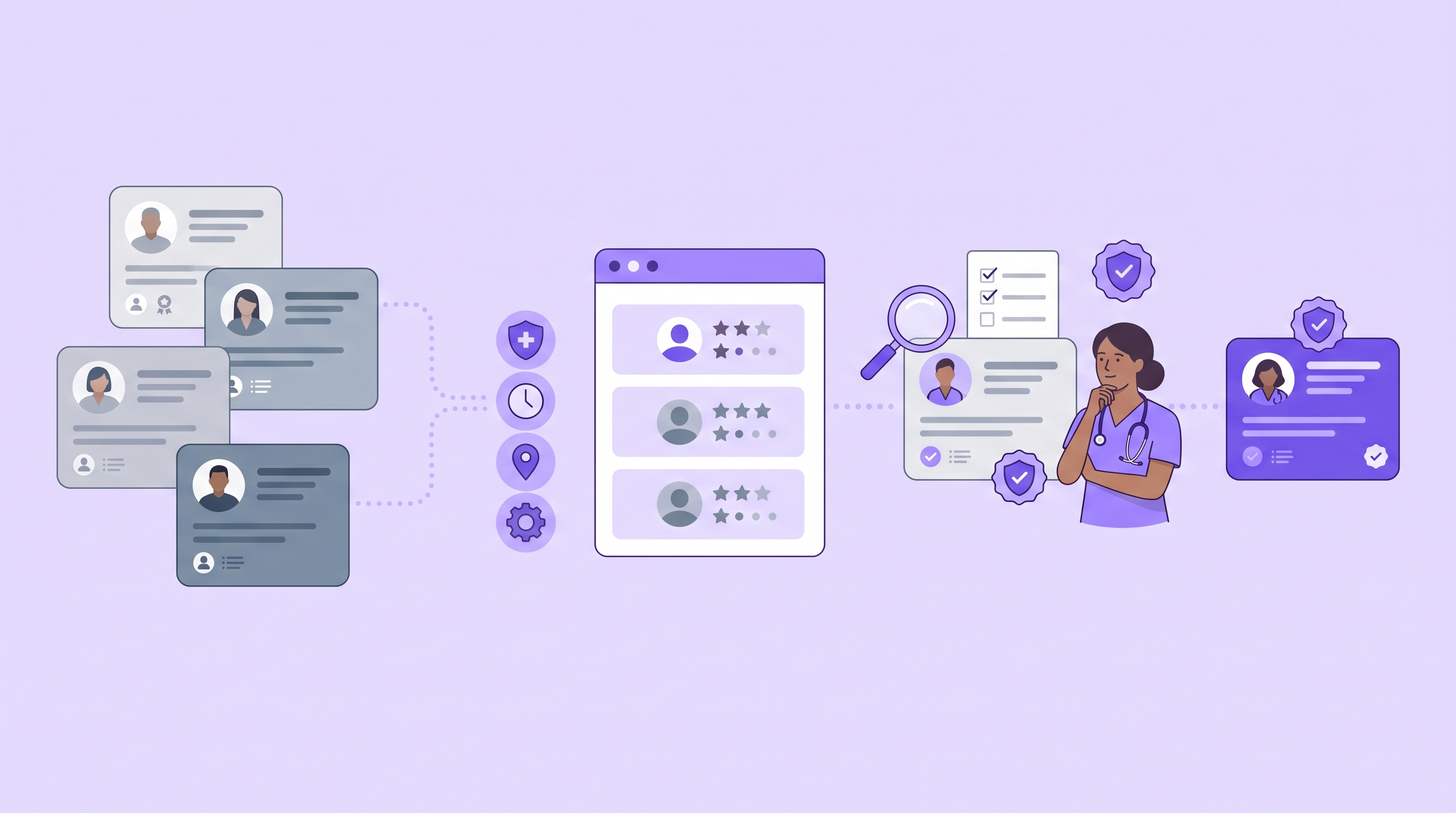
Dedicated preceptor recruiters are professionals focused solely on sourcing, vetting, and maintaining relationships with clinical preceptors. They don't replace clinical coordinators or faculty. They extend the placement team's capacity by handling the time-intensive work that buries internal staff.
As one university partner described the impact: "Having NPHub actually go out there and essentially take my two-man team and make it a 51-man team is HUGE." That's not outsourcing. That's multiplying capacity while keeping control where it belongs, with your program.
What Dedicated Recruiters Make Possible
When preceptor recruitment becomes a dedicated function—staffed by professionals who understand clinical education from the inside—programs gain more than administrative relief. They gain expertise.
At NPHub, the majority of our Preceptor Recruiters are former nurses. They understand clinical workflows, nuances in the scope of practice, and what makes a preceptor effective, not just credentialed. That background shapes every conversation with potential preceptors and every placement decision.
When recruitment is handled by people who've worked in healthcare settings themselves, programs can:
- Build pipelines proactively. Instead of scrambling each term, recruiters develop relationships with potential preceptors by specialty and geography before nurse practitioner students need them.
- Reduce last-minute crises. With ongoing outreach and a deeper network of experienced preceptors, programs aren't dependent on the same overextended clinicians everyone else is chasing.
- Maintain consistent quality. Dedicated recruiters can apply rigorous vetting standards, credential verification, scope alignment, and teaching readiness across every NP preceptor in the network.
- Free coordinators for higher-value work. When the logistics are handled, clinical faculty and coordinators can focus on student support, mentorship, and academic oversight.
Infrastructure, Not Outsourcing
Some academic leaders hesitate to bring in external support, worried it signals program weakness. The opposite is true.
Investing in dedicated recruitment capacity is a structural response to industry-wide changes—not an admission that a program can't handle its own placements. It's the same logic that led hospitals to create dedicated credentialing departments. The preceptor shortage isn't temporary. Enrollment growth isn't slowing. The complexity of finding a preceptor for every student, every rotation, every term isn't decreasing.
Programs that treat recruitment as infrastructure, not an afterthought, are positioning themselves to scale sustainably.
This is no longer a nice-to-have. It's infrastructure.
Connect with our university team today to explore how dedicated preceptor recruiters can help your program grow.
How This Supports Accreditation and Program Quality
Accrediting bodies such as CCNE and ACEN require every nurse practitioner program to demonstrate clear oversight of clinical placement, preceptor qualifications, and student outcomes. For program directors, clinical faculty, and decision makers, this means proving that systems are structured, documented, and consistent across every clinical course.
Dedicated recruitment support strengthens that structure in measurable ways.
Accreditation Alignment
- Maintain standardized documentation for each clinical placement site, including each preceptor's licensure, certifications, and educational background.
- Verify that clinical sites meet accreditation criteria and align with program requirements.
- Ensure each clinical setting supports the required clinical hours and appropriate direct patient care exposure.
- Document oversight of nurse practitioner preceptors, evaluation forms, and student performance.
Reduced Compliance Risk
- Decrease rejected placements caused by credentialing gaps or scope misalignment.
- Confirm that each clinical placement supports the objectives of the clinical course.
- Create consistency across multiple preceptors, specialties, and healthcare facilities.
- Prevent delays that impact a student’s ability to complete clinical hours on schedule.
Stronger Educational Outcomes
- Protect the integrity of the nurse practitioner clinical placement process.
- Ensure nurse practitioner students gain meaningful hands-on experience that connects classroom knowledge to real patient interactions.
- Support a high-quality learning experience across primary care, specialty practices, and diverse clinical sites.
- Reinforce clinical skills, clinical reasoning, and professional expectations required for advanced practice.
Most importantly, a structured recruitment model creates audit-ready records for accreditation reviews. Programs can clearly demonstrate oversight of clinical placement requirements, preceptor vetting, and student outcomes.
For leadership teams focused on compliance, reputation, and on-time graduation rates, this level of infrastructure is strategic.
Conclusion: The Programs That Adapt Will Lead
The preceptor shortage is not a temporary disruption. It is a structural feature of a rapidly growing profession. As demand for advanced practice providers increases, pressure on nurse practitioner clinical placement capacity will continue.
For many NP programs, the question is no longer how to find a preceptor for the next term. It is about building sustainable clinical capacity for the next five years.
Programs that invest in dedicated recruitment infrastructure now will be better positioned to:
- Scale enrollment without sacrificing clinical placement quality.
- Protect on-time graduation rates by reducing disruptions when a preceptor cancels.
- Maintain stable clinical schedules across specialties and geographic regions.
- Reduce burnout among faculty and clinical placement teams.
- Strengthen accreditation standing through consistent oversight and documentation.
When recruitment remains reactive, programs operate term to term, responding to shortages as they arise. When recruitment becomes strategic, leadership gains visibility into pipeline strength, specialty coverage, and long-term placement capacity.
This is the moment to move from reactive placement filling to proactive clinical capacity planning.
For nurse practitioner students and nursing students alike, reliable access to high-quality clinical placements determines whether they complete clinical hours on schedule and progress confidently into advanced practice. For program leadership, it determines enrollment stability, confidence in compliance, and institutional reputation.
The programs that adapt will not simply manage the shortage. They will build systems that outlast it.
If your NP program is evaluating how to strengthen nurse practitioner clinical placement at scale, explore how NPHub’s dedicated Preceptor Recruiters support clinical placement capacity planning, compliance oversight, and sustainable growth. Connect with our university partnership team to start the conversation.
.webp)
Frequently Asked Questions
1. Why are clinical rotations so critical in a nurse practitioner program?
Clinical rotations are the bridge between classroom knowledge and autonomous clinical decision-making. During nurse practitioner clinical placement, NP students apply theory in real clinical settings, refine clinical skills, and build confidence in direct patient care. These experiences ensure students complete the required clinical hours while developing the competence expected in advanced practice.
2. How does the preceptor shortage impact nurse practitioner education?
The shortage directly affects access to quality clinical placements. Many NP students struggle to secure nurse practitioner preceptors, which can delay graduation and disrupt clinical schedules. At scale, this creates enrollment constraints for programs and increases pressure on clinical placement teams.
3. What challenges do students face when securing clinical placements on their own?
When nursing students are responsible for finding their own placements, they often encounter competition from other healthcare programs, slow responses from clinical sites, and credentialing misalignment. A single disruption, such as when a preceptor cancels, can jeopardize their ability to complete clinical hours on time.
4. What is the primary role of a nurse practitioner preceptor?
A preceptor is typically an experienced advanced practice provider who supervises NP students during clinical rotations. They guide clinical reasoning, oversee patient interactions, evaluate performance, and provide constructive feedback that strengthens the student’s clinical experience.
5. What makes an effective preceptor in clinical practice?
Strong preceptors combine evidence-based expertise with a teaching mindset. They explain the rationale behind treatment plans, encourage students to verbalize decision-making, promote gradual independence, and create a safe learning environment that supports professional development.
6. How do clinical rotations support critical thinking and advanced practice readiness?
Through hands-on experience, students learn to synthesize patient data, develop differential diagnoses, and function within interdisciplinary teams. These real-world clinical settings build the confidence and judgment required for advanced practice.
7. How can programs reduce stress around clinical placement for NP students?
Programs that provide structured oversight, organized documentation, and dedicated recruitment support reduce uncertainty. A reliable clinical placement process helps students focus on learning rather than scrambling to secure sites.
8. What happens when a program lacks a structured preceptor network?
Without proactive recruitment, programs often rely on reactive outreach each term. This increases the risk of inconsistent placements, disrupted clinical schedules, and delayed completion of clinical hours.
9. How do dedicated Preceptor Recruiters support clinical placement at scale?
Dedicated recruiters proactively source and vet clinical sites, maintain relationships with potential preceptors, and ensure placements align with program requirements. This strengthens nurse practitioner clinical placement infrastructure and reduces strain on faculty and coordinators.
10. How can programs future-proof their clinical placement strategy?
Forward-thinking NP programs treat clinical placement as infrastructure. By investing in dedicated recruitment capacity, leadership protects placement quality, supports on-time graduation, and ensures nurse practitioner students receive consistent, high-quality clinical experiences.
To explore how NPHub’s dedicated Preceptor Recruiters support nurse practitioner clinical placement at scale, connect with our team today.
Find a preceptor who cares with NPHub
Book a rotation.webp)

.webp)


%20(3)%20(2).svg)
.webp)