




.webp)
Nurse practitioner clinical placements at Maryville University are an important part of the program’s structure and professional training. The university provides guidance and support to help students prepare for clinical rotations. Planning ahead and staying engaged early can help ensure clinical hours are completed on schedule.
TL;DR: A Guide to NP Clinical Rotations at Maryville University
- Maryville University’s clinical placement process is designed to give nurse practitioner students hands-on experience that aligns with their specialty and professional goals.
- Maryville provides structure, guidance, and administrative support throughout the placement process.
- Because clinical site approvals involve multiple steps and external coordination, beginning the process early is strongly encouraged. Adequate planning helps avoid timeline disruptions and supports steady progression toward graduation, even when coursework is on schedule.
- In some cases, NP students choose to pair Maryville’s guidance with additional support when factors like timing, location, or specialty make the search more complex. In those cases, services like NPHub can help students explore vetted, program-aligned preceptor options within university approval requirements.
NPHub is an independent, private service that helps students find vetted preceptors, handle documentation, and stay on track for graduation and licensure. NPHub is not affiliated with or endorsed by Maryville University. This article is intended to share general, informational guidance based on our experience helping NP students from hundreds of NP programs secure clinical placements, along with publicly available information. If you are a student at Maryville University, NPHub can still support you in finding preceptors.
What to Expect from Clinical Rotations in Nurse Practitioner Programs
Finding clinical placements has become increasingly challenging for nurse practitioner students across the country, with many spending months trying to secure sites and preceptors.
It’s a common hurdle in most nurse practitioner programs Maryville assists students in securing clinical placement with support during the process.
NP Students are encouraged to take full advantage of all the resources and support offered by the university when preparing for clinical rotations and during the search of their preceptor.. In some situations, students may also choose to engage additional support to help navigate their options.
While NPHub is not affiliated with Maryville University, many of the preceptors in our network are affiliated with a wide range of accredited nurse practitioner programs and meet common university requirements.
By combining Maryville’s guidance with early planning and, when helpful, added support, students can move through the clinical placement process with greater confidence and stay focused on their path toward graduation. This stage of the program may feel demanding, but it’s also where meaningful clinical growth and patient care begin.
You’re not doing it in the dark. With university support, and resources like NPHub, a clinical placement service trusted by over 8,000 NP students nationwide, you’re equipped to get it done.
Start early, stay organized, and keep in mind: this part of your nursing program may be challenging, but it’s also where the real growth (and real patient care) begins.
Maryville University Nurse Practitioner Program That Require Clinical Rotations
At Maryville University nurse practitioner paths involve hands-on clinical experience at approved facilities in your local area.
The clinical practicum remains the only in-person component. Here are the five specializations available via multiple degree pathways:
- Family Nurse Practitioner (FNP)
- Psychiatric Mental Health Nurse Practitioner (PMHNP)
- Pediatric Primary Care Nurse Practitioner (PNP)
- Adult-Gerontology Primary Care Nurse Practitioner (AGPCNP)
- Adult-Gerontology Acute Care Nurse Practitioner (AGACNP)
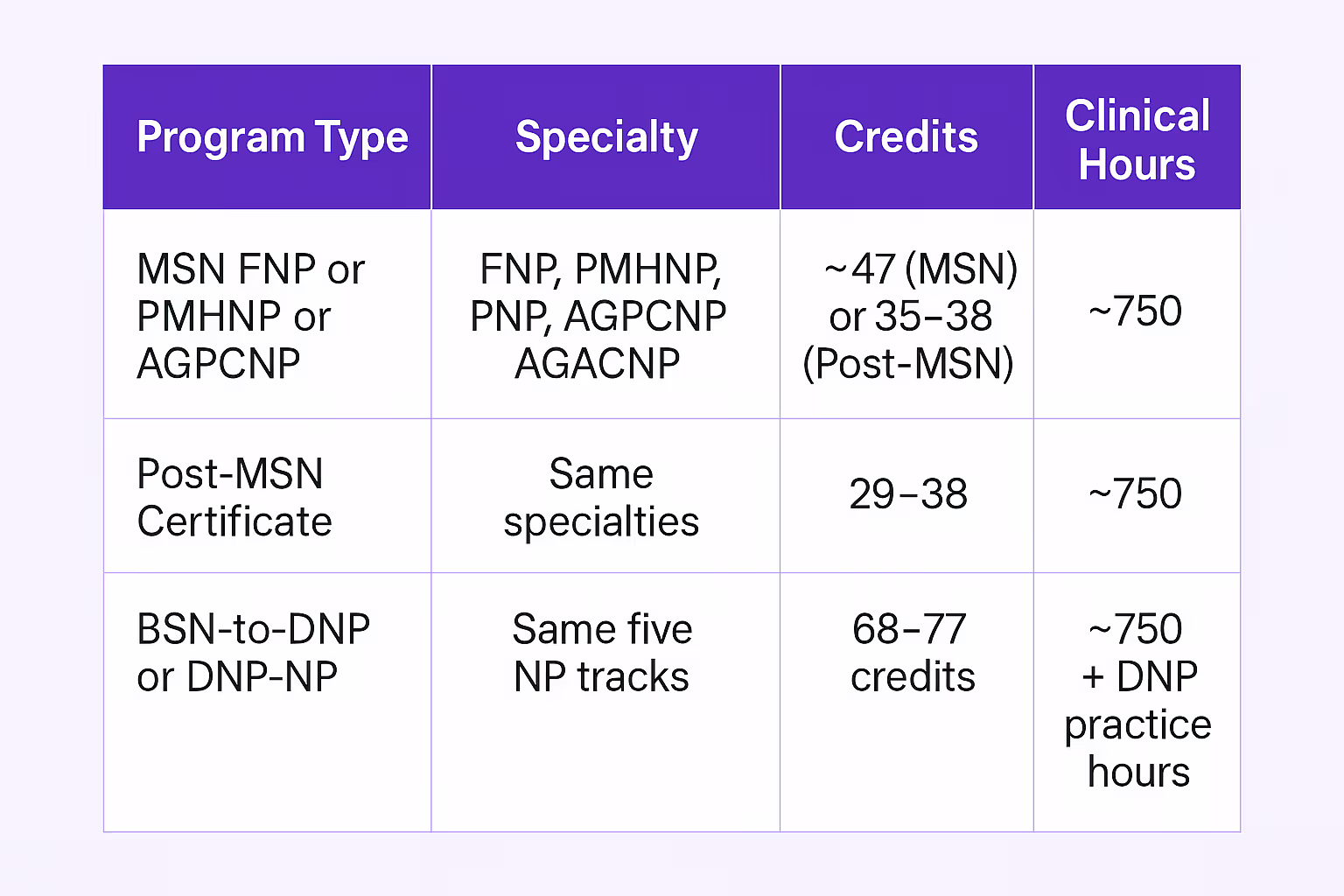
Degree pathways include MSN, Doctor of Nursing Practice, and a specialized post master's certificate designed for nurses who already hold an MSN and want to expand their expertise in a new specialty.
Degree Pathways Offered
Maryville offers each specialization through three program options, depending on your background:
- MSN (Master of Science in Nursing) – For registered nurses with a BSN degree, typically 41–50 credit hours (47 credit hours for most tracks; 50 credit hours for PMHNP). Tuition is often calculated per credit hour, allowing students to estimate total program costs based on their chosen track.
- Post‑Master’s Nurse Practitioner Certificate – This post master's nurse practitioner certificate is designed for nurses who already hold an MSN and are seeking additional NP credentials; ranges from 29 to 38 credit hours based on specialization. Tuition is also calculated per credit hour.
- BSN-to-DNP or DNP-NP – A full Doctor of Nursing Practice program, combining NP specialization with additional coursework in organizational systems leadership, clinical scholarship, and evidence based practice (68–77 credit hours total depending on track). Tuition is determined per credit hour.
Applicants to the BSN-to-DNP and post-master’s nurse practitioner programs must meet a minimum cumulative GPA requirement as part of the admission criteria.
Across all routes, students benefit from flexible multiple start dates throughout the year (January, March, May, July, August, October) and 100% online coursework, helping working clinicians, registered nurses, LPN applicants, and others, balance career, education, and personal life with fewer barriers
Clinical Hours and Structure
Across all five NP tracks, Maryville requires approximately 750 clinical hours to meet national certification and Missouri State Board standards. This aligns with current NTF (National Task Force) expectations for nurse practitioner education.
- MSN and Post-MSN Certificate programs integrate clinical experiences within core courses (e.g. Advanced Health Assessment, Adult-Gerontology Health Care I & II, Pediatric/Family Health Care, Psychopharmacology, Mental Health Assessment)
- BSN-to-DNP and DNP-NP options include the same clinical components plus additional DNP-level practicum hours for a total of around 1,000 hours, especially focused on clinical scholarship, systems leadership, and health care policy development.
These programs aim to prepare advanced practice nurses to effectively treat patients, implement evidence based practice, and lead within the health care environment across diverse care settings.
No matter which path you choose, those clinical hours don’t schedule themselves. Once you’ve locked in your NP track and know how many hours you’ll need, it’s time to get strategic about when and how to start your search.
Because while Maryville gives you the flexibility of online learning, they also expect you to hit those in-person clinical benchmarks without delay. Up next: how early you should begin looking for a site, and why your timeline might matter more than you think.
Maryville University Clinical Rotations: When to Start Searching for a Site
Maryville may offer flexibility but there is nothing flexible about clinical hours compliance. If you delay your site search, you risk missing deadlines, delaying entry into advanced practice nurse certification, and disrupting your progression through required courses.
So when should you start?
Once you’re admitted, whether you’re pursuing family nurse practitioner, psychiatric mental health nurse, adult gerontology acute care, or pediatric nurse practitioner tracks, start building a list of potential clinical sites.
These could be primary care settings, mental health clinics, PICU wings, or adult-gerontology clinics. Remember all five concentrations contain 750 clinical hours.
Also, three to four months before your clinical rotation begins is the bare minimum. Clinical sites usually require documentation: immunization verification, HIPAA training, EMR system access, and sometimes even orientation modules.
Meanwhile, Maryville needs enough time to verify your preceptor’s credentials in alignment with the Missouri State Board, process the affiliation agreement, and cross-check that everything matches the nursing program guidelines.
Start even earlier if:
- You live in a rural or saturated urban area with limited preceptor availability
- You work shift schedules and need flexible start dates or evenings/weekends
- You’re in high-demand tracks like psychiatric nursing, pediatric primary care, or acute care
- You plan rotations within hospital systems or academic medical centers—they often move slowly through their HR onboarding
What happens if you don’t? Delays. Missed rotations. Missed career opportunities. Students have shared that waiting too long has resulted in extended time to graduate, extra terms, or delayed DNP program progression, not because of failure, but because approval paperwork lagged. And remember: these clinical hours are required for your master of science degree in nursing and for national certification exams.
Starting early gives you the advantage of more preceptor options, the ability to follow up without panic, and time to pivot if site plans fall through. Maryville won’t force you to relocate or attend campus visits, but they do expect you to meet your admission requirements and submit everything in a timely manner.
Next up: how to draft a standout message when you reach out to clinical preceptors, so they see you as professional, prepared, and ready to make an impact.
What to Include When Contacting Potential Preceptors On Your Own
Cold-emailing a stranger to ask them to supervise you for 700+ hours of clinical training isn't exactly comfortable. But if you’re pursuing advanced nursing through Maryville’s nursing program, learning how to approach preceptors professionally is just part of the game.
Whether you're seeking hours in primary care settings, pediatric primary care, or psychiatric mental health, a strong first message can make the difference between getting ignored, or getting a yes.
1. A Clear, Concise Subject Line
Make it easy for them to understand your intent right away. Keep it professional.
- “Maryville NP Student Seeking Clinical Preceptor (Spring Term)”
- “Request for Clinical Rotation Placement – Family Nurse Practitioner Student”
2. A Brief, Personalized Introduction
Introduce yourself and clarify that you’re a Maryville University student. Mention your nurse practitioner program, your specialty track (FNP, PMHNP, AGACNP, etc.), and your current progress in the program.
I’m currently enrolled in the online master of science in nursing program at Maryville University’s Catherine McAuley School of Nursing, pursuing my family nurse practitioner certification. I’ve completed my core science courses and am preparing for my first clinical rotation.
3. Your Clinical Rotation Details
Let them know the number of clinical hours, dates, and specialty required. This shows professionalism and preparedness.
I’m required to complete 750 clinical hours in total. For this rotation, I’m seeking approximately [X] hours in a primary care or mental health setting between [start date] and [end date]. I can be flexible with days/times and am happy to use my own transportation.
4. Mention Maryville’s Support
Remind them that this isn’t all on them, Maryville handles the paperwork and onboarding through official channels.
Maryville facilitates the affiliation agreement, verifies credentials with the Missouri State Board, and ensures all required documentation is in place. You would not be expected to complete any of this alone.
5. Attach Your Resume (CV)
Include your curriculum vitae to show your qualifications and relevant nursing experience. This is especially important for registered nurses, LPN applicants, or students who’ve already completed relevant clinical scholarship or health care policy courses.
6. End with Gratitude and a Clear Follow-Up
Keep the tone respectful, and let them know you’ll follow up.
Thank you for considering this request. I would be honored to complete my clinical hours under your supervision. Please let me know if you’d be open to discussing further—I’ll follow up later this week unless I hear from you sooner.
Use this structure when reaching out via email or phone, especially if you’re applying for a pediatric nurse practitioner, psychiatric nursing, or adult gerontology acute care rotation. These are competitive, and standing out from the start can make all the difference.
That said, strong emails and polished CVs don’t guarantee success. Many nurse practitioner students at Maryville University still face unexpected roadblocks, from preceptors ghosting them to last-minute site cancellations.
The clinical placement process leads to navigating a system that’s often under-resourced and inconsistent. Let’s break down the most common challenges students run into, and how to avoid getting stuck.
Challenges You May Face During Your Clinical Rotations Search
Let’s not sugarcoat it, finding a clinical site as an NP students can be one of the toughest parts of the journey. While the university’s online education model gives you the freedom to learn from anywhere, it also introduces a whole new set of challenges:
- No responses to outreach: You’ve emailed 30 clinics, followed up twice, and still... crickets. You’re not alone. Many registered nurses transitioning into advanced practice nurse roles underestimate how saturated the market is with other students doing the exact same thing.
- Avoid it by starting early (3–4 months ahead), personalizing every email, and attaching a clear, professional CV. Mention you’re a Maryville student and highlight the university’s support in managing the paperwork.
- Preceptor “maybes” that turn into no-shows: Some providers agree verbally but never fill out paperwork—or worse, back out last minute. That’s why starting early and following up professionally is so key.
- Protect yourself by getting written confirmation, setting clear expectations from day one, and staying in touch every step of the way. Always have a Plan B in case someone bails.
- Clinical site doesn’t meet Maryville’s standards: Not every practice qualifies. Some might lack the right patient population, provider license, or affiliation capabilities. Maryville checks for compliance with both Collegiate Nursing Education standards and Missouri State Board rules—so don’t assume “anywhere with patients” will work.
- Before you invest time, check with the university’s clinical team to confirm the site and preceptor are eligible. Keep a copy of their preceptor checklist handy while you search.
- Delays with paperwork or affiliation agreements: Even when you secure a “yes,” it can take weeks for the site to be approved if the required courses, licensure documents, or agreements aren’t submitted correctly.
- Stay organized. Create a shared folder for all documentation, track every email, and keep communication lines open between you, your site, and Maryville’s clinical team.
- Time constraints: You’re working full-time, juggling your BSN degree coursework, maybe raising a family—and suddenly coordinating a multi-step legal and academic process feels impossible.
- Give yourself grace, but don’t procrastinate. Block out dedicated time for outreach each week—and if you feel overwhelmed, that’s what services like NPHub are for.
These are systemic hurdles that hit students across all five NP tracks, the good news is that these problems are solvable, with preparation, persistence, and sometimes a little extra help. If you’re gearing up to find a clinical site, these five tips will help you stay focused, avoid delays, and get across the finish line with your clinical hours (and sanity) intact.
5 Tips to Survive the Clinical Placement Search
The clinical placement process is a test of your time management, communication skills, and ability to think like an advanced practice nurse before you even earn the title.
If you want to avoid last-minute panic, missed deadlines, or wasted outreach, keep these five strategies in your toolkit.
1. Treat Your Search Like a Class (With Deadlines and All)
Clinical placement isn’t “extra.” It’s as crucial as any of your science in nursing or health promotion courses. Block out time for it just like you would for coursework. If your semester starts in August, you should be searching seriously by May. And don’t wait for reminders, mark important dates (like site approval deadlines) the same way you’d track assignments in your core courses.
2. Think Beyond the Obvious: Expand Your Network
Most students email the same handful of major clinics in their city, which means those inboxes are flooded. You’ll have better odds by thinking creatively, consider private practices, urgent care centers, school-based health programs, or specialty clinics that still meet Maryville’s standards for nursing practice experience. Tap into your personal network, past coworkers, or even your BSN degree classmates to find warm leads.
3. Know Your Track, Know Your Audience
If you're in the mental health nurse practitioner, adult gerontology primary care, or pediatric nurse practitioner track, don’t just search “preceptor near me.” Know what kind of patient care population you’re expected to work with. Your outreach should reflect that. Be specific in what you’re requesting so preceptors know you understand the role and aren’t just looking for a warm body to check a box.
4. Make It Easy for the Preceptor to Say Yes
Preceptors are doing you a favor. Make the process easy for them by showing up organized and informed. Provide a short intro about your nursing program, include a polished curriculum vitae, and be ready to answer questions about compliance, required courses, and what support Maryville provides. The more work you take off their plate, the faster they’ll say yes.
5. Follow Up, Then Follow Up Again
One email isn’t enough. If you haven’t heard back in a week, follow up with a short reminder. Still nothing? Try a phone call or LinkedIn. Some students give up after one “no” when in reality, most placements take multiple contacts before securing a commitment. Keep your tone professional, but don’t let silence stop your progress.
Mastering the clinical placement process is part of what prepares you for life as a nurse practitioner. It’s frustrating, no doubt, but it’s also your first experience leading your own professional journey.
Treat it with the same determination you brought to your online master, science courses, or clinical scholarship, because how you manage this phase can directly affect your ability to graduate, certify, and eventually affect patient outcomes.
Of course, even with the best planning, the strongest CV, and a color-coded spreadsheet that would make your enrollment advisor weep with pride—things can still fall apart. Preceptors back out. Clinics change policies. Deadlines sneak up faster than you'd like.
And that’s when you might need more than just good strategy—you need backup.
If you hit a wall, here’s what you should know about using a clinical placement service like NPHub—because sometimes the smartest move is knowing when to call in reinforcements.
Using a Clinical Placement Service Like NPHub
So you’ve tried the emails. Followed up. Followed up again. And despite it all, you’re still staring at an empty calendar and a looming deadline, clinical placement services like NPHub come in to add an aditional set of tools and resources to help thousands of NP students.
NPHub is a dedicated preceptor placement service that helps nurse practitioner students secure vetted, approved clinical preceptors.
Our network includes thousands of family nurse practitioners, psychiatric mental health, adult gerontology primary care, pediatric primary care, and acute care preceptors, each one licensed, experienced, and familiar with NP program expectations.
Here’s what NPHub helps you with:
- Fast access to approved preceptors: No more cold emails. They connect you with professionals who are actively accepting students.
- Guaranteed placement: If we can’t find a match that fits your specialty, timeline, and location, you get your money back. It’s that simple.
- Custom matching by specialty: Whether you need hours in psychiatric nursing, pediatric population care, or adult gerontology acute care, we filter for exactly what you need.
- Pre-vetted sites that match requirements: No more second-guessing if your clinic will be accepted. The sites are already familiar with the process, and often with Maryville students.
Maryville University supports nurse practitioner students throughout the clinical placement process to ensure placements meet academic and compliance standards and ss students move through this process, some choose to explore additional ways to stay organized and informed about their options.
While NPHub is not affiliated with Maryville University, some Maryville NP students choose to use NPHub alongside university resources to explore vetted preceptor options that align with program requirements. All clinical sites and preceptors are still reviewed and approved through Maryville’s established processes.
If the clinical search is what’s standing between you and that next step, let us help you find a clinical site that matches your specialty, your schedule, and your school’s standards so you can focus on becoming the NP healthcare needs. Start your preceptor search now with NPHub.
Frequently Asked Questions About Maryville University Clinical Rotations
1. How many clinical hours are required for Maryville’s NP programs?
The required number of clinical hours varies by track. All clinical hours must be completed in person, even if you’re enrolled in the online MSN or online post-master’s certificate track.
2. What nurse practitioner specialties are available at Maryville University?
Maryville offers multiple NP specialties to fit different career goals. These include Family Nurse Practitioner, Psychiatric Mental Health Nurse Practitioner, Adult-Gerontology Primary Care, Adult-Gerontology Acute Care, and Pediatric Primary Care Nurse Practitioner tracks. Each pathway is aligned with current health care demands and prepares students to treat patients across varied primary care settings.
3. Why do so many NP students use NPHub for clinical placements?
Because the clinical search can be one of the most stressful parts of any nursing program, especially in competitive specialties like pediatric nurse practitioner or psychiatric mental health nurse practitioner. NPHub connects students with preceptors who are already vetted and familiar with different universities and programs requirements, cutting down the time, stress, and uncertainty of the placement process.
4. What kinds of clinical settings are approved for NP students?
NP programs require that your clinical site aligns with your NP track and offers sufficient patient volume and diversity to meet learning objectives. Approved settings may include primary care clinics, community health centers, psychiatric facilities, urgent care, or pediatric offices. Your preceptor must be practicing in the setting and specialty related to your track.
5. Does NPHub work with Maryville University NP students?
No. NPHub does not have a direct partnership with Maryvile University. Instead, Maryvile University NP students come to us for preceptor support and we then have our clinical placement experts find a preceptor that meets all the school's academic and licensure requirements.
6. How much does NPHub cost for NPstudents—and is it worth it?
Pricing varies by specialty, urgency, and location. Many NP students consider it a worthwhile investment to stay on track with graduation and avoid time-consuming searches. NPHub offers access to vetted, credentialed preceptors who meet Maryville’s clinical requirements, saving students time and reducing placement stress.
7. What qualifications must my preceptor have to be accepted?
Usually, your preceptor must hold an active license in the field relevant to your specialty—typically an NP, MD, DO, or PA with at least one year of clinical experience. They should also have experience in a setting that aligns with your track. Make sure to check with Maryville to get detailed guidelines on preceptor eligibility if your are doing the search on your own.
Key Definitions
- Clinical Rotation
A supervised, real-world training experience where NP students apply classroom knowledge in primary care, psychiatric mental health, pediatrics, or acute care settings to build hands-on skills in patient care. - Clinical Site
A healthcare facility—such as a clinic, hospital, or private practice—where students complete required clinical hours under the supervision of a licensed preceptor. - Preceptor
A licensed healthcare provider (NP, MD, DO, or PA) who supervises and evaluates NP students during clinical rotations. Must meet Maryville University’s credential and experience requirements. - Student-Led Placement
A placement model where the student is responsible for locating a clinical site and qualified preceptor, then submitting the information to the university for approval. - Affiliation Agreement
A formal contract between Maryville University and the clinical site that legally allows the student to complete rotations at that location. - Collegiate Nursing Education (CCNE)
The accrediting body for Maryville’s nursing program, ensuring that academic and clinical standards meet national expectations for advanced nursing education. - Advanced Practice Nurse (APRN)
A registered nurse who has earned at least a master of science in nursing and is licensed to diagnose, treat, and manage patient conditions—includes NPs, CRNAs, CNMs, and CNSs. - Online MSN Program
Maryville’s Master of Science in Nursing program offered via online education, allowing students to complete core courses remotely while fulfilling clinical hours locally.
About the author
- NPHub Staff
At NPHub, we live and breathe clinical placements. Our team is made up of nurse practitioners, clinical coordinators, placement advisors, and former students who’ve been through the process themselves. We work directly with NP students across the country to help them secure high-quality preceptorships and graduate on time with confidence. - Last updated
Dec 26, 2025 - Fact-checked by
NPHub Clinical Placement Experts & Student Support Team - Sources and references
- https://nursing.maryville.edu/family-nurse-practitioner-online-program
- https://www.nphub.com/testimonials
- https://www.npschools.com/profiles/maryville-university
- https://catalog.maryville.edu/preview_program.php?catoid=24&poid=4447
- https://www.nphub.com/
- https://nursfpxwriters.com/best-fnp-online-programs-with-guaranteed-clinical-placement-in-2026/
Find a preceptor who cares with NPHub
Book a rotation.webp)

.webp)

%20(3)%20(2).svg)
.webp)