
.png)



.webp)
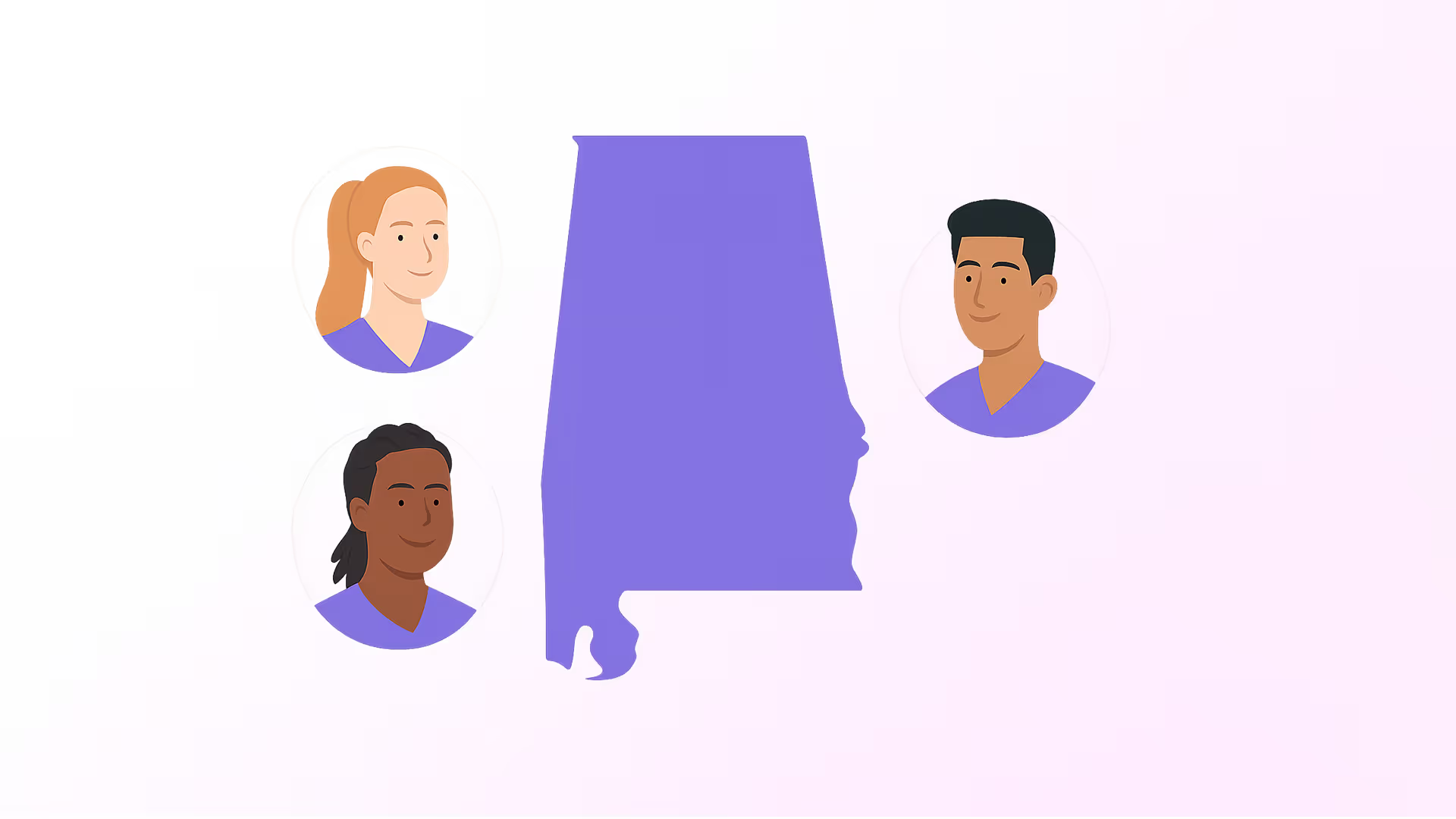
To find an NP preceptor in Mobile, Alabama, most students combine three routes: support from their school (the University of South Alabama College of Nursing expects students to secure their own preceptor, with help from its Office of Clinical Affairs), direct outreach to clinics and health systems such as USA Health, Mobile Infirmary, and Springhill Medical Center, and a preceptor matching service such as NPHub. Most large Mobile hospitals require an active affiliation agreement with your school before you can start.
TL;DR: Key Takeaways for Mobile NP Students
- Mobile County employs nearly 9% of Alabama's RN workforce, and Alabama ranks 45th of 50 states for primary care provider access, with about 241 providers per 100,000 people compared with 285 nationally.
- The University of South Alabama College of Nursing (USA CON) expects NP students to secure their own preceptor and approved clinical site, with guidance from its Office of Clinical Affairs.
- Mobile's major health systems, including USA Health, Mobile Infirmary, and Springhill Medical Center, generally require an affiliation agreement with your school, and USA Health often prioritizes USA CON students.
- Effective cold outreach frames the request as low effort for the preceptor, is personalized, keeps the first email short, and follows up after 7 to 10 days, no more than twice.
- NPHub matches Mobile NP students with vetted preceptors, handles paperwork and affiliation agreements, and backs every rotation with its Perfect Preceptor Promise.
Mobile has major health systems and one of Alabama's largest NP programs, but NP students here still compete for a limited number of preceptors and approved clinical sites. This guide covers why Mobile placements are competitive, which local institutions can help, five outreach strategies for finding a preceptor on your own, and how NPHub can match you with one. If you'd rather start by browsing available preceptors, create your free account.
Mobile NP Clinical Rotations: Opportunities and Challenges
Mobile, Alabama is known for its strong healthcare systems, respected universities, and growing demand for nurse practitioner students.
For many in an NP program, this city looks like the perfect place to gain clinical experience in primary care, mental health, family practice, women’s health, or even urgent care. With programs like USA CON (University of South Alabama College of Nursing) producing graduates ready for advanced nursing practice, Mobile should be full of opportunities.
But the reality for NP students is very different. While schools may cover support courses and classroom learning, finding an NP preceptor at an approved clinical site can feel almost impossible.
With many NP students searching for appropriate sites and too few qualified preceptors available, the competition is overwhelming. Students often spend months emailing potential preceptors, calling clinical sites, and trying to meet clinical requirements—all while working, studying, and taking care of family.
And it isn’t just about meeting a school’s admission requirements or graduating on time. A fulfilling clinical experience is essential to step into your future role as an advanced practice registered nurse. Without the right preceptor in a geographically accessible area, students risk delays, added tuition, and the stress of starting another semester without an approved placement.
We know how discouraging it feels to face unanswered emails or months of rejection. At NPHub, we’ve created a personalized matching process that connects you with qualified preceptors in Mobile and nearby areas so you can stop stressing about paperwork and focus on becoming the provider you’re meant to be. Create your free account today and see how we can help you find the perfect preceptor and complete your clinical requirements with confidence.
In this blog, we’ll break down why securing a clinical placement in Mobile is so challenging, what options exist for nursing students, and how services like NPHub can support you in moving past the frustration and toward graduation.
Why Is It Hard to Find an NP Preceptor in Mobile, Alabama?
Finding an NP preceptor in Mobile is hard because Alabama ranks 45th of 50 states for primary care provider access, so the providers who could precept are already stretched thin, and Mobile's largest hospitals reserve many rotations for students from affiliated schools.
Across Alabama, advanced practice registered nurses (APRNs) make up 12.45% of the nursing workforce, with the vast majority being Certified Registered Nurse Practitioners (CRNPs). That means thousands of students are moving through NP programs and searching for qualified preceptors at the same time.
In Mobile County alone, nearly 9% of Alabama’s RN workforce is employed, making it one of the most competitive clinical settings in the state for nurse practitioner students.
How Does Alabama's Primary Care Shortage Affect NP Students in Mobile?
At first glance, that might sound encouraging, Mobile has hospitals, family practice clinics, urgent care sites, and approved clinical sites that are essential to nursing practice. But here’s the challenge: Alabama ranks 45th out of 50 states for primary care provider access, with only about 241 providers per 100,000 people.
That’s significantly lower than the national average of 285 per 100,000, meaning Alabama lags nearly 15% behind the rest of the country.
This shortage is systemic, it affects doctors, physician assistants, and NP preceptors alike. The result? NP students in Mobile are chasing limited clinical sites in a city where the healthcare workforce is already stretched thin. Add to this the reality that 32% of Alabama’s nursing workforce plans to retire in the next 10 years, and the shortage becomes even more pressing.
For NP students in Mobile, this means:
- There is significant unmet need for primary care providers.
- Mobile mirrors this statewide shortage, creating one of the toughest placement markets in Alabama.
- While demand for NP preceptors is rising, the pool of appropriate sites is limited, leaving students with fewer options and higher competition.
Which Mobile Institutions Help NP Students Find Preceptors?
In Mobile, the University of South Alabama College of Nursing (USA CON) supports its NP students with faculty guidance and its Office of Clinical Affairs, while health systems like USA Health, Mobile Infirmary, and Springhill Medical Center host rotations for students from affiliated schools. Neither guarantees a placement, so how much help you get depends on where you're enrolled.
Does USA CON Find Clinical Placements for NP Students?
No. The University of South Alabama College of Nursing (USA CON), one of the largest NP educators in Alabama, expects NP students to secure their own preceptor and approved clinical site, with support from faculty and its Office of Clinical Affairs.
NP students at USA CON take a hybrid approach to clinical training. The university provides faculty support, guidance through the Office of Clinical Affairs, and administrative resources, but the primary responsibility falls on the student to secure their own NP preceptor and approved clinical site.
Because USA CON’s students are spread across the country, and even internationally, the program allows them to complete clinical requirements in geographically accessible areas, not just in Mobile. Students are encouraged to leverage professional networks to find appropriate sites and potential preceptors that align with their schedules, career goals, and personal commitments.
USA CON's system empowers NP students with control over their clinical setting and specialty fit, but it also adds pressure. Many USA CON students find themselves juggling coursework, family, and jobs while struggling to secure the right preceptor on time.
Can NP Students Do Clinical Rotations at USA Health, Mobile Infirmary, or Springhill Medical Center?
Yes, if your school has an active affiliation agreement with the hospital. USA Health, Mobile Infirmary, and Springhill Medical Center are Mobile's major hospital systems and serve as training grounds for advanced practice registered nurses across the region.
However, like many large hospital systems, these sites usually reserve clinical experiences for students enrolled at affiliated schools. For example, rotations at USA Health are often prioritized for USA CON students, while Mobile Infirmary and Springhill typically require active affiliation agreements with nursing programs. Students are often expected to identify their own preceptors within these systems before the hospital can provide onboarding, credentialing, or site access.
In short, while Mobile’s hospitals represent rich opportunities for clinical training, they aren’t open to every student and the lack of guaranteed access means many NP students are left searching beyond their university’s network.
How Do You Find an NP Preceptor in Mobile on Your Own?
To find a Mobile preceptor on your own, frame your request as low effort for the preceptor, send emails when they're likely to be read, personalize each message, keep the first contact short, and follow up professionally. The five strategies below cover each step.
1. Redefine the Ask: Position Yourself as a Low-Effort Win
The way you frame your request can make the difference between silence and success. Many students unknowingly position themselves as a burden: “I need hours for my NP program—can you help me?” To a provider already juggling a full clinic load, this reads as “extra work.”
Instead, your strategy is to shift the burden off the preceptor. Make it clear that your university manages the bulk of the administrative process: paperwork, evaluations, compliance. Emphasize that all you need is clinical supervision. This reframing instantly changes the ask from a heavy lift to a light one.
In practice, your message might sound like: “My program provides all documentation and handles compliance through the Office of Clinical Affairs. Your role would be focused purely on clinical teaching and direct supervision—no additional paperwork required.” This reassures potential preceptors that saying yes won’t derail their schedule, while reminding them that you’ll be an asset, not an administrative headache.
2. Leverage Timing as a Competitive Edge
In Mobile’s busy healthcare market, timing can be as important as content. Sending your message when a provider’s inbox is already overflowing all but guarantees you’ll be overlooked. The strategy here is to send outreach at times when your email is most likely to be seen—and read.
The sweet spots:
- Early mornings (6–7 a.m.), before the clinic rush begins.
- Evenings (after 6 p.m.), when providers catch up on messages.
- Midweek (Tuesday–Thursday), avoiding the chaos of Mondays and the fatigue of Fridays.
Pairing a concise, well-crafted email with these windows significantly increases your odds of standing out. In a city where many NP students are sending the same requests, your timing could be the deciding factor that gets your message opened.
3. Personalize with Precision: Show You Chose Them
One of the strongest ways to capture attention is to demonstrate that your request isn’t random. Instead of mass-emailing every clinical site in Mobile, personalize each message to highlight why you want to learn from that provider specifically.
For example, if a clinic focuses on family practice, mention your interest in developing primary care skills for patients across the lifespan. If the site specializes in women’s health or mental health, explain how this aligns with your career goals or specialty track.
Personalization proves you aren’t just looking for any rotation—you’re seeking the right preceptor who can help you grow in your future role as a nurse practitioner. In a saturated placement market, this approach positions you as intentional, professional, and serious about your education.
4. Simplify the First Contact: Remove Barriers to Yes
Your first message should open a door, not overwhelm the recipient. Attaching multiple documents—immunization records, liability insurance, preceptor packets—creates friction that often leads to your email being ignored or flagged as too much work.
The smarter strategy? Keep your initial outreach clean and simple. Introduce yourself, state your program and expected graduation date, clarify the type of clinical rotation you need (e.g., urgent care, pediatrics, women’s health), and briefly share your availability. Add one personalized line about why you admire their practice.
By keeping the ask small, you make it easy for a busy provider to say yes—or at least to keep the conversation going. Once interest is confirmed, you can follow up with the necessary attachments. Think of it as reducing friction at the starting line so your request doesn’t get stuck before it’s even read.
5. Master the Follow-Up: Persistence with Professionalism
In Mobile’s competitive market, one email is rarely enough. Providers are balancing patient care, administrative tasks, and teaching responsibilities. Silence after your first message often doesn’t mean rejection, it just means they’re busy.
Your strategy here is professional persistence. Wait 7–10 days and then follow up with a short, respectful message that reaffirms your interest. Something like: “I wanted to follow up on my previous message about completing a clinical rotation in family practice. I’d be truly grateful for the opportunity to learn from your team.”
Two follow-ups are usually the maximum—you want to be persistent without becoming pushy. If there’s still no response, it’s time to move on and redirect your efforts. This balance of persistence and professionalism shows that you respect the preceptor’s time while demonstrating your seriousness about securing a fulfilling clinical experience.
Cold outreach is never easy, especially when you’re trying to balance coursework, support courses, and family life. But by applying these five strategies you can turn a daunting process into one that builds confidence, credibility, and hopefully the connection with the perfect preceptor in Mobile.
How Does NPHub Help NP Students Find Preceptors in Mobile?
NPHub is a clinical placement marketplace that connects NP students with vetted preceptors who are actively accepting students, including in Mobile and nearby areas, then handles the affiliation agreements and rotation paperwork. NPHub has placed 9,249 students across 14,251 rotations in 45 states. NPHub accepts 2,435 of 18,314 preceptor applicants, a 13.3% acceptance rate, and students rate NPHub 4.9/5 on Trustpilot across 1,609+ reviews.
If a preceptor in your specialty is available in NPHub's network, you can find and request them in under 30 minutes through the preceptor booking process. The preceptor has up to 7 business days to accept, and NPHub's coordinators complete the rotation paperwork in up to 14 business days, often faster.
What NPHub Offers Mobile NP Students:
- Guaranteed Clinical Placement – Skip the waiting lists and unanswered emails. With NPHub, you’re matched with the right preceptor who’s already approved and ready to teach.
- Full Paperwork + Compliance Support – From university forms to preceptor packets, we handle the admin so you can focus on learning instead of logistics.
- Local Options with Flexibility – Choose from primary care, mental health, women’s health, urgent care, family practice, pediatrics, and more. Most placements are in a geographically accessible area near Mobile, with additional options if you’re open to commuting.
- Personalized Matching Process – We don’t just find you any site—we work to connect you with the perfect preceptor who fits your specialty focus, schedule, and career goals.
Create your free NPHub account and discover how we can help you secure an approved placement in Mobile, Alabama, so you can move forward in your program with confidence.
FAQ: Finding NP Preceptors in Mobile, Alabama
1. How do I find NP preceptors in Mobile, Alabama?
Most NP students start by reaching out to clinical sites such as family practice, urgent care, or mental health clinics. If you’re at USA CON or another local program, you may get some guidance but not a guaranteed placement. Many students also use preceptor-matching services like NPHub to connect with qualified preceptors faster.
2. Do universities in Mobile, like USA CON, guarantee clinical placements?
No, USA CON provides support and resources but ultimately expects students to secure their own clinical placement. The school may assist during your first semester through the Office of Clinical Affairs, but students must show proof of a preceptor to gain full admission into the program.
3. What should I do if my NP program doesn’t help me find a clinical site?
If your program doesn’t guarantee placement, you’ll need to use strategies like cold outreach to potential preceptors in your area. Many students also turn to NPHub, which offers a personalized matching process to connect you with approved clinical sites in Mobile and nearby cities.
4. How does using NPHub compare to finding a preceptor on my own?
Cold outreach can take months with no guarantees, especially in a saturated market like Mobile. NPHub saves time by matching you with experienced NP preceptors who are already open to students, while also handling paperwork and compliance so you can focus on your clinical experience.
5. What types of clinical sites are available in Mobile for NP students?
Mobile, Alabama offers diverse placement options, including primary care clinics, urgent care centers, pediatrics, family practice, women’s health, and mental health settings. Availability depends on school affiliations and preceptor capacity, which is why students often need flexibility in choosing their site.
6. How much does it cost to use a preceptor-matching service like NPHub?
Costs vary depending on your specialty and placement location, but most students find the value worth it compared to delaying graduation or paying for extra semesters. With NPHub, you get access to a qualified preceptor, compliance support, and an approved placement you can trust.
7. When should I start searching for an NP clinical placement in Mobile?
It’s best to start 3–6 months in advance, since many preceptors commit to students early and clinical sites may have long onboarding timelines. Starting early reduces stress and gives you time to find the right preceptor without risking delays in your program.
8. Are Mobile preceptors open to out-of-state NP students?
Yes, but most large health systems and hospitals require your school to have an active affiliation agreement. If you’re from outside Alabama, it’s best to confirm with your program and use services like NPHub, which can help connect you to preceptors in geographically accessible areas.
9. What documentation do I need before starting a clinical rotation in Mobile?
Most clinical sites will require proof of your RN license, immunization records, liability insurance, and Basic Life Support (BLS) certification. Your school may also provide a preceptor packet with evaluation forms and clinical requirements that must be signed by the site.
10. What are the biggest misconceptions about finding NP preceptors in Alabama?
One common misconception is that your school will automatically find you a preceptor—many do not. Another is believing that sending enough emails guarantees a site, when in reality the shortage of qualified preceptors makes this unreliable. That’s why more students are turning to preceptor-matching services to secure a fulfilling clinical experience on time.
Key Definitions for NP Students in Mobile, Alabama
- Clinical Placement / Clinical Rotation
A supervised training experience where NP students complete hands-on hours in an approved clinical site under the guidance of a qualified preceptor. Required for graduation. - Preceptor
An experienced nurse practitioner, physician, or advanced provider who supervises and trains NP students in a clinical setting while fulfilling their program’s requirements. - Qualified Preceptor
A licensed provider who meets your school’s criteria for teaching, often with specific years of experience, specialty alignment, and active licensure. - Approved Clinical Site
A healthcare location (clinic, hospital, urgent care, family practice, etc.) where NP students can complete rotations once the site is formally approved by the school. - Admission Requirements
Criteria students must meet for full enrollment in an NP program, often including proof of a secured clinical placement. - Geographically Accessible Area
The surrounding region where students can reasonably commute for their clinical experience, especially important for balancing work, school, and family responsibilities. - Fulfilled Clinical Experience
A completed rotation that provides not only the required hours but also meaningful patient care exposure in primary care, mental health, pediatrics, women’s health, or family practice. - Preceptor Packet
A set of documents provided by the school outlining evaluation tools, rotation requirements, and expectations for the preceptor and student.
Article details
- Last updated
June 27, 2026 - Fact-checked by
NPHub Clinical Placement Experts & Student Support Team - Sources and references
- https://www.southalabama.edu/colleges/con/
- https://www.nphub.com/how-it-works
- https://www.nphub.com/perfect-preceptor-promise
- https://www.abn.alabama.gov/wp-content/uploads/2023/09/2020-RN-Renewal-Demographic-Data.pdf
- https://www.americashealthrankings.org/explore/measures/PCP_NPPES/AL
- https://www.nphub.com/blog/the-hefty-cost-of-delaying-np-graduation
- https://www.usahealthsystem.com
- https://www.infirmaryhealth.org/documents/content/clincial_placement_guidelines_for_nursing_students.pdf
- https://springhillmedicalcenter.com/health-resources/resources-healthcare-instructors
Find a preceptor who cares with NPHub
Book a rotation.webp)
.jpeg)

.webp)
.jpeg)

%20(3)%20(2).svg)
.webp)