
.png)




.webp)
State NP clinical requirements define what nurse practitioners can legally do in each state, including diagnosing conditions, interpreting diagnostic tests, prescribing medications, and delivering patient care. These requirements—based on state scope of practice laws—determine whether an NP must work under physician supervision, follow a collaborative agreement, or can practice independently with full authority.
TL;DR: What You Need to Know About NP Scope of Practice by State
- NP practice laws vary by state, determining whether you can work independently or need physician supervision.
- There are 3 authority levels: full (independent), reduced (collaborative agreement), and restricted (direct supervision).
- Licensure alone isn't enough—some states require extra supervised hours or transition periods before granting autonomy.
- Scope of practice affects your day-to-day: from prescribing meds to launching your own practice.
- Knowing your state's rules is essential for planning your career, choosing preceptors, and delivering care with confidence.
Understanding Nurse Practitioner Scope of Practice
“Nurse practitioner scope of practice” refers to the legal boundaries that define what nurse practitioners (NPs) can and cannot do clinically and it's far from one-size-fits-all.
While some NPs practice as independent practitioners, others are legally tethered to physician supervision or collaborative agreements based on their state's regulatory model.
At its core, scope of practice defines whether and how NPs can:
- Diagnose and treat patients across primary care, acute care, and mental health settings
- Interpret diagnostic tests like labs and imaging
- Prescribe medications, including controlled substances
- Manage chronic diseases and implement evidence-based treatment plans
- Deliver public health and preventive care independently or in collaboration
Scope of practice is established by state practice laws and enforced by each state board of nursing or medicine. These laws apply to all advanced practice registered nurses (APRNs), including those with population foci such as family (FNP), adult-gerontology (AGNP), or psychiatric mental health (PMHNP).
Because requirements vary by state, planning your clinical rotations requires more than just finding any preceptor, it requires securing one who meets your state’s supervision and licensure standards. That’s where NPHub comes in. Create a free NPHub account to find and secure preceptors who align with your state’s scope of practice and regulatory requirements.

And here's the real kicker: just because you're certified and licensed doesn't mean you'll get to use the full extent of your skills in every state.
NP Scope of Practice: Full vs Reduced vs Restricted Practice
Once you're licensed and certified, the next question is: what exactly are you allowed to do? That's where the concept of NP scope of practice comes into sharp focus.
In the U.S., nurse practitioners operate under one of three legally defined practice authority categories: full, reduced, or restricted. These categories dictate the degree of clinical autonomy you have, affecting everything from how you treat patients to whether you need physician involvement to order diagnostic tests or prescribe medications.
Full Practice Authority
Nurse practitioners in full practice authority states are allowed to:
- Diagnose and treat patients independently
- Interpret diagnostic tests
- Prescribe medications, including controlled substances
- Establish independent practices and follow their own practice guidelines
States with full practice authority recognize NPs as primary care providers who can deliver quality health care without physician supervision or a collaborative agreement. As of 2025, there are 27 such states, plus the District of Columbia.
These states allow NPs to practice to the full extent of their training and licensure immediately or after a short transitional period. Examples include New Hampshire, Rhode Island, North Dakota, Utah, and Washington.
Reduced Practice Authority
In states with reduced practice authority, NPs can still evaluate and manage patients but must maintain a collaborative agreement with a physician for at least one element of their practice.
Typical restrictions include:
- Limits on prescriptive authority (especially for controlled substances)
- Requirement for physician approval for certain diagnostic tests or treatment plans
- Mandated review of a percentage of patient charts through peer review systems
These states recognize NPs as key providers in health care, but legal barriers often prevent them from fully functioning as independent practitioners. The exact limitations vary significantly from state to state.
Restricted Practice Authority
In restricted practice authority states, NPs are required to practice under direct physician supervision for most, if not all, clinical tasks. This often includes:
- Direct oversight for prescribing medications
- Supervision while managing chronic diseases
- Physician sign-off on diagnostic testing
- Limits on practicing in solo or remote settings
Restricted states impose the most substantial practice barriers, frequently impacting patient access, particularly in underserved areas where physician shortages are most acute.
Now that you understand the key differences between full, reduced, and restricted NP practice authority, let's take a closer look at how this plays out across the country. The next section offers a state-by-state comparison, so you can see exactly where your skills and autonomy are fully recognized and where legal restrictions still apply.
NP Practice Authority by State: A Comparison Guide
While NP scope of practice definitions give us the big picture, the real-world impact happens at the state level.
Whether you're choosing where to apply, considering relocation, or just want to know where you can actually use your full skill set, this guide breaks it down clearly.
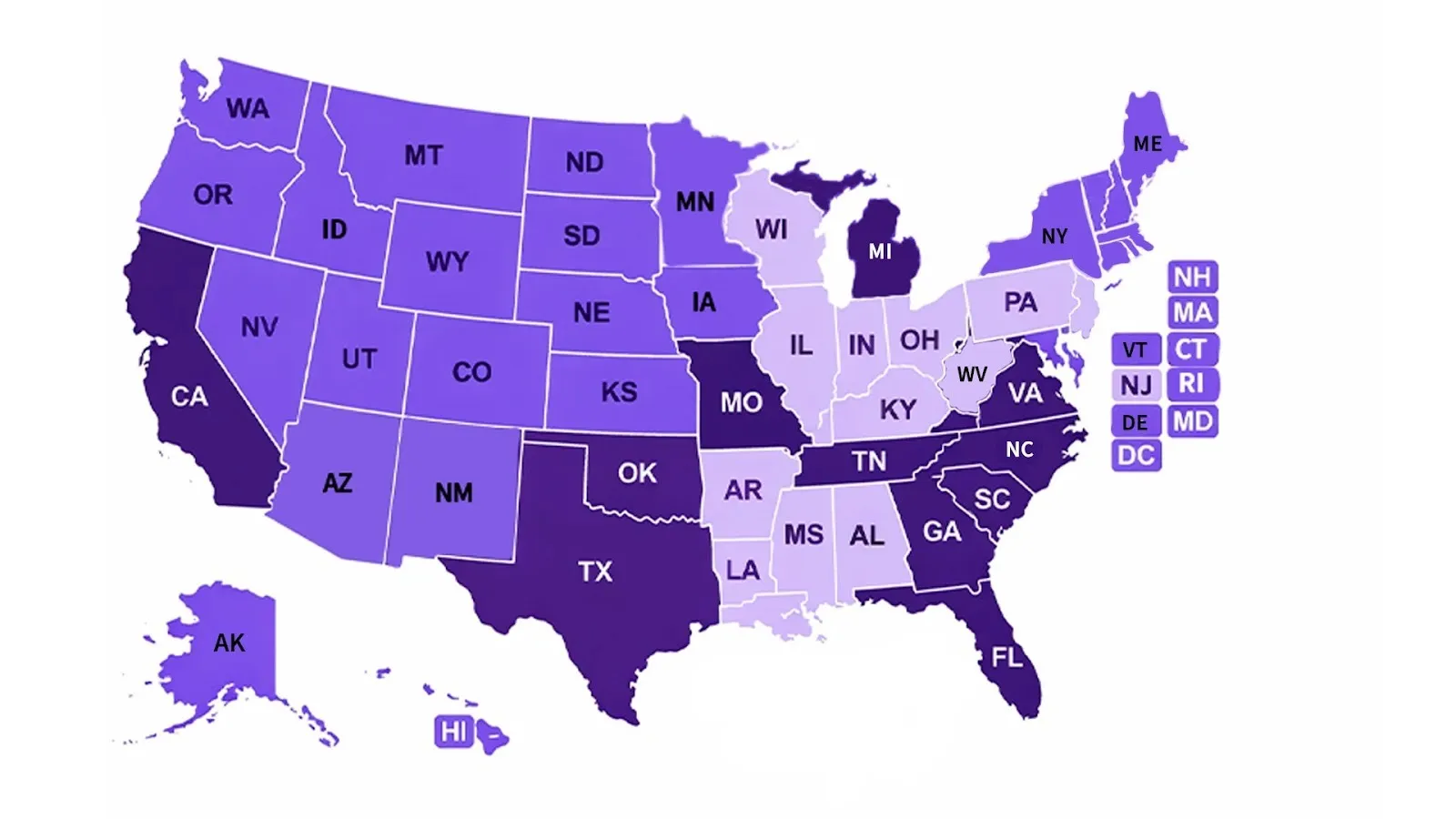
Here's a summarized state-by-state breakdown of Practice Authority, Prescriptive Authority, NP Licensing Time Frame, and CSR (Controlled Substance Registration) requirements:
Alabama
- Practice Authority: Reduced Practice
- Prescriptive Authority: Collaborative agreement required for all medications, including controlled substances
- NP Licensing Time Frame: 6–8 weeks
- CSR Required: Yes
Alaska
- Practice Authority: Full Practice
- Prescriptive Authority: Full authority, including controlled substances (PDMP registration required)
- NP Licensing Time Frame: 6–8 weeks (Temporary); 12–14 weeks (Permanent)
- CSR Required: No
Arizona
- Practice Authority: Full Practice
- Prescriptive Authority: Full prescriptive authority, including controlled substances
- NP Licensing Time Frame: 10–12 weeks
- CSR Required: No
Arkansas
- Practice Authority: Reduced Practice
- Prescriptive Authority: Collaborative agreement required for prescribing, including controlled substances
- NP Licensing Time Frame: 8–10 weeks
- CSR Required: No
California
- Practice Authority: Restricted Practice
- Prescriptive Authority: Physician collaboration required for prescribing controlled substances unless qualified under AB 890
- NP Licensing Time Frame: 10–12 weeks
- CSR Required: No
Colorado
- Practice Authority: Full Practice
- Prescriptive Authority: Full authority, including controlled substances
- NP Licensing Time Frame: 4–6 weeks
- CSR Required: No
Connecticut
- Practice Authority: Full Practice
- Prescriptive Authority: Full authority to prescribe, including controlled substances
- NP Licensing Time Frame: 6–8 weeks
- CSR Required: Yes
Delaware
- Practice Authority: Full Practice
- Prescriptive Authority: Full authority to prescribe, including controlled substances
- NP Licensing Time Frame: 6–8 weeks
- CSR Required: Yes
District of Columbia
- Practice Authority: Full Practice
- Prescriptive Authority: Full authority to prescribe, including controlled substances
- NP Licensing Time Frame: 10–12 weeks
- CSR Required: Yes
Florida
- Practice Authority: Restricted Practice
- Prescriptive Authority: Physician supervision required for prescribing controlled substances
- NP Licensing Time Frame: 3–4 weeks
- CSR Required: No
Georgia
- Practice Authority: Restricted Practice
- Prescriptive Authority: Direct physician supervision required for controlled substances
- NP Licensing Time Frame: 6–8 weeks
- CSR Required: No
Hawaii
- Practice Authority: Full Practice
- Prescriptive Authority: Full authority to prescribe, including controlled substances
- NP Licensing Time Frame: 6–8 weeks
- CSR Required: Yes
Idaho
- Practice Authority: Full Practice
- Prescriptive Authority: Full authority to prescribe, including controlled substances
- NP Licensing Time Frame: 4–6 weeks
- CSR Required: Yes
Illinois
- Practice Authority: Reduced Practice
- Prescriptive Authority: Collaborative agreement required for prescribing controlled substances
- NP Licensing Time Frame: 10–12 weeks
- CSR Required: Yes
Indiana
- Practice Authority: Reduced Practice
- Prescriptive Authority: Collaborative agreement required for prescribing controlled substances
- NP Licensing Time Frame: 6–8 weeks
- CSR Required: Yes
Iowa
- Practice Authority: Full Practice
- Prescriptive Authority: Full prescriptive authority, including controlled substances
- NP Licensing Time Frame: 7–8 weeks
- CSR Required: Yes
Kansas
- Practice Authority: Full Practice
- Prescriptive Authority: Collaborative agreement required for prescribing controlled substances
- NP Licensing Time Frame: 6–8 weeks
- CSR Required: No
Kentucky
- Practice Authority: Reduced Practice
- Prescriptive Authority: Collaborative agreement required for controlled substances; independent authority for non-controlled substances after 4 years
- NP Licensing Time Frame: 4–6 weeks
- CSR Required: No
Louisiana
- Practice Authority: Reduced Practice
- Prescriptive Authority: Collaborative agreement required for all medications, including controlled substances
- NP Licensing Time Frame: 4–6 weeks
- CSR Required: Yes
Maine
- Practice Authority: Full Practice
- Prescriptive Authority: Full prescriptive authority, including controlled substances
- NP Licensing Time Frame: 6–8 weeks
- CSR Required: No
Maryland
- Practice Authority: Full Practice
- Prescriptive Authority: Full authority to prescribe, including controlled substances
- NP Licensing Time Frame: 4–6 weeks
- CSR Required: Yes
Massachusetts
- Practice Authority: Full Practice
- Prescriptive Authority: Collaboration required initially; waived after 2 years of supervision
- NP Licensing Time Frame: 8–10 weeks
- CSR Required: Yes
Michigan
- Practice Authority: Restricted Practice
- Prescriptive Authority: Collaborative agreement required for prescribing controlled substances
- NP Licensing Time Frame: 4–6 weeks
- CSR Required: Yes
Minnesota
- Practice Authority: Full Practice
- Prescriptive Authority: Full authority to prescribe, including controlled substances
- NP Licensing Time Frame: 6–8 weeks
- CSR Required: No
Mississippi
- Practice Authority: Reduced Practice
- Prescriptive Authority: Physician collaboration required for prescribing controlled substances
- NP Licensing Time Frame: 2–4 weeks
- CSR Required: No
Missouri
- Practice Authority: Restricted Practice
- Prescriptive Authority: Collaborative agreement required for prescribing all medications
- NP Licensing Time Frame: 2–4 weeks
- CSR Required: Yes
Montana
- Practice Authority: Full Practice
- Prescriptive Authority: Full authority to prescribe, including controlled substances
- NP Licensing Time Frame: 4–6 weeks
- CSR Required: No
Nebraska
- Practice Authority: Full Practice
- Prescriptive Authority: Full prescriptive authority, including controlled substances
- NP Licensing Time Frame: 6–8 weeks
- CSR Required: No
Nevada
- Practice Authority: Full Practice
- Prescriptive Authority: Full prescriptive authority, including controlled substances
- NP Licensing Time Frame: 6–8 weeks
- CSR Required: Yes
New Hampshire
- Practice Authority: Full Practice
- Prescriptive Authority: Full authority to prescribe, including controlled substances
- NP Licensing Time Frame: 6–8 weeks
- CSR Required: No
New Jersey
- Practice Authority: Reduced Practice
- Prescriptive Authority: Collaborative agreement required for prescribing controlled substances
- NP Licensing Time Frame: 8–10 weeks
- CSR Required: Yes
New Mexico
- Practice Authority: Full Practice
- Prescriptive Authority: Full authority to prescribe, including controlled substances
- NP Licensing Time Frame: 3–4 months
- CSR Required: Yes
New York
- Practice Authority: Full Practice
- Prescriptive Authority: Full authority granted after fulfilling collaborative practice requirements
- NP Licensing Time Frame: 4–6 weeks
- CSR Required: No
North Carolina
- Practice Authority: Restricted Practice
- Prescriptive Authority: Physician approval required for prescribing controlled substances
- NP Licensing Time Frame: 4–6 weeks
- CSR Required: No
North Dakota
- Practice Authority: Full Practice
- Prescriptive Authority: Full authority to prescribe, including controlled substances
- NP Licensing Time Frame: 4–6 weeks
- CSR Required: No
Ohio
- Practice Authority: Reduced Practice
- Prescriptive Authority: Physician oversight required for prescribing controlled substances
- NP Licensing Time Frame: 3–5 weeks
- CSR Required: No
Oklahoma
- Practice Authority: Restricted Practice
- Prescriptive Authority: Collaborative agreement required for prescribing all medications, including controlled substances
- NP Licensing Time Frame: 5–7 weeks
- CSR Required: Yes
Oregon
- Practice Authority: Full Practice
- Prescriptive Authority: Full authority, including controlled substances under NP’s own license
- NP Licensing Time Frame: 14–16 weeks
- CSR Required: Yes
Pennsylvania
- Practice Authority: Reduced Practice
- Prescriptive Authority: Collaborative agreement required for prescribing all medications
- NP Licensing Time Frame: 8–10 weeks
- CSR Required: No
Rhode Island
- Practice Authority: Full Practice
- Prescriptive Authority: Full authority to prescribe, including controlled substances
- NP Licensing Time Frame: 6–8 weeks
- CSR Required: Yes
South Carolina
- Practice Authority: Restricted Practice
- Prescriptive Authority: Collaborative agreement required for prescribing medications, including controlled substances
- NP Licensing Time Frame: 4–6 weeks
- CSR Required: Yes
South Dakota
- Practice Authority: Full Practice
- Prescriptive Authority: Full authority to prescribe, including controlled substances
- NP Licensing Time Frame: 4–6 weeks
- CSR Required: Yes
Tennessee
- Practice Authority: Restricted Practice
- Prescriptive Authority: Collaborative agreement required for prescribing all medications
- NP Licensing Time Frame: 4–6 weeks
- CSR Required: No
Texas
- Practice Authority: Restricted Practice
- Prescriptive Authority: Must work under a Prescriptive Authority Agreement (PAA) with a physician for prescribing, including controlled substances
- NP Licensing Time Frame: 9–11 weeks
- CSR Required: No
Utah
- Practice Authority: Full Practice
- Prescriptive Authority: Full authority to prescribe, including controlled substances
- NP Licensing Time Frame: 3–4 weeks
- CSR Required: Yes
Vermont
- Practice Authority: Full Practice
- Prescriptive Authority: Full prescriptive authority, including controlled substances
- NP Licensing Time Frame: 3–5 weeks
- CSR Required: No
Virginia
- Practice Authority: Restricted Practice
- Prescriptive Authority: Collaborative agreement required initially; waived after 5 years of supervised practice
- NP Licensing Time Frame: 4–6 weeks
- CSR Required: No
Washington
- Practice Authority: Full Practice
- Prescriptive Authority: Full authority, including controlled substances
- NP Licensing Time Frame: 9–10 weeks
- CSR Required: No
West Virginia
- Practice Authority: Reduced Practice
- Prescriptive Authority: Collaborative agreement required for prescribing medications, including controlled substances
- NP Licensing Time Frame: 2–3 weeks
- CSR Required: No
Wisconsin
- Practice Authority: Full Practice
- Prescriptive Authority: Collaborative agreement required for prescribing controlled substances
- NP Licensing Time Frame: 10–12 weeks
- CSR Required: No
Wyoming
- Practice Authority: Full Practice
- Prescriptive Authority: Full authority to prescribe, including controlled substances
- NP Licensing Time Frame: 4–6 weeks
- CSR Required: Yes
How State NP Clinical Requirements Impact Patient Care and NP Careers
Whether you're an NP seeking independence or a student preparing for graduation, the regulatory environment of your state can drastically affect your clinical freedom, earning potential, and impact on the communities you serve.
Patient Access and Health Equity
In full practice authority states, patients often benefit from faster access to primary care and mental health services, particularly in rural or underserved areas.
NPs in these states can manage chronic diseases, prescribe medications, and deliver holistic care without waiting on physician approval—reducing delays and improving continuity of care.
Conversely, in restricted practice states, NPs often face barriers that limit their ability to respond to patient needs promptly. Requiring physician supervision can slow down routine treatments, limit telehealth access, and contribute to provider shortages, especially during health crises.
Career Opportunities and Autonomy
The state practice environment directly influences NP job satisfaction and professional mobility. In full authority states, NPs can launch their own independent practices, negotiate better contracts, and shape their roles based on patient needs rather than bureaucratic limitations.
However, in reduced or restricted states, career progression often hits a ceiling. From limitations on prescribing controlled substances to mandatory peer review systems, many NPs find themselves legally tethered—even after years of education, certification, and successful clinical experience.
The Reality for New NP Grads
If you're just starting out, state regulations will dictate more than just your first job. They'll determine how quickly you can practice independently, how long you must remain under supervision, and whether you'll need a collaborative agreement to treat patients at all.
For some new grads, this can mean delayed career starts or being locked out of desired roles in telemedicine, urgent care, or rural health.
Know the Rules, Empower Your Practice
Navigating the legal maze of nurse practitioner scope of practice isn't just about ticking boxes—it's about protecting your license, maximizing your autonomy, and delivering the best possible care to your patients.
Whether you're mapping out your first clinical rotation or preparing to relocate, understanding state NP clinical requirements is key to avoiding delays, denials, or missed opportunities.
The more informed you are about your state's licensing rules, physician involvement mandates, and transitional practice periods, the more control you have over your career trajectory.
That's why at NPHub, we help nurse practitioner students secure their clinical rotations in all 50 states, and that includes helping them understand where and how they're legally allowed to practice.
From matching you with preceptors who meet your state's and school requirements to giving you clarity around practice environments, our job is to make sure your clinical journey starts on solid ground.
Your future patients need a confident, well-prepared provider. And that starts with securing the right clinical training. Create your free NPHub account today and connect with vetted preceptors aligned with your state’s scope of practice requirements.

Frequently Asked Questions: Nurse Practitioner Scope of Practice Across States
1. What is nurse practitioner scope of practice?
Nurse practitioner scope of practice refers to the range of medical services nurse practitioners are legally authorized to perform under state law. The NP scope of practice includes making diagnoses, interpreting diagnostic and laboratory tests, prescribing medication, managing treatment plans, and coordinating patient care.
Scope is defined by four factors: graduate education, additional training, state practice laws, and institutional policies. Advanced practice registered nurses must practice within their population focus, such as family, pediatrics, or acute care, and remain accountable to their state board and professional standards.
2. Which states allow full practice authority for nurse practitioners?
Full practice authority allows nurse practitioners to evaluate patients, make diagnoses, interpret diagnostic tests, prescribe controlled substances, and manage treatment independently without physician supervision.
As of 2026, 28 states and Washington, D.C., grant full practice authority. States such as New Hampshire, Rhode Island, North Dakota, South Dakota, New Mexico, and Washington allow full practice. In some states, full authority is granted after completing a required transition period under a physician.
3. What is the difference between full, reduced, and restricted practice authority?
Practice authority describes how much autonomy nurse practitioners have under state scope laws.
- Full practice authority: NPs practice independently and may own independent practices.
- Reduced practice authority: State law requires a collaborative agreement for at least one element of NP practice, such as prescribing controlled substances.
- Restricted practice authority: Nurse practitioners must work under physician supervision for most or all elements of care.
These classifications directly affect NP role autonomy, medical staff membership eligibility, and practice environment flexibility.
4. Can nurse practitioners prescribe medications in all states?
Yes. All states allow nurse practitioners to prescribe medication, but restrictions vary.
In reduced practice or restricted practice states, physician supervision or collaborative agreements may be required for prescribing controlled substances. Some states limit specific schedules or require a physician’s signature for certain medications.
Prescriptive authority is governed by state law and enforced by the state board of nursing.
5. What are the educational requirements for nurse practitioners?
Nurse practitioners complete graduate education at the master’s, post-master’s, or doctoral level. After completing an accredited NP program, candidates must obtain national board certification and apply for a professional license in their state.
National accreditation standards ensure that NPs are deemed competent to provide safe, cost-effective, patient-centered care. Educational preparation includes advanced pathophysiology, pharmacology, and clinical training to support making diagnoses, interpreting diagnostic tests, and managing treatment.
6. What is the APRN Consensus Model?
The APRN Consensus Model is a national framework designed to standardize how advanced practice registered nurses are licensed, certified, educated, and regulated across states.
It clarifies nurse practitioner role competencies, defining scope of practice, and population focus requirements. While not all states fully align with the model, it has influenced modern NP practice laws and expanded full practice authority nationwide.
7. Do all states require a collaborative agreement for NPs?
No. In full practice states, collaborative agreements are not required.
In reduced practice authority states, NPs must maintain a collaborative agreement for at least one element of care. In restricted practice states, physician supervision is required for most or all clinical functions.
State scope regulations determine these requirements, and NPs are accountable to their state board for compliance.
8. How do state regulations affect new NP graduates?
Many states require newly licensed nurse practitioners to complete a transition-to-practice period before practicing independently. This may involve 1,000 to 2,000 hours of supervised practice.
These transitional requirements are common in states that eventually grant full practice authority after a defined period. State practice laws directly impact how quickly new graduates can open independent practices or work as independent practitioners.
9. Why is there a push for full practice authority?
The movement toward full practice authority is driven by physician shortages, especially in primary care and underserved communities.
Research demonstrates that nurse practitioners are qualified health professionals capable of treating patients across primary care, chronic disease management, home health, and preventive care settings. Expanding NP practice authority improves access to care, supports cost-effective healthcare delivery, and increases availability of primary care providers.
Organizations such as the American Association of Nurse Practitioners support full practice expansion, while some groups, including the American Medical Association, raise concerns about scope creep and physician oversight.
10. Who regulates nurse practitioner practice?
Nurse practitioners are regulated by their state board of nursing under the state’s nurse practice act.
NPs must adhere to ethical codes, national certification standards, evidence-based practice guidelines, and ANA Standards of Professional Performance. Each NP is accountable to patients, the nursing profession, and their state board.
Federal law allows nurse practitioners working in Veterans Affairs facilities to practice independently, regardless of state restrictions.
Article details
- Last updated
March 1, 2026 - Fact-checked by
NPHub Clinical Placement Experts & Student Support Team - Sources and references
- https://www.ama-assn.org/sites/ama-assn.org/files/corp/media-browser/specialty%20group/arc/ama-chart-np-practice-authority.pdf
- https://pmc.ncbi.nlm.nih.gov/articles/PMC9534177/pdf/nihms-1820683.pdf
- https://www.incrediblehealth.com/blog/nurse-practitioner-scope-of-practice-by-state/
- https://opportunityhealthcare.com/nurse-practitioner-scope-of-practice-authority-by-state
Find a preceptor who cares with NPHub
Book a rotation.webp)
.jpeg)

.webp)

.jpeg)

%20(3)%20(2).svg)
.webp)