
.png)




.webp)
Becoming a nurse practitioner preceptor allows experienced nurse practitioners to educate nursing students during required clinical rotations, support nursing education, and help address the nationwide nursing shortage. By guiding students through hands-on clinical practice, preceptors help prepare aspiring nurses for real-world patient care while contributing to the future of the nursing profession.
TL;DR - The Benefits of Becoming a Nurse Practitioner Preceptor: Shaping Future Healthcare Leaders
- Nurse practitioner preceptors play a critical role in nursing education by guiding nursing students through required clinical rotations.
- The growing nursing shortage and expanded student enrollment have increased demand for qualified clinical preceptors nationwide.
- Preceptors educate nursing students by helping them translate theoretical learning into clinical practice while maintaining quality patient care.
- With the right support, becoming a preceptor is manageable alongside clinical practice and professional responsibilities.
- Nurse practitioners interested in precepting can join NPHub to become a preceptor, with administrative support and paid clinical rotations.
The Increasing Need for Clinical Preceptors in Nursing Education
The growing nursing shortage nationwide has created an urgent need for experienced nurse practitioners to embrace the role of clinical preceptors. As the healthcare landscape evolves, nursing students face increasing challenges in securing clinical placements - a crucial step toward completing their education and joining the nursing profession.
Advanced practice registered nurses who step into preceptor roles do more than just educate nursing students - they play a vital role in addressing the nationwide nursing shortage by helping prepare aspiring nurses for clinical practice. While taking on student mentorship alongside personal and professional responsibilities may seem daunting, the journey of becoming a preceptor offers significant rewards for both mentors and students.
Through this role, preceptors contribute to the development of competent, confident clinicians while supporting the continuity and quality of care in their communities and those who want to take on this role can join NPHub to become a preceptor, review student rotation requests, and receive compensation with full administrative support, even while balancing personal and professional responsibilities.
In this blog, we'll explore the meaningful benefits of guiding the next generation of healthcare providers through their clinical rotations.
Understanding the Clinical Preceptor Role in Nursing Education
What is a Nurse Practitioner Preceptor?
Clinical preceptors are experienced advanced practice registered nurses who combine their expertise in patient care with teaching ability to guide nursing students through their clinical rotations.
A nurse practitioner preceptor play a crucial role in helping students translate theoretical learning into real-world clinical practice, enhancing both clinical competency and clinical reasoning skills by supervising them in clinical settings and ensuring they meet program and professional expectations during their rotations.
Who Can Become a Preceptor?
To educate students enrolled in nurse practitioner programs, preceptors must be licensed advanced practice registered nurses (APRNs) in good standing within their state of practice.
Beyond maintaining up-to-date clinical credentials, successful nursing preceptors demonstrate:
- A commitment to quality patient care
- Excellence in oral communication skills
- The ability to provide positive and negative feedback constructively
- Dedication to practice knowledge sharing
- Passion for lifelong learning
- Natural teaching ability
- Strong leadership qualities in healthcare delivery
Preceptor Duties
Preceptors are dynamic professionals who have multiple responsibilities. Some of them are:

Why Clinical Preceptors Matter in Nursing Education
The Current Challenge: A Growing Preceptor Shortage
significant obstacles for nursing students seeking to complete their clinical placements. This shortage affects multiple clinical rotations and carries substantial financial and career implications:
- Extended Tuition Costs: Additional semester fees reaching $3,750
- Relocation Expenses: Accommodating clinical placements in different locations: $7,710
- Career Impact: Delayed entry into nursing practice: $19,250
- Professional Setback: Postponed licensure and career advancement: $30,000
- Placement Search: Resources spent seeking preceptors nationwide: $1,200
Total Financial Impact: Approximately $58,910
These delays carry real financial and professional consequences for students, including extended tuition costs, relocation expenses for distant rotations, and postponed licensure and career advancement. Each missed or delayed rotation compounds the strain on an already stretched healthcare system.
The root causes extend beyond just numbers. While nursing schools struggle to expand student enrollment, experienced faculty face increasing patient care demands, limiting their ability to help students meet clinical objectives. This creates a cycle where fewer registered nurses can transition into advanced practice roles.
Clinical preceptors help break this cycle by ensuring students can complete rotations on time and enter practice prepared. NPs who are open to supporting students but concerned about administrative burden can join NPHub to become preceptors, with student coordination and school paperwork handled so their focus remains on teaching and patient care.
Benefits of Becoming a Nurse Practitioner Preceptor
Being a preceptor is not just about mentoring; it’s a golden opportunity to evolve both personally and professionally. By stepping into this role, you embark on a fulfilling journey that promises growth and a lasting impact.
Here’s a glimpse into the benefits that make this path shine:
- A Chance to Give Back: Think back to your early days and the guiding hands that shaped your career. As a preceptor, you have the opportunity to be a mentor for those just starting out in their careers.
- Sharpening Leadership Skills: Preceptorship isn’t just teaching; it’s leading. As you navigate the challenges of mentoring, you’ll improve your leadership skills.
- Rekindling Your Passion: The daily routine can sometimes feel monotonous. But, the fresh energy and curiosity of students can reignite your love for mentoring.
- Elevating Your Professional Profile: Being a preceptor isn’t just a title; it’s a badge of commitment. It speaks volumes about your dedication to bettering healthcare and nurturing new talent.
- Staying Ahead with Credentials: As you mentor, you’re also earning. Preceptorship provides you with essential continuing education hours (CE credits), ensuring you stay updated and licensed. Many states recognize and accept clinical preceptor hours towards national certification and APRN licensure renewal.
Embracing the role of a preceptor allows experienced nurse practitioners to support students, strengthen the profession, and remain actively involved in clinical education without managing the administrative burden alone.
So, are you ready to grow and glow?
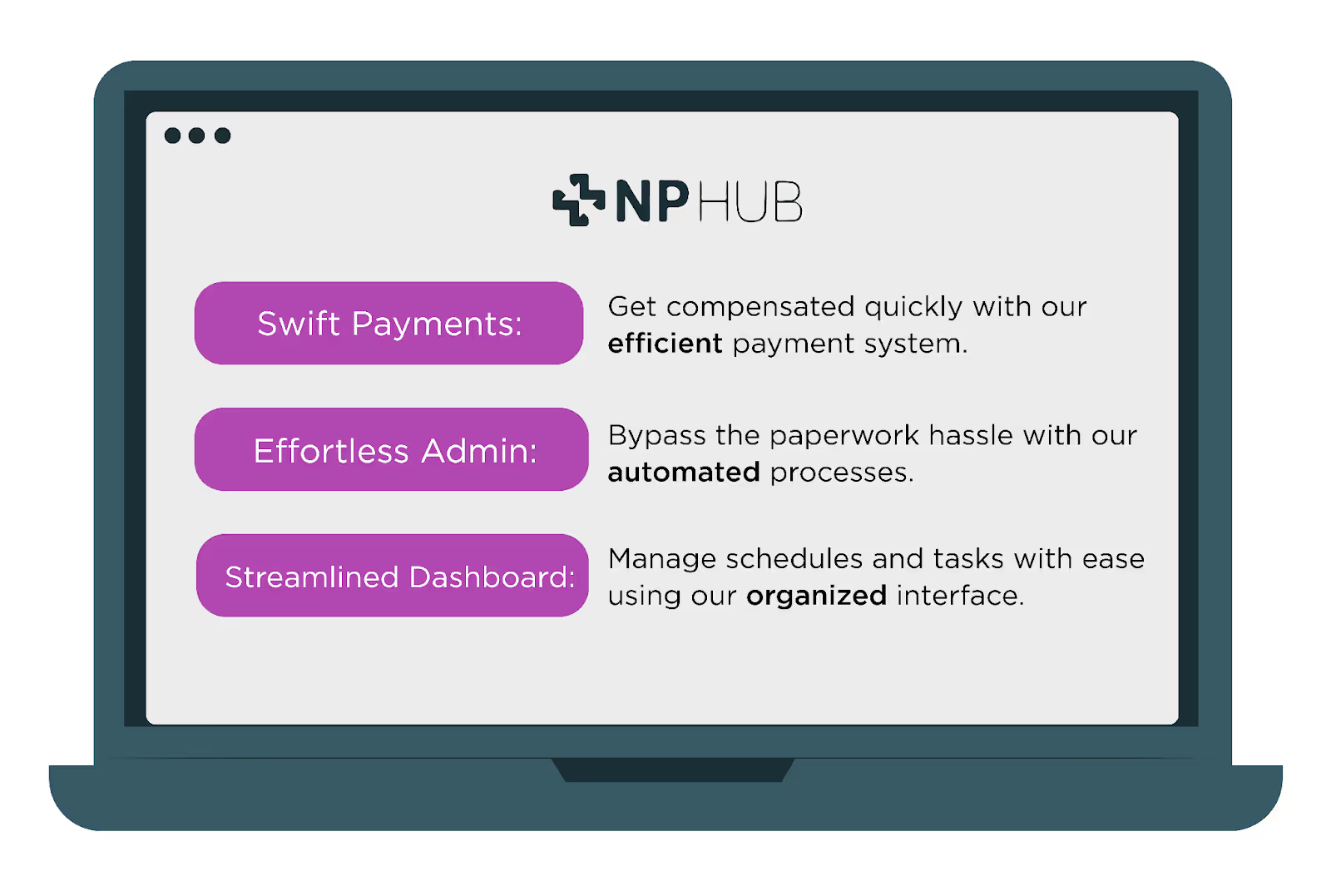
Become a Preceptor with NPHub and Get Paid
Apart from the intangible rewards of mentoring, becoming a preceptor with NPHub brings tangible benefits too. These include:
Creating an Enriching Clinical Learning Environment: A Guide for Nurse Practitioner Preceptors
Structuring Effective Clinical Rotations
The success of a clinical rotation often depends on how well the learning experience is structured. Clinical preceptors play a key role in helping nurse practitioner students translate academic knowledge into real patient care while meeting program requirements and clinical objectives.
A well-organized rotation provides clarity for both the student and the preceptor and helps ensure steady progress throughout the placement.
Aligning with Learning Objectives
Begin each clinical rotation by sitting down with your student to understand their specific learning needs and goals. Review the program-specific clinical objectives provided by their nursing school to ensure alignment with both student needs and educational requirements.
Consider these key aspects when planning:
- Match learning opportunities with student-articulated learning needs
- Incorporate specific clinical competency requirements
- Design experiences that challenge yet support student growth
- Create space for clinical reasoning development
Progressive Skill Development
Rather than diving into complex cases immediately, build a foundation for success through graduated responsibility. Start with basic patient care scenarios and gradually increase complexity as students demonstrate clinical competency. This approach allows nursing students to develop confidence while ensuring quality patient care remains uncompromised.
The progression typically follows this pattern:
- Observation and basic skill practice
- Supervised direct patient care
- Increasingly independent decision-making
- Complex case management
- Leadership opportunities in clinical practice
Mastering the Balance: Tips for Successful Preceptorship
Managing Clinical Responsibilities
Balancing patient care with teaching responsibilities is one of the most common challenges for a preceptor. During each clinical rotation, success depends on having a clear approach to supervision, feedback, and evaluation that fits into an existing clinical workflow.
Effective preceptors often plan for:
- Student supervision during patient care activities
- Documentation review and feedback
- Clinical reasoning discussions
- Performance evaluation
- Professional development support
Having a consistent structure helps ensure students meet rotation requirements without disrupting patient care.
Creating an Effective Learning Schedule
Rather than trying to teach everything at once, pace the clinical rotation to allow for proper skill development. Schedule regular check-ins to discuss progress toward meeting clinical objectives and adjust the learning plan as needed. This might mean:
"I dedicate the first 15 minutes of each day to reviewing our goals and addressing any questions," shares an experienced preceptor. "This small investment in planning makes the entire day run more smoothly and ensures we meet both patient care and educational objectives."
Supporting Professional Growth
Remember that your role extends beyond teaching clinical skills. As you help nursing students develop their clinical competency, you're also modeling professional behavior and leadership. Take time to discuss:
- Professional boundary management
- Effective communication strategies
- Ethical decision-making in health care delivery
- Work-life balance considerations
- Career development opportunities
Most importantly, maintain open lines of communication. Create an environment where students feel comfortable asking questions and seeking clarification. This approach not only improves learning outcomes but also contributes to better patient care and safety.
Remember, as a clinical preceptor, you're not just teaching skills - you're helping shape the future of the nursing profession. Your investment in providing quality clinical experiences helps address the growing nursing shortage while preparing the next generation of healthcare providers.
The Real Challenges of Becoming a Preceptor — and How to Overcome Them
While the benefits of becoming a nurse practitioner preceptor are numerous, it's important to acknowledge that advanced practice registered nurses who take on this vital role face real challenges in clinical practice and nursing education today.
Understanding these hurdles — and learning how to manage them — can help you stay motivated, maintain quality patient care, and continue making a profound impact on the nursing profession.
1. Lack of Formal Preceptor Training
One of the most common obstacles is that many clinical preceptors are asked to mentor nursing students without formal training in teaching strategies, planning clinical assignments, or completing a student evaluation form. While experienced faculty at nursing schools offer support when available, the reality is that preceptors educate nursing students often by relying on their own clinical instincts.
Solution: Proactively seek orientation resources from accredited online nursing programs or institutions offering guidance on meeting clinical objectives. Some nursing programs now provide training modules specifically for clinical faculty advisors to ensure preceptors feel equipped to educate students enrolled in nurse practitioner programs.
2. Variable Student Preparedness
Not all nursing students arrive with the same level of skill or confidence. Some may be high-performing and ready to tackle independent tasks, while others may struggle to translate theoretical learning into clinical reasoning. Managing these wide differences can challenge your patience and energy.
Solution: Early in the clinical rotation, clearly identify student articulated learning needs. Use open communication to set goals based on their current abilities and progression toward clinical competency. Remember, nursing preceptors are essential for helping nursing students learn to bridge the gap between distance nursing students study programs and hands-on clinical placements.
3. Feeling Undervalued by Institutions
Many nursing profession preceptors report feeling undervalued by nursing schools, especially when balancing personal and professional responsibilities. Despite the critical role clinical preceptors play in educating future nurses, recognition and incentives have historically been inconsistent.
Solution: Choose to become a preceptor with organizations that respect your contribution. Platforms like NPHub recognize the tremendous investment you make and offer fair compensation, assisting in the licensure renewal process by helping you obtain continuing education hours that accept clinical preceptor hours toward national certification renewal.
4. Balancing Teaching with Clinical Productivity
Keeping up with your own clinical records, patient load, and healthcare demands while also ensuring your student meets clinical objectives can be overwhelming. Many preceptors cite this juggling act as one of the most stressful aspects of becoming a preceptor.
Solution: Integrate student supervision directly into patient care activities. Use real patient encounters to encourage critical thinking, teach documentation standards, and model decision-making. You can plan clinical assignments based on your regular workflow rather than adding extra tasks. This way, students translate theoretical learning while supporting your care delivery.
5. Emotional Labor of Mentoring
Teaching ability goes beyond clinical skills — it requires emotional resilience. Supporting a nursing student through moments of doubt, occasional failures, and inevitable learning curves takes emotional energy. Especially for distance nursing students adjusting to in-person clinical settings, extra patience is often needed.
Solution: Focus on offering consistent positive and negative feedback in a constructive manner. Celebrate small wins to keep both you and your student motivated. Maintaining professional boundaries, modeling strong emotional intelligence, and practicing lifelong learning yourself are key to thriving in this mentorship role.
Why Facing These Challenges Matters
Despite these very real obstacles, the need for more clinical preceptors has never been greater. With the growing nursing shortage and nursing schools struggling to expand student enrollment, your willingness to accept clinical preceptor hours and prepare aspiring nurses directly shapes the future of nursing practice and health care delivery.
Becoming a nurse practitioner preceptor isn't just about helping one nursing student succeed — it's about transforming the system, educating future nurses, and ensuring that the next generation of registered nurses and nurse practitioners has the support, skill, and leadership needed to meet the demands of modern healthcare.
Your dedication, patience, and ability to lead will leave a lasting legacy on the nursing profession.
Conclusion
Becoming a nurse practitioner preceptor plays a critical role in supporting nursing education at a time when many students struggle to secure a required clinical rotation. When students are unable to complete rotations on time, graduation is delayed and workforce shortages continue to grow.
By guiding students through clinical rotations, preceptors help ensure future nurse practitioners are prepared for real-world patient care. Precepting also allows experienced NPs to remain engaged in education, contribute to the profession, and support the next generation of providers without stepping away from clinical practice.
At NPHub, we understand that lack of administrative support has historically made precepting difficult. Our platform is built to remove those barriers so nurse practitioners can focus on teaching while we handle coordination and logistics.
What Sets NPHub Apart
- 2,000+ Active Preceptors Nationwide
Join a growing network of nurse practitioner preceptors supporting students through required clinical rotations across multiple specialties. - Fair, Transparent Compensation
Preceptors are compensated for each clinical rotation based on teaching hours, recognizing the time and expertise required. - Paperwork and School Coordination Managed
University documentation, affiliation agreements, and required forms are handled electronically to reduce administrative burden. - Vetted NP Students
Students are pre-screened and matched based on specialty, program requirements, and rotation needs. - Dedicated Preceptor Support
Ongoing assistance is provided throughout each rotation to help with documentation, coordination, and university requirements.
The growing nursing shortage needs experienced nurses like you to step forward and educate the next generation of healthcare providers. The question isn't "Why become a preceptor?" but rather, "How soon can I start?"
Ready to make a difference in nursing education? Become a preceptor today.

Frequently Asked Questions
1. What are the benefits of becoming a nurse practitioner preceptor?
The benefits of becoming a nurse practitioner preceptor include contributing to nursing education, supporting nursing students’ careers, developing leadership and teaching ability, and helping address the nationwide nursing shortage. Preceptors educate nursing students by guiding them through clinical rotations and helping them build clinical competency while maintaining quality patient care.
2. Who can become a clinical preceptor?
Clinical preceptors are typically advanced practice registered nurses or licensed nurse practitioners with up-to-date clinical credentials, active clinical practice, and experience providing direct patient care. Nursing schools and accredited online nursing programs require preceptors to meet specific licensing and experience criteria.
3. How do preceptors support nursing students during clinical rotations?
Clinical preceptors educate nursing students through direct supervision, planning clinical assignments, and evaluating performance. They help students translate theoretical learning into clinical practice, provide positive and negative feedback, complete student evaluation forms, and support students in meeting clinical objectives during each associated clinical rotation.
4. Why are more clinical preceptors needed nationwide?
The growing nursing shortage, combined with expanded student enrollment in nursing schools and online nursing programs, has increased demand for clinical placements. Many programs are seeking preceptors nationwide in order to accommodate clinical placements and expand student enrollment while maintaining nursing education standards.
5. How does NPHub support nurse practitioner preceptors?
NPHub supports nurse practitioner preceptors by coordinating clinical placements, managing student documentation, and handling nursing school paperwork. This allows clinical preceptors to focus on patient care and educating future nurses while administrative and school-related tasks are managed externally.
6. How does NPHub help nursing schools and online nursing programs?
NPHub enables nursing schools and accredited online nursing programs to place students by connecting them with experienced nursing profession preceptors. By supporting preceptors and managing clinical placement logistics, NPHub helps programs accommodate clinical rotations and maintain enrollment while ensuring students meet required clinical objectives.
7. Can clinical preceptor hours count toward continuing education or licensure renewal?
In some cases, clinical preceptor hours may be accepted toward continuing education hours or used in the licensure renewal process, including national certification renewal. Acceptance depends on state boards and certifying bodies, but documentation from clinical rotations can support these requirements.
8. How does precepting through NPHub fit into clinical practice and workload?
Preceptors working with NPHub can review student information before accepting a clinical rotation and integrate teaching into their existing clinical workflow. This approach helps balance personal and professional responsibilities while supporting nursing students’ learning and maintaining quality patient care.
Key Definitions & Terms
- Preceptor
A licensed nurse practitioner or advanced practice registered nurse who provides direct supervision and teaching to nursing students during clinical rotations, supporting the development of clinical competency, clinical reasoning, and quality patient care. - Clinical Preceptor
- An experienced nurse practitioner responsible for educating nursing students through hands-on clinical practice, student evaluation, and feedback while ensuring clinical objectives are met during each clinical rotation.
- Clinical Rotation
- A required, supervised learning experience in which nursing students apply theoretical learning in real patient care settings to meet educational, licensure, and program requirements.
- Clinical Placement
- The healthcare setting where a clinical rotation occurs, such as a clinic, hospital, or private practice, used by nursing schools and online nursing programs to educate students enrolled in nursing programs.
- Advanced Practice Registered Nurse (APRN)
- A registered nurse with advanced education and national certification, including nurse practitioners, who practices independently or collaboratively within an approved scope of clinical practice.
- Clinical Preceptor Hours
Documented hours spent supervising and educating nursing students during clinical rotations, which may be accepted toward continuing education hours, licensure renewal, or national certification renewal depending on regulatory requirements. - Student Evaluation Form
A formal document completed by the preceptor to assess a nursing student’s clinical performance, professionalism, and progress toward meeting clinical objectives during a rotation. - Clinical Faculty Advisor
A representative from a nursing school or accredited online nursing program who oversees student progress, ensures clinical objectives are met, and serves as a liaison between students and clinical preceptors. - Theoretical Learning
Academic instruction provided through nursing schools or distance nursing students study programs that must be applied by nursing students during clinical practice. - Clinical Competency
A nursing student’s ability to safely and effectively apply knowledge, skills, and clinical reasoning in patient care settings under preceptor supervision.
Article details
- Last updated
January 9, 2026 - Fact-checked by
NPHub Clinical Placement Experts & Student Support Team - Sources and references
Find a preceptor who cares with NPHub
Book a rotation.webp)
.jpeg)

.webp)

.jpeg)

%20(3)%20(2).svg)
.webp)