
.png)



.webp)
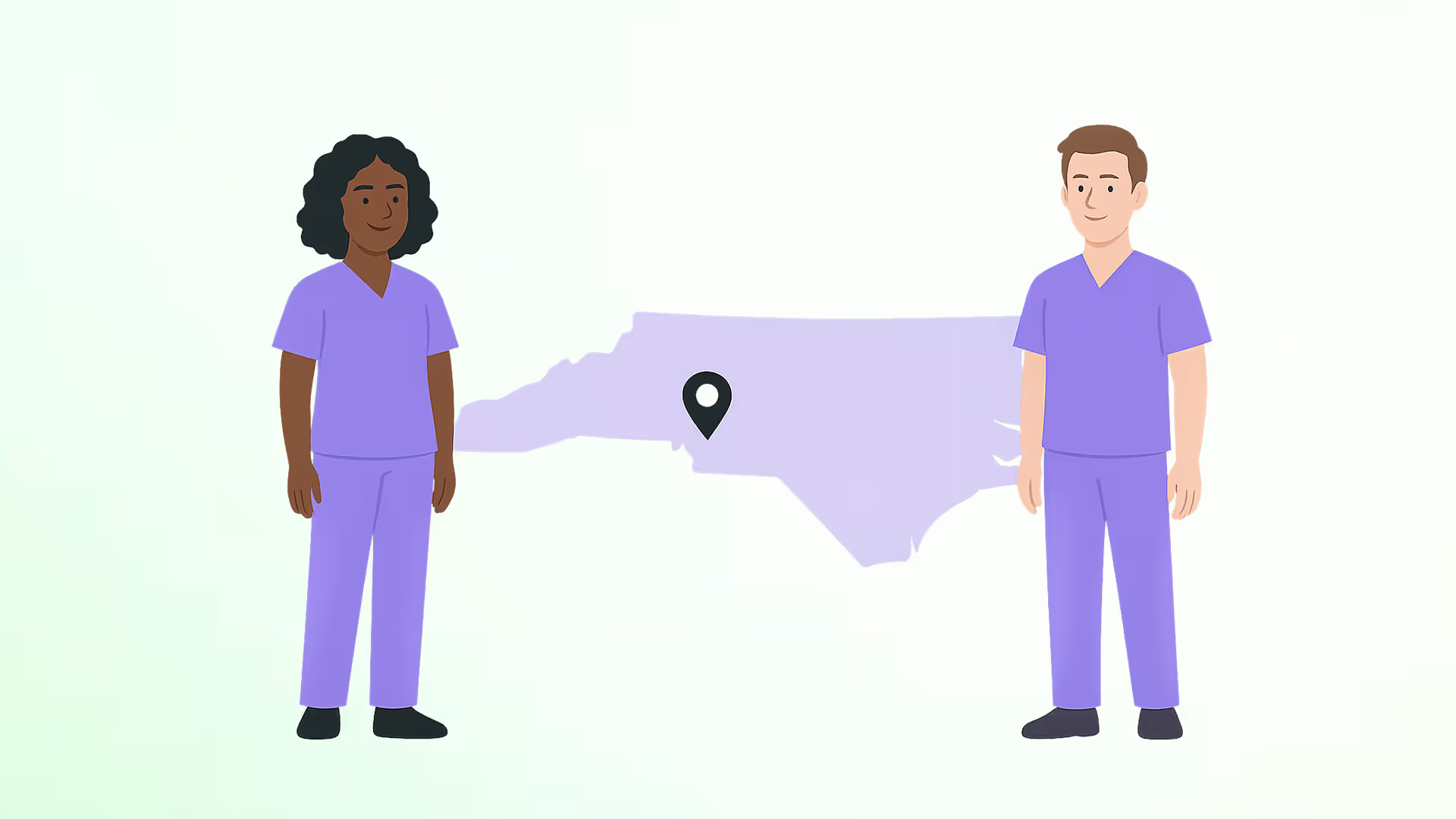
To find nurse practitioner preceptors in Charlotte, NC, students should look into accessible local NP programs like UNC Charlotte, apply through health systems like Atrium and Novant, or use services like NPHub. Clinical placements in the Charlotte region are in high demand, so early action and the right connections are key.
TL;DR: How to Find NP Preceptors in Charlotte, NC
- Start early—Charlotte is competitive. Clinical sites fill up fast, so begin your search 3–6 months in advance.
- Use local resources. UNC Charlotte, Atrium Health, and Novant offer some placement support—but only if your school has a valid affiliation agreement.
- Master cold outreach. Many students must contact 10–20 clinics directly before securing a preceptor—professional, personalized emails matter.
- Avoid common mistakes. Don’t wait too long, skip follow-ups, or send incomplete outreach—it can cost you the spot.
- Create a free accout with NPHub if you're stuck, connect with vetted preceptors in Charlotte and get full support from an specialized team that understand what you need for your clinical rotations.
Why Finding a Preceptor in Charlotte Is So Challenging
Charlotte is one of the most desirable cities in North Carolina for nurse practitioner education and clinical training.
With major health systems, community clinics, and a growing healthcare footprint, it attracts NP students from across the state and from out-of-state programs. That demand has made finding a qualified preceptor for each required rotation increasingly competitive.
Many students assume that being enrolled in a local program will automatically make clinical placements easier. In reality, even students attending Charlotte-based schools often face delays, rejections, or long waitlists when trying to secure a preceptor for a specific rotation.
Another challenge is timing. Most preceptors in Charlotte commit to rotations months in advance. By the time many students begin searching, available slots are already filled. This is especially true for primary care, family practice, and women’s health rotations, where demand is consistently high.
Sending outreach emails, tracking responses, and coordinating paperwork all take time. Delays in securing a preceptorcan push a rotation back an entire semester, which often leads to postponed graduation, additional tuition, and extended time away from career advancement.
This is why having visibility into available preceptors early, understanding your rotation options, and creating a free NPHub account before deadlines approach matters. With a free account, you can see which preceptors and rotation options are available in Charlotte without committing or paying upfront.
Why Nurse Practitioners in North Carolina Are Choosing Charlotte for Clinical Rotations
Charlotte has become a major draw for nurse practitioner students in North Carolina due to its clinical depth, variety of practice settings, and strong healthcare infrastructure. For students planning future rotations, the city offers exposure to diverse patient populations across hospital systems, outpatient clinics, and community-based practices. That educational value is exactly why competition for every available preceptor continues to rise.
As more students target Charlotte for their required rotations, the number of available preceptors has not kept pace. Many experienced providers limit how often they take students, while others commit their rotation availability far in advance. This imbalance has made early planning essential for anyone hoping to complete clinical requirements in the region.
A Rapidly Expanding NP Workforce
According to the North Carolina APRN Workforce Report, the number of nurse practitioners in the state rose by 147.3% between 2013 and 2022, growing from 4,696 to 11,612 active NPs.
Growth since 2000 is even more significant, with the NP workforce expanding by 429%. This growth outpaces other healthcare roles:
- Nurse Practitioners: +429%
- Physician Assistants: +228%
- Physicians: +28%
Nurse practitioners now represent more than 76% of the advanced practice registered nurse workforce in North Carolina.
In 2022, nearly 60% of new NP workforce entrants in North Carolina came from out-of-state programs. That shift has directly impacted access to preceptors in cities like Charlotte, where in-state and out-of-state students are often competing for the same rotation sites.
What This Means for Students Seeking Charlotte Clinical Placements?
- Demand for preceptors in Charlotte continues to increase
- Students from multiple programs are competing for the same rotation opportunities
- Securing a preceptor often requires earlier planning and broader outreach
Understanding these trends helps explain why waiting until a semester begins to search for a rotation often leads to delays.
Whether you're enrolled in a Charlotte-based program or attending school elsewhere, knowing who offers structured help and who doesn’t, can make all the difference in how quickly and successfully you secure your rotation. Having a free NPHub account let's you review available preceptors early and understand your options before competition intensifies.
Where to Find Charlotte Preceptors: Schools and Health Systems That Can Help
Some nurse practitioner programs provide structured support to help students secure a preceptor for each required rotation. Others offer limited guidance and expect students to manage the process on their own. If you have ever sent multiple emails to clinics without hearing back, you already know how stressful this can be.
In Charlotte, knowing which schools and health systems actively support NP clinical rotations, and which do not, can save you weeks of outreach and uncertainty. Some organizations offer coordinated placement processes, while others require students to identify their own preceptors before any onboarding begins.
Understanding these differences early helps you focus your time on options that are realistic for your program and timeline but if you want to boost your chances of securing a preceptor and avoid spending hours doing outreach, create a free NPHub account to see which rotation options are actually available in Charlotte before you start emailing clinics.
In the meantime, here’s what you need to know before you start chasing placements in one of the most competitive cities in North Carolina.
UNC Charlotte (UNCC)
UNC Charlotte stands out as one of the few universities in the state that provides coordinated clinical placement supportfor its nurse practitioner students. But how does it works:
- Students use the Sonia portal, a centralized platform to manage all aspects of their clinical education.
- Clinical placements are arranged by the university in collaboration with local partners, most notably Atrium Health, one of the largest employers in the region.
- Faculty members and placement coordinators work directly with students to ensure they meet hour requirements and complete rotations across multiple settings.
- Placement support is strongest for students in the FNP and AGACNP tracks, including those enrolled in the school’s DNP program.
- Students must meet specific prerequisites before starting their clinical placements, such as completing required coursework or obtaining necessary approvals.
- Certain courses must be completed prior to beginning clinical placements, as these courses are designed to prepare students for the demands of clinical education.
Clinical rotation availability may vary by term and cohort, and not all specialties are offered every semester. Planning ahead is essential to ensure all graduation requirements are met.
Atrium Health – Center for Advanced Practice
For NP students not enrolled in Atrium-owned schools, direct application through Atrium’s Center for Advanced Practice is required.
Here’s what you need to know:
- Atrium manages a centralized placement process covering 900+ clinical sites in and around Charlotte.
- NP students must submit a placement request using their Student Placement Application at least 3 to 6 months before the rotation start date.
- Your school must have a Clinical Education Affiliation Agreement (CEAA) in place with Atrium. Without it, your application will not be considered.
- The placement team reviews credentials and attempts to match students with available preceptors based on availability, specialty, and rotation needs. Students may need to select from a set of available rotations depending on their specialty and what is open.
It’s a formal, competitive process early submission and complete documentation are critical for success.
Novant Health
Novant Health accepts NP students but handles placements a bit differently through its myClinicalExchange system.
Here’s how it works:
- Your school must first have an active affiliation agreement with Novant Health.
- Students or clinical coordinators must apply through myClinicalExchange, a portal used to submit documentation and monitor placement progress.
- While Novant provides clinical sites and manages onboarding, students are often responsible for securing their own preceptors.
- Rotations must be requested at least 30 days in advance, but earlier is better given demand.
Novant Health may also offer elective clinical rotations, allowing students to gain experience in specialized areas depending on site availability. This hybrid model works well for organized students who can identify preceptors early but still want the structure of a formal health system onboarding process.
Even with institutional support, many students are still responsible for securing one or more preceptors on their own, especially for competitive specialties or out-of-state programs.
When school and health system support falls short, having an account at NPHub lets you access accurate information early and helps prevent last-minute scrambles and missed rotation deadlines by giving you a clearer picture of available preceptors and rotation options in Charlotte, so you can plan realistically instead of relying on guesswork.
How to Find Nurse Practitioner Preceptors in Charlotte on Your Own
Even with a solid plan, many NP students hit a wall when it comes to finding a preceptor, especially in competitive cities like Charlotte.
When searching for preceptorship opportunities, carefully choosing which clinics and providers to contact is crucial to maximize your chances of success.
If your school doesn’t have an affiliation with a local health system, or if you’re in a time crunch, cold outreach can be your lifeline. It’s not glamorous, but when done right, it works.
Here’s a step-by-step breakdown to help you approach the process with clarity and confidence.
Step 1: Search Smart
Start by identifying clinics and providers that are most likely to accept students:
- Primary care and family medicine clinics tend to be the most open to students, especially those focused on FNP or general practice. These clinics serve a diverse range of patients, providing valuable hands-on experience with different populations.
- Urgent care centers, community health centers, and women’s health practices are often under less administrative red tape than hospitals and may be more flexible. These settings also expose students to a variety of patients and clinical scenarios.
- NP-owned clinics or private practices are hidden gems—these providers often remember what it was like to search for a preceptor and are more likely to say yes. Working in these clinics allows students to interact with patients from various backgrounds.
- Use online tools like:
- Google Maps: Search “family nurse practitioner clinic” or “primary care NP Charlotte NC.”
- Healthgrades or Zocdoc: Browse individual providers and specialties by zip code.
- LinkedIn: Look for NPs in your area, filter by city, and check their current practice settings.
Keep an eye out for providers who mention teaching, mentoring, or academic affiliations in their bios—they’re often more open to students.
At this stage, many students spend weeks researching clinics without knowing whether a preceptor is even available. Using a free NPHub account alongside your outreach can help you focus on realistic rotation options in Charlotte instead of chasing leads that are already full.
Step 2: Reach Out Professionally
This is where many students lose their chance—so keep it sharp, respectful, and specific:
- Start with a strong subject line to grab attention and clarify your intent.
Example: “NP Student Seeking Primary Care Preceptor – Charlotte, Fall 2025” - Include the essentials in your message:
- Your name, NP program, and expected graduation date.
- The type of rotation you need (e.g., family practice, women’s health).
- Required hours and preferred dates (e.g., “180 hours between Sept 15–Nov 30”).
- Attach your resume and required documents (liability insurance, immunizations, etc.).
- Keep the tone appreciative and professional—this is a professional request, not a favor.
- Personalize each email:
- Use the provider’s name.
- Mention something specific about their clinic (e.g., "I admire your focus on underserved communities").
- Avoid mass-email language. If it feels like spam, it will be ignored.
A thoughtful, personalized message shows you're serious, prepared, and respectful of their time, qualities every potential preceptor appreciates. Below is a sample email you can customize for your own outreach.
- Email Template:
- Subject: NP Student Seeking Primary Care Preceptor – Charlotte (Fall 2025)
- Email Body:
- Dear [Provider’s Name],
- I hope this message finds you well. My name is [Your Full Name], and I’m a nurse practitioner student currently enrolled at [Your NP Program Name], expecting to graduate in [Month, Year].
- I’m reaching out to kindly inquire whether you might be accepting NP students for clinical rotations this fall. I’m looking to complete a [specialty] rotation—specifically, [X] clinical hours between [start date] and [end date]—and your practice’s focus on [personalized mention about their clinic] really stood out to me.
- I’ve attached my resume, proof of liability insurance, and other required documents for your review. My school provides full onboarding support and can work directly with your office to manage any necessary paperwork or affiliation agreements.
- If this might be a possibility, I’d love to connect and discuss further. Thank you so much for your time and for the important work you’re doing for our community.
- Warm regards,
[Your Full Name]
[Phone Number]
[Email Address]
[Attachments: Resume, Insurance Proof, Immunizations, etc.]
Once you’ve sent your message, don’t stop there—following up is just as important as the first outreach. Let’s talk about how to do it without being pushy.
Step 3: Follow Up (It Matters More Than You Think)
No response doesn’t always mean “no.” More often, it means “I haven’t had time to read this” or “This got buried in my inbox.”
Providers are busy, especially those in high-demand specialties or small clinics. A polite follow-up can bring your message back to the top of their inbox and back to their attention:
- Follow up 5–7 business days after your initial message with a brief, polite check-in.
- Keep your follow-up short, friendly, and direct.
Example: “Just checking in on my previous email regarding a clinical rotation. I’d love to connect if this might be possible!” - Keep a simple tracking sheet with information like clinic name, contact info, date contacted, response received (if any), follow-up schedule, etc.
- Don’t take silence personally. Preceptors are busy. Consistent, respectful follow-up shows professionalism.
Following up can stretch on for weeks, especially in a competitive market like Charlotte. If responses stall and deadlines are approaching with a free NPHub account you can reassess your rotation options quickly by showing you which preceptors still have availability, so delays do not turn into missed semesters.

Step 4: Be Ready to Say Yes Immediately
If someone agrees to precept you, you’ll likely need to act fast to lock it in. Many preceptors receive multiple requests, and they may offer their availability to the first student who confirms. Being prepared to respond the same day can make the difference in securing a preceptorship.
- Have all your documents prepped and in one folder: resume, background check, proof of insurance, immunization records, and your program’s preceptor packet.
- Notify your school immediately to start the approval process. Many schools need to review and approve the site before confirming placement.
- Confirm everything in writing: Rotation dates, hours, specialty, and any onboarding or EMR training you’ll need.
Think of it like a job offer: you want to respond with gratitude and readiness because delays in submitting paperwork or getting school approval can cost you the opportunity.
Being ready with your documents and knowing your program’s next steps ensures you can secure the spot without hesitation.
Cold outreach can work and for many students, it’s the only option available. But even with the right message, timing, and follow-up, the reality is that Charlotte is a saturated market. Sometimes, despite your best efforts, the “yes” just doesn’t come.
Common Mistakes to Avoid When Securing a Charlotte Clinical Placement
In a city as competitive as Charlotte, even small missteps can cost you a required rotation or delay your ability to secure a qualified preceptor.
Students often have a limited number of opportunities to adjust their clinical schedules, so planning ahead is critical. The good news is that most of these mistakes are avoidable with the right preparation and realistic expectations around preceptor availability and rotation timelines.
Here’s a breakdown of the most common mistakes NP students make and how to stay ahead of them.
Waiting Too Long to Start
- Charlotte is one of the most competitive markets for NP students, and many preceptors are booked months in advance for each rotation.
- Some health systems like Atrium require placement applications 3–6 months before the rotation begins.
- Waiting until your semester starts to search for a preceptor almost guarantees stress or a delayed rotation.
- Starting your search in the spring semester can help you secure a preceptor before the most competitive rotation periods.
Assuming Your School Has an Affiliation
- Not every clinic or hospital that accepts NP students accepts your specific school for a rotation. Without an active Clinical Education Affiliation Agreement, a preceptor cannot host you.
- Many students secure a preceptor only to find out later their school can’t approve the rotation, losing valuable time.
- Before reaching out, always confirm with your program whether the preceptor site is approved or if initiating a new agreement for that rotation is even possible.
This is where many NP students lose weeks of effort but knowing which preceptors and rotation sites are commonly compatible with NP programs is possible through an account at NPHub, this way you avoid dead ends and don't gamble your graduation timeline.
Sending Generic or Incomplete Outreach
- A vague, impersonal email is easy to ignore, especially in a city where preceptors receive dozens of rotation requests.
- Leaving out key information such as rotation dates, required hours, or program details creates unnecessary back-and-forth.
- Not attaching documents like your resume or insurance proof can slow down approval, even if a preceptor is interested.
Not Following Up
- One email is rarely enough when requesting a preceptor for a competitive rotation.
- Without follow-up, you may lose a rotation opportunity simply because your request was not seen at the right time.
- A short, professional follow-up 5–7 days later often makes the difference in securing a preceptor.
Ignoring Paperwork and Deadlines
- Once a preceptor says yes, the clock starts ticking. Delay your documents, and you risk losing the spot.
- Some schools have their own internal deadlines for site approval and preceptor contracts that students overlook.
- Keep a checklist of what’s required and start gathering everything early—even before you have a confirmed site.
Giving Up Too Soon
- It is common to contact 10–20 clinics before finding a preceptor, especially in saturated markets like Charlotte.
- Each rejection brings you closer to securing a rotation, but many students stop too early.
- Persistence and organized tracking increase your chances of landing a preceptor for the required rotation.
Even if you do everything right, the Charlotte clinical placement process is unpredictable. That’s why having a backup like NPHub can be a game changer.
When time runs out, leads fall through, or your inbox is full of “unfortunatelys,” it’s a relief to know there’s a reliable, professional solution ready to help.
When to Use NPHub for Charlotte Clinical Placements
If you are feeling stuck or do not have the time to continue chasing leads, it may be time to use a more direct option to secure your clinical placement.
This is where a preceptor-matching service like NPHub becomes relevant for students trying to complete a required rotation in a competitive city like Charlotte.
Unlike general job boards or informal school lists, NPHub connects students with vetted preceptors who are actively available to take students and support clinical rotations.
Many of these preceptors are already familiar with NP program requirements and credentialing processes, which helps reduce delays and having a NPHub account (for free) allows you to see what preceptor and rotation options are available in Charlotte that match your program requirements.
Why NPHub Might Be Right for You
Consider using NPHub if:
- You’ve exhausted your own outreach and haven’t secured a rotation.
- Your school doesn’t assign preceptors or has limited placement support.
- You’re facing a tight deadline and can’t afford to delay graduation.
- You’re out-of-state and don’t have local networking connections in Charlotte.
- You simply want peace of mind and a smoother placement process.
What NPHub Provides
- A network of verified, experienced preceptors across Charlotte and surrounding areas.
- Placement coordination that includes communication, paperwork, and school requirements.
- Flexible options based on your specialty, schedule, and hours needed.
- Dedicated support throughout the placement process.
NPHub is not a shortcut for unprepared students, but it is a powerful solution for those who’ve done the work and still need help. It’s a backup plan, a safety net, or even your Plan A if your program gives you total responsibility for securing preceptors.
From Search to Success: Your Charlotte Clinical Journey Starts Here
If you’ve made it this far, you’re already doing more than most NP students. You’re planning ahead, researching your options, and taking control of your clinical placement process—and in a city like Charlotte, that proactive mindset is your biggest advantage.
Yes, Charlotte is competitive. But it’s also one of the most exciting places in North Carolina to grow as a provider.
With two nationally recognized health systems, a strong network of community clinics, and a diverse patient population, Charlotte clinical placements offer hands-on experiences that few other cities can match. Students will have the opportunity to learn from a variety of specialties, including internal medicine, geriatrics, and pediatrics, and gain hands-on experience with different procedures.
From urban family medicine practices to rural outreach and specialty care, this region gives you the range and depth you need to grow your skills and your confidence.
And let’s not forget, Charlotte isn’t just about work. Known as the Queen City, it’s home to a vibrant mix of culture, food, parks, and events.
When you’re not in scrubs, there’s no shortage of ways to decompress, recharge, and feel part of something bigger than your school calendar.
So yes, the process can be tough. But remember: it’s tough because the opportunities are worth it. Whether you secure your rotation through school connections, cold outreach, or a matching service like NPHub, know this—you’re not just finding a preceptor. You’re stepping into the next phase of your career in a city built for healthcare leaders.
Frequently Asked Questions: Finding NP Preceptors in Charlotte, NC
1. How do I find nurse practitioner preceptors in Charlotte, NC?
Start with your school’s clinical placement coordinator, then explore local health systems like Atrium and Novant. If you're still stuck, use preceptor-matching services like NPHub, or begin cold outreach to local clinics and providers.
2. Which hospitals in Charlotte accept NP students?
Atrium Health and Novant Health are the two largest health systems that offer clinical placements. Both require that your school has a current Clinical Education Affiliation Agreement.
3. How far in advance should I apply for a clinical rotation in Charlotte?
Ideally, you should begin applying 3 to 6 months before your intended start date. Some hospital systems close rotation requests once capacity is met.
4. Can out-of-state NP students do clinicals in Charlotte?
Yes, but only if their school has an active agreement with the clinical site. Out-of-state students often need to use cold outreach or NPHub to secure placements. Out-of-state students interested in Charlotte placements should start their search early and confirm that their school has the necessary agreements in place.
5. What if my school doesn’t help with preceptors?
You’ll need to find one independently. This includes researching local providers, reaching out directly, or using a service like NPHub that does the work for you. You can also participate in preceptor-matching services or local networking events to increase your chances of finding a placement.
6. Is it okay to use a paid preceptor service like NPHub?
Yes. Many students use services like NPHub when their school doesn’t offer placement help or when they face time constraints. It's especially helpful in high-demand cities like Charlotte.
7. What paperwork do I need to start a clinical rotation?
Most preceptors and schools require a resume, proof of liability insurance, immunization records, background check, and a school-specific preceptor packet.
8. How many preceptors should I contact?
Expect to contact 10–20 providers before getting a “yes.” Keep track of your outreach and follow up consistently.
9. Do UNC Charlotte students get help with clinical placements?
Yes. UNC Charlotte provides coordinated placement support through the Sonia portal and works closely with health systems like Atrium Health.
10. What if a preceptor says yes, but my school doesn’t approve the site?
You may not be able to proceed. Always confirm with your school’s clinical office that the site is approved or eligible for a new affiliation agreement before committing.
Key Definitions
- Preceptor
A licensed healthcare provider (usually an NP, MD, or PA) who supervises and mentors a nurse practitioner student during clinical rotations.
- Clinical Placement
A supervised hands-on training experience in a real healthcare setting where NP students apply classroom knowledge to patient care.
- Clinical Training
A comprehensive, hands-on learning experience that includes clinical rotations, preceptorships, and practicing with real patients. Clinical training provides supervised, real-world clinical exposure across various healthcare settings, preparing NP students for advanced practice roles, licensure, and professional competency.
- CEAA (Clinical Education Affiliation Agreement)
A formal contract between an NP program and a clinical site that allows students to complete rotations there. Without this agreement, a site may not be approved.
- Sonia Portal
The online system used by UNC Charlotte for managing student clinical placements, documentation, and hours tracking.
- myClinicalExchange
A platform used by Novant Health to coordinate student placements, track compliance, and manage documentation.
- NPHub
A preceptor-matching service that helps NP students find verified clinical preceptors, especially in competitive markets like Charlotte, NC.
- Cold Outreach
The process of contacting potential preceptors (usually via email or phone) without a prior relationship or referral.
- Rotation Hours
The number of clinical hours a student must complete under a preceptor to meet graduation and certification requirements. Typically ranges from 500–1000 hours across multiple specialties.
Article details
- Last updated
January 13, 2026 - Fact-checked by
NPHub Clinical Placement Experts & Student Support Team - Sources and references
- https://www.shepscenter.unc.edu/wp-content/uploads/2024/10/Final-Public-APRN-State-of-the-State-Report-1.pdf
- https://oscp.charlotte.edu/clinicals/
- https://atriumhealth.org/education/center-for-advanced-practice/advanced-clinical-practitioner-student-placement
- https://www.nphub.com
- https://www.nphub.com/how-it-works
Find a preceptor who cares with NPHub
Book a rotation.webp)
.jpeg)

.webp)
.jpeg)


%20(3)%20(2).svg)
.webp)