
.png)



.webp)
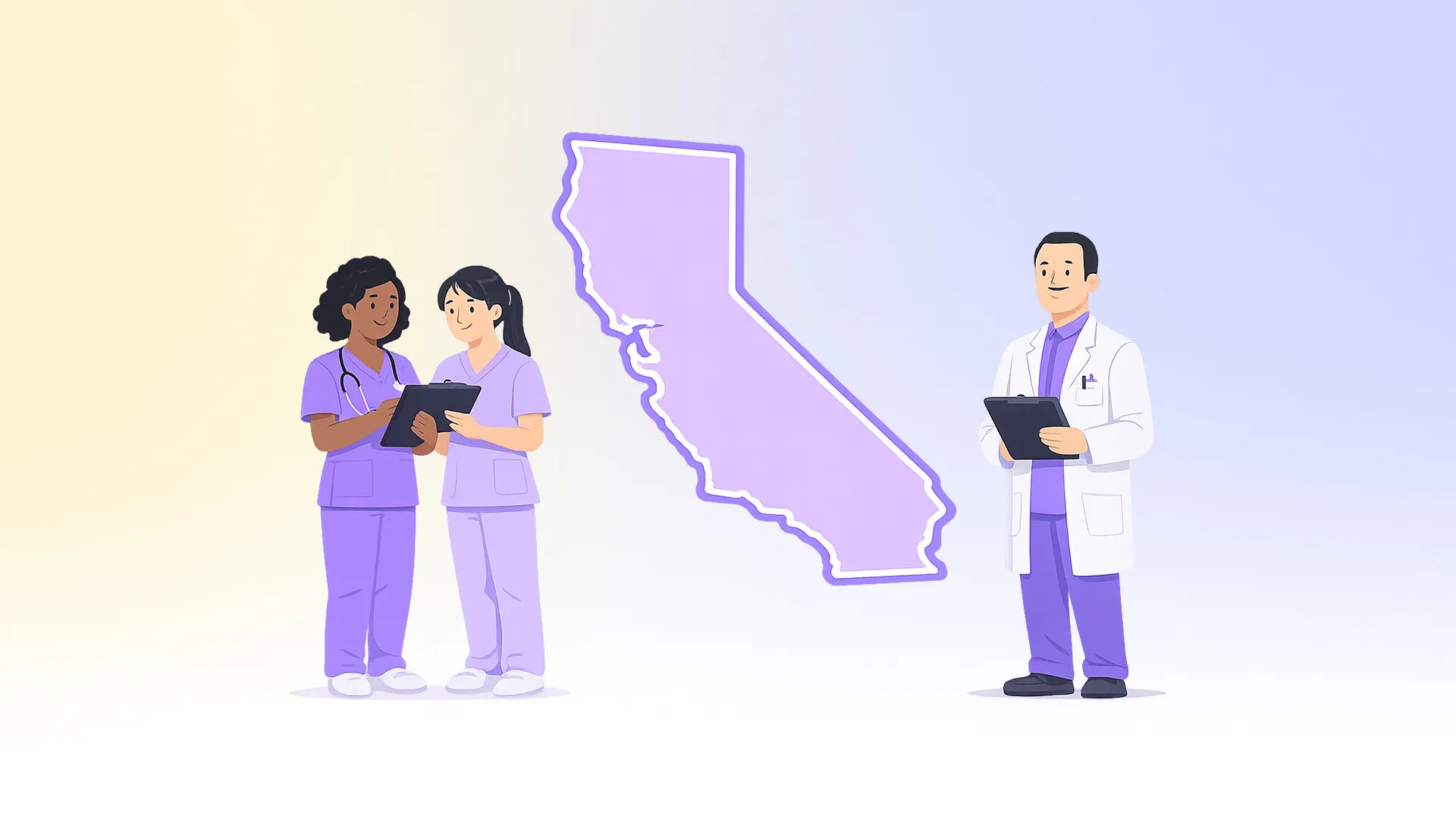
Finding an FNP preceptor in California is a required step for family nurse practitioner students to complete clinical hours, graduate, and qualify for national certification and licensure. Most FNP programs require supervised clinical training in primary care and related settings, where students gain experience in assessment, treatment, and patient management under an approved clinical preceptor.
TL;DR - Finding an FNP Preceptor in California (Without Losing Your Mind)
- Family nurse practitioner students in California must secure an approved FNP preceptor to complete required clinical hours and meet program and licensure requirements.
- Finding NP preceptors in California is challenging due to high student volume, limited clinical sites, and provider workload, especially in primary care settings.
- Clinical placements may include primary care, family medicine, urgent care, women’s health, pediatrics, long term care, and approved telehealth settings, depending on program rules.
- Paid preceptor matching services are commonly used by NP students when cold outreach and school resources do not lead to confirmed placements.
- Creating a free NPHub account allows nurse practitioner students to view available, vetted FNP preceptors in California and plan clinical placements without delays.
Finding an FNP Preceptor in California
Why does finding an FNP preceptor in California feel so difficult, even for experienced nurse practitioner students?
One of the biggest reasons is the number of students competing for the same clinical placements. California has a high concentration of nurse practitioner programs, which means many NP students are searching for preceptors at the same time.
In high demand areas such as the Bay Area, San Diego, and the Inland Empire, clinical sites often receive more requests than they can realistically handle.
The search for an FNP preceptor in California takes time and coordination but if you go ahead and create your NPHub account (for free) you can get access to vetted preceptors, narrow options by clinical site and specialty, and reduce time spent contacting clinics that are not accepting NP students.
Provider workload also plays a major role. Physicians, nurse practitioners, and other clinicians working in primary care, family medicine, urgent care, and women’s health are managing full patient schedules.
Taking on a student adds supervision responsibilities, evaluations, and time commitments that many clinicians cannot fit into an already full schedule.
School support is another challenge. Many programs require students to secure their own clinical preceptor but provide limited resources to help with the process. This leaves nurse practitioner students responsible for outreach, follow ups, and coordination with clinical sites while still meeting academic and work obligations.
Location can further complicate the search. In underserved areas and parts of the Central Valley, there may be fewer clinicians available to precept. In urban regions, the competition among many NP students can be intense. Both situations make it harder to find available preceptors willing to take on students.
All of this happens while students are working with an active RN license, caring for patients, completing coursework, and tracking required clinical hours. It is a demanding process that often feels overwhelming.
The difficulty in finding an FNP preceptor is not a reflection of your qualifications or dedication. It is a common challenge built into the current structure of NP education in California.
What Is a Family Nurse Practitioner (FNP)?
A Family Nurse Practitioner is an advanced practice registered nurse who provides primary care to patients across the lifespan.
Family nurse practitioners care for children, adults, and older adults in a wide range of clinical settings, often serving as a patient’s main point of contact for ongoing care.
This role builds on a strong nursing foundation and expands it into assessment, diagnosis, treatment, and long term management of both acute and chronic conditions. FNPs focus heavily on preventive care, patient education, and supporting overall health and wellness.
In practice, a family nurse practitioner may be responsible for:
- Performing health assessments and physical exams
- Diagnosing and treating common medical conditions
- Managing chronic illnesses such as diabetes, hypertension, and asthma
- Prescribing medications within state scope of practice
- Providing preventive care and health screenings
- Supporting patients with weight management and lifestyle changes
- Delivering care in primary care, family medicine, urgent care, and community based settings
FNPs work closely with physicians, clinicians, and other healthcare professionals to deliver coordinated patient care. In many settings, especially underserved areas, family nurse practitioners play a critical role in improving access to care.
Clinical training is a key part of NP education. Through clinical experience, nurse practitioner students learn how to apply classroom knowledge in real world practice settings.
Clinical preceptors guide students through patient interactions, assessments, and evaluations, helping them develop the skills needed for safe and effective practice.
This is why securing the right clinical preceptor matters so much. The quality of your clinical experience directly affects your professional development, confidence, and readiness for independent practice after graduation.
Types of FNP Clinicals You’ll Need
Family nurse practitioner programs are designed to prepare students for broad primary care practice, which means clinical training must cover multiple patient populations and care settings.
While specific requirements vary by school, most programs expect nurse practitioner students to complete clinical hours across several core areas:
- Primary care and family medicine rotations make up a large portion of FNP clinical training.
- In these settings, students gain experience providing comprehensive care to patients across the lifespan. This includes preventive visits, chronic disease management, assessments, and treatment planning. Many programs require a minimum number of hours specifically in primary care.
- Adult and geriatric care rotations focus on managing complex medical conditions, medication management, and long term treatment plans.
- Family nurse practitioner students often work with patients who have multiple chronic conditions and need ongoing monitoring and follow up.
- Pediatrics is another common rotation requirement.
- These clinical placements allow students to develop skills in growth and development assessments, pediatric evaluations, immunizations, and common childhood illnesses.
- Women’s health rotations may include preventive care, reproductive health, and routine gynecologic services.
- Depending on the practice setting, students may also gain exposure to prenatal or postpartum care.
Some programs allow a portion of clinical hours to be completed in urgent care or acute care settings. These rotations focus on same day assessments, treatment of acute conditions, and fast paced patient care. Schools often limit how many hours can be counted in these environments, so it is important to confirm requirements with faculty early.
Across all rotations, clinical preceptors play a key role in supervision, evaluation, and skill development. Preceptors guide students through real world clinical experience, help them meet program requirements, and assess readiness for certification and licensure.
By the time you are trying to line up multiple rotations, most students are already exhausted. Keeping track of which specialties your program requires, which clinical sites count, and who is even accepting students can quickly turn into a second full time job and creating a free NPHub account gives you visibility into real, available preceptors so you can stop guessing and start locking in clinical placements that actually count toward your hours.
Understanding which rotations your program requires helps you focus your search, approach potential preceptors more strategically, and avoid delays in completing your clinical hours.
FNP Salary and Job Outlook in California
For many nurse practitioner students, the pressure of finding an FNP preceptor is tied to what comes next. Clinical placements are not just a program requirement. They are the final step before stepping into a role that offers stability, flexibility, and strong earning potential in California.
Family Nurse Practitioners are advanced practice registered nurses with graduate level education who provide primary and specialty care across the lifespan. FNPs diagnose and treat acute and chronic conditions, order and interpret diagnostic tests, prescribe medications, and focus heavily on health promotion and disease prevention. In many practice settings, they perform many of the same services as physicians while working independently or as part of a care team.
Before entering an advanced practice role, students must hold a current unrestricted RN license and complete required clinical hours. After graduation, FNPs are eligible to sit for national certification, which opens the door to practice across a wide range of clinical settings.
Salary outlook for Family Nurse Practitioners in California
California consistently ranks as the top paying state for Family Nurse Practitioners. Average annual salary estimates range from approximately $151,000 to nearly $197,000, with earnings varying based on location, experience, and practice setting. This places California well above the national average for nurse practitioner compensation.
In several California cities, reported salaries are even higher:
- Oceanside averages over $223,000 per year
- Los Angeles averages over $186,000 per year
- San Diego averages over $172,000 per year
- San Jose averages over $154,000 per year
- Sacramento averages over $152,000 per year
These numbers reflect the strong demand for primary care providers across the state, particularly in high population areas and regions with limited access to care.
High salary potential and strong demand are part of what makes the FNP role worth pursuing. Securing the right clinical experience is what allows nurse practitioner students to reach this stage without delays and creating a free NPHub account is the first step to see available FNP preceptors in California so you can plan clinical placements that support your long term goals.
Job demand and practice settings in California
Family nurse practitioners continue to be in demand across California, largely because they are trained to work in multiple care settings where access to providers is limited.
This flexibility is a major reason FNPs are relied on throughout the state, especially in primary care and community based environments.
- Primary care offices remain one of the most common settings for family nurse practitioners. In areas facing a shortage of primary care providers, particularly in rural and underserved communities, FNPs help fill gaps in access to care. In California, where practice authority is reduced, FNPs often work alongside physicians while still providing comprehensive patient care. These settings typically offer more predictable schedules compared to hospital based roles, which can support better work life balance.
- Outpatient centers are another growing area of employment. These clinics focus on providing timely care without hospital admission and often operate during standard business hours. Family nurse practitioners in outpatient settings assist with assessments, treatment planning, minor procedures, and follow up care, making these roles appealing to those seeking consistency in scheduling.
- Long term care facilities rely on FNPs to manage patients with complex and chronic conditions. Residents in these settings are often at higher risk for hospitalization, and family nurse practitioners help coordinate care across specialties, monitor changes in condition, and support continuity of care within an interdisciplinary team.
- Physicians’ offices continue to be a common employment setting in states with limited practice authority. In California, FNPs often work in collaboration with supervising physicians. Even within these structures, family nurse practitioners provide high quality care and manage a wide range of patient needs within the scope allowed by state regulations.
Across these practice settings, the demand for family nurse practitioners is driven by provider shortages, aging populations, and the need for accessible primary care. This demand is what makes clinical training and securing the right preceptor such a critical step for nurse practitioner students preparing to enter the workforce.
These practice settings are where many family nurse practitioner students hope to work after graduation. Finding a clinical preceptor in one of these environments is often required by the program and difficult to do alone and with a free account you can secure vetted preceptors across multiple settings, helping align clinical training with future practice opportunities.
Why Cold Outreach Rarely Works To Secure FNP Preceptors in California?
For many nurse practitioner students, the first instinct is to start emailing clinics and calling offices directly. On paper, this feels like the responsible approach. In reality, cold outreach rarely leads to a confirmed FNP preceptor in California.
Most clinical sites receive frequent requests from NP students, PA students, and medical students. Front desks are often instructed to decline student inquiries or forward them to a general inbox that is not monitored closely. Even when messages reach a clinician, there is often no follow up.
Time is another major factor. Physicians and nurse practitioners in primary care, family medicine, urgent care, and women’s health are focused on patient care, documentation, and meeting productivity expectations. Reviewing student requests, coordinating schedules, and completing evaluations adds work that many clinicians are not able to take on.
There is also uncertainty on the provider side. Some potential preceptors are unsure about program requirements, supervision expectations, or whether their practice setting qualifies. Without clear information up front, many clinicians choose not to respond rather than risk committing to something they cannot support.
Geography and competition make the process harder. In high demand areas like the Bay Area and San Diego, clinics are contacted constantly. In underserved areas, there may be fewer clinicians available to precept at all. Either way, many NP students spend weeks reaching out with little progress.
Cold outreach often consumes time without moving the process forward. Understanding why this approach falls short can help nurse practitioner students shift toward more effective ways of securing clinical placements.
Are Preceptor Matching Services Worth It To Secure California FNP preceptors?
Preceptor matching services have become a common solution for family nurse practitioner students in California. These services connect NP students with vetted preceptors who are already open to teaching and meet program requirements.
For many NP students, this approach reduces uncertainty. Instead of guessing which clinics might accept students, matching services provide visibility into available preceptors, practice settings, and timelines. This allows students to plan clinical placements more efficiently and avoid delays.
While every student’s situation is different, these options have helped many nurse practitioner students move past stalled searches and complete their clinical training on schedule.
When they first hear about paid preceptor services, after years of tuition, fees, and unpaid clinical work, the idea of paying for a clinical placement can feel frustrating.
But paid preceptor services (like NPHub) exist because the traditional approach often fails. Preceptors are clinicians with full patient loads, and supervising students requires time, documentation, and evaluations. Compensation helps make precepting feasible and predictable for providers who might otherwise opt out.
For students, the value is in structure and clarity. A preceptor matching service identifies clinicians who are already willing to take students, confirms that the practice setting meets program requirements, and coordinates the placement details. This reduces the risk of last minute cancellations or placements that do not count toward required clinical hours.
Whether a paid service is the right choice depends on your timeline, program requirements, and available resources. For many NP students in California, it becomes a practical solution when securing a preceptor on their own is no longer realistic.
How NPHub Helps FNP Students in California Secure Preceptors
NPHub was built to solve the exact problem many family nurse practitioner students face when they reach the clinical phase of their program:
- Instead of asking students to cold contact clinics or rely on outdated school lists, NPHub connects nurse practitioner students with vetted preceptors who are already open to teaching.
- For FNP students in California, this means access to preceptors in primary care, family medicine, urgent care, women’s health, pediatrics, and other qualifying practice settings.
- Preceptors are reviewed to ensure they meet program and licensure requirements, which helps reduce the risk of placements being denied or delayed.
- The matching process is designed to be straightforward. Students share their specialty needs, preferred location, timeline, and program requirements. From there, NPHub identifies available preceptors that align with those criteria. This removes much of the back and forth that typically slows down the search process.
- NPHub also supports NP students beyond the initial match. The team assists with paperwork, coordination with schools, and communication throughout the clinical placement. This helps ensure the rotation stays on track from start to finish.
For nurse practitioner students who are balancing work, school, and personal responsibilities, having structure around clinical placements can make a significant difference. Instead of spending months searching, students can focus on clinical training, evaluations, and gaining real world experience.
You’re Not Behind
Struggling to find an FNP preceptor does not mean you missed a step or waited too long. Many capable family nurse practitioner students run into the same obstacles, regardless of experience or preparation.
The challenge comes from limited availability, high demand, and a system that places much of the responsibility on students.
Clinical training is a transition point. It requires a different kind of planning, support, and structure than coursework alone.
Once the right clinical site and preceptor are in place, many students find they are able to focus again on learning, patient care, and professional development.
If you are still searching, there are options available. With the right resources and clear information, it is possible to move forward and complete your clinical hours without putting your program on hold.
If you are still searching for your FNP preceptors in California, creating a free NPHub account gives you a clear view of available preceptors and practical options for completing your clinical hours without delaying your program.
Frequently Asked Questions About FNP Preceptors in California
1. Who can serve as an FNP preceptor in California?
An FNP preceptor is typically a licensed family nurse practitioner, physician, or other qualified clinician approved by your school. Most programs require preceptors to have an active, unrestricted license and experience in a qualifying practice setting such as primary care, family medicine, or women’s health.
2. How many clinical hours do family nurse practitioner students need to complete?
Clinical hour requirements vary by program, but most family nurse practitioner students must complete a minimum number of supervised clinical hours across multiple settings, including primary care. Your school will outline the required total and any specialty specific minimums.
3. When should I start looking for an FNP preceptor in California?
Many NP students begin searching four to six months before their rotation start date. In high demand areas like the Bay Area, San Diego, and Inland Empire, starting early improves the chances of securing a clinical placement that meets program requirements.
4. Can family nurse practitioner students complete clinical hours through telehealth?
Some programs allow a portion of clinical hours to be completed through telehealth, especially for follow up care, chronic disease management, and patient education. Approval depends on school policies and how supervision and evaluations are handled.
5. Why is it so hard to find FNP preceptors in California?
California has a high number of nurse practitioner students and a limited number of clinicians willing or able to precept. Provider workload, reduced practice authority, and competition from medical and PA students all contribute to limited availability.
6. Are paid FNP preceptor services allowed in California?
Most programs allow students to use paid preceptor matching services, but requirements vary by school. It is important to confirm that the preceptor, practice setting, and clinical hours meet your program’s standards before committing.
7. What happens if I cannot find an FNP preceptor in time?
If a preceptor is not secured by the deadline, students may need to delay their clinical course or adjust their program timeline. This is why many nurse practitioner students seek additional resources to avoid last minute disruptions.
8. How does NPHub help family nurse practitioner students?
NPHub connects nurse practitioner students with vetted FNP preceptors in qualifying practice settings and supports the process from matching through completion of the clinical placement, including coordination and paperwork support.
Key Definitions & Terms
- Family Nurse Practitioner (FNP)
A family nurse practitioner is an advanced practice registered nurse who provides primary care to patients across the lifespan. FNPs diagnose and treat acute and chronic conditions, prescribe medications, and focus on health promotion and disease prevention in a variety of practice settings. - FNP Preceptor
An FNP preceptor is a licensed clinician, typically a family nurse practitioner or physician, who supervises nurse practitioner students during clinical training and evaluates their clinical performance. - Clinical Preceptor
A clinical preceptor is a qualified healthcare provider responsible for supervising students during clinical experience, providing guidance, oversight, and formal evaluations required by the program. - Clinical Hours
Clinical hours are the supervised practice hours nurse practitioner students must complete in approved clinical settings to meet program and certification requirements. - Clinical Placement
A clinical placement is an approved clinical site and preceptor arrangement where NP students complete required clinical training under supervision. - Clinical Site
A clinical site is the healthcare setting where clinical training takes place, such as a primary care clinic, family medicine practice, urgent care center, or community health clinic. - Practice Setting
A practice setting refers to the type of healthcare environment where patient care is delivered, including primary care offices, outpatient clinics, long term care facilities, schools, and public health clinics. - Telehealth Clinical Rotation
A telehealth clinical rotation allows nurse practitioner students to complete approved clinical hours through virtual patient care under real time supervision, depending on program policies. - Preceptor Matching Service
A preceptor matching service connects nurse practitioner students with vetted preceptors who meet program requirements and are available to supervise clinical training.
Article details
- Last updated
January 16, 2026 - Fact-checked by
NPHub Clinical Placement Experts & Student Support Team - Sources and references
- https://onlinelearning.csuohio.edu/blog/what-is-an-fnp
- https://www.sonhs.miami.edu/academics/masters-programs/fnp/program-highlights/index.html
- https://www.registerednursing.org/articles/best-states-for-fnp/
- https://www.indeed.com/career/family-nurse-practitioner/salaries/CA
- https://onlinenursing.cn.edu/news/top-6-places-where-family-nurse-practitioner-can-work
- https://www.nphub.com/how-it-works
- https://www.nphub.com/find-preceptors
Find a preceptor who cares with NPHub
Book a rotation.webp)
.jpeg)

.webp)

.jpeg)

%20(3)%20(2).svg)
.webp)