
.png)



.webp)
TL;DR
- Most NP programs rely on transactional placement models, passive databases, and one-off matches that reset to zero every term, leaving faculty and coordinators to carry the full burden of securing clinical sites.
- Transactional approaches typically lack ongoing preceptor relationships, meaningful vetting beyond credentials, and any infrastructure for forecasting clinical capacity across cohorts.
- Relationship-driven recruitment, where dedicated teams continuously engage, vet, and support preceptors over time, produces more reliable, higher-quality placements that programs can plan around.
- NPHub's model is clinician-led, built on NP-to-NP vetting interviews, 45-day re-verification cycles, and specialty expertise that compounds with every term rather than disappearing between them.
- For NP programs looking to reduce faculty workload, strengthen accreditation compliance, and improve on-time graduation rates, the shift from transactional placement to relationship-driven recruitment is not incremental — it is structural. Connect with NPHub's university team →
Every Term, the Same Scramble
If you lead or coordinate an NP program, this cycle probably feels familiar: a new cohort is approaching clinical rotations, and the race to secure enough quality preceptors and clinical sites starts all over again. Faculty stretch beyond their teaching roles to chase down placements. Coordinators juggle spreadsheets and unanswered emails. Students wait, uncertain whether their clinical placements will be confirmed in time to stay on track for graduation.
The pressure is only growing. Recent data from the American Association of Colleges of Nursing (AACN) confirms the trend: DNP enrollment has grown continuously for over two decades, master's-level nursing programs saw a 4.8% increase last year, and applications to DNP programs surged 18.5% in 2024. Yet AACN identifies insufficient clinical placement sites, faculty, and preceptors as primary barriers to accommodating qualified applicants.
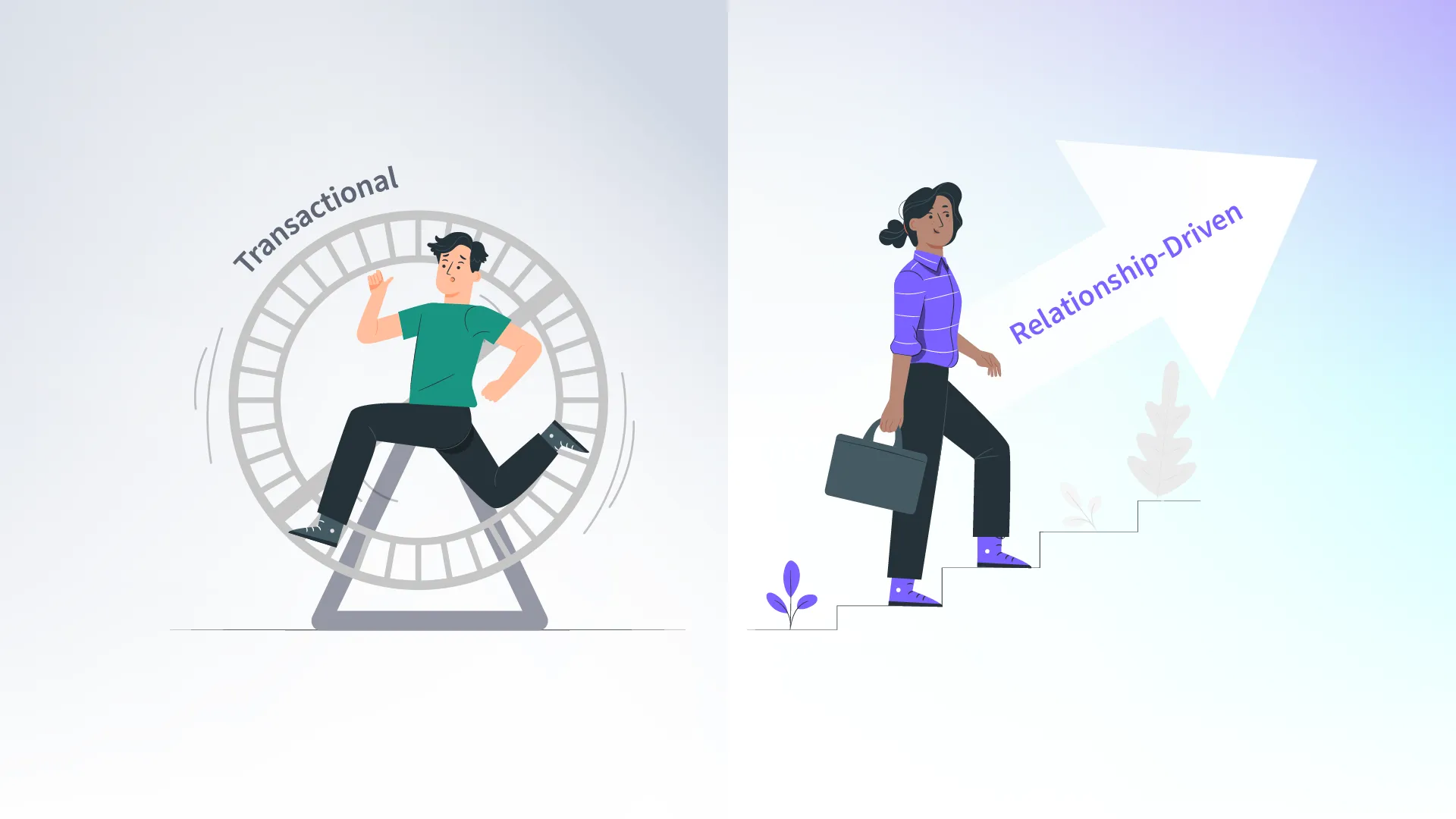
Most NP programs rely on internal outreach, passive databases, or transactional placement vendors to fill this gap. These approaches typically share the same limitation: they treat each placement as a standalone transaction.
The result:
- No continuity with preceptors from one term to the next
- No capacity forecasting across specialties or cohorts
- No compounding benefit, every cycle resets to zero
- Full burden on faculty and coordinators to make it work again
The real challenge facing programs today is not simply a shortage of clinical sites. It is the absence of a recruitment model built to maintain lasting relationships with preceptors, so programs are not constantly starting from scratch.
That distinction between transactional placement and relationship-driven recruitment is what this article explores.
Connect with NPHub's university team →
Why Transactional Clinical Rotations Leave NP Programs Carrying the Risk
Most clinical placement models in NP education follow a familiar pattern: a program or student searches a database, identifies an available preceptor, submits paperwork, and hopes the match holds through the end of the rotation. It is a process built around filling individual slots rather than building clinical capacity over time.
These transactional models serve a purpose. They can connect students with preceptors when a program's internal network falls short. But they were not designed to support the scale, quality, or consistency that universities need as enrollment continues to grow.
Research on academic-practice partnerships reinforces this point. AONL's Compendium 2.0 on sustainable partnerships identifies transactional mindsets as a foundational barrier to effective collaboration, noting that when partnerships are treated as mere transactions, outcomes are limited and resentment can build over time.
Here is where transactional placement models typically break down for NP programs:
- Relationships reset every term: Once a rotation ends, there is no ongoing connection between the program and the preceptor or the clinical site. Programs lose whatever rapport or institutional knowledge was built, and start over in the next cycle.
- Vetting stops at credentials: Licensure and certification may be confirmed, but clinical fit, teaching readiness, patient population, and specialty alignment are often overlooked. A preceptor who is qualified on paper may not provide the clinical experience that a program's students actually need.
- The model is reactive by design: Placements are filled one at a time with no ability to forecast capacity, plan across cohorts, or coordinate by specialty. There is no infrastructure for proactive workforce planning, only slot-filling.
- Risk stays with the program: When a placement falls through mid-rotation, faculty and coordinators absorb the disruption. They chase alternatives, manage compliance concerns, handle additional paperwork, and bear the cost of delays, often without support from the placement provider.
Sustainable partnerships require shared responsibility, structured mentorship, and ongoing dialogue, not one-off transactions where one side carries the burden.
Transactional models are not inherently bad. But for programs trying to deliver efficient, consistent clinical rotations at scale, they represent a ceiling, not a foundation.
What Changes When Recruitment Is Built on Relationships
There is another way to approach clinical placement, one where dedicated recruitment teams actively build, maintain, and deepen relationships with preceptors and clinical sites over time, not only when a slot needs to be filled.
This is the model NPHub operates on. And it changes the dynamic for NP programs in ways that go well beyond logistics.
Why does this matter? Sustainable academic-practice partnerships found that the most effective collaborations are driven by shared responsibility, structured mentorship, and ongoing dialogue, not transactional exchanges. The same principle applies to how preceptors are recruited and retained. When recruitment is treated as a relationship rather than a transaction, the quality and reliability of placements improve at every level.
Here is what relationship-driven recruitment looks like in practice:
Continuous engagement, not seasonal outreach: NPHub's Preceptor Recruiters do not wait for a program to submit a student roster before reaching out to clinical sites. They conduct regular outreach, maintain real-time communication, and provide ongoing assistance to preceptors throughout their time in the network. This keeps sites engaged and placement-ready, not cold and unresponsive when a program needs them most.
Specialty and regional expertise that sharpens every match: Over time, recruiters develop deep knowledge of specific specialties, regions, and communities. This allows them to match students with preceptors based on clinical experience, patient population, and program criteria, rather than just on who happens to be available. That expertise is what separates a placement that meets minimum requirements from one that genuinely supports a student's development.
Institutional knowledge that compounds: Because recruiters maintain long-term contact with preceptors and sites, they know which environments work well for certain rotations, which preceptors mentor students most effectively, and where emerging capacity exists. This knowledge does not reset between terms, it accumulates, giving programs access to insights that no database can replicate.
Proactive risk identification: Ongoing relationships mean recruiters can identify scheduling changes, capacity shifts, or compliance concerns before they disrupt a student's rotation. Instead of faculty discovering a problem after paperwork has been submitted, the recruitment team surfaces issues early and provides guidance to keep placements on track.
This is a fundamentally different culture of recruitment. It mirrors what workforce research consistently shows: that long-term relationship investment leads to better outcomes than transactional approaches — whether in talent acquisition, employee retention, or in this case, clinical education partnerships.
For NP programs, the difference is tangible. Placements become more predictable. Faculty spend less time chasing sites. And the partnership between your program and your placement provider strengthens with every term — rather than starting over.
Connect with NPHub's university team to see how a relationship-driven recruitment model works in practice.
From Individual Placements to Program-Level Capacity
Securing a single strong placement matters. But what NP programs actually need is a system that delivers consistent, repeatable results across terms and cohorts without requiring faculty and coordinators to rebuild the pipeline every cycle.
Relationship-driven recruitment makes this possible at the program level:
- Stable clinical capacity programs can plan around: Preceptors who stay in the network long-term create a foundation that allows programs to forecast availability by specialty, geography, and term rather than reacting to shortages after enrollment is already set.
- Quality that does not degrade over time: NPHub's recruiters run reports and continuously review preceptor performance, site compliance, and credential status, including re-verification every 45 days. This ensures the standards a program relies on in September still hold in March.
- Cohort-level coordination: Instead of managing placements student by student, programs can work with a recruitment team that supports entire cohorts through coordinated strategies, aligning timelines, specialties, and documentation across the group.
For university leadership, this connects directly to what matters most: on-time graduation rates, accreditation compliance, and enrollment confidence.
For faculty and clinical coordinators, the shift is just as significant. When a dedicated recruitment team handles site outreach, preceptor engagement, and scheduling coordination, coordinators are no longer the first responders to every placement disruption. Issues are identified early through ongoing monitoring and escalated through a structured process, not dropped on a coordinator's desk as emergencies.
Programs also gain clearer reporting and visibility into placement status, compliance documentation, and outcome data without building tracking systems internally. Over time, recruiters learn each program's specific requirements and accreditation standards, becoming an extension of the school's clinical education infrastructure.
This is not just operational efficiency. It is a shift in responsibility from programs bearing all placement risk alone to sharing that responsibility with a partner accountable for outcomes.
Inside NPHub's Recruitment Model
What makes NPHub's approach operationally different comes down to how preceptors are sourced, evaluated, and supported over time.
Clinician-led recruitment: NPHub's Preceptor Recruiters are supported by a team of board-certified Nurse Practitioners who conduct NP-to-NP vetting interviews, assess clinical fit, and provide guidance on specialty alignment. This is not an administrative function, it requires real-world clinical expertise. Every candidate is evaluated not just on credentials, but on their ability to mentor students in a meaningful learning environment.
Structured vetting built for university standards: Before entering the network, every preceptor completes license verification, credential review, a 20-minute clinical interview, and site-level approval. This multi-layered process is designed to meet the compliance and quality benchmarks universities rely on during accreditation reviews. For a deeper look at these standards, NPHub's preceptor verification article outlines each step in detail.
Relationship depth that benefits every program: As recruiters build tenure with preceptors and sites, they develop the kind of trust and familiarity that makes placements smoother, faster, and more reliable. That institutional knowledge, which talent thrives in, which settings, which sites are expanding, which communities have emerging capacity, compounds over time and creates resources no transactional model can replicate.
What Your Program Should Expect
The choice is straightforward: continue with placement models that reset every term, or partner with a recruitment team that builds clinical capacity through relationships.
The right partner should deliver consistent placement quality across cohorts, proactive communication with real-time visibility, compliance-ready documentation and reporting, measurable reduction in faculty workload, and a growing network of engaged, vetted preceptors invested in clinical education.
If your NP program is looking for that kind of partnership, we'd welcome the conversation.
.webp)
Frequently Asked Questions
How is relationship-driven recruitment different from using a preceptor database?
A database provides listings. Relationship-driven recruitment means dedicated recruiters actively source, vet, and maintain ongoing contact with preceptors and clinical sites — building familiarity, trust, and institutional knowledge that improves placement quality and reliability over time. Programs benefit from a partner that knows their requirements, not just a search tool.
How does NPHub's model reduce administrative burden on faculty and coordinators?
NPHub's recruitment team handles site outreach, preceptor engagement, scheduling coordination, compliance documentation, and ongoing monitoring. This means faculty and coordinators spend less time chasing placements and managing mid-rotation disruptions, and more time focused on teaching, student development, and program leadership.
What does NPHub's preceptor vetting process include?
Every preceptor completes license and credential verification, a 20-minute NP-to-NP clinical interview conducted by board-certified Nurse Practitioners, and site-level administrative approval. This structured process evaluates not only licensure but also clinical fit, specialty alignment, patient population, and teaching readiness. For a detailed breakdown.
How does NPHub help programs maintain compliance for accreditation reviews?
NPHub's recruiters continuously review preceptor credentials, site status, and scope of practice — including re-verification every 45 days. Programs receive compliance-ready documentation and reporting that can support CCNE and ACEN accreditation standards without having to build internal tracking systems.
Can NPHub support placements across multiple specialties and cohorts simultaneously?
Yes. Because recruiters develop expertise in specific specialties and regions, NPHub can coordinate placements at the cohort level — aligning timelines, specialty requirements, and documentation across multiple students and clinical sites within the same term.
How does this model help with on-time graduation rates?
By reducing rejected placements, mid-rotation disruptions, and last-minute scrambles, relationship-driven recruitment helps students complete required clinical hours on schedule. Programs gain the ability to forecast clinical capacity in advance, which supports more predictable progression toward graduation.
What kind of visibility do programs have into placement status?
Programs receive real-time updates on placement progress, preceptor compliance status, and outcome data. This reporting is managed by NPHub's team, giving coordinators clear visibility without the need to build or maintain separate tracking resources internally.
How do I connect with NPHub's university team?
You can schedule a consultation with NPHub's university partnership team to explore how the model fits your program's needs. There is no obligation, just a conversation about how relationship-driven recruitment can support your clinical education infrastructure.
Find a preceptor who cares with NPHub
Book a rotation.webp)
.jpeg)

.webp)

.jpeg)

%20(3)%20(2).svg)
.webp)