
.png)



.webp)
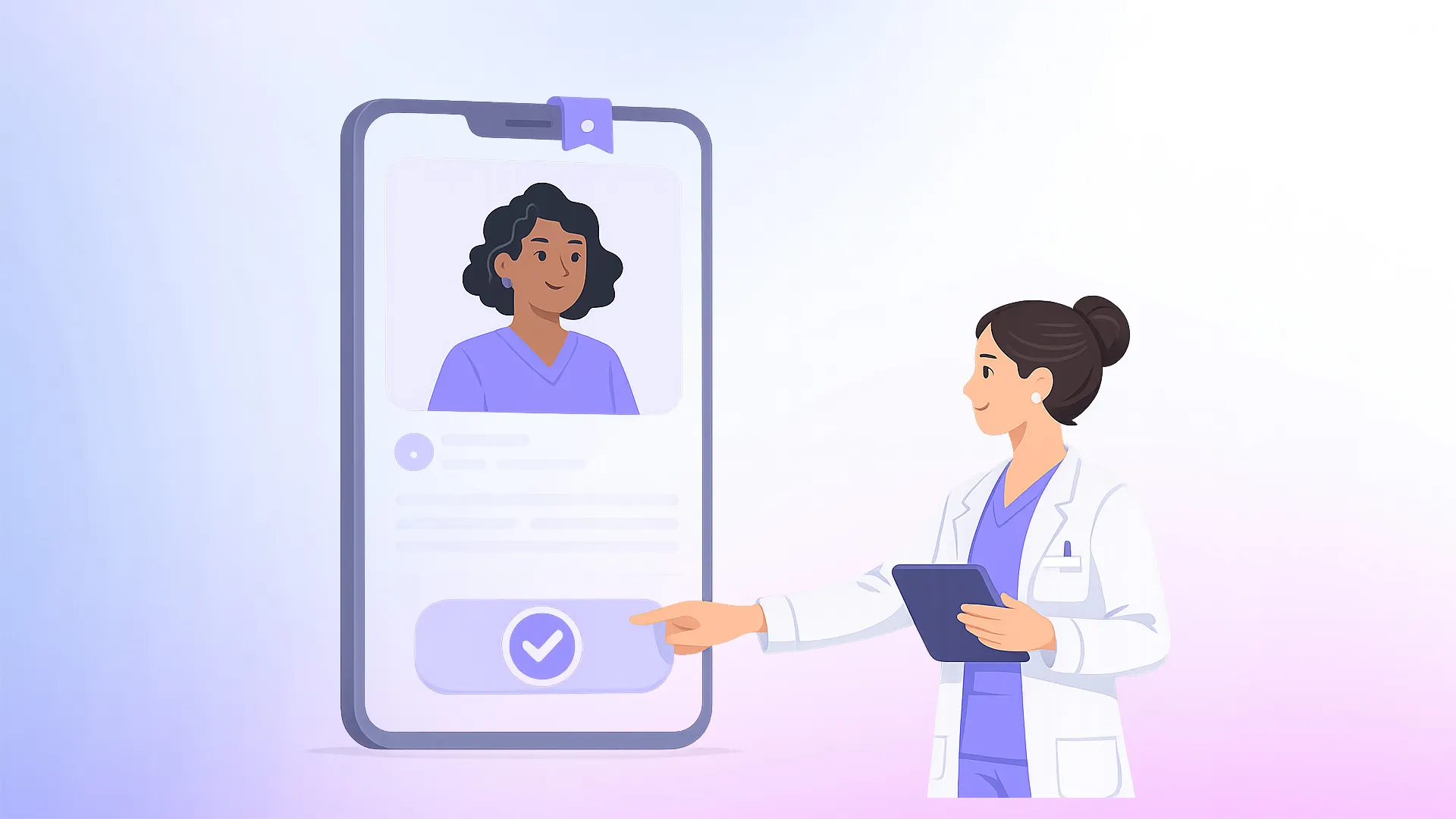
NPHub verifies preceptors through a clinician-led, multi-layered process that includes NP-to-NP vetting interviews, license and credential verification, clinical site approval, and ongoing monitoring. Every preceptor is reviewed and continuously re-verified by board-certified Nurse Practitioners to ensure academic acceptance, clinical quality, and consistency throughout a student’s rotation, even when real-world conditions change.
TL;DR - How NPHub Verifies Preceptors: Our Vetting, Safety, and Quality Standards
- NPHub verifies preceptors through a clinician-led, multi-layered process designed to support school acceptance, clinical quality, and consistency throughout clinical rotations.
- Every preceptor is vetted by board-certified Nurse Practitioners through NP-to-NP interviews, license and credential verification, and clinical site approval.
- Verification does not stop at onboarding; active preceptors are continuously monitored and re-verified every 45 days to account for real-world changes in healthcare settings.
- This framework reduces common risks for NP students, including rejected placements, mid-rotation disruptions, and delays in completing required clinical hours.
- Students who want to move forward with greater confidence can create a free NPHub account to connect with vetted preceptors and secure a clinical placement built on verified standards.
Why Preceptor Verification Is Important For Clinical Rotations?
Have you ever wondered whether the preceptor you find will actually be accepted by your school, support your clinical hours, and provide the kind of clinical experience you need to graduate on time?
For many NP students, clinical rotations are not stressful because of the work itself, but because of the uncertainty around finding a preceptor and securing a clinical placement that truly meets program requirements.
Clinical education depends on more than completing hours on paper. Each rotation must align with school expectations, university policies, and the learning goals of nurse practitioner programs.
When preceptors are not properly verified, students may face rejected placements, last-minute changes, or rotations that do not provide meaningful hands-on learning. These issues can delay graduation, increase tuition costs, and add unnecessary stress during an already demanding stage of education.
Preceptor verification directly impacts whether a clinical placement is accepted by your school. If you want to reduce the risk of rejected rotations or last-minute issues, creating a free NPHub account gives you access to these preceptors, who have already gone through a structured verification process designed to support program requirements.
How NPHub Verifies Preceptors in Real-World Clinical Settings
NPHub’s approach to verification is designed with this reality in mind. Instead of treating verification as a one-time checkpoint, it is structured as an ongoing process that supports consistency, communication, and oversight throughout the placement.
This helps students secure clinical placements that remain aligned with their program requirements, even as real-world conditions change.
NPHub focuses on verifying not only individual clinical preceptors, but also the clinical sites where rotations take place. This includes confirming that the environment supports the required clinical hours, aligns with educational goals, and can provide a meaningful clinical experience for students preparing for their profession.
This real-world approach also helps address common student concerns around last-minute changes or instability during rotations. By maintaining consistent communication with active preceptors and clinical sites, the NPHub team can identify changes early and guide students forward with clarity.
Rather than leaving students to manage issues alone, verification and oversight work together to support a more stable, stress free placement experience.
Ultimately, verifying preceptors in real clinical environments means recognizing that change is part of healthcare. To account for this, NPHub’s verification framework is built around three core pillars that guide how preceptors are evaluated, approved, and monitored over time.
Together, these pillars are designed to support students through their clinical rotations, protect their investment in education and tuition, and help them move forward toward graduation with greater peace of mind.
Pillar 1: Clinician-Led Oversight of Every NPHub Preceptor
At the core of NPHub’s verification standards is a clinician-led approach. Every NP preceptor in the network is sourced, evaluated, and onboarded by an internal clinical team made up of five board-certified Nurse Practitioners.
These are experienced nurse practitioners who understand clinical education, scope of practice, and what NP students need from their clinical rotations.
This matters because preceptor verification is not only an administrative task. It requires clinical judgment. By relying on an internal NP team rather than third-party reviewers or automated systems, NPHub ensures that decisions about who can teach and precept students are made by professionals who have worked in similar clinical environments.
Clinician-led oversight allows NPHub to evaluate whether a preceptor’s practice setting, patient population, and scope of care are appropriate for clinical education. It also helps ensure alignment with the expectations of NP programs and universities, which can vary significantly depending on specialty, clinical hours, and rotation requirements.
This approach also supports consistency. Because the same internal team is responsible for sourcing and onboarding preceptors, standards are applied uniformly across the network. For students, this reduces uncertainty when finding placement and increases confidence that the preceptor they are matched with has been reviewed through a structured, professional process.
By placing clinician oversight at the beginning of the placement process, NPHub helps students secure clinical placements that are more likely to be accepted by their school, provide meaningful clinical experience, and remain stable throughout the rotation. This foundation supports a smoother path through clinicals and helps students move forward toward graduation with fewer disruptions.
Many placement services rely on listings or basic credential checks. If working with preceptors reviewed by board-certified Nurse Practitioners matters to you, creating a free NPHub account is the first step to connecting with preceptors who have been evaluated for clinical scope, teaching readiness, and educational fit.
Pillar 2: Structured NP-to-NP Vetting Interviews
Licensure alone does not determine whether a preceptor is the right fit for NP clinical education. A nurse practitioner may be highly skilled in practice, yet not work in a setting or scope that aligns with student learning objectives, program requirements, or required clinical hours.
For this reason, NPHub includes a structured, peer-level clinical vetting interview as a core part of its verification process. Every prospective preceptor completes a required 20-minute one-on-one vetting call with a board-certified Nurse Practitioner from NPHub’s internal clinical team.
This is not a screening call or a form review. It is a focused NP-to-NP conversation designed to evaluate both clinical fit and readiness to teach students.
During this interview, the clinical team confirms key elements that directly impact the student experience, including the preceptor’s practice location or locations, scope of practice, specialty alignment, and the patient population students will encounter.
Equal attention is given to acuity, daily workflow, and whether the clinical environment can support meaningful hands-on learning rather than observation-only experiences.
The vetting interview also considers program-specific needs. NP programs and universities often have different expectations for primary care, women’s health, or specialty rotations.
By addressing these factors early, the interview helps reduce the risk of placing students in clinical sites that later fail to meet school requirements or are rejected during the approval process.
This step adds an important layer of quality control. It ensures that preceptors are not only licensed nurse practitioners, but also appropriate educators for clinical rotations.
For students, this translates into a higher likelihood of securing a placement that supports learning goals, provides relevant clinical experience, and remains aligned with academic expectations throughout the rotation.
Pillar 3: Credential and License Verification
Clinical quality and academic safety depend on more than experience alone. For a clinical placement to be accepted by a school and support a student’s education, the preceptor must meet clear licensure and credential standards. This is why credential and license verification is a required and non-negotiable part of NPHub’s process.
Every NP preceptor considered for the network undergoes a formal credential review conducted by NPHub’s internal team. This review includes verification of board certification, confirmation of an active and unrestricted state nursing license, and validation of the preceptor’s professional background and clinical experience. These steps help ensure that preceptors meet both regulatory requirements and academic expectations.
In addition to basic verification, license integrity screening is performed to identify any disciplinary actions, restrictions, or unresolved issues. Any preceptor with limitations or concerns on their license is automatically disqualified from onboarding. This zero-tolerance standard is in place to protect students, universities, and patient care environments.
For NP students, this level of verification reduces uncertainty during the placement process. It helps prevent situations where a placement is questioned or rejected after paperwork is submitted, which can lead to delays, additional cost, or last-minute stress. By confirming licensure and credentials upfront, NPHub helps students secure placements that are more likely to be accepted by their school and remain valid throughout the rotation.
This pillar reinforces academic credibility and patient safety while supporting a smoother clinical experience. It ensures that students are learning under qualified nurse practitioners who meet professional standards and are cleared to teach in a clinical setting.
License and credential issues are often discovered too late in the placement process. By creating a free NPHub account, NP students can secure preceptors who have already passed license verification and integrity screening, helping reduce compliance concerns before paperwork is submitted.
Pillar 4: Clinical Site and Administrative Approval Standards
Verifying a preceptor alone is not enough to ensure a successful clinical placement. Even when a nurse practitioner is fully qualified and experienced, the clinical site itself must be prepared and approved to host NP students.
Many placement issues arise not from the preceptor, but from administrative or site-level misalignment.
As part of its verification process, NPHub confirms that each clinical site has the appropriate administrative approval to support student rotations.
This includes verifying that the site is able to accommodate NP students, aligns with program expectations, and can meet documentation and compliance requirements set by schools and universities.
This additional layer of verification helps reduce common disruptions such as last-minute cancellations, paperwork delays, or conflicts between clinical sites and academic programs. It also supports smoother coordination during the placement process, allowing paperwork and approvals to move forward more efficiently.
For students, clinical site verification adds a layer of predictability. It increases the likelihood that a placement will be accepted by their school and remain stable throughout the rotation.
By addressing both the individual preceptor and the clinical environment, NPHub helps create placements that support consistent learning, timely completion of clinical hours, and progress toward graduation.
Pillar 5: Ongoing Monitoring and Re-Verification
Preceptor verification at NPHub is not a one-time event. Clinical rotations do not take place in a perfect or static environment, and NPHub does not assume that everything will always go exactly as planned.
Healthcare settings change, schedules shift, patient populations evolve, and unexpected situations can arise. That reality is built into how this pillar works.
This is why NPHub treats verification as a continuous process rather than an ideal-world checkpoint. The goal is not to pretend that issues never happen, but to reduce risk, detect changes early, and maintain oversight when real-world conditions shift.
NPHub’s NP-led team conducts proactive outreach every 45 days to ensure that active preceptors and clinical settings remain accurate, appropriate, and compliant.
During this ongoing review, the team confirms that:
- Practice locations remain accurate
- Scope of care has not changed
- Patient populations are still appropriate for student learning
- All information remains current and compliant
This process exists specifically because clinical environments are not static. Without regular re-verification, information can become outdated quickly, increasing the risk of issues being discovered late in a rotation when students have fewer options.
For students, this means oversight does not stop once paperwork is signed or a rotation begins. If something changes mid-rotation, it is more likely to be identified through ongoing monitoring rather than falling entirely on the student to detect or report.
This helps protect completed clinical hours, reduces last-minute disruptions, and supports clearer communication when adjustments are needed.
Continuous monitoring exists because clinical placements do not always unfold in ideal conditions. While this framework reflects how verification should be handled when everything goes as planned, NPHub recognizes that real-world healthcare includes exceptions, changes, and unique situations. This pillar is designed to account for those cases and maintain oversight when conditions are not perfect.
What Happens If Something Changes During a Rotation
Even with strong verification standards in place, clinical rotations do not always unfold exactly as planned. Healthcare environments are dynamic.
Preceptors may experience schedule changes, clinics may adjust operations, or patient populations may shift during a rotation. These situations are not uncommon, and they do not automatically mean a placement has failed.
What matters is how those changes are handled.
At NPHub, verification is paired with active oversight and consistent communication so students are not left to manage changes on their own. When something shifts during a rotation, the goal is to understand the situation early, assess how it affects clinical hours or learning objectives, and guide next steps in a way that protects the student’s progress.
Because preceptors and clinical sites are monitored throughout the rotation, changes are more likely to be identified before they become major disruptions. This allows the NPHub team to assist with communication, clarify expectations with the school if needed, and help students stay aligned with program requirements.
In cases where adjustments are required, students receive guidance rather than being asked to start over or navigate the issue alone.
This approach reflects a realistic understanding of clinical education. The verification framework outlines how placements should function under best-practice standards, while ongoing oversight exists to support students when real-world conditions introduce exceptions.
Together, these layers help reduce stress, protect completed clinical hours, and provide continuity during a critical stage of education.
For students, this means support does not stop once a rotation begins. It continues through the process, helping ensure that even when circumstances change, there is a clear path forward.
When things shift during a rotation, students often wish they had chosen a placement service with more structure. Creating a free NPHub account helps you move forward with preceptors who are part of a monitored network, so you are not navigating changes alone.

What Makes NPHub’s Preceptor Verification Process Different
A structured verification framework helps reduce uncertainty at every stage of the placement process. By reviewing preceptors, clinical sites, credentials, and scope of care upfront, students are less likely to encounter surprises after paperwork is submitted or a rotation has already begun.
Verification also plays a key role in clinical quality. When preceptors are evaluated for teaching readiness and clinical fit, students are more likely to gain hands-on experience aligned with their program goals.
Just as important, ongoing monitoring provides reassurance when conditions change. Students are not expected to manage unexpected issues alone or navigate communication between clinics and schools without guidance.
Instead, verification and oversight work together to provide continuity, support, and a clearer path forward, even when real-world situations introduce complexity.
Ultimately, this framework is designed to support students through one of the most critical parts of their education. By reducing risk, increasing alignment with academic requirements, and maintaining oversight throughout the rotation, NPHub helps students focus on completing their clinical hours, progressing through their program, and moving toward graduation with greater peace of mind.
At NPHub, verification is approached as an ongoing responsibility rather than a one-time checkpoint. Every preceptor on NPHub is sourced, vetted, and continuously monitored by board-certified Nurse Practitioners — not algorithms, not third parties. This structure exists to support real clinical environments, where conditions change and oversight matters throughout the rotation, not just at the start.
As NPHub continues to grow, we remain committed to evolving our verification standards to meet the highest academic and clinical expectations nationwide, so students can move through their clinical rotations with greater clarity, consistency, and confidence.
For students who want to secure their next clinical placement with fewer surprises, starting with vetted preceptors can make a meaningful difference. Creating a free NPHub account gives you access to a network built around verification, oversight, and real-world clinical support, so you can move forward with more confidence in your placement decision.
Frequently Asked Questions
1. How does NPHub verify preceptors before students are placed?
At NPHub, every preceptor is sourced and reviewed by board-certified Nurse Practitioners. Verification includes a clinician-led vetting interview, credential and license verification, and confirmation that the clinical site is approved to host NP students.
2. Is preceptor verification at NPHub a one-time process?
No. Preceptor verification at NPHub is ongoing. Active preceptors are re-verified every 45 days to ensure practice details, scope of care, and patient populations remain accurate and compliant throughout a student’s rotation.
3. How does this verification help ensure my rotation is accepted by my school?
The verification process is designed to align preceptors and clinical sites with program and university requirements. This reduces the risk of rejected placements due to scope misalignment, licensing issues, or site-level noncompliance.
4. What happens if something changes during my clinical rotation?
Healthcare environments change. NPHub’s ongoing monitoring allows changes to be identified early so students are supported with guidance and communication rather than being left to handle issues alone.
5. Are clinical sites verified in addition to individual preceptors?
Yes. NPHub verifies that clinical sites have administrative approval to host NP students, which helps reduce last-minute cancellations, paperwork issues, and conflicts with academic programs.
6. How is NPHub different from other preceptor placement services?
NPHub does not rely on open listings, algorithms, or third-party reviewers. Preceptors are sourced, vetted, and continuously monitored by board-certified Nurse Practitioners with direct clinical experience.
7. Does verification affect the quality of my clinical experience?
Yes. Preceptors are evaluated not only for licensure, but also for clinical fit, patient population, and readiness to teach. This increases the likelihood of meaningful hands-on learning aligned with NP education.
8. Can verification help prevent delays in graduation?
By reducing the risk of rejected placements, mid-rotation disruptions, and compliance issues, verification helps students complete required clinical hours on time and stay on track toward graduation.
9. Does NPHub’s verification process change as the network grows?
Yes. NPHub continues to evolve its verification standards to meet academic and clinical expectations nationwide while maintaining clinician-led oversight.
10. Why should NP students care about preceptor verification?
Because verification directly impacts whether clinical hours count, placements remain stable, and rotations support real clinical education rather than creating delays, stress, or added cost.
Key Definitions
- Preceptor Verification
A structured process used to confirm that a clinical preceptor meets licensure, credential, clinical scope, and educational standards required for NP clinical placements and school approval. - Vetted Preceptors
Clinical preceptors who have been reviewed through clinician-led interviews, license and credential verification, clinical site approval, and ongoing monitoring to ensure suitability for NP education. - Clinical Placement
A required component of NP programs where students complete supervised clinical hours at an approved clinical site under the guidance of a qualified preceptor. - Clinical Rotations
Defined periods within an NP program during which students gain hands-on clinical experience across specific specialties or care settings to meet graduation requirements. - Ongoing Monitoring and Re-Verification
A continuous oversight process in which preceptors and clinical sites are reviewed at regular intervals to ensure information remains accurate, compliant, and aligned with student and program requirements. - Preceptor Matching Service
A service that connects NP students with appropriate clinical preceptors while managing verification, paperwork coordination, and oversight to reduce risk and improve placement stability.
Article details
- Last updated
January 23, 2026 - Fact-checked by
NPHub Clinical Placement Experts & Student Support Team - Sources and references
Find a preceptor who cares with NPHub
Book a rotation.webp)
.jpeg)

.webp)
.jpeg)


%20(3)%20(2).svg)
.webp)