
.png)



.webp)
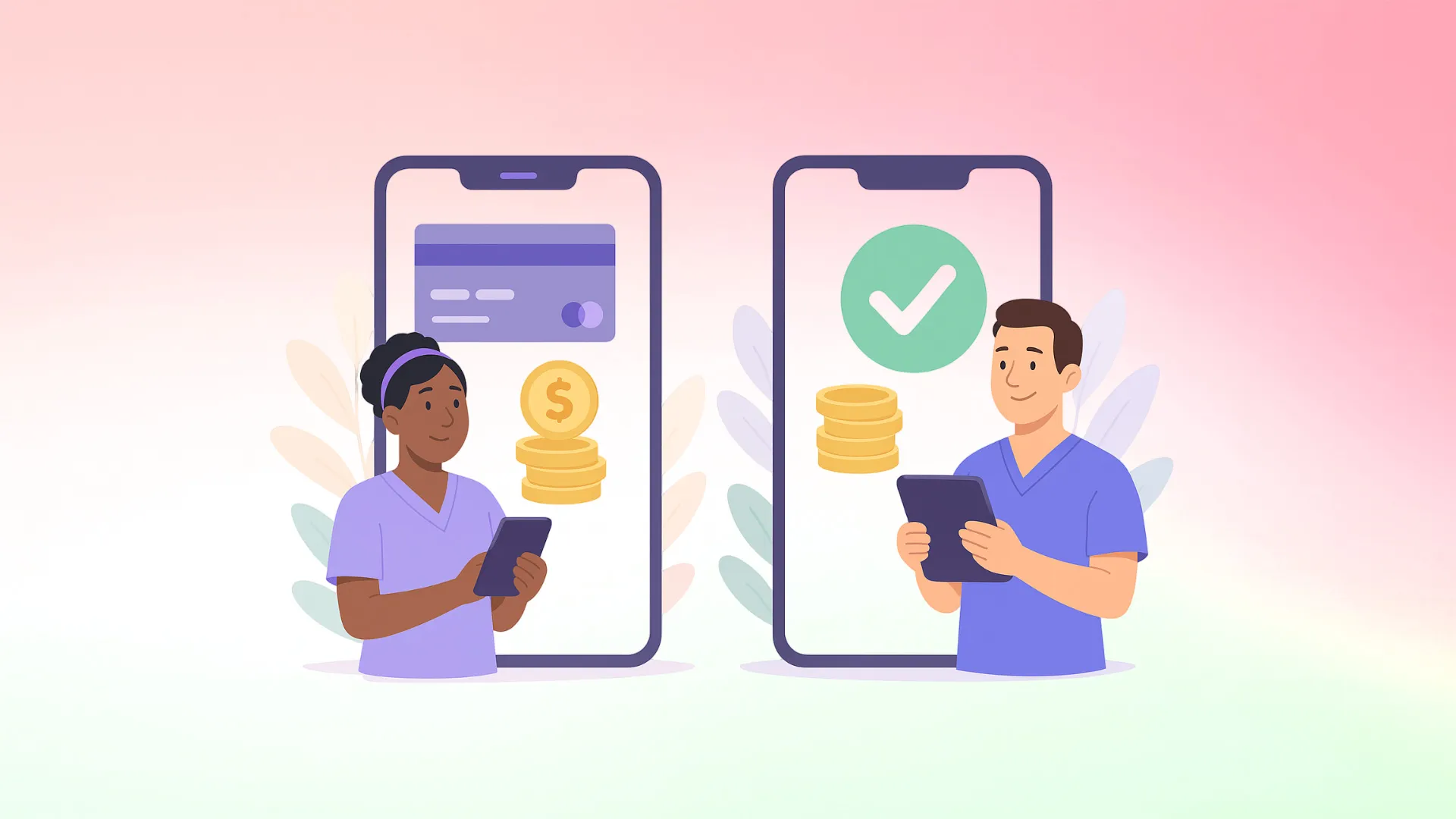
Nurse practitioner students do not get paid during clinicals. Clinical hours are an educational requirement, not employment, so NP students are never paid for their clinical rotations, regardless of specialty or clinical site. These placements provide supervised experience, professional development, and the training needed for graduation and licensure.
TL;DR - Do NP Students Get Paid for Clinicals?
- NP students do not get paid for clinicals. Clinical hours are treated as education, not employment, in every NP program and every specialty.
- Because NP programs especially online require students to find preceptors on their own, many end up paying 1,500 to 2,500 per rotation for a clinical placement, especially in competitive locations.
- A strong clinical site gives you experience, confidence, professional references, and sometimes a job offer, even though the hours are unpaid.
- Stipends only apply to postgraduate fellowships, not NP clinical rotations. Your required clinical hours never include salary, benefits, or tuition coverage.
- If searching alone has drained you, you can create a free NPHub account to explore placements that match your schedule and your program’s requirements without committing to anything.
What No One Tells You When You Begin Your NP Clinical Hours
At some point in your NP journey, usually right around the time you’re filling out clinical paperwork and looking at your bank account, a very real thought hits you: am I supposed to get paid for clinicals, or am I actually doing all this for free?
It usually happens on a day when you’re already stretched thin. You’re working your shifts, keeping up with assignments, trying to plan out your clinical hours, and juggling the usual tuition, textbooks, and living expenses that never seem to let up.
So the idea of spending even more time in a clinical site, caring for patients, following a preceptor’s lead, and rearranging your entire life to fit these rotations naturally makes you wonder what other nurse practitioner students ask too: is there any kind of pay, support, or financial help for all of this?
NP students today deal with intense schedules, limited clinical placements, and programs that often expect you to find qualified preceptors who meet school requirements on your own. It’s a lot.
And when you’re giving so much of your time, energy, and focus to your clinical experience, it’s completely understandable to hope there’s at least some kind of compensation or relief attached to it. Many NP students start by looking for a place where they can explore real clinical options that fit their schedule, their specialty interests, and their program requirements.
Having a space where you can see what is available, compare clinical sites, and understand what each preceptor offers can make this part of the process feel a lot less overwhelming. If that kind of clarity would give you some breathing room, you can create a free account with NPHub and start browsing placements that match what you are looking for at your own pace.
Before we get to the actual answer, it helps to look at why this question shows up for almost every NP student at some point, especially those trying to balance work, school, and life without losing themselves in the process.
Why NP Clinicals Are Not Paid (Even When It Feels Like They Should Be)
Once you begin your clinical rotations, it becomes clear how much time and energy your clinical hours really take. So it makes sense that many NP students start to wonder if compensation is part of the process, especially when they are already juggling tuition, textbooks, and living expenses.
Here is the straightforward answer. Nurse practitioner students never get paid for clinicals. In most NP programs, including online or hybrid formats, the clinical hours are considered an educational requirement, not employment. Whether you are in primary care, family practice, public health, critical care, or any of the competitive specialties or locations, students do not get paid for their time in the clinic.
Some students come across the idea of stipends and assume they might apply to NP clinicals, but this is where confusion usually starts. Stipends are not offered for standard NP clinical hours. What most people are referring to are postgraduate fellowships, which take place after graduation, not during your NP school program.
For example, an Infectious Diseases Fellowship (Mayo Clinic) for a Nurse Practitioner can offer a stipend close to 81,000 dollars for the entire 52 week program, paid in biweekly installments. These fellowships often include benefits, travel allowances, and no tuition fees, although participants cover their own living accommodations and transportation.
This is very different from the nurse practitioner clinical placement you complete as a student. Your required rotations will not include a stipend, salary, or benefits. They are strictly educational.
Knowing this does not necessarily make it easier. Many nursing students rearrange their entire schedules, take per diem shifts outside rotation days, or adjust their budgets just to complete the required hours.
The financial aspect of clinicals can feel overwhelming at times, especially when NP programs expect you to find preceptors on your own. But even with everything you give to your clinical experience, compensation is not part of the structure.
The value shows up later, through professional references and networking, new skills, and sometimes the unexpected job offer that comes when a preceptor sees your potential.
Why Some NP Students End Up Paying for Clinical Placements
Many students discover that instead of being paid, they are actually expected to pay for the placement itself. This feels backwards at first, especially when you are already managing textbooks and living expenses, tuition, and the demands of NP school.
But the reason so many students face this is tied to what has been happening across nursing education and after having to search for their clinical placement all alone, there's NP students that get help from preceptor placement services like NPHub, all starts with creating a free NPHub account and searching for placements without committing to anything. Sometimes even seeing what is available can help you breathe again.
There are more NP students and fewer available clinical preceptors, and most programs, especially online or hybrid formats, put the responsibility on students to find preceptors on their own. When you combine high demand, limited availability, and the pressure on clinics to balance patient schedules with teaching time, clinical placements become competitive.
This is why placement fees exist. When a clinic or preceptor agrees to teach, they take time away from patients to teach, review charting, guide your decision making, complete evaluations and handle school paperwork, and adjust their schedule to help you learn instead of focusing only on billable visits.
To offset that impact, some placements charge a fee, usually between 1,500 to 2,500 per rotation through a vetted service. When you break that down, it often comes out to about 12.50 to 17.50 per hour, which allows preceptors to create the bandwidth to actually teach instead of squeezing everything into an already full clinic day.
Not every NP student pays for a placement, but the number who do is growing, especially in areas where NP programs, especially online, have expanded enrollment without increasing the number of available preceptors.
For students who are working full time, raising families, or managing tight schedules, placement services have stepped in to help connect them with qualified preceptors who meet school requirements, confirm availability and handle the administrative tasks that usually slow everything down.
It is important to remember that paying for a placement does not mean you are doing anything wrong. It does not reflect on your dedication or your ability to practice. It is simply the reality of a system that has more students than available training sites. For many, paying for a nurse practitioner clinical placement is what keeps them on track for graduation instead of spending months searching on their own.
If you are at the point where you just want to see real options without the back and forth, you can sign up for free with NPHub and look through placements that match your schedule, your specialty, and your program’s requirements.
What NP Students Actually Gain From a Strong Clinical Placement
When you finally settle into a clinical site that fits your goals and your schedule, something shifts. The long hours, the rearranged work shifts, the stress of searching for clinical placements, all of it starts to feel a little more worth it.
A strong placement gives you room to grow in ways that simply are not possible in the classroom. This is where your confidence starts to build, and where your future as a nurse practitioner takes shape.
The value goes far beyond checking off required clinical hours. In a good rotation, you start getting real experience, the kind that shows you how different a family nurse practitioner visit feels compared to a day in primary care or public health or urgent care.
You learn to assess patients from start to finish. You notice the way your preceptor thinks and how they make decisions. You begin understanding the full scope of what your role will look like once you finish NP school.
This is also where you gain something students often do not talk enough about. You begin building relationships. You earn trust. You start collecting the professional references and networking opportunities that help you later when you are looking for your first job.
Many NP students receive a job offer from a preceptor or clinic where they trained. It happens more often than people expect, especially when you show up ready to learn, willing to help, and eager to grow.
A strong clinical experience also gives you insight into which specialty feels right for you. Maybe you thought you wanted family practice but discovered a love for women’s health or pediatrics. Maybe you planned on staying in critical care but fell in love with the rhythm of outpatient primary care. Watching the day to day flow of a clinic helps you understand what will fit your personality, your strengths, and your life.
Most of all, a solid placement shows you that you are capable. You can step into patient care with more confidence. You can communicate clearly. You can collaborate with your preceptor and support staff in ways that feel natural. This is where the classroom becomes real and where you begin to feel like the provider you are working so hard to become.
This Is What Really Matters Right Now
By the time you reach the end of your clinical journey, you start to realize that being an NP student is almost like living two lives at once.
You are a student, an RN, a parent, a partner, the family problem solver, and now the person who shows up to a clinic with a stethoscope and three pens hoping you remembered your lunch. It is a lot. And somehow, you keep going.
So here is the truth that feels both comforting and slightly ridiculous. NP students do not get paid for clinicals. You do all the work, all the learning, all the growing, and the universe gives you… experience. And maybe a free pen if your preceptor is feeling generous.
But even without a paycheck, these hours shape you in ways that matter. The confidence, the skills, the connections, the sense that yes, you can do this. That is the real payoff.
And if the search for a clinical site has been the part that makes you want to scream into a pillow, you do not have to keep doing that alone. You can always create a free NPHub account and explore placements at your own pace. No pressure, no chaos, just options that make this whole process feel less impossible.
You are building something real here. Something that took courage, energy, sacrifice, and more caffeine than anyone will ever know. You are almost on the other side of it, and the provider you are becoming is worth every hour you put in.
Frequently Asked Questions About NP Clinical Hours and Payment
1. Do NP students get paid for clinicals?
No. Nurse practitioner students almost never get paid during clinicals. Clinical rotations are part of your nursing education, not a paid position, so students do not get paid in any specialty or setting.
2. Why don’t nurse practitioner students get paid for their clinical hours?
Clinicals are designed for hands-on experience and supervised learning. You are there to grow your skills, not replace paid staff or generate billable work for the clinic.
3. Are there any NP programs where practitioner students get paid for their clinical hours?
No. NP programs, especially online or hybrid formats, do not pay students for required clinical hours. Payment or salary only appears in postgraduate fellowships, not in standard clinical placements.
4. I heard about stipends. Can nurse practitioner students apply for those?
Stipends are typically tied to postgraduate programs, not NP clinical rotations. For example, some fellowships pay stipends like 81,000 dollars per year, but that is after graduation and not during your NP clinical experience.
5. Why do some NP students pay for their clinical placements?
Because NP students and fewer preceptors exist than the number of students needing spots. To secure qualified preceptors who meet school requirements, some placements charge 1,500 to 2,500 per rotation, especially in competitive specialties or locations.
6. Is it normal to use placement services to find preceptors?
Yes. With NP programs especially online shifting the responsibility to students to find preceptors, many rely on placement services. A vetted service like NPHub helps students confirm availability and handle paperwork.
7. How much does a nurse practitioner clinical placement usually cost?
Most paid placements range from 1,500 to 2,500 per rotation, which breaks down to roughly 12.50 to 17.50 per hour of supervised clinical time.
8. Can I choose my clinical site?
Usually yes. Most school programs allow students to select or propose their own clinical site, as long as the preceptor meets program and state requirements for nurse practitioner clinical placement.
9. What specialties can NP students rotate through?
Depending on your program, you may complete hours in primary care, family practice, public health, pediatrics, women’s health, mental health, or critical care, depending on your track.
10. How can NP students manage unpaid clinical hours while working?
Many students rely on per diem shifts outside rotation days, careful budgeting, or adjusting schedules to fit in rotation hours. Some also plan early to cover their placement fees without delaying graduation.
Key Definitions
- Clinical Hours
Supervised time spent providing direct patient care during your NP program. These hours are required for graduation, certification, and licensure. - Clinical Rotations
Structured experiences in real healthcare settings where NP students apply classroom knowledge, build skills, and work with clinical preceptors. - Clinical Placements
The actual site or clinic where your rotations take place. Can include family practice, primary care, public health, critical care, and other settings. - Clinical Site
The clinic, practice, hospital, or healthcare location that hosts your clinical rotations and offers opportunities for supervised patient care. - Preceptor
A licensed provider, usually a nurse practitioner or physician, who supervises students, evaluates performance, and teaches clinical reasoning. - Nurse Practitioner Clinical Placement
A formal assignment connecting an NP student to a clinical site and preceptor who meets school and state board requirements. - NP Program
A graduate-level nursing school program that prepares RNs to become nurse practitioners, including didactic coursework and required clinical hours. - FNP Program
A specific NP track that prepares students to become family nurse practitioners, focusing on care across the lifespan. - Placement Fee
The cost some students pay to secure a clinical site, often ranging from 1,500 to 2,500 per rotation through a placement service. - Stipend
Financial support offered in postgraduate fellowships (not NP clinical rotations). These may be annual amounts paid in installments. - Hybrid Formats
NP programs that blend online coursework with in-person requirements. Often place responsibility on students to find preceptors. - Professional Development
Growth achieved through clinical training, including skill-building, confidence, networking, and opportunities for a future job offer.
Article details
- Last updated
November 28, 2025 - Fact-checked by
NPHub Clinical Placement Experts & Student Support Team - Sources and references
Find a preceptor who cares with NPHub
Book a rotation.webp)


.webp)
.jpeg)
.jpeg)

%20(3)%20(2).svg)
.webp)