
.png)




.webp)
A nurse practitioner interview evaluates your clinical expertise, medical knowledge, and ability to deliver safe, effective patient care. Employers assess how you apply evidence-based guidelines, communicate with the healthcare team, develop treatment plans, and handle real clinical scenarios such as difficult patients, patient education, and patient safety in settings like primary care or acute care.
TL;DR: Nurse Practitioner Job Interview Questions — 11 Essential Preparation Tips
- Reflect on your NP journey — Highlight clinical experience, communication skills, and what makes you a strong candidate for the nurse practitioner role.
- Tailor your prep — Align your resume and responses with the job description, mission statement, and values of your potential employer.
- Practice common NP interview questions — Use the STAR method for behavioral questions on patient care, conflict resolution, and ethical dilemmas.
- Research compensation — Know salary benchmarks and total compensation, but save negotiations for later unless prompted by the hiring manager.
- Follow up and stay curious — Send a thank-you email, ask informed questions, and show commitment to lifelong learning and personalized care.
Job interviews for nurse practitioners (NPs) are one of the final steps between graduation and starting your first provider role. After years of coursework and clinical rotations, this is where you show employers you are ready to move from student to practicing NP.
For many candidates, the interview happens right after transitioning from bedside nursing into advanced practice training. If you're transitioning from a registered nurse, the conversation often focuses on how your RN experience, graduate education, and clinical rotations prepared you to diagnose, treat, and manage patient care at the provider level.
NP interviews rarely focus on knowledge alone. Employers want to see how you think through patient scenarios, communicate with healthcare teams, and apply clinical judgment in real healthcare settings.
Preparing for these discussions ahead of time helps you explain your clinical reasoning clearly and demonstrate confidence as a new provider.
This guide breaks down the nurse practitioner interview process and common NP interview questions. You'll learn practical strategies to help you prepare, communicate your experience effectively, and approach interviews with greater confidence.
Once you're ready to start applying, discover exciting NP job opportunities and connect with healthcare teams actively hiring nurse practitioners.
Interview Questions for Nurse Practitioners: Tips for a Successful NP Job Interview
1. Acknowledge Your Worth as a Nurse Practitioner
Recognizing the Value of Your Experience
When preparing for a nurse practitioner job interview, start by understanding the value of your training and clinical experience.
Becoming a nurse practitioner requires years of academic preparation, clinical rotations, and certification exams. These experiences build the clinical judgment and patient care skills employers expect from advanced practice providers.
Your clinical rotations are especially important. During these placements, NP students learn how to apply evidence-based guidelines, evaluate symptoms, interpret diagnostic data, and treat patients under supervision.
Interviewers often ask candidates to describe real clinical situations. Employers want to see how you think, how you make decisions, and how you communicate with patients and healthcare teams.
Examples from your clinical experience help demonstrate:
- Your clinical skills
- Your ability to follow evidence-based practice
- Your approach to patient-centered care
- Your ability to collaborate with healthcare teams
- Your readiness for the nurse practitioner role
It is also helpful to reflect on the challenges you faced during NP school. Managing demanding coursework, balancing clinical rotations, and caring for complex patient cases often develop resilience and problem-solving skills that employers value.
Questions to Reflect On Before Your Interview
Before attending your nurse practitioner interview, prepare examples from your clinical training.
Consider reflecting on questions such as:
- What were the most challenging aspects of your NP training, and how did you overcome them?
- Can you recall a patient case that significantly influenced your professional growth?
- How have your academic preparation and clinical experiences prepared you for the role of an NP in today's healthcare environment?
Other NP interview questions may focus on teamwork, clinical reasoning, and patient care decision-making:
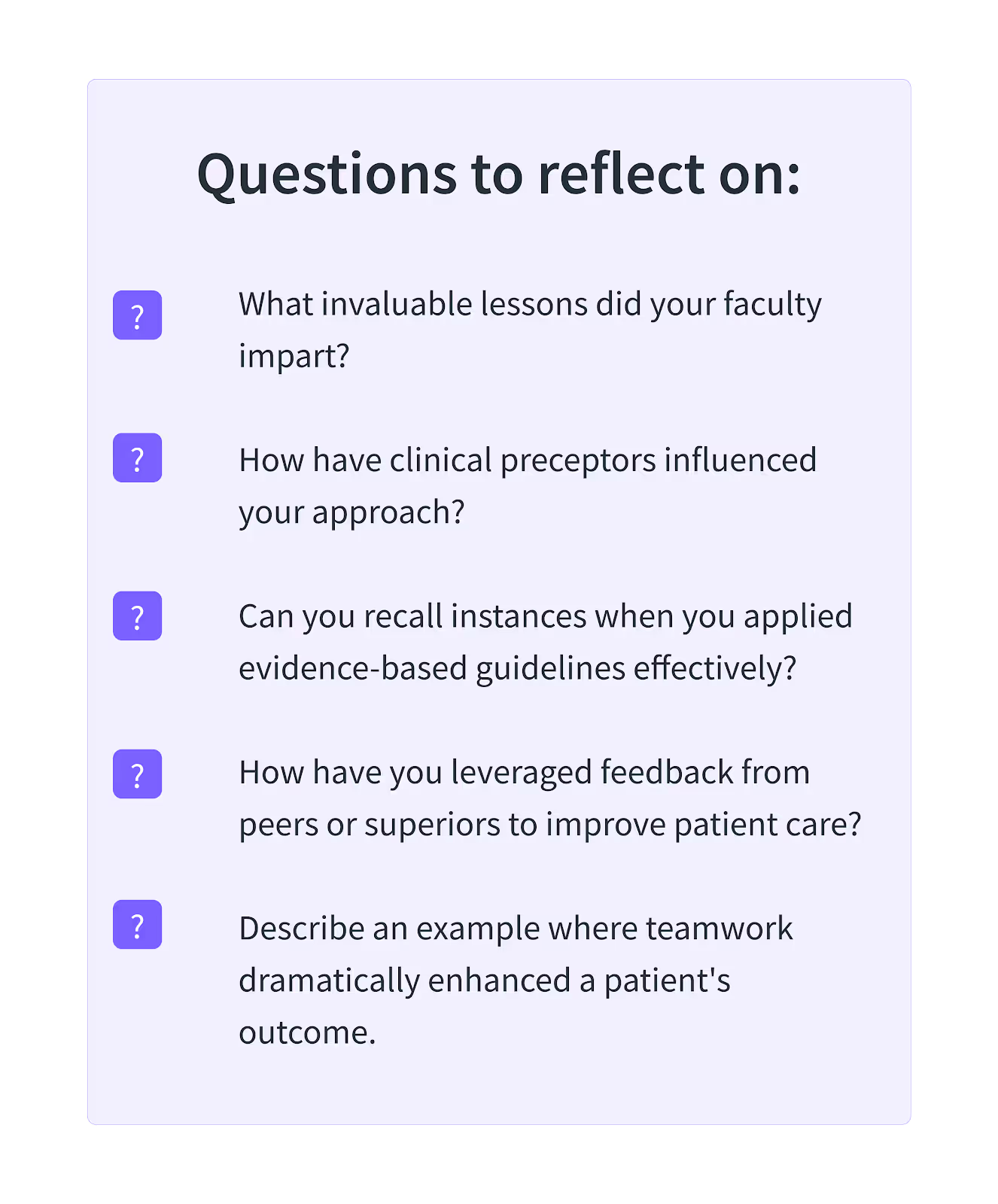
Reflecting on these questions, along with common NP interview questions, can help you prepare thoroughly and boost your confidence. By pondering these questions, you’ll be better prepared to discuss your experiences in a way that resonates with interviewers and underscores your qualifications for the position.
2. Chronicle Your Journey Clearly
Crafting a Compelling Resume
Your resume is more than just a list of qualifications and experiences; it’s a narrative that tells the story of your professional journey. For Nurse Practitioners, this story should convey your passion for healthcare, your commitment to high quality patient care, and your readiness to take on the responsibilities of the NP role.
When crafting your resume, focus on clarity, relevance, and impact. Tailor your resume to the specific demands of the position you’re applying for. Highlight your clinical experiences, particularly those that align with the job description. For example, if you’re applying for a position in a family practice, emphasize your experience in primary care settings, including any rotations or internships where you managed chronic conditions, performed health assessments, or provided patient education.
In addition to your clinical experiences, include any relevant academic achievements, certifications, and professional affiliations. If you’ve published research, presented at conferences, or participated in quality improvement projects, be sure to include these as well. These accomplishments demonstrate your dedication to continuous learning and your contribution to the advancement of the nursing profession.
Fundamental Components of Your Resume
When structuring your resume, ensure it includes the following key components:
- Contact Information: Include your name, address, phone number, and email address. Make sure your email address is professional.
- Objective Statement: A brief statement outlining your career goals and what you hope to achieve in the NP role. Tailor this statement to the specific position you’re applying for.
- Licensure and Certifications: Clearly list your current NP licensure, any state-specific licenses, and relevant certifications (e.g., ACLS, PALS, FNP-BC, or AGACNP-BC).
- Education: Detail your educational background, including your NP program, undergraduate degree, and any relevant continuing education.
- Clinical Experience: Provide a detailed account of your clinical rotations, internships, and any work experience related to the NP role. Highlight specific skills and competencies you gained in each setting.
- Professional Experience: Include any relevant work experience outside of your clinical rotations, such as RN roles, volunteer work, or leadership positions in student organizations.
- Skills: List specific skills relevant to the NP role, such as diagnostic procedures, electronic health record (EHR) proficiency, patient education, and team collaboration.
- Professional Affiliations: Mention any memberships in professional organizations like the American Association of Nurse Practitioners (AANP) or state-specific NP associations. Being part of a network of healthcare professionals is crucial for staying updated and connected in the field.
- References: Consider including a section for references or indicating that they are available upon request.
By organizing your resume thoughtfully and ensuring it aligns with the job you’re applying for, you’ll make a compelling case for your candidacy.
3. Prepare, Practice, Present
The Importance of Practice
Interview preparation is crucial for success in securing your nurse practitioner position. It involves more than just reviewing potential nurse practitioner interview questions; it's about understanding the interview's flow, practicing your responses, and preparing to present yourself as the best candidate for the job. Practice is essential for becoming a skilled nurse practitioner, as it helps you refine your communication skills and effectively demonstrate your clinical expertise to potential employers.
Start by researching the healthcare facility where you're interviewing. Understand its mission statement, values, patient population, and the specific nurse practitioner role within the organization. This knowledge will allow you to tailor your responses to align with the facility's culture and expectations, showing how you can contribute to their healthcare team and improve patient outcomes.
Next, anticipate the common NP interview questions you might be asked and prepare your answers. Typical nurse practitioner interview questions include:
- Why did you choose to become a Nurse Practitioner?
- How do you handle challenging patient cases or when a patient refuses treatment?
- Can you describe a time when you worked as part of an interdisciplinary healthcare team?
- How do you stay current with evidence-based guidelines and developments in the medical field?
- Describe your approach to patient education and ensuring patient safety
- How would you handle a stressful situation in an emergency department setting?
When answering these behavioral questions, use the STAR method (Situation, Task, Action, Result) to structure your responses. This approach helps you provide clear, concise, and impactful answers that highlight your problem-solving skills, critical thinking, and clinical expertise while demonstrating your ability to work closely with other healthcare professionals.
Practice Questions and Mock Interviews for Nurse Practitioner Interview Questions
Practice answering these practitioner interview questions out loud, either on your own or with someone. Consider conducting mock interviews to simulate the actual interview environment. This practice can help you refine your responses, manage your nerves, and improve your confidence. It is also crucial to practice nurse practitioner interview questions to understand what hiring managers are looking for and to be well-prepared for specific areas such as primary care, acute care, emergency department, and specialized NP interview scenarios.
Focus on demonstrating your technical skills, medical knowledge, and ability to provide personalized care while maintaining a holistic approach to patient treatment. Practice discussing how you coordinate care with nursing staff, handle ethical dilemmas, and make informed decisions based on evidence-based guidelines.
In addition to preparing your answers, think about the questions you want to ask the interviewers. Remember, a nurse practitioner interview is a two-way street. Asking thoughtful questions shows your genuine interest in the role and your desire to ensure it's the right fit for your career goals. Some questions you might consider include:
- What are the primary responsibilities of the NP in this role?
- How does the organization support continuing education and professional development for nurse practitioners?
- Can you describe the team dynamics and how NPs collaborate with other healthcare providers?
- What are the key challenges facing this facility, and how can an NP contribute to addressing them?
- How does the organization ensure patient safety and quality patient care?
As you develop confidence in your interview preparation, ensure you're targeting the right opportunities that match your clinical experience and career aspirations. Explore current nurse practitioner job at NPHire to find roles where your newly honed interview skills and clinical expertise can make the greatest impact on patient care.
By preparing and practicing thoroughly, you'll be well-equipped to present yourself as a confident, knowledgeable, and capable candidate ready to excel in any nurse practitioner role, whether in primary care, acute care, or specialized healthcare settings.
4. Speak the Language of the Facility
Aligning with Organizational Culture and Expectations
Every healthcare facility is unique, and your ability to reflect its specific values during the nurse practitioner job interview can set you apart from other candidates. This goes beyond reviewing the job description—this is about showing that you belong there. Before stepping into the interview, research the organization’s mission statement, services, patient population, and how they define high quality patient care. This kind of interview preparation shows initiative and professionalism.
Many nurse practitioners overlook the importance of speaking the same “language” as their potential employer. During the interview process, reflect the organization’s values in your responses. For instance, if the clinic is rooted in community-based primary care, emphasize your experience working with underserved populations and your passion for patient education. If they focus on holistic approaches, discuss how your treatment plans consider the patient’s family, lifestyle, and mental well-being—not just their lab tests.
Matching their tone doesn’t mean being inauthentic. It means showing that your own nursing career and philosophy are in sync with their mission. This also helps when answering behavioral interview questions. For example, if asked how you delegate tasks or collaborate with other healthcare professionals, refer to actual clinical scenarios that mirror their work environment.
Use familiar keywords they’ve used in their job posting. If the facility frequently mentions things like “open communication,” “team-based care,” or “broad range of services,” find opportunities to naturally weave these into your interview answers. Employers want to know you’re not just a skilled nurse practitioner, but one who thrives in theirsetting.
Questions to Ask Yourself Before the Interview:
- How does this facility define exceptional patient care?
- What words or phrases appear repeatedly in their job postings or website?
- Can I provide specific examples from my experience that align with their priorities?
By demonstrating that you’ve done your homework and understand the work environment, you’ll establish early on that you’re the right candidate—not just clinically, but culturally.
5. First Impressions Matter

The Power of Professional Appearance
First impressions matter during a nurse practitioner job interview. Your appearance can influence how interviewers perceive your professionalism, attention to detail, and respect for the hiring process.
Choose attire that is professional, polished, and appropriate for a healthcare environment. Business attire is the standard for most NP interviews.
Typical interview attire includes:
- Women: a tailored suit, blazer with a conservative dress, or professional blouse with slacks
- Men: a suit and tie or a dress shirt with a blazer and professional slacks
Your outfit should be clean, well-fitted, and comfortable. Avoid overly flashy accessories, strong fragrances, or distracting clothing. A simple, polished appearance helps keep the focus on your qualifications and communication.
Grooming also contributes to a professional impression. Choose a clean, natural look for hair, makeup, and accessories. Footwear should be professional and comfortable enough to move confidently.
Comfort is important. If your clothing feels restrictive or uncomfortable, it may affect how confidently you present yourself during the interview.
Planning Ahead
Preparing your outfit in advance helps reduce stress on the day of your interview.
Try on your interview attire several days before the interview to confirm it fits well and does not require adjustments. Many candidates prepare their clothing the night before to avoid last-minute rushing.
Interview preparation also includes practical logistics. Plan your route to the interview location, allow time for traffic or delays, and aim to arrive early. Arriving with extra time allows you to review notes and mentally prepare before meeting the hiring team.
Paying attention to these small details helps you present yourself as a prepared and professional nurse practitioner candidate.
6. Be Ready to Talk Through a Clinical Scenario
Showcasing Critical Thinking and Clinical Decision-Making
During a nurse practitioner interview, you may be asked to walk through a clinical scenario. These questions help employers evaluate your critical thinking, clinical reasoning, and approach to patient care.
Interviewers want to see how you analyze patient symptoms, interpret lab results, consider treatment options, and make safe clinical decisions. These questions are common in primary care, urgent care, and emergency department roles.
A typical scenario might sound like this:
A 45-year-old patient presents with a sore throat, fatigue, and fever. How would you approach this case?
The interviewer is evaluating several aspects of your clinical thinking, including:
- How you gather relevant patient history
- What findings you look for during the physical exam
- How you differentiate between viral and bacterial infections
- Which diagnostic tests or lab work you would order
- When you would consider prescribing antibiotics
- How you explain your plan to the patient
A clear way to structure your response is to walk through your clinical reasoning step by step:
- History
Ask about symptom onset, severity, exposure history, recent illnesses, and associated symptoms. - Physical Exam
Evaluate throat appearance, lymph nodes, temperature, and other relevant findings. - Differential Diagnosis
Consider possible causes such as viral pharyngitis, streptococcal infection, or other upper respiratory conditions. - Diagnostics
Explain whether you would order tests such as a rapid strep test or throat culture. - Treatment Plan
Describe how treatment decisions depend on clinical findings and diagnostic results. - Follow-Up
Explain how you would educate the patient, provide return precautions, and schedule follow-up if needed. - Interviewers are also evaluating how you communicate. They want to see that you can explain clinical decisions clearly to both patients and colleagues.
- You can strengthen your answer by mentioning collaboration with other healthcare professionals, such as nurses, physicians, or care coordinators when managing patient care.
- Practicing clinical scenarios before your interview can help you organize your thinking and deliver structured answers. Mock cases are not about perfection. They help demonstrate how you analyze clinical problems, communicate decisions, and deliver high-quality patient care.
7. Know Your Worth, Part 2
Navigating Salary Discussions
Salary discussions can feel uncomfortable during a nurse practitioner job interview, especially for new graduates. Preparing in advance can help you approach the conversation with confidence and professionalism.
Before the interview, research the typical salary for nurse practitioners in your region, specialty, and level of experience. Reliable sources include the Bureau of Labor Statistics, professional organizations such as the AANP, and healthcare salary platforms.
Compensation can vary based on several factors, including:
- Type of healthcare facility
- Geographic location
- Specialty area
- Scope of responsibilities
- Local demand for nurse practitioners
Understanding these factors helps you enter salary discussions with realistic expectations.
When salary comes up during the interview, focus on the total compensation package, not just the base salary. Many healthcare employers include benefits and professional development opportunities that significantly affect long-term value.
Preparing for the Conversation
If compensation is discussed during the interview, respond confidently and keep the conversation professional.
A clear approach is to reference your research and remain open to discussion. For example:
"Based on my research and the market rate for nurse practitioners in this area, I’m targeting a salary range between X and Y. I’m also interested in learning more about the full compensation package, including benefits and professional development opportunities."
In many cases, salary negotiations happen later in the hiring process after the employer has decided you are a strong candidate. Being prepared helps you navigate that conversation when it occurs.
Beyond Salary: Evaluating the Full Compensation Package
When reviewing a job offer, consider the entire benefits package, not just the salary. These benefits often influence long-term job satisfaction and financial stability.
Important factors to evaluate include:
- Health Insurance
Coverage for medical, dental, vision, and dependents. - Retirement Plans
Employer contributions to retirement plans such as a 401(k) or pension. - Professional Development
Continuing education funding, conference support, or certification reimbursement. - Paid Time Off (PTO)
Vacation days, sick leave, and personal days. - Work-Life Balance
Expected work schedule, shift structure, and flexibility. - Malpractice Insurance
Coverage provided by the employer and policy limits. - Additional Benefits
Wellness programs, childcare assistance, transportation support, or other employee perks.
Evaluating the full compensation package helps you determine whether the position aligns with your professional goals, financial needs, and long-term career plans.
8. Enduring Impressions
The Importance of Post-Interview Etiquette
Your interview does not end when the conversation finishes. Post-interview follow-up can influence how employers remember you and reinforce your interest in the role.
Following up shows professionalism, attention to detail, and genuine enthusiasm for the position. A thoughtful follow-up message also gives you one more opportunity to highlight your qualifications and connection to the role.
One of the most effective follow-up steps is sending a thank-you email within 24 hours of your interview. This message shows appreciation for the opportunity and keeps you fresh in the interviewer's mind.
A strong follow-up email typically does three things:
- Thanks the interviewer for their time
- Reinforces your interest in the nurse practitioner position
- Briefly highlights your relevant clinical experience or qualifications
Crafting a Thoughtful Thank-You Email
When writing a post-interview email, keep your message clear, professional, and concise.
Key elements to include:
- Personalize the Message
Address the interviewer by name and reference a specific topic discussed during the interview. - Express Gratitude
Thank them for the opportunity to interview and for sharing insights about the role or organization. - Reinforce Your Interest
Briefly restate why the position aligns with your experience and career goals. - Add Any Relevant Information
If there was a question you wish you had answered more clearly, you can briefly add that information. - Keep the Email Concise
A short, well-structured message is more effective than a long explanation.
Example Thank-You Email
Subject: Thank You for the Interview – [Your Name]
Dear [Interviewer's Name],
Thank you for the opportunity to interview for the Nurse Practitioner position at [Healthcare Facility]. I appreciated learning more about your team and the work you are doing to provide patient-centered care.
I especially enjoyed our discussion about [specific topic discussed during the interview], and I’m excited about the possibility of contributing to those efforts.
With my experience in [mention key qualifications, such as primary care experience or evidence-based practice], I believe I could contribute meaningfully to your team.
Thank you again for your time and consideration. Please feel free to contact me if you need any additional information.
Best regards,
[Your Full Name]
[Your Contact Information]
Sending a thoughtful follow-up message reinforces your professionalism, highlights your qualifications, and leaves a strong final impression on the hiring team.
9. Confidence is Key, But So Is Humility
Striking a Balance Between Readiness and Growth
Confidence matters during a nurse practitioner job interview. Completing a nurse practitioner program, passing certification exams, and working as a registered nurse have prepared you for advanced clinical responsibility. However, interviewers also want to see self-awareness and a willingness to keep learning.
Many nurse practitioner interview questions are designed to evaluate how you handle situations where you need support or additional guidance.
A common behavioral question is:
"Tell me about a time you had to manage a situation outside your scope or experience."
Interviewers ask this question to understand how you respond to uncertainty in clinical practice. They want to see whether you remain calm, consult other healthcare providers, and take appropriate steps to protect the patient experience.
Strong nurse practitioners recognize their limits. Knowing when to ask questions, refer a patient, or seek input from colleagues shows sound clinical judgment.
You can also discuss situations where you managed care for multiple patients during a demanding shift. Examples from urgent care, primary care, or an emergency department setting help demonstrate your ability to prioritize tasks, collaborate with other healthcare professionals, and manage competing clinical responsibilities.
If you encountered challenges adapting to a new system, such as an electronic health records system, describe what steps you took to improve. Employers value candidates who show initiative, adaptability, and a commitment to professional growth.
Tip: Share examples of how your confidence supports patient education. Explaining diagnoses, treatment plans, or follow-up instructions clearly helps improve the overall patient experience and demonstrates strong communication skills.
10. Continuous Learning
Staying Current in a Dynamic Nursing Career
Healthcare continues to evolve as new research, technologies, and clinical guidelines emerge. For a Nurse Practitioner, staying current with these developments supports strong clinical decision-making and improves patient care.
Employers often look for candidates who demonstrate a commitment to ongoing education. Staying informed helps you provide high-quality patient care, improve the patient experience, and remain confident when discussing clinical topics during a job interview.
One effective way to stay updated is by following professional nursing journals. Publications such as The Journal for Nurse Practitioners and The American Journal of Nursing regularly publish research, clinical guidelines, and updates relevant to nursing practice.
You can also expand your knowledge by attending webinars, conferences, and workshops focused on NP practice. These events allow nurse practitioners to learn from clinical experts and stay informed about emerging healthcare trends.
The Role of Professional Associations
Joining professional organizations can also support long-term professional growth. Associations such as the American Association of Nurse Practitioners (AANP) and state-level NP organizations provide resources that help nurse practitioners remain active in the profession.
Membership often includes access to:
- Continuing education opportunities
- Clinical practice resources and research updates
- Networking events with other healthcare professionals
- Advocacy initiatives that support the NP profession
Participating in these organizations can also strengthen your professional credibility and open opportunities for leadership roles or specialized interest groups.
Networking and Mentorship
Professional networking plays an important role in continuous learning. Regular conversations with peers, mentors, and colleagues can provide insight into best practices, clinical challenges, and new developments in the NP field.
You may find networking opportunities through:
- Local NP chapters or professional events
- Online professional forums and communities
- Social media groups focused on nurse practitioner practice
Networking often leads to valuable collaborations, mentorship relationships, and career opportunities.
Mentorship is especially valuable for early-career nurse practitioners. An experienced nurse practitioner can provide guidance on clinical decision-making, career development, and navigating healthcare environments.
If you do not currently have a mentor, consider connecting with someone you respect in your professional network or within a professional association.
Staying engaged in learning and professional connections helps nurse practitioners strengthen their clinical skills, remain informed about the evolving healthcare landscape, and continue delivering excellent patient care throughout their careers.
11. Clarify the Scope and Support
Understanding Expectations So You Can Thrive
During your NP interview, answering questions is only part of the conversation. Strong candidates also ask thoughtful questions about the role, the clinical environment, and the support available.
Clarifying expectations helps you understand whether the position will support long-term career growth and allow you to provide high-quality patient care without unnecessary burnout.
Consider asking questions such as:
- “What is the typical patient load for nurse practitioners in this role?”
- “What level of support is available from physicians or other healthcare providers?”
- “How are new nurse practitioners oriented and trained?”
These questions show that you are thinking about patient safety, teamwork, and professional development.
If the role includes responsibilities across primary care and acute care, it is important to understand whether new NPs are expected to practice independently immediately or if there is a structured mentorship or onboarding period. Many nurse practitioners, especially those transitioning from a registered nurse role, benefit from clear guidance during their first months in practice.
You can also ask about operational aspects of the workplace, including:
- how electronic medical records are used
- how interdisciplinary teams coordinate patient care
- whether the organization holds regular clinical meetings or performance reviews
Understanding these systems helps you align expectations with your potential employer from the start.
If you have personal motivations for becoming a nurse practitioner, such as improving patient outcomes in underserved communities or caring for a family member, this can also be an appropriate moment to share them. These insights help interviewers understand your commitment to the profession and your long-term goals in healthcare.
Knowing what to expect from a role helps you make informed career decisions and identify workplaces where nurse practitioners can succeed, grow professionally, and deliver excellent patient care.
Conclusion
Nurse practitioner interviews require preparation, self-awareness, and the ability to clearly communicate your clinical experience. By organizing your resume, practicing common nurse practitioner interview questions, and presenting your skills with confidence, you can make a strong impression on hiring managers and healthcare teams.
Successful candidates demonstrate more than knowledge. Employers look for nurse practitioners who can explain clinical reasoning, collaborate with healthcare professionals, and deliver safe, high-quality patient care. Staying current with evidence-based guidelines, maintaining proficiency with electronic medical records, and communicating clearly with patients and care teams are essential skills to highlight during interviews.
If you're ready to apply these strategies and start your career, explore exciting NP job opportunities at NPHire and connect with healthcare organizations seeking qualified nurse practitioners.
If you're still completing your clinical training, securing the right preceptor placements can make a major difference in how confidently you approach interviews. With a free NPHub account you can search and secure a vetted preceptor from our network of over 2000 preceptors ready to help NP students gain the hands-on experience needed to discuss real patient care scenarios and treatment decisions during job interviews.
With the right preparation and clinical experience, you can confidently transition from training to your first nurse practitioner role in primary care, acute care, or emergency settings.
Frequently Asked Questions (FAQs)
1. What are the most common nurse practitioner interview questions?
Common nurse practitioner interview questions focus on clinical reasoning, patient care, and collaboration with the healthcare team. Hiring managers often ask about managing a difficult patient, handling a patient who refuses treatment, applying evidence based guidelines, and coordinating care with other healthcare professionals to improve patient outcomes.
2. How should I prepare for a nurse practitioner job interview?
Effective interview preparation includes reviewing common NP interview questions, researching the organization’s mission statement, and studying the job description for the nurse practitioner position. Strong interview prep also involves practicing how to explain your clinical experience, medical knowledge, and decision-making process during patient care scenarios.
3. What skills do employers look for in a nurse practitioner interview?
During a nurse practitioner interview, employers evaluate a mix of clinical skills, communication skills, and critical thinking. They want to see that you can work closely with the care team, coordinate care with nursing staff and other providers, and deliver safe patient care that improves the patient's care experience.
4. How can nurse practitioners demonstrate clinical expertise during an interview?
To demonstrate clinical expertise, nurse practitioners should discuss real cases from previous clinical rotations or a previous position as a registered nurse. Explaining how you interpreted symptoms, reviewed patient information, ordered diagnostic tests, and developed evidence-based treatment plans shows strong medical knowledge and problem-solving ability.
5. What clinical scenario questions might be asked in an NP interview?
Many NP interview questions involve clinical scenarios. For example, interviewers may ask how you would manage a patient with symptoms that could indicate viral and bacterial infections, how you would respond in a stressful situationin the emergency department, or how you would handle a patient who refuses treatment while ensuring patient safety.
6. How should nurse practitioners answer behavioral interview questions?
Behavioral questions in a practitioner interview evaluate how you handle teamwork, leadership, and conflict. Employers may ask about conflict resolution with staff members, managing a difficult patient, or addressing an ethical dilemma. Strong answers demonstrate critical thinking, collaboration with other providers, and a commitment to safe patient care.
7. What questions should nurse practitioners ask during a job interview?
During a job interview, nurse practitioners should ask thoughtful questions about the patient population, workflow, and expectations of the nurse practitioner role. You may also ask about collaboration with healthcare professionals, support from physicians, the structure of the care team, and opportunities for continuing education in the organization.
8. How important is communication in a nurse practitioner interview?
Communication skills are essential for nurse practitioners because they directly affect patient outcomes. Employers want to see how you explain diagnoses, provide education to patients, and help a patient's family understand treatment options so they can make informed decisions about care.
9. Why do employers ask about teamwork during nurse practitioner interviews?
Teamwork is a core part of NP practice. Employers want to know how you coordinate care with nursing staff, physicians, and other healthcare professionals. They may ask how you worked closely with a care team to manage complex cases in primary care, acute care, or hospital settings.
10. What makes a nurse practitioner stand out during a job interview?
Candidates stand out when they clearly connect their clinical experience, master's degree training, and nursing licenseto real patient care situations. Demonstrating technical skills, knowledge of electronic medical records, commitment to preventative medicine, and a holistic approach to patient care helps show a potential employer that you are prepared for the nurse practitioner role and ready for your dream job in healthcare.
Article details
- Last updated
March 4, 2026 - Fact-checked by
NPHub Clinical Placement Experts & Student Support Team - Sources and references
- https://www.nphire.com/blog/a-guide-for-a-smooth-rn-to-np-transition
- https://www.nphire.com
- https://www.nphub.com/blog/find-clinical-rotations-guide
- https://www.nphub.com/blog/what-nps-do
- https://www.nphire.com/blog/writing-the-perfect-nurse-practitioner-cv
- https://www.nphub.com/blog/rn-vs-np-differences
- https://www.nphub.com/blog/aanp-vs-ancc-certification
Find a preceptor who cares with NPHub
Book a rotation.webp)


.webp)

%20(3)%20(2).svg)
.webp)