
.png)

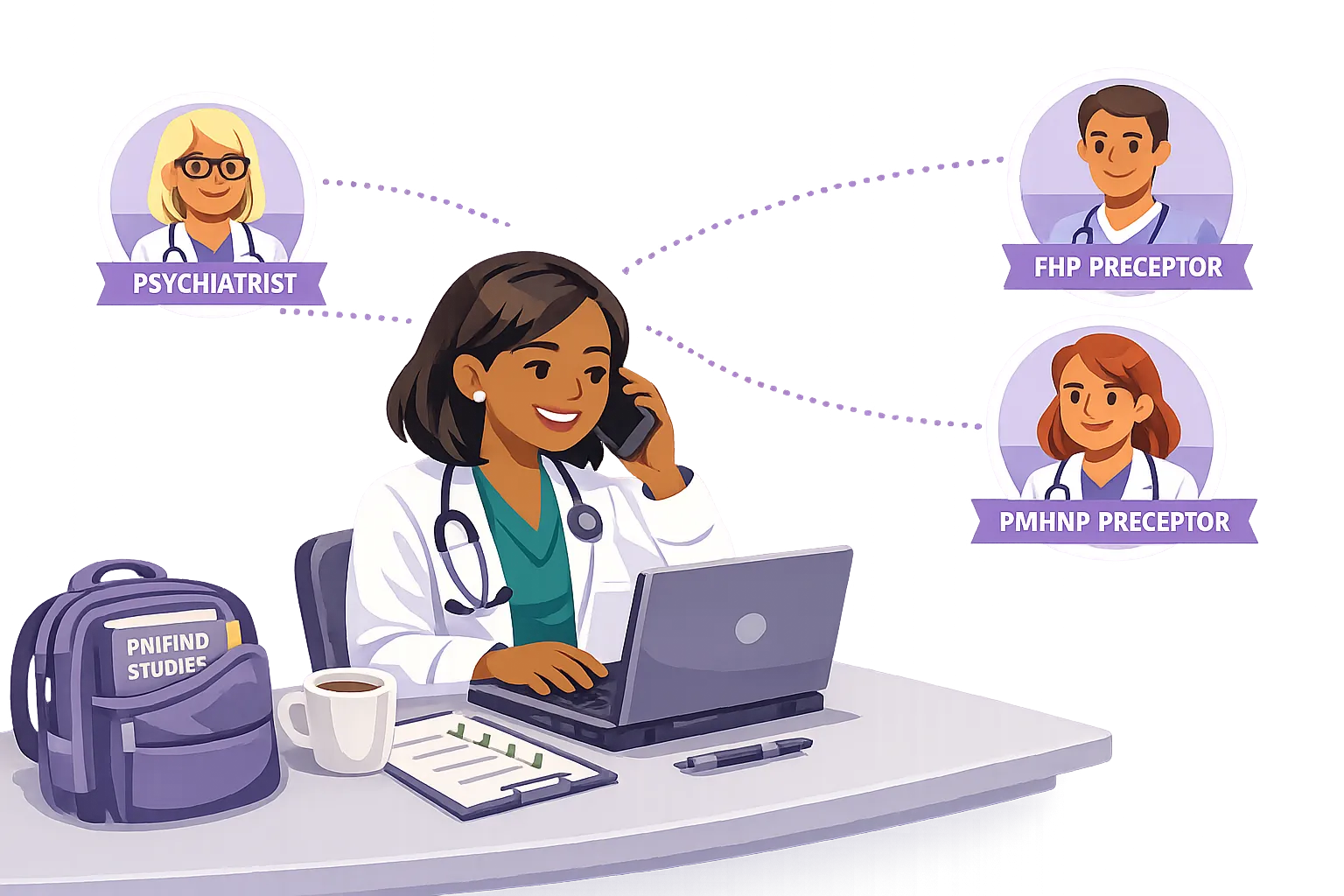


.webp)
TL;DR
- PMHNP students in Maryland typically need 500–1,000 clinical hours, with rotations available in inpatient settings, outpatient clinics, community mental health centers, and telehealth psychiatry practices.
- Maryland cities like Baltimore, Columbia, Germantown, Frederick, and Silver Spring offer strong psychiatric and primary care preceptor options across diverse populations.
- Many schools help with some clinical placements but often expect students to find their own PMHNP preceptors, especially for later DNP or specialty rotations.
- This article walks through a step-by-step strategy: leveraging university resources, contacting local clinics and hospitals, marketing yourself to preceptors, and using NPHub to lock in rotations fast.
- Students using multi-channel approaches (school, outreach, platforms) secure preceptors 3x faster—averaging 4–6 weeks versus 3–6 months.
- If you’re short on time, open a free NPHub account to see available Maryland PMHNP preceptors and reserve your spot before rotations fill up.
Why PMHNP Clinical Rotations in Maryland Matter
Maryland stands out as a strategic state for psychiatric mental health nurse practitioner students for three compelling reasons: full practice authority, high demand for mental health services, and access to major health systems like Johns Hopkins, University of Maryland Medical System, and Sheppard Pratt.
- Projected growth: Maryland mirrors the national trend with approximately 28% NP job growth projected through 2030, driven by rising behavioral health needs post-COVID and a statewide ratio of roughly 1 PMHNP per 5,000 residents.
- Diverse clinical exposure: Students rotating in Maryland gain hands on experience with varied populations—urban Baltimore City with high-acuity cases, suburban Montgomery and Howard counties with established outpatient practices, and rural Eastern Shore and Western Maryland areas facing significant provider shortages.
- Full practice authority context: Since Maryland adopted full practice authority for NPs in 2015, students can observe how experienced preceptors manage their own patient panels, prescribe medications independently, devise treatment plans, and collaborate with psychiatrists and therapists without mandatory physician oversight.
If you already know you want a Maryland PMHNP placement, open a free NPHub account now so you can get matched while you continue reading.
Overview of PMHNP Preceptors and Settings in Maryland
Maryland offers a wide range of PMHNP preceptor types and practice settings, giving students exposure to the full spectrum of psychiatric care delivery.
Common PMHNP preceptor types include:
- Board-certified PMHNPs working in outpatient or inpatient settings
- Psychiatrists willing to supervise NP students during clinical rotations
- Experienced family or adult nurse practitioner clinicians providing significant behavioral health care in primary care clinics
- Psychiatric CNS professionals with active Maryland licenses
Typical Maryland practice settings:
Setting Type
Example Locations
Training Focus
Inpatient psychiatry
Towson, Elkridge, Baltimore
Acute stabilization, crisis care, new admissions
Residential treatment
Various statewide
Long-term recovery, therapeutic milieu
Outpatient mental health
Bowie, Laurel, Columbia
Chronic management, medication management, therapy
Telehealth psychiatry
Statewide
Remote patient care, technology integration
Integrated primary care
Frederick, Rockville
Behavioral health screening, collaborative care
For concrete examples, Sheppard Pratt hospitals in Towson and Elkridge offer acute inpatient care rotations, while outpatient centers in Bowie and Laurel provide community-based PMHNP training focused on diverse populations.
Expected PMHNP rotation lengths typically range from 120–240 clinical hours per psychiatric rotation, aligning with most accredited PMHNP masters and DNP program expectations.
Types of PMHNP and NP Clinical Rotations Available in Maryland
Most NP programs require 500–1,000 total clinical hours, with a substantial portion dedicated to psychiatric mental health and other core specialties. Understanding the rotation categories available in Maryland helps you target the right preceptors.
Main rotation categories in Maryland:
- PMHNP-specific psychiatry: Focus on psychiatric evaluations, medication management participate in treatment planning, and psychotherapy modalities
- Primary care with behavioral health: Integrated settings where clinicians assess individuals for both medical and psychiatric disorders
- Pediatrics: Child and adolescent mental health, working with different psychiatric disorders in younger populations
- Emergency medicine: Crisis intervention, acute psychiatric presentations
- Underserved care rotations: AHEC-linked sites and FQHCs serving vulnerable communities
PMHNP students typically complete rotations across the lifespan, including child and adolescent psychiatry, adult outpatient psychiatry, geriatric psychiatry, and addiction medicine clinics. This breadth allows students to diagnose psychiatric disorders across age groups and implement interventions tailored to each population.
Some Maryland hospitals offer formal psychiatry rotations structured similarly to Introduction to Clinical Medicine experiences, with focus on underserved or high-acuity populations.
How Maryland NP Schools Help You Secure PMHNP Preceptors
Maryland-based NP programs vary significantly in their approach to clinical placements. Some fully arrange placements, others provide partial preceptor lists, and many schools expect students to bring proposed preceptors for program approval.
Common school support mechanisms:
- Clinical placement offices with dedicated coordinators (though often managing 1:50 student ratios)
- Faculty clinical coordinators who leverage alumni networks
- School-maintained databases of prior Maryland preceptors in cities like Baltimore, Columbia, and Rockville
- Partnerships with behavioral health clinics, hospitals, and state agencies like the Maryland Department of Health
- Affiliation agreements with major systems like Johns Hopkins and University of Maryland Medical System
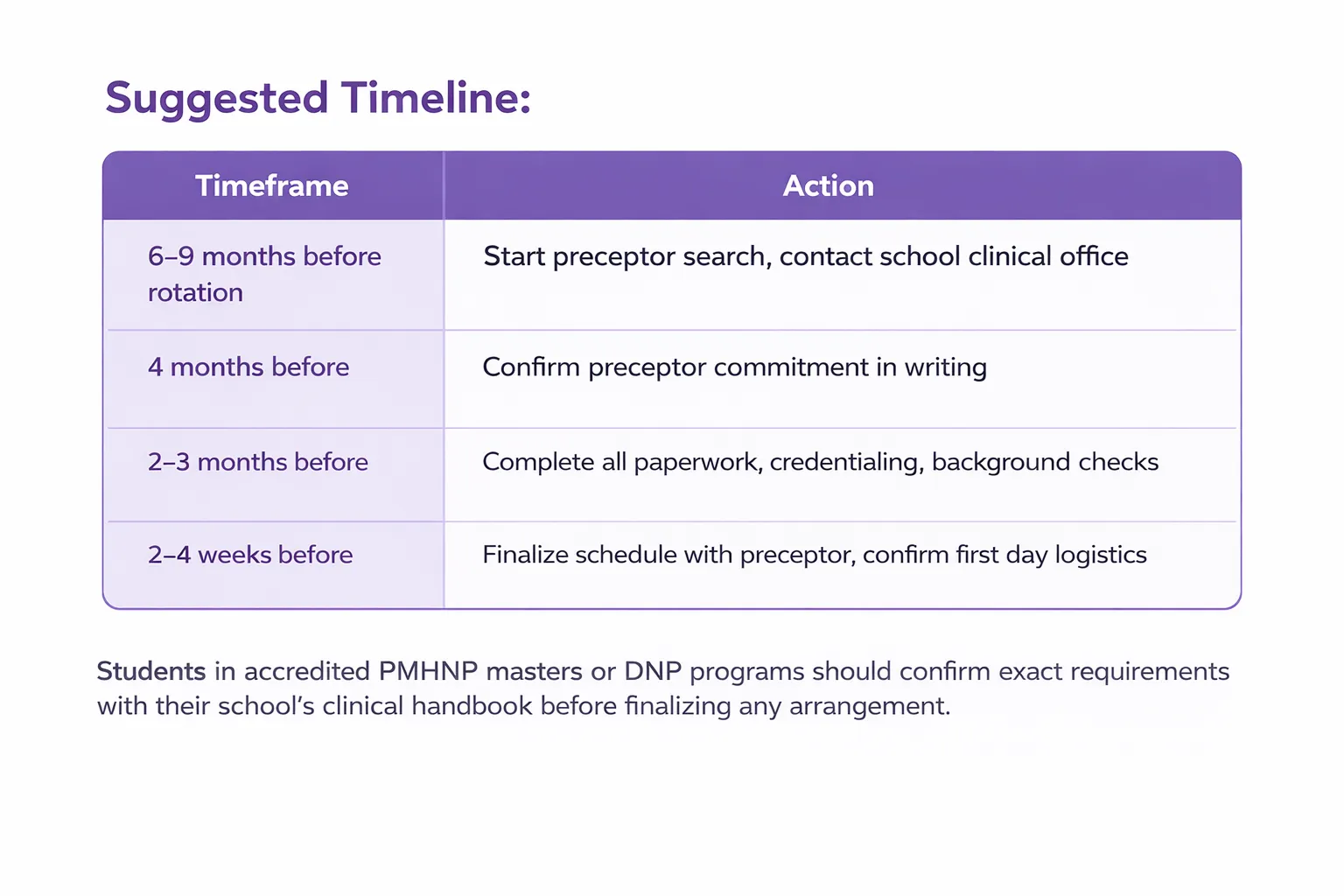
Key action step: Meet with your academic advisor 6–9 months before psychiatric rotations start to confirm hour requirements, acceptable clinical sites, and credentialing timelines.
When school resources aren’t enough or spots fill quickly, open a free NPHub account to see which vetted Maryland preceptors are currently accepting PMHNP students.
Finding and Contacting PMHNP Preceptors in Maryland
Maryland preceptors receive frequent requests from nurse practitioner students, so you need a systematic approach combining school contacts, professional networks, online tools, and structured outreach.
Key search channels:
- University alumni networks and faculty connections
- Maryland Nurses Association and local APNA chapter meetings (Baltimore chapter meetings attract 200+ attendees)
- LinkedIn searches using filters like “PMHNP Maryland” or “psychiatric nurse practitioner Baltimore”
- Direct outreach to psychiatry practices and community mental health clinics
- Preceptor matching platforms like NPHub
Use geographic filters to focus on high-opportunity areas: Baltimore, Columbia, Germantown, Frederick, Silver Spring, and Annapolis. Target a mix of settings including FQHCs, private psychiatry practices, hospital-based outpatient centers, and integrated behavioral health practices within primary care groups.
Sample Outreach Email Structure
Dear \[Preceptor Name\],
My name is \[Your Name\], and I am a current student in \[Program Name\] at \[University\], pursuing my \[MSN/DNP\] in Psychiatric Mental Health. I am seeking a preceptor for \[Number\] clinical hours from \[Start Date\] to \[End Date\].
I am particularly interested in your practice because \[specific reason—population served, treatment approach, etc.\]. My background includes \[relevant RN experience, psychiatric work, etc.\].
I am happy to provide my CV, program syllabus, and any documentation your office requires. Thank you for considering this request.
Best regards,
\[Your Name\]
\[Phone\] | \[Email\]
Leveraging University and Professional Resources
Start with your school’s clinical placement office and ask specifically for existing psychiatric preceptor lists within Maryland. Faculty teaching psych-mental health courses or advanced pharmacology often practice clinically and may know PMHNPs willing to precept in the Baltimore–Washington corridor.
Attend Maryland NP and PMHNP networking events, APNA regional meetings, and hospital-sponsored education days. These face-to-face connections often yield preceptorship opportunities that cold emails cannot.
Confirm early which external preceptors your program can contract with and how long affiliation agreements with Maryland hospitals or clinics typically take—some larger systems require 60–90 days for paperwork alone.
Contacting Local Maryland Hospitals, Clinics, and Behavioral Health Practices
For large systems, call behavioral health departments at Johns Hopkins affiliates, University of Maryland Medical System sites, or Sheppard Pratt directly and ask for the student placement or education coordinator.
For outpatient psychiatry practices and community mental health centers in cities like Bowie, Laurel, Hagerstown, and Salisbury, a direct phone call often works better than email.
Keep phone scripts concise:
- Who you are and your school/specialty
- How many hours you need
- Requested dates (e.g., sept dec start date or begin jan april cycles)
- Whether they accept PMHNP students from out-of-state programs if applicable
Some offices don’t advertise precepting but will consider it if the student demonstrates professionalism, scheduling flexibility, and willingness to help with tasks like chart prep and follow-up.
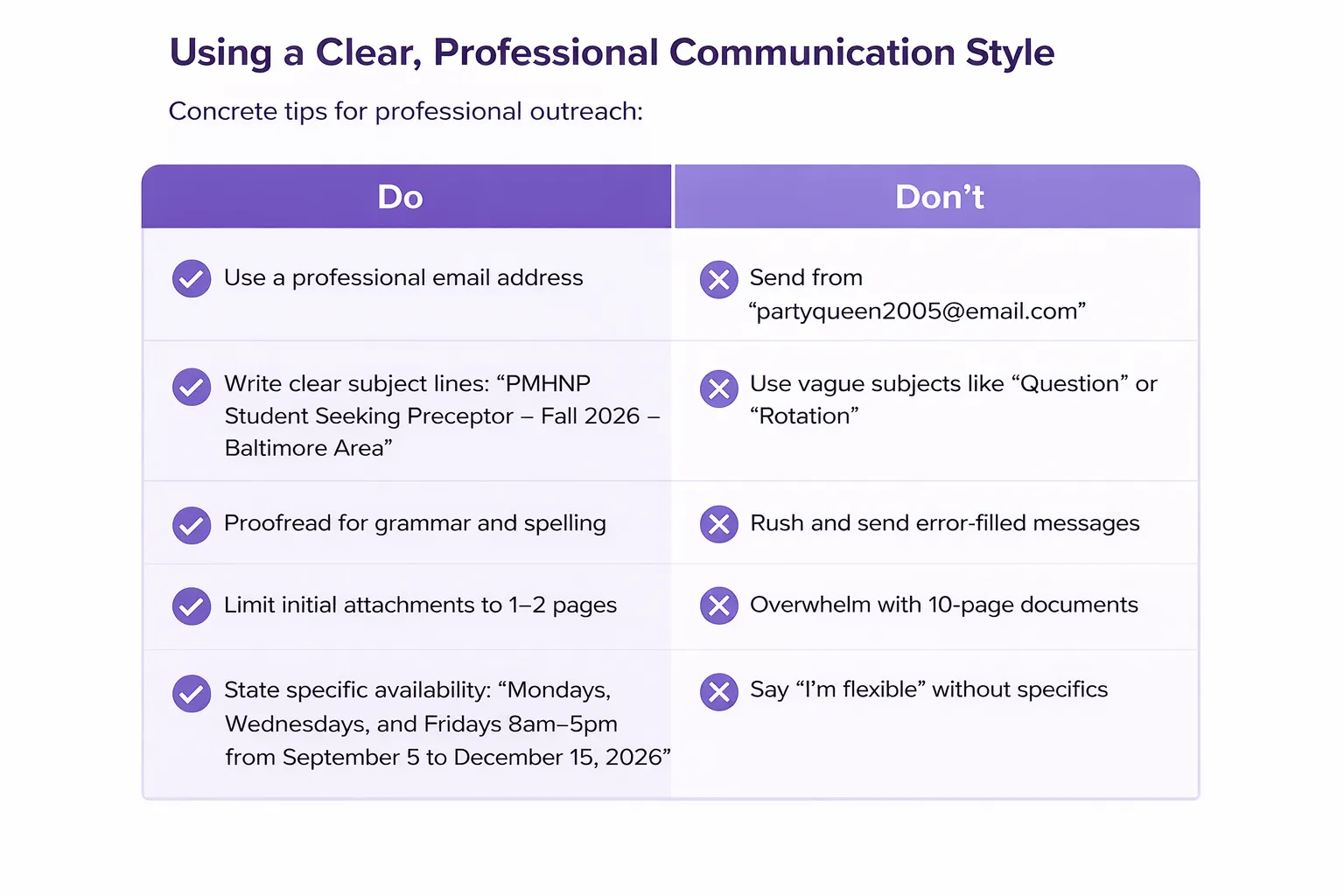
Using a Professional and Clear Approach With Preceptors
Brevity and clarity win. Your initial outreach should be 2–3 concise paragraphs or a short phone pitch—avoid long personal stories.
Every message should include:
- Your name, program, and expected graduation date
- Rotation type (PMHNP) and total hours needed
- Specific date range (e.g., may aug or fall semester)
- Location flexibility
- Any prior psychiatric or mental health experience
Attach or offer a short CV highlighting mental health experience—whether that’s inpatient psych RN work, crisis center experience in Baltimore, or telehealth triage roles.
A follow-up message 5–7 days later is appropriate, but repeated weekly messages are not. Be persistent yet respectful of the preceptor’s time.
How to Get Maryland Preceptors to Respond (and Say Yes)
Maryland PMHNP preceptors are often fully booked and may not answer every request. Standing out requires professionalism and demonstrating clear value from the first contact.
Preceptors respond more often when they immediately see that the student understands their workload and is ready to contribute meaningfully. Before requesting a PMHNP rotation, ensure you’ve completed basic psych-mental health coursework—advanced psychopharmacology, psychopathology, and assessment courses signal you’re prepared.
Highlight relevant clinical background: RN experience on inpatient psych units, ED psychiatric holding areas, or outpatient counseling support roles. An active RN license in Maryland (or compact state) is typically required before rotations begin.
Tired of non-responses? Open a free NPHub account so you can see preceptors who have already agreed to take students—instead of sending dozens of cold emails into the void.
Highlighting What You Bring to the Table
The right preceptor wants to know what you’ll contribute, not just what you need. Detail specific ways you can add value:
- Help with charting, patient education, and care coordination calls
- Pull screening tools (PHQ-9, GAD-7, mood logs) and prepare patients for sessions
- Assist with medication management documentation and prescription tracking
- Manage medications lists and reconciliation before appointments
Mention comfort with EMR basics, telehealth etiquette, and strict adherence to HIPAA requirements. Show flexibility—willingness to work early mornings, some evenings, or rotating days to match the PMHNP’s clinic schedule.
Brief notes about bilingual skills, community outreach experience in Maryland neighborhoods, or familiarity with local resources (crisis lines, partial hospitalization program setting opportunities) help you stand out.
Thank preceptors for their time regardless of their answer. Gracious responses keep doors open for future rotations or job opportunities after graduation.
Following Up Without Overdoing It
One concise follow-up after about a week is typically enough. If there’s still no response, move on rather than sending multiple reminders.
Sample follow-up language:
“I wanted to follow up on my earlier email regarding PMHNP clinical hours this fall. I understand your schedule is busy and appreciate any response, whether yes or no. Thank you again for your time.”
Some preceptors forward student emails to colleagues or practice managers—maintaining a positive tone can lead to unexpected opportunities.
NPHub handles outreach and confirmation with Maryland preceptors on the student’s behalf, which is particularly useful when time is short or deadlines are looming.
PMHNP Preceptors and Rotations in Major Maryland Cities
This city-by-city overview provides realistic expectations and specific ideas for where to look in Maryland’s major metropolitan areas.
Availability changes each semester, but major metro areas generally offer the highest number of PMHNP and general NP preceptors across diverse settings. Students using platforms like NPHub can see current openings updated regularly.
Baltimore and Surrounding Areas
Baltimore serves as Maryland’s major healthcare hub, with large health systems, teaching hospitals, and community mental health centers serving diverse and often underserved populations.
What Baltimore offers:
- Inpatient psychiatry at major hospital systems
- Outpatient behavioral health across the Baltimore–Columbia–Towson corridor
- Strong clinical experience with serious mental illness, co-occurring substance use disorders, and crisis stabilization
- Exposure to patients with opioid use disorders and complex trauma histories
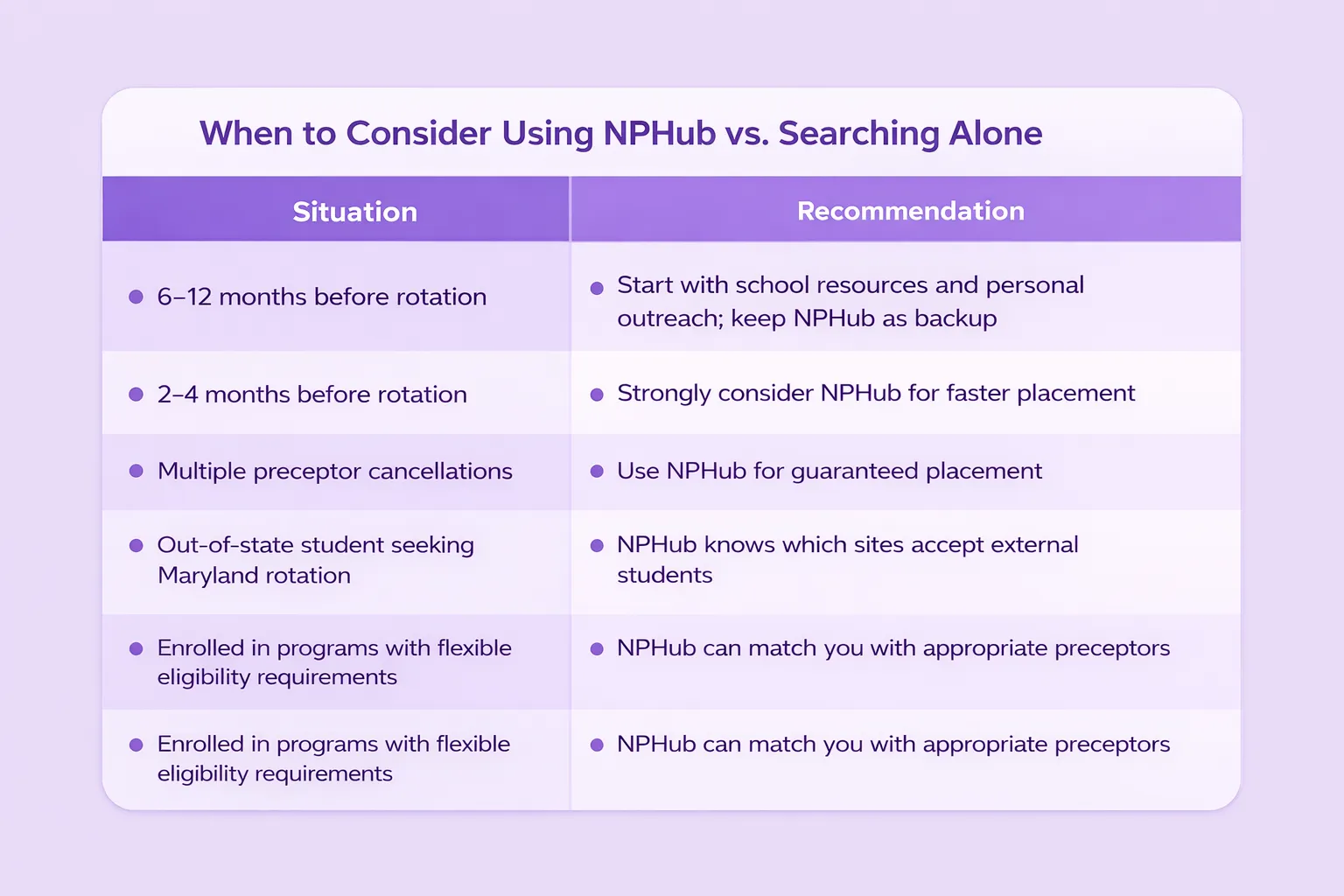
Competition for Baltimore rotations is intense—the city has roughly 2.5 preceptors per 100 students compared to 0.8 in rural areas like Salisbury. Students often start searching 6–9 months in advance or use services like NPHub for guaranteed placements.
Columbia, Germantown, and Suburban Hubs
Columbia, Germantown, and nearby suburbs host many outpatient clinics, family practices with embedded behavioral health, and private psychiatric offices.
These areas typically offer more outpatient-focused PMHNP preceptorships centered on chronic mood and anxiety disorders, ADHD management, and stable psychotropic medication adjustments. The pace may differ from urban inpatient settings but provides valuable experience in long-term patient care relationships.
Commuting from Baltimore or Washington, DC is often feasible, expanding your potential preceptor pool. Search for group practices and multispecialty clinics that employ PMHNPs and may accept one student per semester.
Frederick, Bowie, and Other Growing Communities
Frederick is a growing city with regional hospitals, outpatient mental health providers, and primary care offices serving both urban and rural patients. The provider-to-population ratio remains challenging (approximately 1:2,500 for mental health), creating opportunities for students willing to travel.
Bowie and nearby Prince George’s County communities offer outpatient psychiatry clinics and wellness centers with strong PMHNP training potential. Students willing to rotate in these mid-sized cities often face less competition than in Baltimore while still obtaining robust clinical experience.
Practical considerations: Confirm housing, commute times, and parking when planning rotations outside your home city. Discuss logistics early with potential preceptors to ensure your schedule works.
How NPHub Helps You Secure a PMHNP Preceptor in Maryland
NPHub connects NP students with vetted Maryland preceptors across various specialties, including PMHNP, and manages the logistics and documentation that often delay rotation starts.
Core benefits of NPHub:
- Guaranteed placement once confirmed—no more last-minute cancellations leaving you scrambling
- Preceptor vetting to ensure experienced preceptors meet program requirements
- Handling of contracts and site paperwork
- Support from initial match through the end of the rotation
- Access to preceptors in key Maryland locations like Baltimore, Columbia, Germantown, and Frederick
Students can create a free NPHub account to browse available Maryland rotations and then decide whether to move forward with a paid placement once they find a match.
This is critical: Opening a free NPHub account saves time, reduces stress, and can prevent delays in graduation by securing a preceptor quickly.
How the NPHub Preceptor Matching Process Works in Maryland
The NPHub process is straightforward:
- Create a free account and enter your program details, desired rotation dates, and specialty (PMHNP or other specialties)
- Select Maryland as your location and review matching options
- NPHub staff verify preceptor credentials, confirm availability, and coordinate directly with the site
- Documentation support helps you prepare required materials: RN license verification, immunization records, background checks, and liability insurance proof
- Ongoing communication during the rotation addresses any issues with hours, schedule, or site expectations
Creating a free NPHub account today lets you see what Maryland preceptors are available right now, so you can plan confidently.
Practical Tips to Nail a PMHNP Preceptor in Maryland’s Main Cities
Beyond finding names and emails, success depends on how you present yourself to Maryland preceptors—especially in crowded markets. These city-specific strategies can be applied immediately.
Baltimore: Standing Out in a Competitive Market
- Emphasize high-acuity experience when reaching out to Baltimore PMHNP preceptors—prior ED, ICU, or inpatient psych work resonates with urban practice demands
- Mention comfort with diverse populations and social determinants of health, which are central to mental health care in Baltimore City
- Apply early to institutional PMHNP placements at major hospitals, then back up with private practice outreach and a possible NPHub match
- Signal commitment by including a brief statement about long-term interest in working in Baltimore or Maryland after graduation
Columbia, Germantown, and DC-Adjacent Suburbs: Show Reliability and Flexibility
Suburban PMHNP preceptors often prioritize punctuality, strong documentation skills, and consistent availability due to packed outpatient schedules.
- Clearly state you can reliably attend clinic days without frequent class conflicts or shift work overlaps
- Offer to help with population health projects, patient education materials, or quality improvement tasks that clinics need but rarely tackle
- If commuting from DC or Northern Virginia, reassure preceptors you have reliable transportation and realistic expectations about traffic
Frederick, Bowie, and Beyond: Lean Into Local Roots
- Students with personal ties to Frederick, Bowie, or surrounding areas should mention this—local knowledge signals community investment
- Highlight familiarity with local referral networks: outpatient therapists, substance use programs, crisis services specific to those counties
- Express willingness to take on community-oriented tasks like outreach calls, tracking referrals, or coordinating with schools and social services
- Explore hybrid or telehealth PMHNP rotations that serve broader parts of Maryland while anchored locally
Maryland Requirements, Logistics, and Timeline for PMHNP Rotations
Each Maryland clinical site has its own onboarding process, but many share similar requirements and timeframes that students must prepare for well in advance.
Common documentation requirements:
- Active RN license (Maryland or compact state)
- Background check and drug screening
- Immunizations (including Hepatitis B, MMR, Varicella)
- TB test (within past 12 months)
- CPR/BLS certification
- Liability insurance proof
- Health clearance from your program
Larger systems often require 60–90 days for credentialing. Students whose schools are out of state must confirm that affiliation agreements can be completed in time.
Key Definitions
- PMHNP (Psychiatric Mental Health Nurse Practitioner): An advanced practice registered nurse specializing in assessing, diagnosing, and treating mental health and substance use disorders across the lifespan. PMHNPs conduct psychiatric evaluations, manage medications, provide therapy, and collaborate with interdisciplinary teams.
- Preceptor: A licensed clinician (often a PMHNP, NP, or doctor) who supervises NP students during clinical rotations, providing teaching, guidance, feedback, and evaluation throughout the preceptorship training experience.
- Clinical Rotation: A supervised, for-credit practice experience in a real healthcare setting where NP students apply classroom learning to direct patient care, typically requiring specified hours to prepare students for independent practice.
- Full Practice Authority: In Maryland, the legal ability of NPs to evaluate patients, diagnose, interpret diagnostic tests, and initiate and manage treatment plans, including prescribing medications, without mandatory physician supervision after meeting state-specific criteria.
- FQHC (Federally Qualified Health Center): A community-based healthcare organization that receives federal funds to provide primary and preventive care in underserved areas, often including behavioral health services. Many FQHCs in MD serve individuals lacking access to specialty psychiatric care.
FAQs
This section answers common PMHNP Maryland questions not fully covered earlier in the guide.
Can I complete a PMHNP rotation in Maryland if my school is based in another state?
Out-of-state students can often rotate in Maryland if their school can sign an affiliation agreement with the Maryland clinical site and if the site accepts external students. Talk with your program’s clinical coordinator early to confirm whether Maryland sites are permitted and what specific paperwork is needed. NPHub can help match out-of-state students with Maryland preceptors who are already familiar with working with external programs, streamlining the process significantly.
Are there PMHNP preceptors in Maryland who offer evening or weekend hours?
Some outpatient psychiatry and primary care practices schedule evening clinics or occasional Saturday hours, but these slots are limited and highly competitive. Students with rigid day-job schedules should plan rotations well in advance or consider temporarily adjusting work hours to meet clinical requirements. When using NPHub, you can share your scheduling constraints so staff can prioritize preceptors with compatible clinic hours when possible.
Can I do telehealth-only PMHNP rotations in Maryland?
Some Maryland PMHNP preceptors integrate telehealth into their practice, but many schools still require at least part of the rotation to include in-person patient care. Confirm telehealth policies with your program before committing to any rotation, including requirements for physical presence at the site versus remote participation. NPHub can help identify preceptors who use a mix of in-person and telehealth visits, allowing students to gain clinical experience with both care models.
What should I do if my Maryland PMHNP preceptor cancels close to my start date?
Immediately notify your clinical coordinator or faculty advisor and document the cancellation in writing. Request guidance on next steps, including whether rotation dates can be shifted if necessary. Quickly restart outreach to alternate preceptors while exploring all options. This situation is exactly when opening a free NPHub account and requesting an expedited match can help you avoid serious graduation delays—the platform maintains relationships with preceptors who can accommodate last-minute placements.
How soon should I start looking for a PMHNP preceptor in Maryland?
Begin your search at least 6–9 months before the planned rotation, especially for high-demand cycles like fall and spring in major cities. Larger Maryland systems with full onboarding processes may need 2–3 months just for credentialing, making late requests rarely successful. Students within 3–4 months of their rotation start who still lack a confirmed preceptor should strongly consider using NPHub to secure a guaranteed Maryland placement before time runs out.
References and Resources
- Your School’s Clinical Handbook: Always consult your program’s clinical syllabi and handbooks for exact hour requirements, site eligibility rules, and preceptorship description requirements before finalizing any preceptor arrangement.
Article details
- Last updated
Jan 23rd, 2026
- Fact-checked by
NPHub Clinical Placement Experts & Student Support Team
- Sources and references
- Maryland Board of Nursing: Key resource for licensure, scope of practice, and compact licensure information relevant to NP students. Visit mbon.maryland.gov for current requirements.
- American Psychiatric Nurses Association (APNA): National organization providing PMHNP practice guidelines, continuing education, and networking resources at apna.org.
- American Association of Nurse Practitioners (AANP): Offers NP practice guidelines, certification information, and workforce data at aanp.org.
- Maryland Workforce Data: State workforce reports and federal Bureau of Labor Statistics data describe NP growth projections, salary ranges, and mental health provider shortages across Maryland regions.
- NPHub: Visit nphub.com to explore current Maryland preceptor listings, create a free account, and access additional resources and guides on NP clinical rotations.
- https://nurse.org/articles/nurse-practitioner-job-growth/#:~:text=Learn%20More-,Job%20Growth%20for%20Nurse%20Practitioners,need%20over%20the%20next%20decade.
- https://pubmed.ncbi.nlm.nih.gov/40465662/
- https://www.nphub.com/blog/maryland-np-clinical-rotations
- https://www.apna.org/chapters/apna-maryland-chapter/
- https://www.npamonline.org/events/event_list.asp
- https://www.aanp.org/events
- https://share.google/johMidZHPdn6xkSZY
- https://www.sheppardpratt.org/training-education/internships/psychiatric-mental-health-nurse-practitioner-doctor-of-nursing-practice-pmhnp-dnp-preceptorship-program/
Find a preceptor who cares with NPHub
Book a rotation.webp)
.jpeg)

.webp)



%20(3)%20(2).svg)
.webp)