
.png)



.webp)
TL;DR
- If you're a licensed, board-certified PMHNP, psychiatrist, or psychiatric CNS, you almost certainly qualify to precept. Most programs also ask for about one year of postgraduate experience, current malpractice coverage, and an up-to-date CV.
- The role fits into your existing workflow. You supervise a student through the psychiatric assessments, medication management, and risk evaluations you already do, rather than teaching a separate class.
- PMHNP students need roughly 750 to 1,000 direct clinical hours. The national minimum rose from 500 to 750 under the 2022 National Task Force Standards, and the student, not you, tracks and logs those hours.
- Precepting can be paid. Through a preceptor matching service like NPHub, it's treated as a paid professional service, often an hourly fee, instead of unpaid volunteer work.
- The paperwork is the one part you can hand off entirely. NPHub manages affiliation agreements, license verification, and school coordination, so you keep the rewarding part and skip the administrative drag.
Precepting has a reputation, and it isn't entirely unfair. For years, supervising a nurse practitioner student meant absorbing extra hours into an already full clinical day, chasing down university paperwork, and doing it all for little more than a thank-you note. So it makes sense that many qualified psychiatric providers never take it on. In one survey of practicing NPs, a striking share of those who weren't precepting said the reason was simply that no one had asked them.
If you have ever wondered whether you could, or should, become a PMHNP preceptor, this guide answers the three questions that actually matter: whether you qualify, what the role involves day to day, and how to do it without the administrative drag that made precepting feel like a second job. Learning how to become a PMHNP preceptor is less complicated than most clinicians assume.
If precepting has been on your mind, see how precepting with NPHub works. If you'd rather know what you're signing up for first, keep reading.
What Does a PMHNP Preceptor Actually Do?
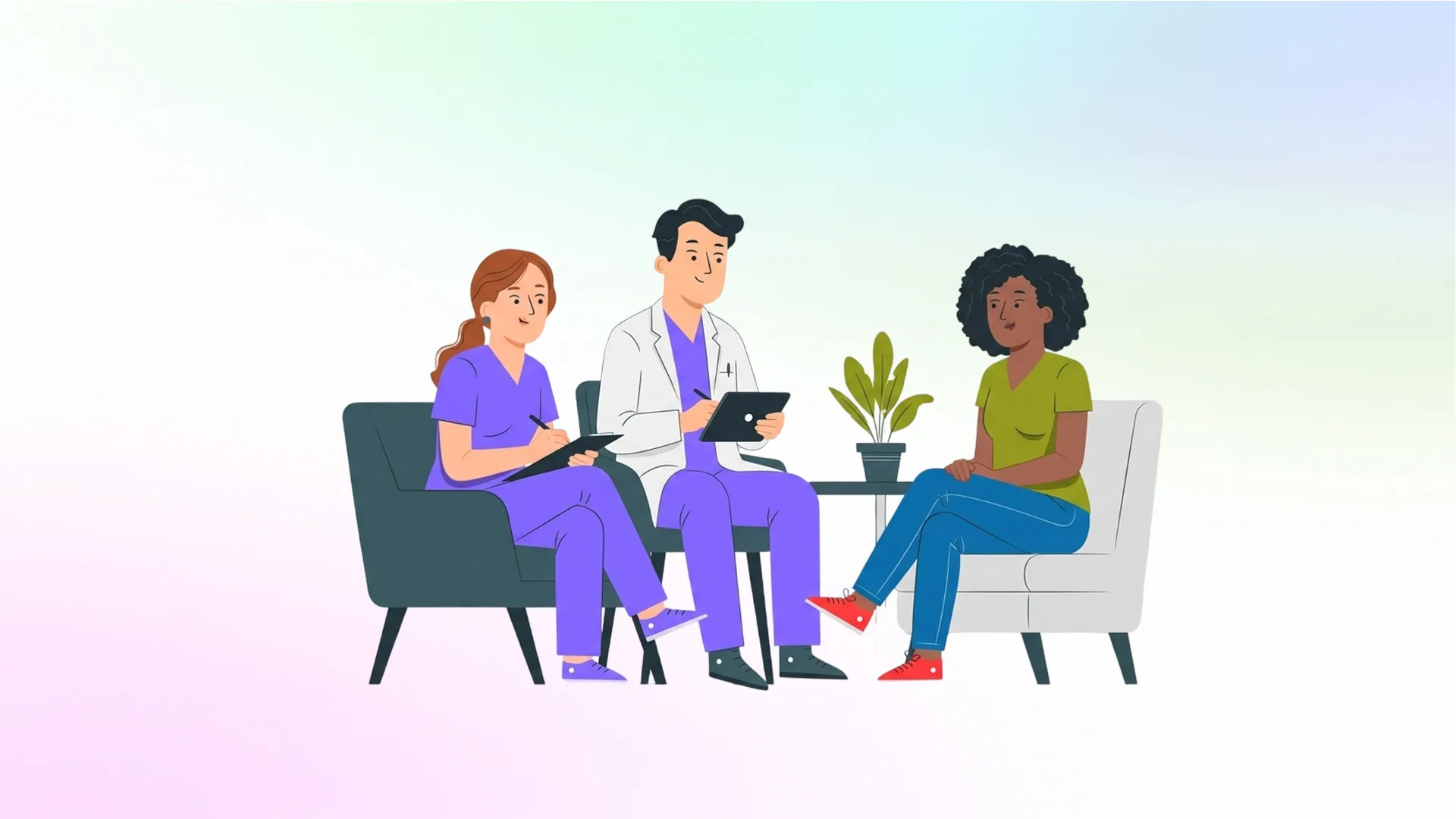
A PMHNP preceptor is a licensed psychiatric provider who supervises a psychiatric-mental health nurse practitioner student during a clinical rotation, guiding their hands-on training in real patient care. In practice, that means letting a student observe and then participate in the work you already do: conducting a psychiatric assessment, building a differential, managing medications, and thinking through risk and safety with real patients across the lifespan, from adolescents to geriatric psychiatry.
The part that surprises most first-time preceptors is how little it changes their day. You are not building a curriculum or teaching a class. Most preceptors fold the student into the normal flow of the practice, talking through their clinical reasoning between visits and handing over more responsibility as the student's competence grows. You also sign off on the clinical hours the student logs, confirming the clinical experience for their program.
Preceptor vs. clinical faculty: who does what
It helps to know where your role ends. The student's clinical faculty advisor at their NP program owns the academic side: grading, clinical objectives, and formal evaluation of the clinical course. You handle the clinical side, modeling real-world practice and giving feedback on what you see. Communication between the two of you is usually light, often a short evaluation at the midpoint and end of the rotation. That is a meaningful change from the heavier site-visit model many providers remember, as most programs now rely on email and phone contact rather than in-person faculty visits.
Why Become a PMHNP Preceptor?
Professional development and staying sharp
Students have just come through didactic coursework on the newest clinical practice guidelines and psychopharmacology, and a good one will ask why you made a decision you have made a thousand times on instinct. That questioning is one of the quietly cited benefits of precepting: it keeps your own clinical reasoning honest. Preceptors also point to the professional development value, from sharpening teaching skills to strengthening a CV, and depending on your certifying body, precepting hours may count toward recertification.
Expanding access to psychiatric care
The mental health workforce gap is real, and PMHNPs are increasingly the providers closing it. The Health Resources and Services Administration has reported that more than 160 million people live in mental health workforce shortage areas, with thousands of additional practitioners needed to meet demand. Every PMHNP student you help train becomes part of that answer. Put more concretely: the student in your office this year will be someone's psychiatric provider next year. Precepting is one of the few levers an individual clinician can pull to widen access to mental health care beyond their own patient panel.
Compensation and recruitment upside
Precepting used to be treated as pure volunteer work. That is changing, and a growing number of psychiatric providers now treat precepting as a paid professional service. Compensation matters less as a windfall than as a signal that your time and expertise are valued, and it removes the old penalty of quietly taking on a student from costing you productivity
There is also a practical upside specific to psychiatry. Research on what motivates clinicians to precept found that PMHNP preceptors rated recruitment opportunities more highly than their family practice and pediatric counterparts. A rotation is effectively an extended working interview. If a student is sharp, reliable, and a good fit for your setting, you have months of evidence before deciding whether to bring them on as a future colleague. For a private practice or clinic trying to grow, that pipeline to the next generation of PMHNPs can be worth as much as any honorarium.
PMHNP Preceptor Qualifications
The single biggest thing standing between most qualified clinicians and precepting is not eligibility. It is the assumption that they are not eligible. Requirements vary by school and state board, but the core of what programs look for in a qualified PMHNP preceptor is consistent:
- An active, unrestricted license to practice in your state, in good standing with your board.
- Board certification as a PMHNP (PMHNP-BC) through the ANCC, if you are a nurse practitioner.
- Relevant clinical experience in psychiatric-mental health. Many programs ask for a minimum of one year of postgraduate experience in your specialty before you precept, measured from your original certification or licensure date, though the exact figure varies by school.
- Current malpractice coverage and an up-to-date CV. Schools routinely request your CV as part of preceptor approval, so it is worth keeping current.
That is the whole gate. If you are a practicing, board-certified psychiatric provider with a year or two of experience, you almost certainly qualify.
Can psychiatrists, PAs, or other providers precept PMHNP students?
Often, yes, though this is where the rules get specific. Most programs allow PMHNP students to be supervised by a board-certified PMHNP, a psychiatrist (MD or DO), or a psychiatric clinical nurse specialist. Because supervising prescribing and medication management is central to a psych rotation, that piece usually has to be overseen by one of those three specifically. Physician assistants and other licensed providers such as psychologists or social workers are accepted by some schools for certain experiences, but not universally, and several state boards do not permit PAs to precept PMHNP students at all. The safe move is to confirm with the student's program and state board of nursing before committing, which is exactly the kind of check a preceptor matching service handles for you.
Meet these? Then you're ready to precept. See how it works with NPHub.
How Many Clinical Hours Do PMHNP Students Need?
Most PMHNP students need somewhere between 750 and 1,000 direct patient care clinical hours to graduate, with the exact number set by their degree track and program. The floor comes from national standards: NP programs have long been required to include a minimum of 750 supervised direct patient care clinical hours, and certification bodies, including the ANCC, adhere to that hour minimum for exam eligibility. The 2022 National Task Force Standards raised the program minimum to 750 direct patient care hours, so many newer PMHNP curricula now sit at or above that figure. Psych programs also commonly carve out a set number of psychotherapy hours separately from medication management.
For you as a preceptor, the number matters less than the rhythm. A student completes those hours across a rotation of a defined length, typically a set number of days per week over a semester, and their school provides the templates for logging and tracking clinical hours. Hour-counting is the student's responsibility, not yours. Your job is to make sure the hours reflect real clinical experience.
How to Become a PMHNP Preceptor, Step by Step
Once you decide to precept, the process is straightforward:
- Confirm your qualifications and availability: Check your license, board certification, and how much time you can realistically give. Most rotations run one to two days a week over a semester.
- Decide your capacity and setting: Choose how many students you can take and which days work for your clinic flow. Many programs require a 1:1 ratio for direct supervision, so one student per rotation is common.
- Get matched with the right student: This is where a preceptor profile and a good clinical match matter. Reviewing a student's background, learning objectives, and stage in their NP program lets you accept a student whose goals fit your practice, rather than being blindly assigned one.
- Complete onboarding and the school affiliation agreement: Sign the paperwork, verify your credentials, and confirm the student's malpractice coverage.
- Start the rotation: Orient the student on day one and begin.
The friction, when there is any, lives almost entirely in steps three and four. Which brings us to the real reason most providers hesitate.
The Paperwork Problem (and How to Skip It)
Ask preceptors what they dislike about precepting, and you will rarely hear "the teaching." You hear about the administration: the affiliation agreements that need signatures, the license verifications, the evaluation forms with their own deadlines, and the email back and forth with clinical coordinators at schools you have no relationship with. Studies of preceptor recruitment consistently identify time, workload, and productivity demands as the top barriers to precepting, rather than the students themselves.
This is the specific problem a preceptor matching service exists to solve. Rather than managing university paperwork yourself, a platform like NPHub digitizes onboarding, handles the affiliation agreements and license verification, and gives you a single profile where you set your availability, review incoming requests, and accept or decline a clinical match from your phone. The clinical coordinators, the document chase, the deadline tracking: all of it moves off your plate. You keep the rewarding part of precepting and hand off the part that isn't. And if a scheduling issue comes up mid-rotation, a dedicated support team handles the logistics so you are not sorting it out alone. It is a genuinely streamlined process built around the way you already work.
Skip the paperwork. Precept with NPHub.
How Does PMHNP Preceptor Compensation Work?
For a long time, the honest answer was that it didn't. Precepting was volunteer labor, and the research reflects it: financial reward has never been the top reason clinicians precept, ranking below a clearly defined role, supportive colleagues, and the simple enjoyment of teaching. But the same body of research names lack of compensation as a genuine barrier, and the absence of pay sent a quiet message that a preceptor's time didn't count.
The model replacing it treats precepting as a paid professional service. Through NPHub, preceptors receive compensation, often structured as an hourly fee, that reflects their time, their clinical expertise, and the effect a student can have on daily productivity. The point isn't to get rich supervising students. It's that saying yes shouldn't cost you anything, and that what you know has a defined value.
What Precepting Actually Looks Like Day to Day
The teaching itself is lighter-touch than most people expect. Early in the rotation you model: the student watches how you run a psychiatric assessment, structure a medication management visit, and work through a safety and suicide-risk evaluation. As they demonstrate competence, you hand over more, letting them lead an interview or propose a psychopharmacology plan while you supervise and refine. Most of the real teaching happens in the two-minute conversations between patients, a quick "why did you land on that diagnosis?" that turns a routine visit into a learning moment.
Good preceptors debrief briefly after complex encounters and give feedback in real time rather than saving it all for a formal evaluation. None of this requires protected teaching time or a lesson plan. It requires letting a capable student watch you work, and thinking out loud a little more than you normally would.
Ready to Start Precepting?
Becoming a PMHNP preceptor no longer means donating your evenings to paperwork. If you are a licensed, board-certified psychiatric provider, you very likely already meet the qualifications. The role fits into the work you do rather than piling on top of it; you can be compensated for it, and it puts you in a position to shape the next generation of psychiatric providers while widening access to mental health care. The administrative weight that used to make precepting a burden is the one part you can hand off completely.
If you're open to it, tell NPHub a little about your practice and availability, and the team will handle the match and the rest.
Frequently Asked Questions
Who can legally precept PMHNP students?
Most PMHNP programs accept a board-certified PMHNP, a psychiatrist (MD or DO), or a psychiatric clinical nurse specialist as a preceptor. Supervision of prescribing and medication management specifically usually has to come from one of these providers. Some schools accept psychologists, licensed clinical social workers, or PAs for certain experiences, but many state boards restrict this, so always confirm with the student's program and state board of nursing.
How much clinical experience do I need to be a preceptor?
It varies by school. Many programs require at least 1 year of postgraduate experience in your specialty, measured from your original certification or licensure date in psychiatric-mental health.
Do PMHNP preceptors get paid?
Traditionally, university-based precepting was unpaid. Preceptor matching services like NPHub changed that by treating precepting as a paid professional service and compensating preceptors for their time and expertise.
Can I precept telepsychiatry or acute care rotations?
Often, yes. Many programs now accept telepsychiatry hours, which expanded significantly in recent years, and psych rotations can span outpatient, inpatient, community mental health, and acute care settings. Confirm which settings your student's program approves before the rotation begins.
How much lead time do I need before a rotation begins?
Plan ahead. Students commonly start searching four to six months out, and some programs require site and preceptor approval up to a semester in advance. Signing on early leaves room for paperwork and onboarding.
Can I precept more than one student at a time?
Usually you take one PMHNP student per rotation. Many programs require a 1:1 preceptor-to-student ratio for direct supervision, though you are welcome to precept new students in later rotations.
Article details
- Last updated
July 8th, 2026 - Fact-checked by
NPHub Clinical Placement Experts & Student Support Team - Sources and references
- https://nursing.maryville.edu/blog/psychiatrist-shortage-how-nurse-practitioners-can-help#:~:text=The%20Health%20Resources%20and%20Services,fill%20this%20gap%20in%20care.
- https://www.nonpf.org/page/NTFStandards
- https://pmc.ncbi.nlm.nih.gov/articles/PMC6626202/#sec6
- https://pmc.ncbi.nlm.nih.gov/articles/PMC12459130/#s5
Find a preceptor who cares with NPHub
Book a rotation.webp)
.jpeg)

.webp)
.jpeg)


%20(3)%20(2).svg)
.webp)