
.png)



.webp)
TL;DR – Top States to Find NP Preceptors and Rotations
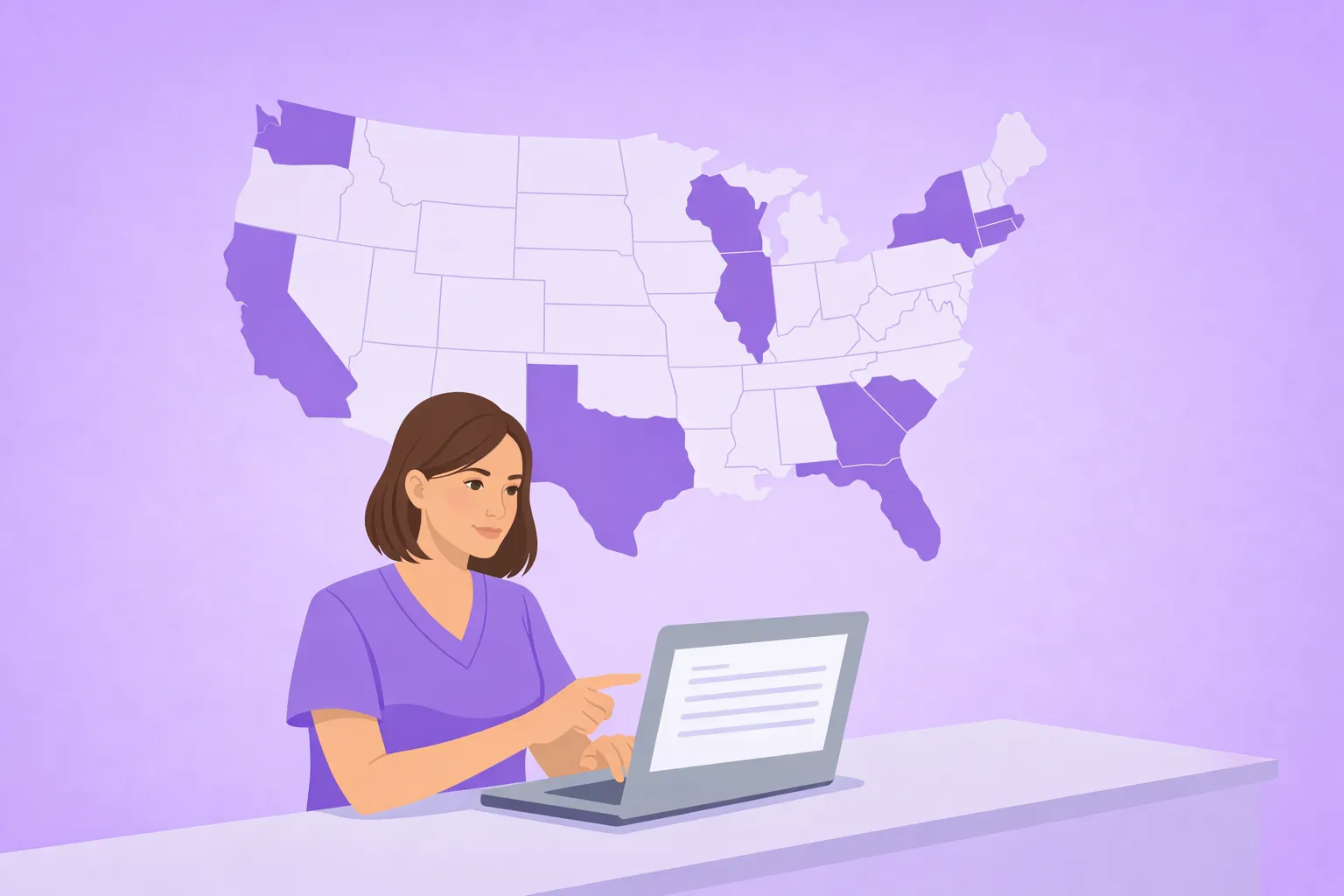
Preceptor availability varies by state, and where you search can significantly impact how quickly you secure your rotation.
- Texas, Florida, Arizona, North Carolina, and Georgia consistently offer better access to NP preceptors due to workforce growth, practice laws, and healthcare demand. Finding a nurse practitioner preceptor can be a challenging process for NP students due to limited local preceptors and high competition.
- Rural and underserved areas often have more available preceptors than major metro centers, and rural areas often have less competition for preceptors compared to major urban centers.
- It’s critical to start early in your preceptor search process—being proactive increases your chances of success and reduces stress.
- Many NP students find that using placement services can significantly reduce the time and stress involved in finding a preceptor.
- There is no national list of active preceptors, which is why many students lose time searching blindly.
- Preceptor matching services like NPHub allow students to explore vetted, available preceptors by state and specialty in one place.
- 👉 Create your free NPHub account to explore preceptors in your state for your next rotation and move forward with clarity instead of guesswork.
Top 5 States With the Most Preceptors Available in 2025–2026
A Practical Guide for NP Students Planning Their Next Rotation
Finding a preceptor for your nurse practitioner rotation has become one of the most challenging parts of graduate nursing education. While NP programs continue to expand, the number of clinicians willing and able to teach has not grown at the same pace. Preceptor shortages are now a widespread challenge for nurse practitioner students, making it significantly harder to secure clinical placements and highlighting the need for strategic approaches.
The result is what many students now experience firsthand: unanswered emails, delayed approvals, last-minute cancellations, and the looming fear of sitting out a semester.
What many NP students do not realize is this: Preceptor availability is not equal across the United States.
Some states consistently offer more accessible preceptors, more rotation opportunities, and smoother placement pathways, especially for students who plan strategically and use the right tools. It is crucial to start early in your search for a preceptor, as beginning the process well in advance increases your chances of finding a suitable placement and reduces stress. Networking with other nurse practitioner students is often cited as a successful tactic for securing NP preceptors, as peer recommendations and community contacts can open doors to new opportunities. Students are also advised to tap into their personal networks to find potential preceptors, leveraging relationships with colleagues, friends, and mentors. Placement services can further help students connect with potential preceptors more efficiently, streamlining the process and expanding available options.
Based on workforce projections, healthcare system growth, practice authority laws, and placement infrastructure, five states stand out for 2025–2026:
- Texas
- Florida
- Arizona
- North Carolina
- Georgia
This article explains why these states lead, where competition is highest, what types of rotations are easier to secure, and how NP students can realistically improve their chances of placement.
If you are actively planning your next rotation, this article is designed to help you move forward with confidence, not stress.
Why Preceptor Availability Depends on Location
Before diving into each state, it’s important to understand what actually drives preceptor availability.
There is no public, centralized, constantly updated list of nurse practitioner preceptors who are currently willing to teach. Availability changes weekly based on workload, staffing, institutional rules, and healthcare demand.
However, certain state-level factors consistently influence access.
Practicum coordinators often assist students in navigating school requirements and the matching process for clinical placements. Clinical match platforms and services can further streamline the matching process by connecting students with preceptors who meet their school requirements.
What impacts preceptor and rotation availability most:
- Growth of the healthcare workforce
- Nurse practitioner practice authority laws
- Number of NP programs competing for the same sites
- Presence of rural and underserved communities
- Incentives for clinicians who precept
- Strength of academic–clinical partnerships
- School requirements, including documentation and compliance with program prerequisites
- Practicum coordinator support, which can assist students in finding clinical placements and preceptors
- The matching process, where clinical match platforms use automated systems to efficiently pair students with suitable preceptors based on their needs
Understanding these factors helps explain why two students in the same specialty can have very different placement experiences depending on where they search.
👉 This is also why many students choose to create a free NPHub account early, so they can explore availability by state instead of guessing.
The Bigger Picture: The Clinical Placement Crunch
The difficulty NP students face is part of a much larger workforce issue.
Healthcare systems worldwide are under pressure due to:
- Aging populations
- Rising chronic disease rates
- Expansion of advanced practice roles
- Increased enrollment across nursing and allied health programs
Preceptor shortages are a key contributor to the clinical placement crunch, making it harder for students to secure quality clinical experiences.
At the same time, clinical placement capacity has not kept pace.
Hospitals and clinics are stretched thin. Productivity expectations are higher. Many clinicians want to teach but lack the time or administrative support.
Exposure to diverse patient populations and hands-on experience is essential for NP students to develop practical skills and succeed in real-world practice. However, completing required clinical hours is increasingly challenging due to the limited availability of experienced preceptors across various specialties.
Research published through the National Institutes of Health shows that clinical placements are now one of the biggest bottlenecks in training future healthcare professionals. Demand from students far exceeds available sites.
This is exactly why location strategy matters when planning your rotation.
State-by-State Breakdown: Where Preceptors Are More Available
1. Texas: The Largest Market With the Most Diverse Rotation Options
Texas consistently ranks as one of the best states for NP preceptor availability. Texas is home to major medical hubs like the Texas Medical Center in Houston, the world's largest medical complex. The state offers a wide variety of clinical sites and specialties for nurse practitioner students, including pediatrics, women's health, psychiatric mental health, acute care, and family medicine. Physicians often serve as preceptors for NP students in Texas, providing valuable clinical training across these diverse healthcare settings.
Why Texas leads for NP rotations:
Texas has one of the largest healthcare systems in the country, with massive growth in outpatient clinics, urgent care centers, community health programs, and specialty practices. Texas is also projected to increase the clinical hours required for nurse practitioner (NP) students, making it even more important to secure quality placements.
The state offers access to experienced preceptors across multiple specialties, ensuring students can find mentors who match their clinical interests and training needs. When applying for placements, students may need to submit detailed preceptor information—such as location, specialties, and CV—and review the preceptorship description to understand the clinical activities and learning objectives involved.
While major cities like Houston, Dallas, Austin, and San Antonio are competitive, Texas truly opens up for students willing to look beyond city centers.
Where students find more success:
- Rural communities
- Border regions
- Suburban primary care clinics
- Community health centers
- Federally Qualified Health Centers
Texas workforce projections show a significant increase in NP positions through 2036, which means clinical training pipelines continue to expand.
👉 If Texas is on your list, create your free NPHub account to explore available preceptors across urban and rural regions before competition intensifies.
2. Florida: High Demand With Regional Strategy Required
Florida remains one of the most popular states for NP students, driven by its aging population and expanding healthcare needs. Florida's healthcare workforce is projected to grow nearly 70% by 2037, increasing the demand for clinical placements. Specialties such as family medicine, pediatrics, and women's health are in particularly high demand for clinical rotations in Florida.
What students need to know:
Florida has strong demand for Nurse Practitioner preceptors, especially in primary care, mental health, and gerontology. However, preceptor availability varies widely by region.
- South Florida (Miami, Fort Lauderdale): highly competitive
- Central Florida (Orlando, Tampa): moderate availability
- North Florida & Panhandle: more accessible placements
Students who limit their search to major metro areas often struggle, while those open to broader regions secure rotations faster.
Exploring availability statewide instead of city-by-city can make a major difference.
👉 A free NPHub account allows you to see those options clearly.
3. Arizona: Full Practice Authority Creates Opportunity
Arizona has become one of the most favorable states for NP students, especially because it allows Full Practice Authority (FPA). Arizona offers clinical rotation opportunities in psychiatric mental health, acute care, and other specialties, giving nurse practitioner students exposure to a wide range of practice areas. The availability of clinical sites in Arizona makes it important for students to conduct a strategic preceptor search to secure placements in their desired specialties.
Why Arizona stands out:
- NPs can practice and precept independently
- Projected NP shortage by 2032
- Strong demand in underserved communities
- Clinics actively seek student involvement
Arizona’s healthcare system leans heavily into community-based care, which often translates into more willing preceptors.
Common rotation settings include:
- Primary care
- Family practice
- Community mental health
- Rural clinics
👉 If you are open to underserved or non-urban settings, Arizona is worth serious consideration. Explore available preceptors by creating your free NPHub account.
4. North Carolina: Academic Infrastructure Meets Workforce Growth
North Carolina combines strong academic medical centers with intentional workforce planning. The state's NP workforce is expected to grow 55% by 2030, indicating a rising demand for preceptors. This growth highlights the critical importance of clinical experience and hands-on experience for NP students in North Carolina, as these are essential for developing practical skills and preparing for real-world patient care across diverse specialties.
Why placements are more structured here:
- NP workforce projected to grow by 55% by 2030
- Area Health Education Centers (AHEC) support rural placements
- Established academic–clinical partnerships
Students often find success through:
- AHEC-supported clinics
- Community health centers
- Primary care practices outside major cities
👉 If structure and predictability matter to you, North Carolina offers solid options. Create your free NPHub account to see vetted preceptors and secure your rotation with confidence.
5. Georgia: Incentives and Underserved Demand
Georgia rounds out the top five due to strong healthcare systems and preceptor incentives.
Why Georgia works for NP rotations:
- Growing demand outside Atlanta
- Tax credit programs that encourage precepting
- Active professional organizations
While Atlanta can be competitive, suburban and rural Georgia consistently show higher availability.
👉 If you are flexible on location, Georgia can be a strategic choice. A free NPHub account helps you identify where preceptors are actually taking students.
How NP Students Actually Find Preceptorships
Even in states known for better preceptor availability, securing a placement still takes strategy. Many NP students start by juggling multiple approaches at once, reaching out to university placement coordinators, leaning on professional associations, asking peers in group chats or social media, cold-emailing clinics one by one, and even making cold calls as a strategic approach when other methods are ineffective.
Consider a Preceptor Matching Service
Finding the right clinical preceptor for your nurse practitioner rotation can be a complex and time-consuming process. That’s where preceptor matching services come in to streamline your search and help you secure quality clinical placements efficiently. Among these services, NPHub stands out as the fastest growing directory dedicated to connecting NP students with vetted, qualified preceptors across the country.
NPHub’s preceptor matching service offers a comprehensive platform where you can easily explore potential preceptors in your area, filter by specialty, and find a clinical preceptor who meets your school requirements for your specific rotation. By using NPHub, you gain access to a reliable network that confirms availability upfront and manages the often complicated paperwork and compliance aspects, saving you valuable time and stress.
Other popular preceptor services like PreceptorLink and Clinical Match Me also provide valuable options for students looking to find preceptors, but NPHub’s focus on thorough credential verification, streamlined preceptor match, and cost-effective solutions make it the preferred choice for many NP students. Whether you’re searching for “find preceptor near me” or seeking specialized clinical experiences, NPHub ensures you get matched with the perfect clinical preceptor to gain proper clinical experience and fulfill your program’s rotation requirements.
With NPHub, you can confidently navigate the clinical placement process knowing you have strong support to meet your school requirements and secure your clinical rotation without unnecessary delays or added costs.
👉 If your timeline is tight or you want clarity faster, create your free NPHub account to explore real, current preceptor options instead of starting from scratch.
To improve your odds to find NP Preceptors, consider the following strategies before it’s too late:
- Expand your geographic search within the state, including rural or underserved areas where demand for specialized care may be higher and competition lower.
- Be flexible with your schedule and rotation timing, as some preceptors may only be available during certain periods.
- Leverage preceptor matching services like NPHub, which provide access to a vetted network of preceptors across multiple specialties, including psychiatric mental health, women's health, and pediatrics.
- Network actively with other nurse practitioner students and future colleagues to learn about potential openings and gain referrals.
- Communicate clearly with your practicum coordinator and understand your school requirements and school paperwork, as some programs may have partnerships or resources to assist in securing specialized preceptors.
While securing placements in these high-demand specialties requires persistence and planning, using a combination of these approaches in the top 5 states with the most preceptors available can help you find the perfect preceptor and gain the proper clinical experience needed for your NP education and future career.
Final Thoughts: Location Strategy + Support Changes Everything
The best state to find a preceptor is not always where you live or attend school. It’s often where:
- Healthcare demand is growing
- Competition is lower
- Practice laws allow flexibility
- Students are actively supported
- For 2025–2026, Texas, Florida, Arizona, North Carolina, and Georgia consistently offer better odds for NP students seeking rotations.
Your rotation is more than a requirement. It’s the bridge between school and practice.
👉 Create your free NPHub account to explore preceptors for your next rotation, compare options by state and specialty, and move forward with clarity instead of stress.
FAQs: Questions About Finding Preceptors
1. Is it easier to find preceptors in certain states?
Yes. Workforce growth, practice laws, and competition vary by state, which directly affects availability.
2. Are rural areas easier for rotations?
Often, yes. Rural and underserved regions typically have fewer students competing for placements.
3. Is there a national list of NP preceptors?
No. Availability changes constantly, which is why centralized matching services exist.
4. When should I start looking for my next rotation?
Start early—ideally 4–6 months in advance, especially for competitive specialties or metro areas. Being proactive increases your chances of securing a preceptor and reduces stress.
5. Can preceptor matching services really save time?
Yes. They reduce outreach, confirm availability, and manage paperwork.
6. What school requirements do I need to meet for clinical placements?
You must meet your school's requirements, which typically include submitting documentation, completing background checks, immunizations, and ensuring your preceptor and site meet program prerequisites. Always check with your program for specific requirements.
7. How many clinical hours are required and how do I track them?
Most nurse practitioner programs require a set number of clinical hours, often between 500 and 700, depending on state and school regulations. You will need to log your clinical hours as you complete them, usually through your school's tracking system or forms.
8. What is the role of the practicum coordinator in securing placements?
A practicum coordinator helps students find clinical placements and preceptors, assists with paperwork, and ensures all requirements are met. They may also provide guidance and support throughout the placement process.
9. What if my desired specialty (like psych or women's health) isn't readily available in these states?
High-demand specialties like psychiatric mental health, women's health, and pediatrics can be challenging to secure in any state due to limited numbers of specialized preceptors and high competition among NP students. However, the five states highlighted in this guide tend to have more diverse healthcare systems and larger networks of qualified preceptors, increasing the chances of finding placements in these specialties.
Key Definitions
- Preceptor – A licensed clinician who supervises and mentors NP students during clinical rotations.
- Clinical Rotation – Required hands-on training in a healthcare setting needed for NP program completion.
- Nurse Practitioners Preceptors – Licensed clinicians, often experienced nurse practitioners or physicians, who supervise, mentor, and provide hands-on training to nurse practitioner (NP) students during their clinical rotations. They play a vital role in guiding students through real-world clinical practice experiences, ensuring students gain the necessary skills and knowledge to become competent practitioners. These preceptors evaluate student performance, provide feedback, and help fulfill school requirements for proper clinical experience, making them essential to the education and development of future nurse practitioners.
- Preceptorship Description – This term refers to a detailed overview of what a clinical rotation entails for an NP student. It outlines the specific learning objectives, types of patient care experiences, clinical activities, and responsibilities that the student will undertake during their time with the preceptor. Understanding the preceptorship description helps students know what to expect, prepare adequately, and ensure the rotation aligns with their educational goals and program requirements.
- Full Practice Authority (FPA) – Allows NPs to practice and precept independently without physician oversight.
- Clinical Placement – The confirmed site where a student completes their rotation.
- Vetted Preceptor – A clinician whose credentials, availability, and willingness to teach have been verified.
- Underserved Area – A region with limited access to healthcare providers, often offering more placement opportunities.
- Preceptor Matching Service – A platform that connects students with available, qualified preceptors.
- Placement Services – Comprehensive support offerings that assist students in securing clinical placements, including preceptor matching, documentation, and compliance with school requirements.
- Academic–Clinical Partnership – Collaboration between schools and healthcare systems to support training.
- Rotation Delay – When a student cannot start on time due to lack of placement.
- Workforce Projection – Forecast of healthcare staffing needs used to plan training capacity.
- School Requirements – The specific prerequisites, documentation, and compliance standards set by academic institutions that must be met for clinical placements.
- Practicum Coordinator – A staff member or team responsible for assisting students in finding clinical placements and preceptors, providing support and guidance throughout the placement process.
- Matching Process – The systematic method of pairing students with suitable preceptors, often using automated or AI-driven systems to efficiently connect students based on their requests and criteria.
- Clinical Match – A tailored matching service or system that connects students with preceptors based on their clinical rotation needs, ensuring a personalized and efficient placement.
- Preceptor Information – Detailed data about a preceptor, including location, specialties, CV, and other relevant details, used to match students and review preceptor profiles before placement.
- Preceptor Accepts – The step in the placement process where a preceptor reviews and agrees to accept a student for a clinical rotation.
Article details
• Last updated
Jan 8, 2026
• Fact-checked by
NPHub Clinical Placement Experts & Student Support Team
• Sources and references:
- https://pmc.ncbi.nlm.nih.gov/articles/PMC10773407/
- https://www.aanp.org/advocacy/state/state-practice-environment#:~:text=State%20practice%20and%20licensure%20laws,required%20for%20licensure%20and%20beyond.
- https://www.nphub.com/blog/how-to-choose-the-best-np-schools-programs
- https://www.ncbi.nlm.nih.gov/books/NBK218556/#:~:text=There%20are%20commonalities%20among%20the,the%20rest%20of%20the%20population.&text=This%20chapter%20first%20describes%20the,in%20alleviating%20problems%20of%20underservice.
- https://pmc.ncbi.nlm.nih.gov/articles/PMC9765302/#:~:text=Abstract,for%20professional%20and%20interprofessional%20training.
- https://www.nphub.com/blog/texas-np-preceptors
- https://www.nphub.com/blog/np-clinical-rotations-florida
- https://www.nphub.com/blog/orlando-nurse-practitioner-preceptors
- https://www.nphub.com/blog/jacksonville-nurse-practitioner-preceptors
- https://www.nphub.com/blog/find-arizona-preceptors
- https://ccpr.wpcarey.asu.edu/sites/g/files/litvpz1326/files/2024-04/hlthcare04-24.pdf
- https://www.nphub.com/blog/tucson-nurse-practitioner-preceptors
- https://www.nphub.com/blog/north-carolina-preceptors
- https://www.ncahec.net/news/nc-ahec-hosts-first-interprofessional-education-leaders-collaborative/
- https://www.nphub.com/blog/find-georgia-preceptors
Find a preceptor who cares with NPHub
Book a rotation.webp)
.jpeg)

.webp)
.jpeg)


%20(3)%20(2).svg)
.webp)