
.png)



.webp)
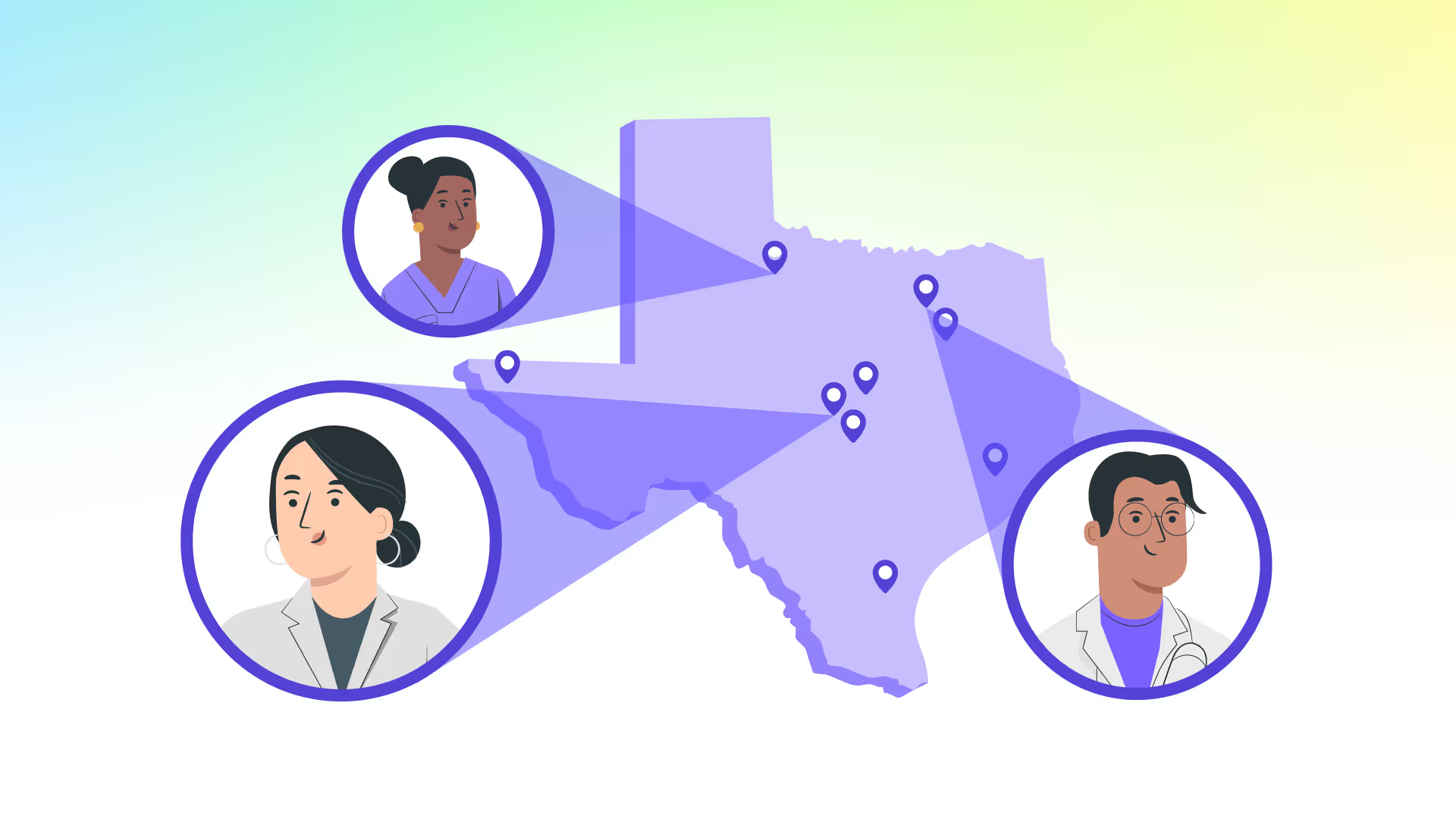
To find NP preceptors in Texas, first confirm your program’s clinical hour and preceptor requirements. Then work three routes at once: your school’s placement support, direct outreach to Texas clinicians and professional networks, and a vetted placement service. Texas requires at least 500 supervised clinical hours for each APRN instructional track, and site paperwork adds time, so starting early protects your graduation timeline.
TL;DR: Texas NP Preceptors and Clinical Rotations
- The Texas Center for Nursing Workforce Studies projects NP supply in Texas to grow 100.4% between 2022 and 2036, while demand grows 26%. A growing NP pipeline means more students competing for a limited number of preceptors, and that competition is typically sharpest in urban hubs like Dallas, Houston, and Austin.
- Primary care need extends far beyond the metros: as of July 2021, 228 of Texas’s 254 counties were full-county primary care shortage areas, according to APM Research Lab. Rural rotations can offer broad clinical exposure and close mentorship, but availability varies by site, so confirm the details with each practice.
- Affiliation agreements between schools and clinical sites can take weeks or longer to finalize. Starting your search 4-6 months early protects your graduation timeline.
- Networking, professional organizations like TNP, and direct outreach can secure placements, but they require persistence, organization, and time.
- A free NPHub account lets you review vetted Texas preceptors across rural and urban regions, see real availability, and decide whether structured placement support fits your timeline before making any financial commitment.
Why Is It Hard to Find NP Preceptors in Texas?
Finding Texas NP preceptors is hard because more NP students are entering the pipeline than there are clinicians with the time and approval to teach. Preceptors balance full patient loads and productivity targets, and Texas’s restricted practice rules add coordination before a clinical site can say yes. The result is a limited number of preceptors, especially in major metros.
The growth numbers explain the competition. According to the Texas Center for Nursing Workforce Studies (TCNWS), the supply of NPs in Texas is projected to grow 100.4%, from 28,540 FTEs in 2022 to 57,201 FTEs in 2036, while demand for NPs is projected to grow 26% over the same period. A larger NP workforce starts as a larger class of NP students, and every one of those students needs clinical hours with a qualified preceptor.
Texas patients still need care, especially outside the cities. Researchers at APM Research Lab found that 228 of Texas’s 254 counties were identified as primary care shortage areas as of July 2021, up from 129 in 2019. Need for care and capacity to teach are two different things, though. A busy rural clinic may welcome a student but still have only one provider available to supervise.
If you have spent a semester emailing clinics and hearing nothing back, that's common, and it says nothing about your readiness. For many students, it is one of the most stressful parts of the program, because the search is time-consuming and runs alongside coursework and 12-hour shifts.
What does restricted practice mean for Texas preceptors?
Texas is a restricted practice state where nurse practitioners must maintain a formal Prescriptive Authority Agreement (PAA) with a collaborating physician under Texas Occupations Code Chapter 157. Because NPs do not have full practice authority, they rarely have sole administrative autonomy over their practice sites. Taking on a student typically requires navigating layers of institutional approval, involving the clinic administration, the collaborating physician or medical director, and the university’s clinical affiliation agreement, before a student can log a single hour.
See Which Texas Preceptors Have Open Availability

Clinical Placement Process: How Many Clinical Hours Do Texas NP Programs Require?
Texas NP programs must include at least 500 supervised clinical hours per track. Under Texas Administrative Code Title 22, Section 221.3, each APRN instructional track or major must have a minimum of 500 supervised clinical hours as defined by the Board. Your program may require more, so your handbook sets your actual target.
These hours are part of the education requirement for APRN licensure in Texas. They mark the transition from registered nurse to advanced practice, where you apply your coursework to real patient care under supervision. If your program prepares you for more than one population focus, confirm with faculty how hours must be distributed across each one.
Do Texas NP Programs Find Preceptors for You?
Some Texas NP programs help students secure preceptors, while others expect students to find their own. At Cizik School of Nursing at UTHealth Houston, for example, a graduate clinical coordinator works with nurse practitioner students to find sites and preceptors matched to their interests. Many programs, including many online programs, place that responsibility on the student.
Even when you find your own preceptor, your program still has to approve the site. Faculty review the preceptor’s credentials, the setting, and how the rotation fits the curriculum, and many sites require an affiliation agreement with your school before you log any hours.
NP schools that provide preceptors →
What If You Attend an Out-of-State Online NP Program?
If your program is based outside Texas, confirm two things before you start outreach. First, check that your program allows clinical placements in Texas. Second, ask what approvals and agreements it needs from a Texas site. Raising these questions early prevents a confirmed preceptor from stalling in paperwork.
What Does a Texas NP Preceptor Do?
A Texas NP preceptor supervises your direct patient care, teaches clinical reasoning in real time, and evaluates your progress for your faculty. Preceptors work with your school to help teach and evaluate students’ knowledge and skills during clinical rotations. They complete your evaluations and give feedback on student performance that your program uses for grading.
Requirements for preceptors vary by school. At Cizik School of Nursing, preceptors for NP students must have at least one year of experience as an APRN, MD, DO, PA, or CNM. Check your own program’s criteria before you reach out, so every preceptor you contact already qualifies.
The best preceptors serve as role models and mentors, offering guidance well beyond a signed hour log. Many treat teaching as a way to shape their future colleagues. One PMHNP preceptor who teaches Cizik students described his goal as passing on what he learned over roughly 25 years in nursing. That kind of commitment is what you are looking for, and it is worth asking about directly when you interview a preceptor.
Where Should NP Students Look for Clinical Rotations in Texas?
NP students in Texas can look for clinical rotations in three broad settings: metro medical hubs, rural communities, and the border region. The comparison below is general guidance on how these settings typically differ, not survey data. Competition, clinical scope, and mentorship vary by site and by program, so confirm specifics directly with each practice.
What Can You Expect From a Rural Clinical Rotation in Texas?
Rural rotations often mean more direct patient care and fewer observation-only days. With limited nearby specialist access, rural providers manage a wide range of conditions, building critical thinking and diagnostic reasoning under supervision. Smaller healthcare teams also give you room to build community relationships, which can support your professional growth after graduation.
What Do Major Texas Medical Hubs Offer NP Students?
Houston, Dallas-Fort Worth, Austin, and San Antonio give NP students access to large health systems with many specialty departments. Houston is home to the Texas Medical Center, which Cizik School of Nursing describes as the world’s largest medical center. Metro clinical experience builds interdisciplinary communication skills and exposure to complex cases, but plan early, because demand for these sites is highest.
Why Consider a Clinical Rotation in the Texas Border Region?
Border region rotations offer experience with community-based care, public health challenges, and cross-cultural care, along with practical opportunities to develop bilingual clinical skills. Primary care in these communities serves diverse patient populations, and that experience transfers to any practice setting in Texas or beyond.
Browse Texas Preceptors by Specialty and Region →

Looking for NP preceptors in a specific Texas city?
NPHub publishes city guides for NP students searching in Texas’s largest markets. Each covers local clinical sites, competition, and search strategies:
- Where to Find Houston Nurse Practitioner Preceptors?
- Where to Find San Antonio Nurse Practitioner Preceptors
- Dallas Nurse Practitioner Clinical Placements: What NP Students Need to Know
- Austin Nurse Practitioner Clinical Placement: Guide for NP Students
For a short, data-focused summary of the Texas search, see how to find NP preceptors in Texas →
How Do You Find a Texas NP Preceptor on Your Own?
To find a Texas NP preceptor on your own, confirm your program’s requirements, build a researched list of clinical sites, use professional networks, send specific outreach, and follow up on a schedule. The process works for many students, but it is time-consuming. Expect to contact many practices before one confirms.
- Confirm your requirements: Ask your faculty for your total clinical hours, required specialty, preceptor credential rules, and the paperwork the site will need. This keeps you from pursuing a preceptor your program cannot approve.
- Research and build a target list: List practices by specialty and region, sites your program has used before, and clinics where classmates completed rotations in earlier semesters.
- Use professional networks: Join Texas Nurse Practitioners (TNP), attend CEU events and conferences, and reconnect with former professors and clinical instructors. On LinkedIn, state clearly that you are an NP student seeking clinical hours in Texas, and engage with Texas NPs before you ask for anything.
- Send direct, specific outreach: Keep it short and include your school, track, rotation dates, total hours, and schedule flexibility. Say why you are interested in that practice’s specialty.
- Follow up and track every contact: Keep a simple spreadsheet of who you contacted, when, and the response. One unanswered email rarely means a final no, and clear communication on a set follow-up schedule signals professionalism.
- Start paperwork the day a preceptor agrees: Affiliation agreements and site credentialing must clear before your hours count. Affiliation agreements are commonly cited as taking weeks or longer.
If you have worked through these steps and your rotation start date is getting closer, a free NPHub account shows you which vetted Texas preceptors have open availability, so you can compare options while you keep your own search going.
See Open Texas Preceptor Availability →
Is a Paid NP Placement Service Worth It in Texas for Nurse Practitioner Students?
A paid placement service can be worth it if your own search has stalled and a delayed rotation would push back your graduation. Delays can add tuition and postpone your income as a practicing nurse practitioner. The decision is personal, so compare the cost of the service against the cost of a delayed semester.
Before you choose any service, confirm your school’s policy. Some NP programs restrict or prohibit the use of paid preceptor-matching services, so check with your program first.
When you evaluate a service, look for:
- A network built specifically around nurse practitioner students
- Preceptors who have agreed in advance to teach
- Published pricing and written refund policies
- Help with clinical site paperwork
- A verifiable track record and third-party reviews
How Does NPHub Work for Texas NP Students?
NPHub connects NP students with vetted preceptors who have already agreed to teach. If a preceptor in the network has availability, you can find them in under 30 minutes. Preceptors have up to 7 business days to accept, and paperwork takes up to 14 business days, often sooner. A student coordinator handles the paperwork and any program-specific forms.
Nationally, NPHub has placed 9,249 students across 14,251 rotations and holds a 4.9/5 rating on Trustpilot across 1,609+ reviews.
See Who is Precepting in Texas This Semester
Whether you keep searching on your own, lean on your program, or add structured support, the goal is the same: secure a committed preceptor in time to complete your clinical hours and graduate on schedule. Creating a free NPHub account lets you browse 160+ vetted Texas preceptors by region and specialty and check real availability before you decide anything.
Create Your Free Account and Browse Texas Preceptors →

Frequently Asked Questions About Texas NP Preceptors
How do I find an NP preceptor in Texas?
Start by confirming your program’s hour, specialty, and preceptor requirements. Then pursue several routes at once: your school’s clinical coordinator, direct outreach to Texas practices, professional networks such as Texas Nurse Practitioners, and vetted placement services. Begin at least one semester early so affiliation agreements and site credentialing can clear before your start date.
How many clinical hours do NP students need in Texas?
Texas Administrative Code Title 22, Section 221.3 requires a minimum of 500 supervised clinical hours for each APRN instructional track. Many NP programs require more than the minimum, so your program handbook sets your exact total. These hours are part of the education requirement for APRN licensure in Texas.
Do Texas NP programs place students with preceptors?
It depends on the program. Some schools, such as Cizik School of Nursing at UTHealth Houston, have a graduate clinical coordinator who helps NP students find sites and preceptors. Many other programs, including many online programs, require students to find their own preceptors. Your program must still approve any site you secure.
What qualifications does a Texas NP preceptor need?
Requirements are set by each NP program. As one example, Cizik School of Nursing requires preceptors for NP students to have at least one year of experience as an APRN, MD, DO, PA, or CNM, along with an unencumbered license. Check your own program’s preceptor criteria before you begin outreach.
Why does restricted practice affect NP clinical placements in Texas?
Texas is a restricted practice state. Because Texas requires NPs to maintain a Prescriptive Authority Agreement with a collaborating physician under Texas Occupations Code Chapter 157, NPs rarely have unilateral authority over clinic operations. Precepting an NP student requires multi-tiered approval from supervising physicians, clinical administrators, and academic legal teams.
How long do affiliation agreements take in Texas?
Affiliation agreements between NP programs and clinical sites are commonly cited as taking weeks or longer, depending on the school and the healthcare system. Your clinical hours cannot begin until the agreement and site credentialing are complete, so start paperwork as soon as a preceptor agrees.
When should I start looking for a clinical rotation in Texas?
NPHub recommends starting your search at least one semester, or 4 to 6 months, before your rotation begins. That window leaves time for outreach, program approval, affiliation agreements, and credentialing. Starting early matters most in Houston, Dallas-Fort Worth, Austin, and San Antonio, where competition for clinical sites is highest.
How does NPHub help NP students find preceptors in Texas?
NPHub connects NP students with vetted Texas preceptors who have already agreed to teach, with 160+ active preceptors and 2,923 completed Texas rotations as of September 2026. Students create a free account to browse by region and specialty, and a student coordinator handles rotation paperwork. Confirm your program allows placement services first.
Key Terms for Texas NP Clinical Placements
Nursing students: People enrolled in a nursing education program. In this guide, the term mainly refers to registered nurses in graduate nurse practitioner programs (MSN or DNP), who must complete supervised clinical hours before APRN licensure. Students in pre-licensure RN programs are also nursing students, but they follow different clinical requirements.
Primary care: First-contact, ongoing healthcare that covers prevention, health maintenance, and the management of acute and chronic conditions. Primary care rotations usually take place in family practice, internal medicine, and community clinic settings. They are central to family, adult-gerontology primary care, and pediatric primary care NP tracks.
Women’s health: A clinical specialty focused on gynecologic, reproductive, prenatal, postpartum, and preventive care for women across the lifespan. Women’s Health Nurse Practitioner (WHNP) students complete their clinical hours in this specialty. Other tracks, such as FNP, may require women’s health hours as well, depending on the program.
Emergency medicine: A specialty focused on the evaluation and treatment of sudden illness and injury, typically in emergency departments and urgent care settings. In Texas, Cizik School of Nursing at UTHealth Houston offers the state’s only Emergency Nurse Practitioner specialty track, as a post-graduate program.
Limited preceptors: A shortage of qualified clinicians who are available and approved to supervise NP students, relative to the number of students who need clinical hours. In Texas, the gap is widening as the NP pipeline grows. TCNWS projects the state’s NP supply to increase 100.4% between 2022 and 2036. Meanwhile, each preceptor can take only a limited number of students per semester.
Article details
- Last updated
August 23, 2026 - Fact-checked by
NPHub Clinical Placement Experts & Student Support Team - Sources and references
- https://www.dshs.texas.gov/sites/default/files/chs/cnws/2023_SupplyDemandReport_ExecutiveSummary.pdf
- https://opportunityhealthcare.com/blog/complete-guide-to-nurse-practitioner-scope-of-practice-np-license-in-texas
- https://uthscsa.edu/nursing/about
- https://www.nphub.com/blog/houston-nurse-practitioner-preceptors
- https://www.nphub.com/blog/san-antonio-nurse-practitioner-preceptors
- https://www.nphub.com/blog/dallas-nurse-practitioner-clinical-placements
- https://www.nphub.com/blog/austin-nurse-practitioner-clinical-placement
- https://www.nphub.com/blog/how-are-west-texas-nps-secure-their-clinical-rotations
- https://www.nphub.com/how-it-works
- https://www.nphub.com/rotation-paperwork-process
- https://texasstandard.org/?p=128685
- https://www.law.cornell.edu/regulations/texas/22-Tex-Admin-Code-SS-221-3
- https://nursing.uth.edu/programs/clinicals
- https://nursing.uth.edu/preceptors/
- https://nursing.uth.edu/news/story/pmhnp-preceptor-shares-his-experience
Find a preceptor who cares with NPHub
Book a rotation.webp)
.jpeg)

.webp)

.jpeg)

%20(3)%20(2).svg)
.webp)