
.png)



.webp)
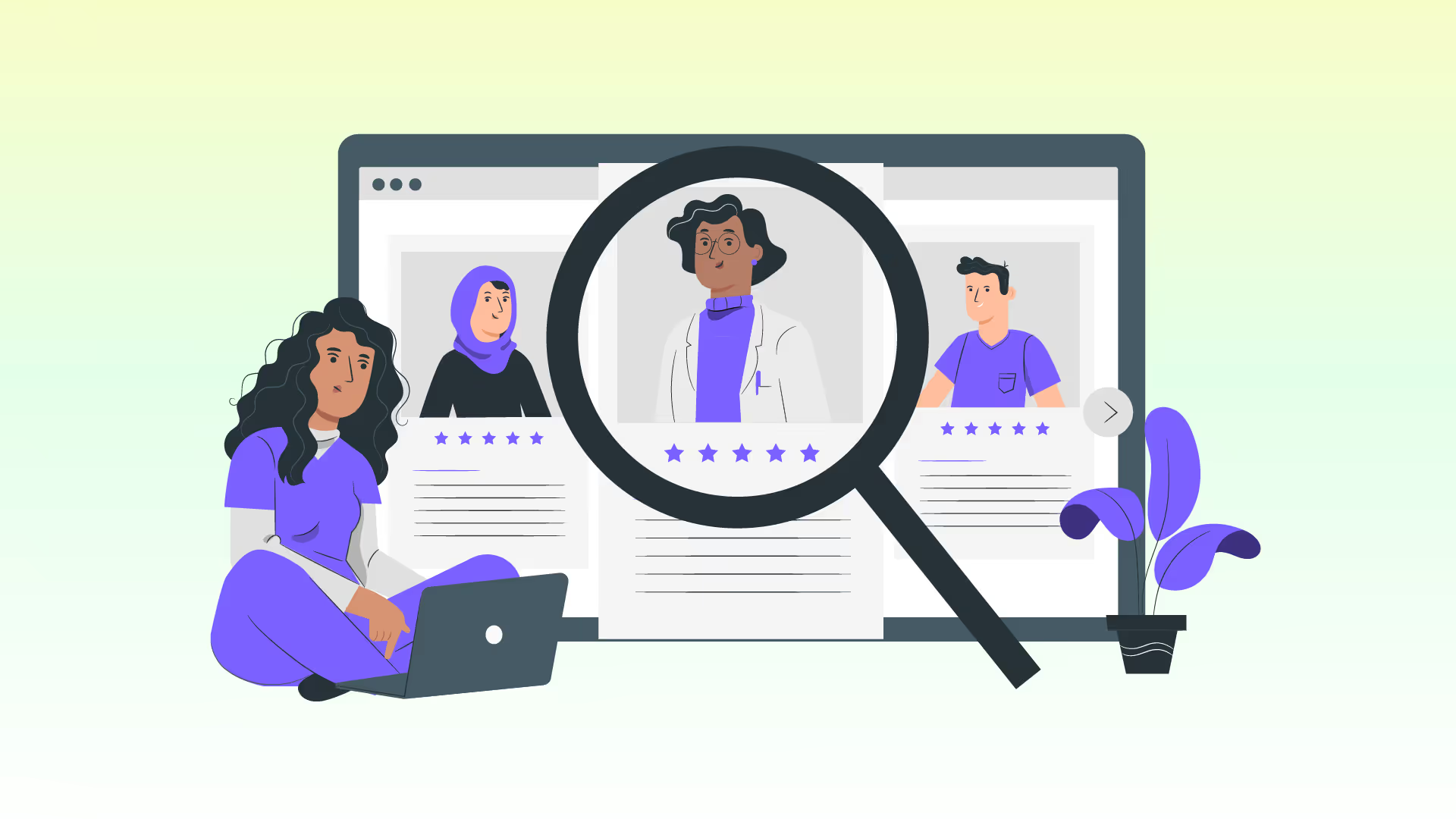
Finding the right nurse practitioner preceptor is one of the most challenging and least supported parts of NP education, and for most students it takes significantly longer than expected. The preceptor shortage is structural, competition for clinical sites is intense, and most NP programs place the full responsibility of securing a placement on the student. Understanding how the search works, what to look for in a preceptor, and when to change your approach is what separates students who graduate on time from those who do not.
TL;DR - Nurse Practitioner Clinical Sites: Finding the Right Preceptor
- The preceptor shortage is structural: NP programs are growing faster than the pool of qualified preceptors willing to take on students, and most schools provide little to no support for the clinical placement process
- Not all clinical sites and preceptors are equal. The right match needs to align with your specialty, your timeline, and your program's credentialing requirements or the placement can fall through even after weeks of coordination
- Independent outreach through cold calling and school resources still has a place, but most students hit a wall where visibility into who is actually accepting students becomes more valuable than persistence alone
- A preceptor matching service changes the starting point of the search by giving you access to vetted preceptors who have already agreed to take students and whose credentials have been verified upfront
- Every week without a confirmed placement is a week closer to a delayed graduation., open your free NPHub account and see which preceptors near you are actively accepting students right now.
The Preceptor Search Is Hard. Here Is Why and What to Do About It.
You have done everything right. The late nights, the double shifts, the coursework stacked on top of a full-time nursing job. You are close. And now the one thing standing between you and graduation is something your NP program told you to figure out on your own: finding a clinical preceptor.
Finding the right nurse practitioner preceptor is one of the most stressful and least supported parts of NP education, and for most students it takes significantly longer than expected. The preceptor shortage is real, the competition for clinical sites is intense, and the process of securing a placement involves more coordination, paperwork, and follow-up than anyone warned you about before you enrolled.
This guide makes that process easier. Here is what it covers:
- How clinical sites and nurse practitioner preceptors work and what qualifies someone to supervise your rotations
- Why the preceptor search has become harder and what structural forces are driving that
- How to find NP preceptors through your own outreach and when a preceptor matching service makes more sense
- What to look for in a clinical preceptor beyond just availability
- How to make the most of your clinical rotations once you have secured a placement
But if you are already deep in the search and reading guides feels like one more thing on a plate that is already full, you do not have to wait until the end to find options, you can create a free NPHub account and see which preceptors are actively accepting NP students near you before you spend another week on cold outreach.
Types of Clinical Sites for Nurse Practitioner Students
Knowing which type of clinical site aligns with your specialty and program requirements directly affects which preceptors you should be targeting and which outreach is actually worth your time.
Here is what each setting offers and what to keep in mind:
- Hospitals provide acute care exposure and complex patient cases. Competitive to access and often require established institutional relationships to break into
- Outpatient clinics are the most common setting for primary care and family practice rotations. Availability varies significantly depending on how saturated your local market is with competing NP students
- Specialty clinics covering women's health, pediatrics, psychiatry, and urgent care offer targeted experience but come with a smaller preceptor pool, making them harder to secure through cold outreach alone
- Schools and long-term care facilities are less commonly pursued but can be strong alternatives for students struggling to find placements in more competitive settings
- Telehealth and hybrid settings are increasingly viable, particularly for students in rural areas with limited access to local clinical sites
The site type you are targeting matters because it defines your realistic preceptor pool before you even begin outreach. A student pursuing women's health in a rural area is working with fundamentally different constraints than a student looking for primary care hours in a major metro. Knowing that from the start saves weeks of pursuing placements that were never going to work.
NPHub's network spans all of these clinical settings across the United States and a free account lets you see which site types and preceptors are currently available near your area, so you know exactly where your realistic options are before you start reaching out.
How To Find The Ideal Clinical Site?
Most guides will tell you to start early, use your school resources, network, and call local clinics. That advice is not wrong, but if you are reading this, you have probably already tried most of it. Here is a more honest breakdown of what works, what has limits, and when it makes sense to change your approach.
- Start earlier than feels necessary: The students with the most options started before the pressure built. Six to 12 months out gives you room to pursue multiple leads without one fallthrough derailing your timeline. If you are already inside that window, the priority is a confirmed placement, not a perfect one.
- Use school resources, but know their limits: Preceptor lists and academic advisors are worth checking, but most school-provided lists are outdated or oversubscribed. Use them as a starting point, not a complete solution.
- Tap your professional network directly: Your existing connections as a registered nurse are underutilized. Colleagues and physicians who already know your work are more likely to respond than a cold email to a clinic you have never worked with.
- Cold outreach still has a place, with realistic expectations: Smaller independent practices in family practice, women's health, or pediatrics often have more flexibility and less competition than larger facilities. Following up, leaving voicemails, and asking for a specific contact all help, but response rates are low and this approach requires time you may not have.
- When outreach stops working, change the starting point: If weeks have passed without a confirmed placement, the issue is not effort. It is visibility. Most students are reaching out blind, without knowing which preceptors are actively accepting students or which clinical sites in their area are actually viable for their program.
What to Look for in a Preceptor
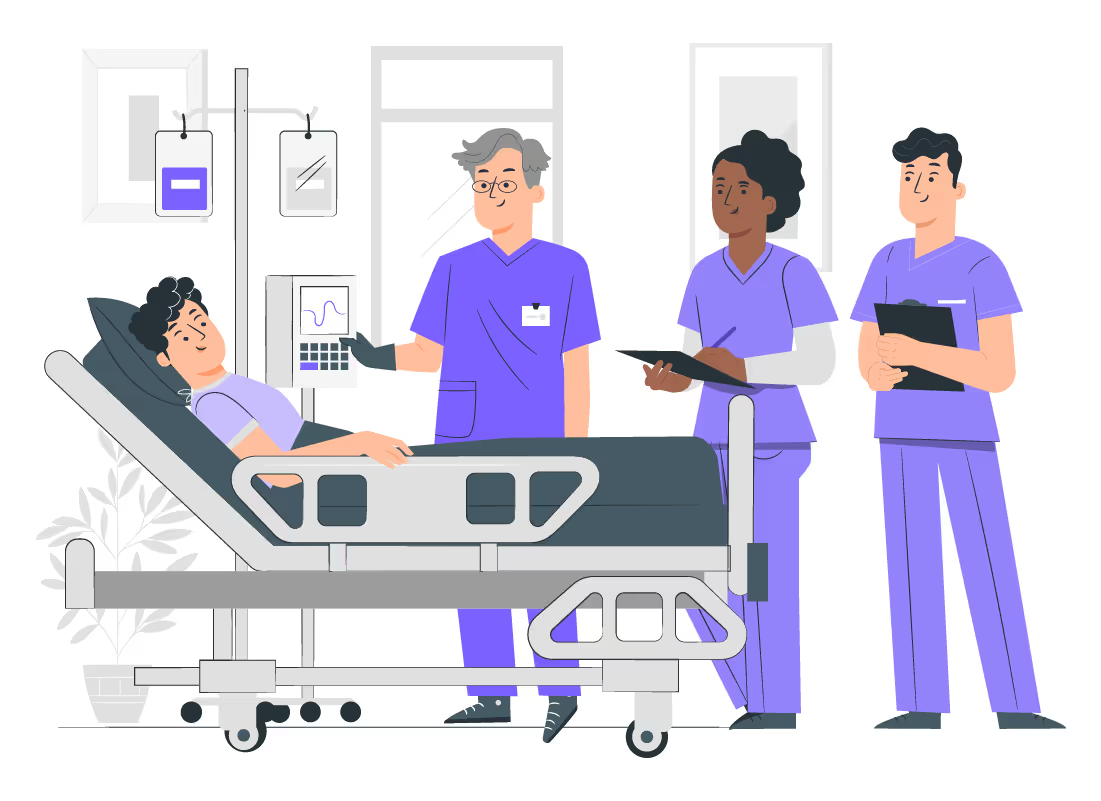
Not every available preceptor is the right preceptor. When you are deep in a search and someone finally responds, the temptation is to say yes before asking the questions that actually determine whether that placement will work. Here is what actually matters:
- Active licensure and certification in your specialty:A qualified nurse practitioner preceptor needs to be currently practicing in the area you are training in, whether that is family practice, women's health, pediatrics, or another population focus
- A patient volume that supports real learning:Preceptors who see 15 to 20 patients daily provide the hands-on exposure that builds clinical judgment and helps you meet your clinical hour requirements meaningfully
- Willingness to complete required paperwork:A preceptor who agrees to supervise you but cannot complete affiliation agreements and program documentation will delay your start date. Confirm this before investing time in the relationship
- Genuine commitment to teaching, not just supervision:Ask prospective preceptors how they structure student involvement during patient encounters. There is a real difference between a preceptor who signs off on your hours and one who actively provides guidance and real-time feedback
- Alignment with your program's credentialing standards:A preceptor who seems like a strong fit can still be rejected by your school if their credentials do not meet your program's specific requirements. Verifying this upfront saves weeks of wasted coordination
NPHub verifies credentials, active practice status, and willingness to complete required paperworkbefore a preceptor ever appears in the network. Create a free account and see which qualified preceptors are available in your specialty near you, so you are evaluating real options instead of starting over with every new lead.
Overcoming Challenges in Clinical Placements
The challenges NP students face in securing clinical placements are not random. They follow a predictable pattern, and understanding where they come from makes it easier to address them before they cost you time you cannot get back.
- The preceptor shortage is the starting point for most problems:More NP students are competing for a pool of qualified nurse practitioner preceptors that is not growing at the same pace. Preceptors are managing full patient loads, productivity requirements, and administrative burden that leaves little room for taking on students. Competition from PA and medical students, whose programs often compensate clinical sites, puts NP students at a disadvantage before outreach even begins.
- Paperwork and coordination delays are harder to predict than the search itself:Even after a preceptor agrees to take you on, the placement is not confirmed until affiliation agreements are signed, program documentation is submitted, and school approval is granted. A single missing credential or form can delay your start date or send you back to the beginning.
- Fallthrough risk is higher than most students expect:A preceptor who agreed in principle can become unavailable before your rotation starts. Pursuing multiple leads simultaneously and having a secondary option identified before your primary placement is finalized is one of the most effective ways to protect your timeline.
The administrative and coordination burden of the search is one of the most controllable variables in this process. NPHub handles affiliation agreements, required paperwork, and coordination between your program and the clinical site. Create a free account and see how the process works before committing to anything.
Making the Most of Your Clinical Rotations
Getting to this point took more than most people realize. The search, the paperwork, the coordination, and everything you were managing alongside it. Your clinical rotation is where that work starts to pay off, and how you approach it directly affects what you walk away with.
- Show up prepared for every patient encounter:Review charts before appointments, come with questions, and treat each case as a learning opportunity rather than a box to check. The students who get the most out of their rotations are the ones who stay curious even when the day is long
- Communicate clearly with your preceptor from the start:Be upfront about your learning goals, your current skill level, and the areas where you want more exposure. A preceptor who understands what you need can give you more targeted guidance and involve you in the cases that matter most for your development
- Reflect after each shift, not just at the end of the rotation:What went well, what you would do differently, and what questions came up during the day are all worth writing down. That kind of ongoing reflection is what turns clinical hours into actual clinical judgment
- Build genuine connections with the healthcare professionals around you:The relationships you develop during your rotations often become your first professional references, your job leads, and your strongest network as a new NP. Treat every interaction as part of your professional identity, not just your education
- Protect your timeline by staying on top of documentation:Late or incomplete evaluations, missing signatures, and unsubmitted hours can delay your graduation even after your rotation is complete. Stay organized and follow up proactively with your preceptor and program coordinator
The quality of your clinical experience starts before your first day. A well-matched, vetted preceptor who is genuinely committed to your development makes everything in this list easier to execute, create a free NPHub account and see which preceptors are available in your specialty, so when you get to this stage you are set up to make the most of it.
Setting Yourself Up for Success
You have done the hard part of understanding what you are up against. The preceptor shortage is real, the search is more complex than most programs let on, and the students who graduate on time are not the ones who had an easier path. They are the ones who stopped waiting for the system to support them and made a different decision before their deadline made it for them.
Here is what that decision protects:
- Your graduation timeline, so one missing placement does not push everything back
- Your clinical experience, so the hours you complete are with a preceptor who is genuinely invested in your development
- Your time and energy, so the search stops consuming bandwidth you need for everything else you are managing
NPHub's network of vetted preceptors spans primary care, family practice, women's health, pediatrics, acute care, and more across the United States. The paperwork, coordination, and affiliation agreements are handled so you can focus on your clinical education.
Create a free NPHub account and see which preceptors are available in your area right now. No commitment required to get started.
Frequently Asked Questions
1. Why is it so hard to find a nurse practitioner preceptor?
The preceptor shortage is structural, not temporary. NP programs are enrolling more students than ever while the pool of qualified preceptors is shrinking. Preceptors are managing full patient loads and productivity requirements that leave little room for teaching, and PA programs and medical schools often compensate clinical sites directly, putting NP students at a disadvantage before outreach even begins.
2. How early should I start looking for a clinical preceptor?
Six to 12 months before your intended rotation start date gives you the most options and the most room to absorb a fallthrough without affecting your graduation timeline. Most students underestimate how long the search takes until they are already in it.
3. What should I do if my school is not helping me find a preceptor?
Most NP programs place the full responsibility of finding clinical placements on students with minimal support. If school resources are not producing results, tap your existing professional network, reach out directly to local clinics, and consider a preceptor matching service that gives you visibility into which preceptors are actively accepting students in your specialty right now.
4. How do I know if a preceptor will meet my program's requirements?
Ask about active licensure and certification in your specialty, clinical experience level, and willingness to complete affiliation agreements and required paperwork before investing time in the relationship. A preceptor who seems like a strong fit can still be rejected by your school if their credentials do not meet your program's specific standards. NPHub verifies all of this before a preceptor ever appears in the network.
5. What specialties can I find a preceptor for?
NPHub's network covers primary care, family practice, women's health, pediatrics, acute care, and more across the United States. High-demand specialties like psychiatry and acute care typically take longer to place due to limited preceptor availability. Create a free account and see what is available in your specialty near you before you start outreach.
6. What happens if my preceptor falls through before my rotation starts?
Preceptor fallthrough is more common than most students expect and one of the leading causes of delayed graduation. Having a secondary option identified before your primary placement is finalized is one of the most effective ways to protect your timeline. If you are working with NPHub and a placement falls through, the team works to find a replacement so you are not restarting the search alone.
7. Is a preceptor matching service worth it?
It depends on where you are in the search. Students early in the process with a flexible timeline may find independent outreach sufficient. Students who have been searching for weeks without a confirmed placement typically find the time saved and reduction in uncertainty justifies the cost. The real question is not whether you can afford a matching service. It is whether you can afford another delayed semester.
8. What does NPHub actually do that I cannot do on my own?
When you search independently, you handle everything: credential verification, outreach, affiliation agreements, required paperwork, and school approval, all while working full time. NPHub handles all of that through a dedicated student coordinator and matches you with preceptors who are already vetted and actively accepting students. Create a free account and see how the process works before committing to anything.
Article details
- Last updated
May 1, 2026 - Fact-checked by
NPHub Clinical Placement Experts & Student Support Team - Sources and references
Find a preceptor who cares with NPHub
Book a rotation.webp)
.jpeg)

.webp)
.jpeg)


%20(3)%20(2).svg)
.webp)