
.png)



.webp)
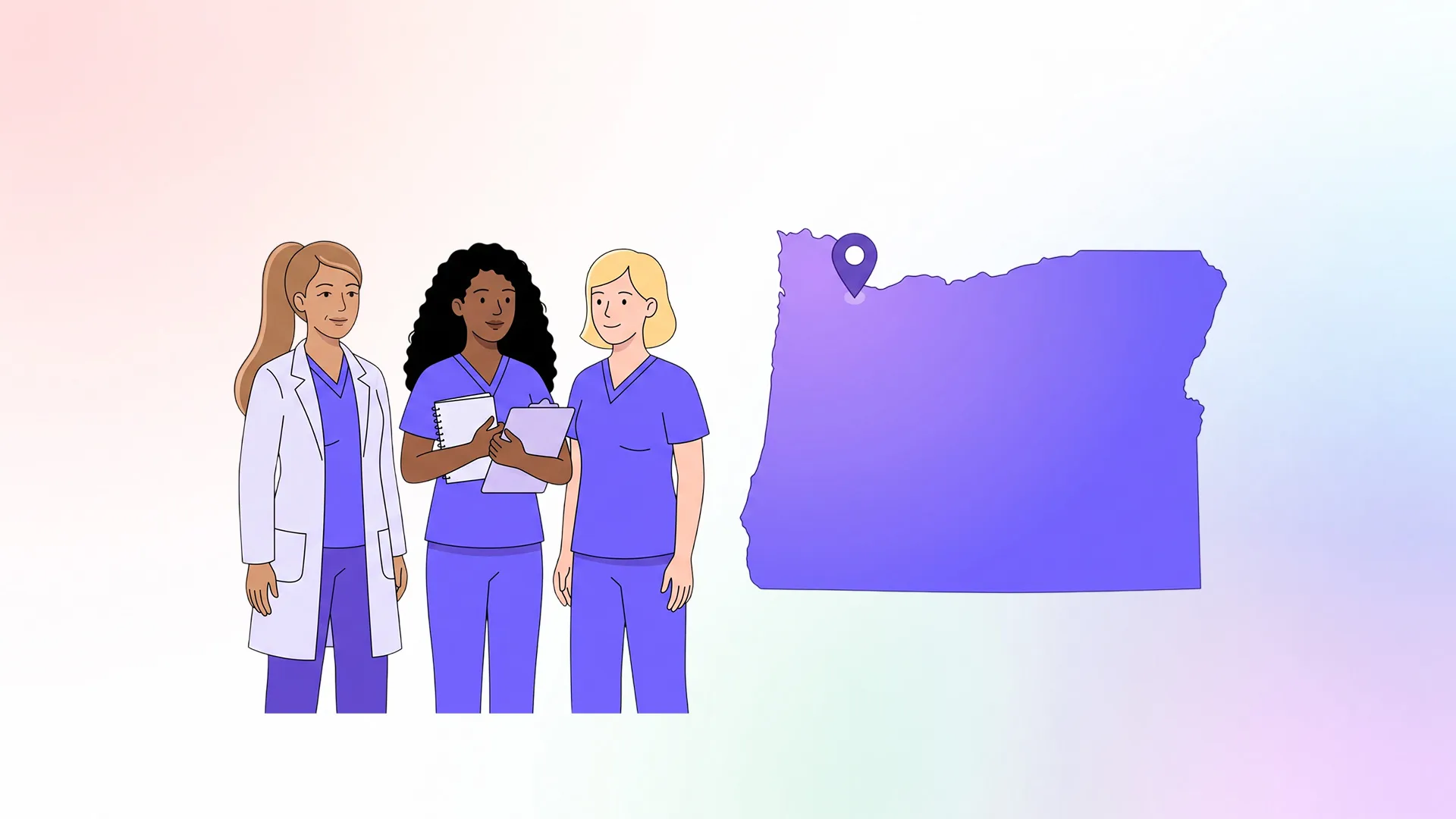
Oregon ranks last in the country for adult mental illness prevalence, with 30.16% of adults experiencing a mental illness, yet Portland PMHNP students spend months searching for a qualified preceptor even in the state's largest city. Portland PMHNPs earn an average of $157,625 per year, 15% above the national average. Psychiatric NP preceptors who supervise students through NPHub add $5,000 to $10,000 or more on top of that. This blog makes the case for why Portland PMHNPs are uniquely positioned to address both problems at once.
TL;DR - Become a Paid Psychiatric NP Preceptor in Portland, Oregon
- Oregon's psychiatric care crisis is the worst in the country: Oregon ranks last nationally for adult mental illness prevalence, has 132 designated mental health professional shortage areas, and meets only 24.28% of its mental health needs. The state needs 85 additional psychiatric providers just to remove its current shortage designations.
- PMHNP students in Portland cannot find preceptors: Most outpatient psychiatric practices in the metro are not structured to take students, telehealth has complicated in-person supervision, and most programs offer minimal placement support. Many PMHNP students spend an entire semester searching without a confirmed clinical rotation.
- Portland PMHNPs are among the highest paid in the country: Portland PMHNPs earn an average of $157,625 per year based on 50 job postings over the past 36 months, 15% above the national NP average of $129,968.
- Precepting adds meaningful income on top of that: Psychiatric NP preceptors who supervise students through NPHub add $5,000 to $10,000 or more annually to their existing clinical income without adding patients or changing their schedule.
- Ready to become a paid psychiatric NP preceptor in Portland? Join the NPHub preceptor network and our team will reach out to get you started.
Portland Has a Psychiatric Care Problem
Oregon has the highest prevalence of mental health challenges of any state in the country: 30% of Oregon adults are struggling with mental health, more than any other state, according to Mental Health America's 2025 annual report. While Oregon has made meaningful progress on access to care, ranking 7th nationally for access in the same report, the sheer scale of mental health need in the state continues to outpace the workforce available to address it.
The national picture makes that gap even clearer. As of March 31, 2026, there are 6,959 designated mental health professional shortage areas across the country, with only 26.78% of mental health needs being met nationally. Oregon fares even worse than the national average, with just 24.28% of its mental health needs met.
The demand for psychiatric mental health nurse practitioners in Oregon is responding to that need. Demand for PMHNP services in Oregon is projected to climb 61% over the next decade, and PMHNP programs across the state are growing to meet that demand. The problem is that the pipeline of graduating PMHNPs entering clinical practice is being bottlenecked at a critical point: the preceptorship.
PMHNP students in Portland cannot find qualified preceptors. Most outpatient clinics, community mental health centers, and private psychiatric practices in the metro are not structured to take students. The preceptor search falls entirely on the student, and many spend an entire semester making cold calls and submitting rotation requests without a confirmed clinical placement.
That is both a crisis and an opportunity. Practicing psychiatric NPs in Portland are in a direct position to address the preceptor shortage, add meaningful income to their existing clinical practice, and directly contribute to the pipeline of PMHNPs Oregon needs. If precepting sounds worth exploring, find out what it looks like before reading on.
Portland's Psychiatric NP Shortage Is Documented and Growing
The psychiatric care gap in Oregon is structural, and Portland sits at the center of it. Understanding what is driving the shortage in the metro matters because it is the same set of conditions that makes qualified psychiatric NP preceptors so urgently needed right now.
Portland did not arrive at this shortage overnight. Several structural factors have been building for years, and together they paint a clear picture of why the psychiatric NP workforce in Oregon cannot keep up with demand:
- Oregon meets less than a quarter of its mental health care needs: Oregon has 132 designated mental health professional shortage areas, with 1.6 million Oregonians living in one and only 24.28% of the state's mental health needs being met, below the national figure of 26.78%. The state would need 85 additional psychiatric providers just to remove its current shortage designations. For PMHNP students seeking clinical rotations in Oregon, that gap is not an abstraction. It is the daily reality of the communities they are training to serve.
- The shortage sits on top of the nation's highest prevalence of mental illness: Oregon ranks last among all 50 states and D.C. in adult prevalence of any mental illness, with 30.16% of adults, nearly 1 in 3, experiencing a mental illness in the past year. The state also ranks 49th for adults with serious thoughts of suicide, and 30.90% of Oregon adults with a mental illness reported an unmet need for treatment. The demand for psychiatric care, medication management, comprehensive psychiatric evaluations, and treatment plans is not declining. It is accelerating.
- Oregon's gap is in prescribers, not therapists: Oregon ranks 4th in the nation for overall mental health workforce availability, with one provider for every 150 people. Yet HRSA still designates 132 mental health shortage areas across the state, because those designations are driven largely by psychiatrist-to-population ratios. Oregon has counselors and social workers. What it lacks is psychiatric prescribing capacity, which is precisely the clinical practice domain that PMHNPs are trained to fill. Growing that prescribing workforce starts with training more PMHNP students, and training more PMHNP students starts with qualified preceptors.
Psychiatric NP Students in Oregon Cannot Find Preceptors
Oregon has a documented psychiatric care crisis and a growing pipeline of PMHNP students who want to help address it. The problem is that those students cannot complete their clinical training without qualified preceptors, and qualified preceptors in psychiatric mental health are among the hardest to find in NP education anywhere in the country.
The gap between student demand and preceptor availability in Oregon is not a minor inconvenience. It is a structural barrier that is slowing the pipeline of PMHNPs entering practice at exactly the moment Oregon needs them most:
- PMHNP is the hardest NP specialty to place students in nationwide: The shortage of qualified PMHNP preceptors is a documented national problem that plays out acutely in Oregon. Most PMHNP students spend months making cold calls, submitting rotation requests to outpatient clinics and community mental health centers, and reaching out directly to psychiatric providers who are already at clinical capacity. Many spend an entire semester searching without a confirmed placement, delaying their clinical hours completion and pushing back their graduation timeline.
- Telehealth has reshaped psychiatric NP practice in ways that complicate placements: A significant share of psychiatric NP practice in Oregon has moved to telehealth platforms. But PMHNP students need in-person training to complete their clinical hours and meet their program requirements. Many outpatient psychiatric practices that now operate primarily or exclusively via telehealth are not structured to supervise students in person, further narrowing the pool of available preceptors in Portland.
- Oregon's existing mental health workforce is burning out and leaving practice: A qualitative study of Oregon's public mental health system found that providers consistently carry high caseloads of patients with severe and complex symptoms, and are routinely required to work beyond their job responsibilities with no additional pay, including supervising students and interns. Researchers identified this chronically stressful environment as a key driver of turnover and attrition. When supervision is unpaid labor stacked on top of an already overloaded clinical role, experienced providers exit both clinical practice and preceptorship at the same time, shrinking the preceptor pool just as student demand grows.
- Most programs offer limited placement support: Most PMHNP programs provide minimal assistance with clinical placement, leaving the preceptor search entirely on the student. In a specialty where qualified preceptors are already scarce and most practices are not taking students, that lack of institutional support means many PMHNP students spend months navigating the search alone, often without success.
The result is a growing bottleneck in Oregon's psychiatric NP pipeline at exactly the moment the state needs more PMHNPs entering practice. Practicing psychiatric NPs in Portland who step into the preceptor role break that bottleneck directly. The next section covers what that looks like in practice, what it pays, and exactly how to get started.
What Happens When Portland Psychiatric NP Preceptors Step Up
Every PMHNP student who cannot find a qualified preceptor in Portland is a future psychiatric provider who enters practice later than they should, or does not enter practice at all. Every practicing psychiatric NP in Portland who decides to precept breaks that cycle for at least one student and contributes directly to the prescribing workforce Oregon is documented to need.
Precepting PMHNP students in Portland is also compensated work, and the compensation picture in this city is stronger than most psychiatric NPs realize.
What Portland Psychiatric NP Preceptors Earn
Portland nurse practitioners earn an average base salary of $148,890 per year, 15% above the national average of $129,968. PMHNPs in Portland specifically earn an average of $157,625 per year based on 50 job postings over the past 36 months. That is the income baseline that preceptor compensation adds on top of.
And on top of that, Portland PMHNPs who precept consistently through NPHub can add $5,000 to $10,000 or more annually to their existing clinical income, without adding patients, extending clinic hours, or taking on a second clinical role.
Who Qualifies to Precept PMHNP Students in Oregon
Oregon is a full practice authority state, meaning nurse practitioners can assess, diagnose, treat, and prescribe independently without a required physician collaborative agreement. That independence shapes the practice environment PMHNP students are training for and affects how preceptor supervision is structured in Oregon clinical settings.
To qualify as a PMHNP preceptor in Oregon a psychiatric NP needs:
- An active, unencumbered Oregon APRN license
- PMHNP-BC certification through the American Nurses Credentialing Center or equivalent board certification
- A minimum of one to two years of clinical experience in psychiatric mental health practice
- Active practice in a qualifying clinical setting: outpatient mental health clinic, inpatient psychiatric unit, community mental health center, or private psychiatric practice with an appropriate in-person supervision structure
What the Preceptorship Actually Involves
Precepting a PMHNP student in a Portland psychiatric practice means providing structured clinical supervision that bridges classroom learning and real world practice. The preceptor role goes beyond oversight. It is mentorship, evaluation, and coaching that develops the clinical skills, diagnostic reasoning, and treatment planning abilities PMHNP students need to practice independently.
Day to day, Portland psychiatric NP preceptors orient students to the clinical setting and patient population, supervise comprehensive psychiatric evaluations and medication management decisions, guide students through differential diagnosis and treatment plan development for patients with a diverse range of psychiatric disorders and psychiatric conditions, provide regular structured feedback and formal evaluations using the student's program tools, and communicate with program faculty on student progress throughout the clinical rotation.
The preceptor's job is clinical supervision and mentoring. The administrative burden that has historically kept qualified psychiatric NPs from saying yes to precepting does not land on them., you can see how precepting works with NPHuband find out what PMHNP student placements look like in your Portland practice.
Portland Has the Crisis. You Have the Answer.
Oregon ranks last in the country for adult prevalence of mental illness. Portland sits at the center of a psychiatric care gap that the state has been unable to close despite ranking 4th nationally for overall mental health workforce availability.
The problem is not a shortage of therapists or social workers. It is a shortage of psychiatric prescribers, the clinicians who can diagnose psychiatric disorders, manage medications, develop comprehensive treatment plans, and provide the full scope of psychiatric care and medication management that Oregon's patient population needs across the lifespan.
PMHNPs are the answer to that problem. And the PMHNPs who will fill that gap five years from now are enrolled in PMHNP programs right now, searching for the right preceptor to complete their clinical hours and gain the real world skills that no classroom can provide.
Think about what a Portland PMHNP preceptor actually provides. Not just supervision hours. Not just signatures on evaluation forms. A genuine learning experience built around real world practice with real patients.
A PMHNP student who completes their pmhnp preceptorship in a Portland psychiatric practice gains hands on experience conducting comprehensive psychiatric evaluations, developing and adjusting treatment plans for patients managing depression, anxiety, and complex psychiatric conditions, learning to diagnose psychiatric disorders and manage medications for patients who present with a diverse range of psychiatric symptoms, and navigating the human complexity of psychiatric care for children, older adults with geriatric psychiatry needs, and families seeking holistic and integrative mental health support.
That clinical experience cannot be manufactured in a simulation. It requires a qualified psychiatric NP preceptor who is willing to share their clinical knowledge, provide structured guidance and feedback, and invest in the professional development of the next generation of psychiatric mental health nurse practitioners.
NP students gain not just clinical hours but the real world skills, critical thinking, and nursing practice foundation they need to provide therapy, prescribe and manage medications, and deliver holistic psychiatric care independently from their first day in practice.
Every Portland psychiatric NP who steps into the preceptor role is not just adding income to their practice. They are directly contributing to the solution to a public health problem that their own community has been unable to solve on its own. The next generation of Portland PMHNPs needs preceptors who are already here, already practicing, and already qualified to provide the guidance and clinical education that will define their careers.
How NPHub Connects Psychiatric NP Preceptors in Portland With Students Who Need Them
The demand is real. The PMHNP students are searching. The clinical knowledge and psychiatric expertise to supervise them exists in Portland practices right now. What NPHub provides is the infrastructure that makes acting on that opportunity simple.
The match comes to you. When you submit your information, a preceptor recruiter, every one of whom is a practicing NP, reaches out to learn about your clinical setting, specialty focus, and availability. NPHub's preceptor matching services identify PMHNP students whose clinical goals, program requirements, and rotation timelines align with what your practice can offer before any request is sent your way.
You stay in control. Rotation requests arrive in your NPHub dashboard with full details: the student's NP program, clinical hours requirements, specialty track, and learning objectives. You review each one independently and accept only what fits your schedule. No cold calls from students, no unsolicited outreach, no pressure.
The paperwork is handled. Every affiliation agreement, liability document, and credentialing requirement is coordinated by NPHub directly with the student's nursing program. You receive what needs a signature, sign it, and move on. Nothing else lands on your desk.
You focus on teaching. Once the rotation begins, your attention goes entirely to the student and your patients. Supervising psychiatric evaluations, guiding medication management, coaching students through holistic treatment planning for patients across the lifespan including children, older adults, and families. When the rotation wraps up, compensation is processed within six weeks.
Oregon needs more psychiatric prescribers. Portland needs more qualified PMHNP preceptors. NPHub connects the two with a streamlined process that protects your time, compensates your expertise, and ensures every PMHNP student who needs a clinical rotation in Portland has access to the guidance and real world learning experience that only a practicing psychiatric NP can provide. Become a preceptor with NPHub and be part of the solution.
Frequently Asked Questions About Becoming a Paid Psychiatric NP Preceptor in Portland
1. Is there a psychiatric care shortage in Portland?
Yes, and it is documented at both the state and national level. Oregon ranks last among all 50 states for adult prevalence of mental illness, with 30.16% of adults experiencing a mental illness in the past year. As of March 31, 2026, Oregon has 132 designated mental health professional shortage areas with only 24.28% of the state's mental health needs being met, below the national figure of 26.78%. The state would need 85 additional psychiatric providers just to remove its current shortage designations.
2. Why is it so hard for PMHNP students in Oregon to find preceptors?
Several structural factors contribute. Most outpatient psychiatric practices and community mental health centers in Portland are not structured to supervise students. A significant share of Oregon's psychiatric NP practice has moved to telehealth, which creates in-person supervision complications for students who need clinical hours completed in person. Most PMHNP programs offer minimal placement support, leaving the preceptor search entirely on the student. The result is many PMHNP students spending an entire semester searching without a confirmed clinical rotation.
3. What do PMHNP preceptors earn in Oregon?
Nurse preceptors nationally earn an average of $82,765 per year, with the majority range between $76,807 and $89,684 and top earners reaching $95,983. PMHNPs in Portland earn an average of $157,625 annually based on 50 job postings over the past 36 months. Portland NPs overall earn an average of $148,890 per year, 15% above the national average of $129,968. Preceptor income through NPHub adds $5,000 to $10,000 or more annually on top of existing clinical income.
4. What are the requirements to become a PMHNP preceptor in Portland?
An active, unencumbered Oregon APRN license, PMHNP-BC certification through the American Nurses Credentialing Center, and a minimum of one to two years of clinical experience in psychiatric mental health practice. Active practice in a qualifying clinical setting is also required: outpatient mental health clinic, inpatient psychiatric unit, community mental health center, or private psychiatric practice with an appropriate in-person supervision structure.
5. Does Oregon's full practice authority affect how I supervise NP students?
Yes, in a positive way. Oregon is a full practice authority state, meaning PMHNPs can assess, diagnose, treat, and prescribe independently without a required physician collaborative agreement. That independence extends to the preceptorship. Oregon PMHNP preceptors supervise students within their own independent practice without physician co-signature or oversight requirements, which simplifies the supervision structure compared to states with more restrictive scope of practice laws.
6. Who handles the paperwork when I take on a PMHNP student through NPHub?
NPHub handles everything. Affiliation agreements, liability documentation, credentialing coordination with the student's nursing program, all of it is managed by NPHub directly. You receive what requires your signature, review it, sign it, and that is the full extent of your administrative involvement.
7. Can I precept students if I practice primarily via telehealth in Oregon?
It depends on the student's program requirements. Most PMHNP programs require a portion of clinical hours to be completed in person, which creates supervision complications for practices that operate exclusively via telehealth. NPHub will assess your practice setting during the onboarding conversation and advise on whether a student match is feasible before anything moves forward.
8. What is the first step to becoming a paid PMHNP preceptor in Portland?
Submit your information and a member of the NPHub preceptor team will reach out directly. They will learn about your Portland psychiatric practice, your availability, and what a good clinical match looks like for your setting. Start here and the conversation will take it from there.
Article details
- Last updated
Jun 11, 2026 - Fact-checked by
NPHub Clinical Placement Experts & Student Support Team - Sources and references
- https://lookouteugene-springfield.com/story/government-politics/2025/10/20/oregon-has-higher-rate-of-mental-illness-than-any-other-state-report-says/
- https://mhanational.org/wp-content/uploads/2025/09/State-of-Mental-Health-2025.pdf
- https://data.hrsa.gov/default/generatehpsaquarterlyreport
- https://www.nursingprocess.org/psychiatric-nurse-practitioner-programs/oregon/
- https://www.indeed.com/career/nurse-practitioner/salaries/Portland--OR
- https://www.indeed.com/career/nurse-practitioner/salaries
- https://www.indeed.com/career/psychiatric%20mental-health-nurse-practitioner/salaries/Portland--OR
- https://opportunityhealthcare.com/blog/everything-you-need-to-know-about-nurse-practitioner-scope-of-practice-np-license-in-oregon
- https://go.nphub.com/precept-with-nphub
Find a preceptor who cares with NPHub
Book a rotation.webp)
.jpeg)

.webp)
.jpeg)


%20(3)%20(2).svg)
.webp)