
.png)



.webp)
TL;DR
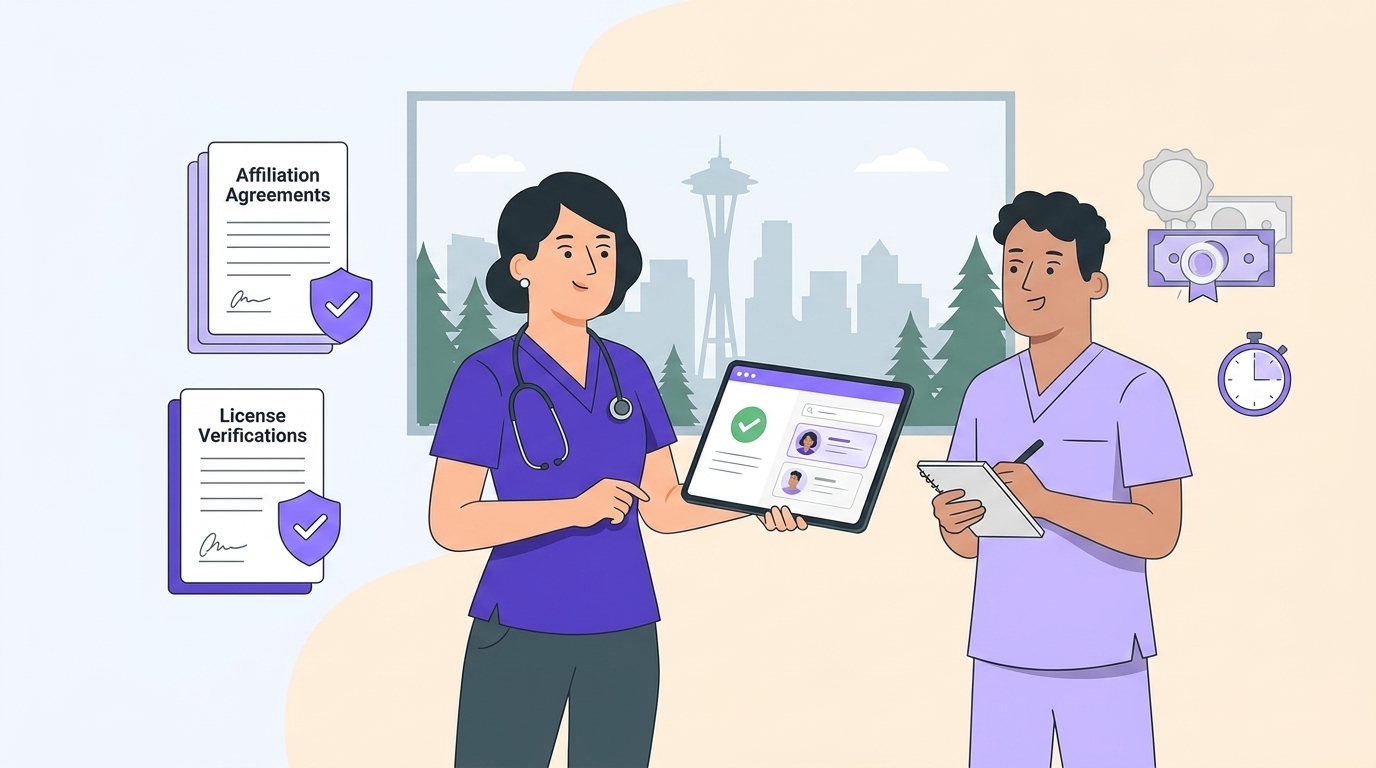
- Precepting in Seattle no longer means unpaid evenings buried in duplicate forms. Washington NPs are increasingly doing it on paid, professional terms.
- The paperwork that made the role exhausting, the affiliation agreements, license verifications, and email ping-pong, can be handled for you.
- You stay in control: you review student profiles and accept or decline, so you hand-pick the nurse practitioner students who fit your practice rather than getting assigned strangers.
- Getting paid to precept is legitimate. Reputable matching services are transparent about how and when you are paid, and many nursing programs partner with them directly.
- As a Washington ARNP with full practice authority, you already meet the role's core requirements. Telling NPHub your specialty and where to reach you is the whole first step.
If you practice as a nurse practitioner in Seattle, you have probably been asked to precept more than once. A student emails out of nowhere. A former classmate passes your name along. Someone catches you in the hallway between patients. For a long time, saying yes meant absorbing a stack of unpaid paperwork on top of a full clinical day, filling out the same forms for every student and every school, and hoping the logistics sorted themselves out.
That version of the role is fading. More Washington clinicians now choose to become a preceptor in Seattle on very different terms: paid for their time, backed by a team that carries the administrative load, and free to decide which nurse practitioner students they take and when.
This guide covers what precepting actually involves in Seattle today, what has changed, how the money and the paperwork really work, and the steps to get started. If you would rather skip ahead, you can see how precepting with NPHub works and leave your details so someone can walk you through it.
What precepting actually asks of you, and what has changed
A clinical preceptor is the practicing provider who supervises a nurse practitioner student during a clinical rotation. You give guidance in real patient encounters, model decision-making, sharpen the student's patient care skills through personal instruction, and sign off on the hours and evaluations their program requires. It is hands-on teaching layered onto your normal clinical care, not a lecture and not a side project.
In Washington, you are already well positioned for it. The state grants nurse practitioners full practice authority and licenses them under the ARNP credential, so you assess, diagnose, and prescribe independently. That autonomy is exactly what programs look for in a preceptor, because you can teach the full scope of a rotation without a supervising physician in the loop.
Most programs and services expect a preceptor to hold a current, unencumbered Washington license, be board certified in the area you plan to precept, and have at least a year or so of clinical experience in that specialty. Specific requirements vary by school and specialty, so it is worth confirming the details for your situation before you commit.
The real shift is cultural. Precepting used to be treated as pure volunteer work, an altruistic favor you did between patients. Now a growing share of clinicians expect the work to be recognized and compensated, and the systems around precepting have caught up to make that normal.
Why so many Seattle clinicians are being asked right now
Nurse practitioners are one of the fastest-growing professions in the country, according to the U.S. Bureau of Labor Statistics, and NP programs have expanded quickly to keep up. Every one of those students needs supervised clinical hours across several rotations, which means demand for preceptors keeps climbing while the pool of available providers has not grown at the same pace.
Here is the part most clinicians find surprising: in one national survey, roughly 60% of practicing NPs were not precepting at all, and the single most common reason was simply that no one had asked them formally. If you have quietly wondered whether you should be doing this and never had a clear way in, you are in good company.
The gap is sharpest in specific specialties. Family medicine sees steady demand and steady competition. Psychiatric mental health, women's health, pediatrics, and acute care face the tightest shortages, and a PMHNP or WHNP preceptor in the Seattle area is genuinely hard for students to find. Some regional health systems have paused taking NP students altogether, and university placement offices like the one at the University of Washington can only stretch so far. Programs such as Seattle University and online cohorts placing students locally are all drawing from the same limited group of clinicians.
None of that is a reason to panic. It is a reason your yes carries weight. When you open a few slots, especially in a high-need specialty or in a setting that serves diverse patient populations outside the urban core, you are often the difference between a student graduating on time and a student sitting out a semester. Rural and suburban practices near Seattle are especially valuable here, since they tend to get far fewer requests than downtown clinics.
What you get out of it: relief first, then recognition
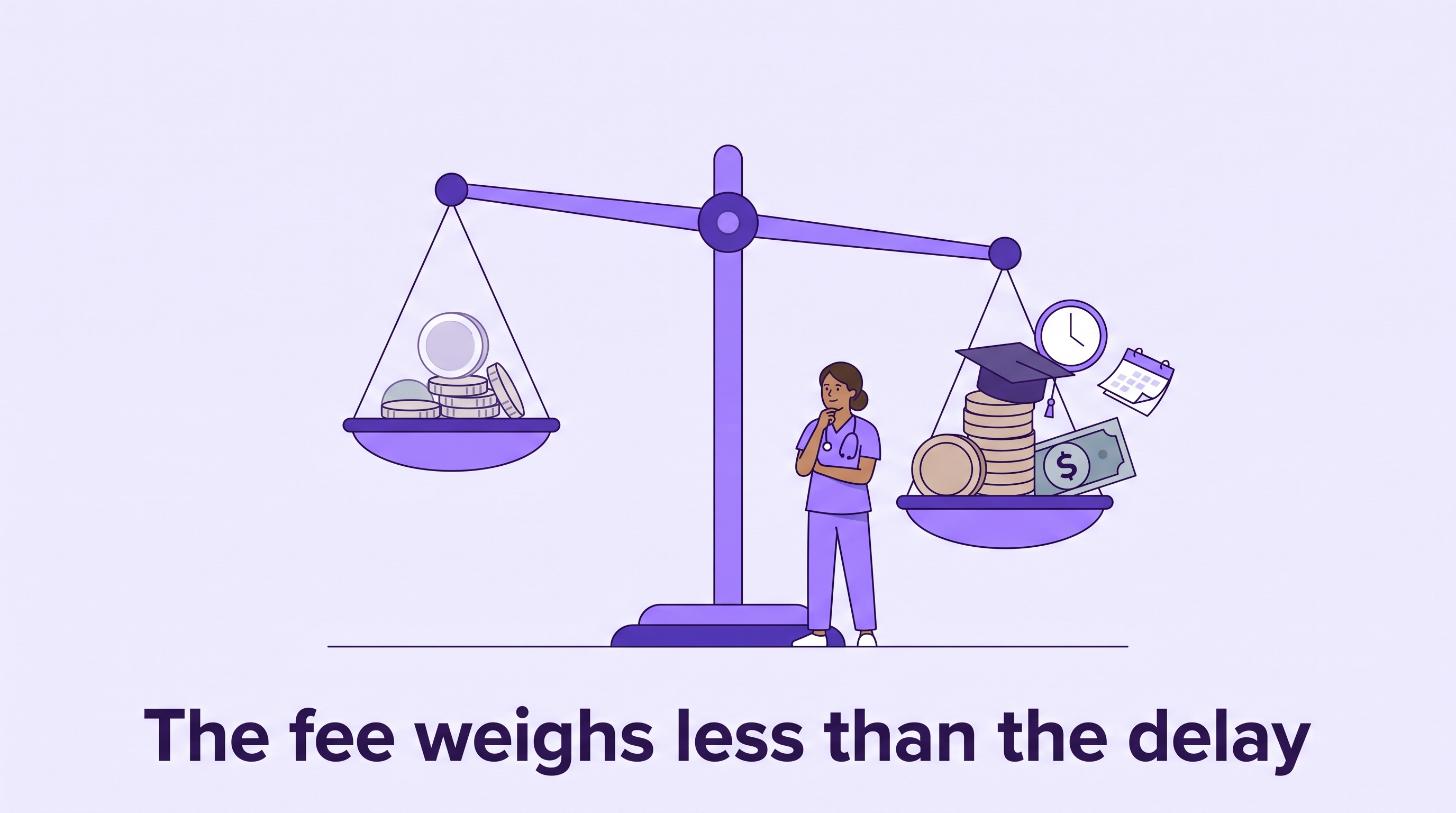
Ask clinicians what actually makes precepting sustainable, and compensation is rarely the first thing they name. Research on NP preceptors consistently points to a clearly defined role, supportive colleagues, and the plain enjoyment of teaching as the factors that keep people in it. Pay matters, but it lands as recognition rather than as the whole reason.
So start with relief. The heaviest part of traditional precepting was never the teaching; it was the administrative sprawl: duplicate forms for every student, affiliation agreements routed through school coordinators, license verifications, onboarding documents, and the endless email ping-pong to get any of it signed. When a service absorbs that work, the role finally feels like what you signed up for.
Then comes the recognition. For years, NPs were the odd ones out. Physicians, residents, and PA students have long had structured, often compensated pathways for clinical training, and by 2017 more than 40% of PA programs reported compensating their clinical sites. Nurse practitioners were frequently expected to teach for free. Getting paid to precept is not a loophole or a gray area. It is your teaching finally being valued the way every other clinical discipline already values it.
There are practical upsides on top of the pay:
- A built-in hiring pipeline: Precepting is an extended, real-world look at a future colleague. Practices that are hiring get first pick of strong students, and PMHNP preceptors in particular rate this as a real motivator.
- It keeps your own practice sharp: Students arrive current on the newest guidelines, and explaining your reasoning out loud is one of the better ways to stay clinically sharp yourself.
- It is a genuine way to give back: Most clinicians precept partly to repay the mentors who trained them and to strengthen the profession, and that motivation holds up in the research year after year.
Washington also offers modest public recognition through the Washington State Nurse Preceptor Grant Program, run by the Nursing Care Quality Assurance Commission, which pays eligible ARNPs, RNs, and LPNs who precept nursing students. The amount is capped and depends on state funding each year, so treat it as a nice addition rather than the main event. The substantive compensation comes from precepting through a platform built to pay you for the work.
If the compensation and support side is what you want spelled out in detail, you can tell NPHub where to reach you and get it mapped to your specialty and setting.
"Is getting paid to precept even legit?"
This is the question almost every clinician asks before signing up, usually because they have heard a horror story about some other company. It deserves a straight answer: yes, getting paid to precept through a reputable preceptor matching service is entirely legitimate. These services exist because NP programs largely leave students to find their own placements, and a marketplace grew up to solve that.
What separates a reputable service from a sketchy one is transparency. With a trustworthy platform, you can see how and when you get paid, track pending and completed rotations, and reach a real person quickly when something comes up. Fly-by-night operators are the opposite: vague on payment, hard to reach, quick to disappear when a student drops out. The clearest signal of legitimacy is who else works with the service. When established nursing schools route their students through the same platform, that institutional trust is doing real work.
NPHub sits on the reputable side of that line by design: a documented payment process, a portal that shows you exactly where each rotation and payment stands, and partnerships with programs across the country. You are not taking anyone's word for it on faith.
How to become a preceptor in Seattle, step by step
The manual path and the supported path start the same way and diverge fast. Here is the full picture so you can see where the work actually goes.
- Confirm you are eligible: You will generally need an active Washington ARNP license in good standing, board certification in the specialty you want to precept, roughly a year or more of experience in that area, and a practice setting that fits a rotation. Your exact obligations depend on the student's program.
- Decide your terms: Choose your specialty focus, how many students you can reasonably take, and the hours and cadence that fit your schedule. This is yours to set, not something dictated to you.
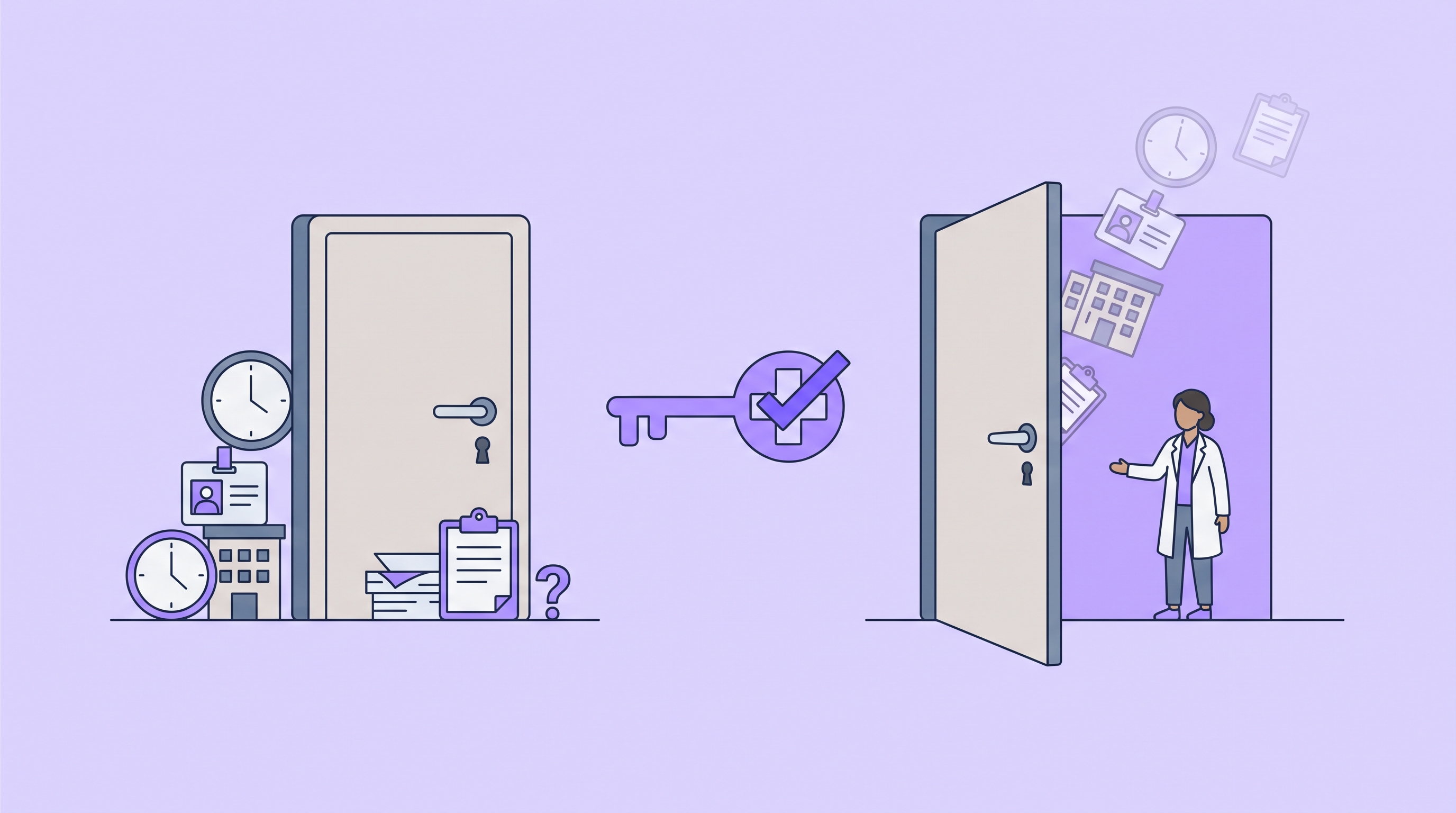
- Handle the paperwork: Every rotation needs an affiliation agreement between the clinical site and the student's school, plus license verification and onboarding documents. On your own, this is the email-ping-pong stage that makes people quit. Through a service, this is the part that gets lifted off your plate almost entirely.
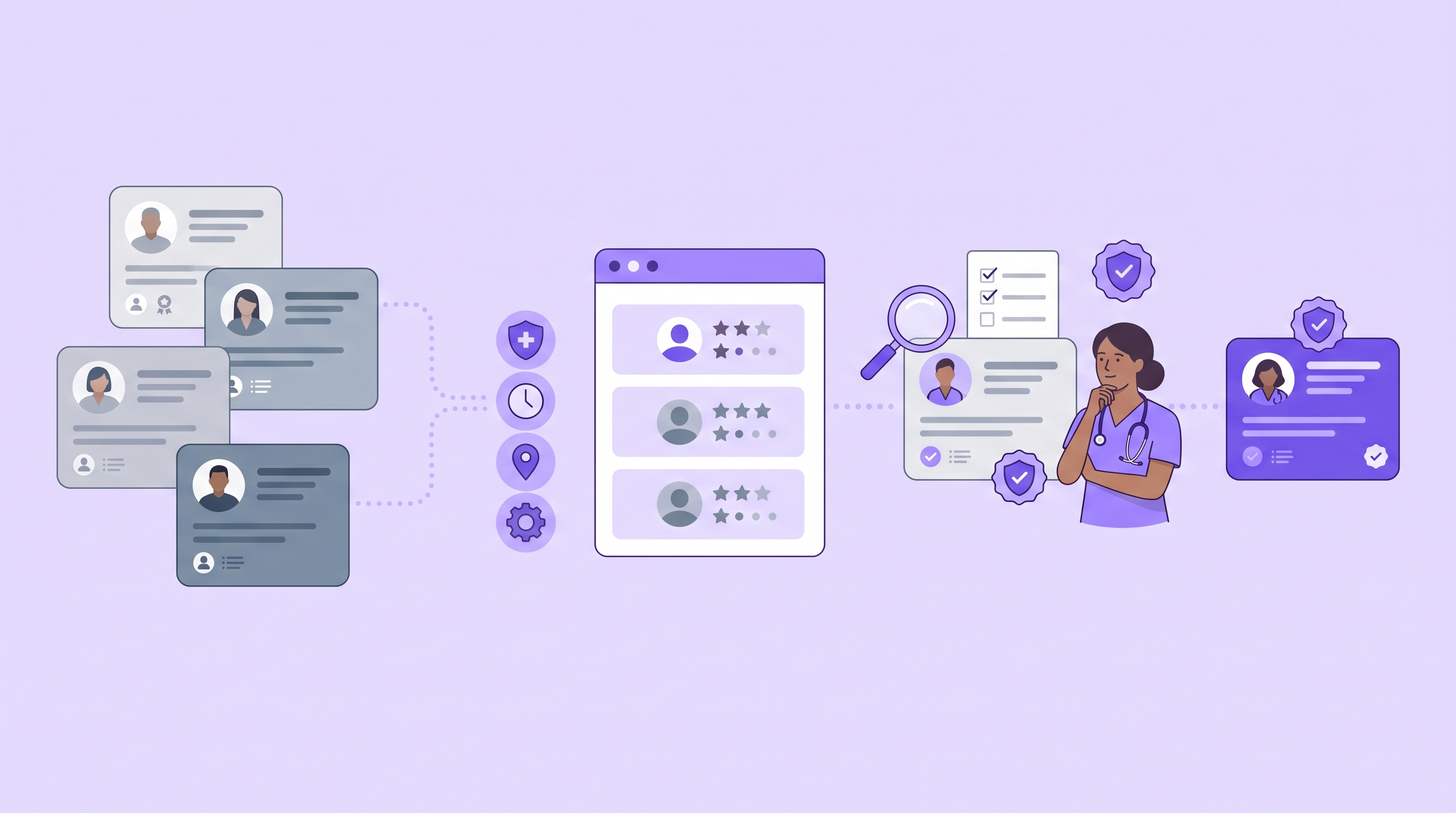
- Get matched to students: Rather than being blindly assigned, you review detailed student profiles, check their clinical experience and learning goals, and accept or decline based on whether they fit your practice. A good personalized matching process means you are hand-picking the students you take, not gambling on strangers.
- Precept and get paid: You do what you already do well, teach in real patient encounters, while the platform tracks the rotation and processes your compensation.
If steps three and four are the ones you would happily never touch, that is the whole point of using a platform. You can share a few details with NPHub and hand the agreements and matching to a team that does this every day.
Agreements, liability, and how much you can hand off
The affiliation agreement is the document that formally connects your practice site to the student's school and spells out responsibilities on both sides. It is the piece that most often stalls a placement, usually because it bounces between a busy clinician and a busy school coordinator for weeks. A matching service manages this end-to-end, so it stops being your problem.
A fair question that comes up early: does precepting change my liability? In practice, you supervise the student's care and remain responsible for patient outcomes the way you already are for your own panel, and students carry their own required coverage through their program. Specifics depend on your employer, your setting, and your malpractice policy, so confirm the details with your own carrier and practice rather than assuming. It is a reasonable thing to check, and it is rarely the obstacle people fear.
Choosing your students and running a strong rotation
Autonomy is the part clinicians tend to underestimate until they have it. Because you review student profiles before agreeing to anything, you can weigh a student's background, clinical experience, and goals against your practice and take the ones who are a genuine fit. If a rotation does not match your setting, you pass. That control is what turns precepting from a favor into a professional choice.
Setting expectations early is what makes a rotation go well. A quick conversation at the start about hours, professionalism, documentation, and what a good day looks like heads off most friction, including the occasional worry that a paying student will treat the rotation as a box to check. Clear expectations plus a support team that backs you up keeps the standard where it should be.
Behind all of that, you should not be troubleshooting alone. The best setups give you a consistent point of contact you can actually reach, ideally by text, when a schedule shifts or a question comes up. Fast, human support is what makes a busy preceptor feel like a respected partner rather than a vendor, and it is a big part of what makes a rotation feel like a supportive environment for the student getting hands-on experience and for you.
Support, training, and not doing this alone
You do not need a teaching certificate to be an excellent preceptor, but a little structure helps. Short online preceptor training modules can sharpen how you give feedback and evaluate a student, and a dedicated support team handles the logistics and the real-time hiccups so you can stay focused on patient care. Local networks are worth tapping too: the Washington State Nurses Association, ARNPs United of Washington State, and the Puget Sound Nurse Practitioner Association all connect you with experienced preceptors and mentors who have done this for years.
What the students you'll host are up against
It helps to know why your slot matters so much. In one survey, 61% of NP students rated finding a preceptor at the very top of a difficulty scale, and other research found that around 40% of students end up sourcing their own placements with little program help. They are cold-calling clinics, sending emails that go unanswered, and competing with medical and PA students for the same sites, often while working full time and supporting families. For a student in a Seattle program, whether at the University of Washington, Seattle University, or an online cohort placing locally, a single yes from the right preceptor can be the thing that keeps a graduation on track. That is the quiet weight your decision carries, and it is a good reason to make precepting easy enough that you actually say yes.
Precepting on your terms
Precepting no longer has to mean unpaid evenings buried in duplicate forms. In Washington, you already have the license, the autonomy, and the experience the role calls for. What has changed is everything around it: the paperwork can be handled for you, the compensation is real, and the choice of which nurse practitioner students you take stays firmly yours.
If that is the version of precepting you have been waiting for, the next step is small. You can let NPHub know you are interested, tell them your specialty and where to reach you, and see what a first match could look like before you decide anything.
Frequently asked questions
Who is eligible to become a preceptor for nurse practitioner students in Washington?
You generally need an active, unencumbered Washington ARNP license, board certification in the specialty you want to precept, and about a year or more of clinical experience in that area, along with a practice setting suited to a rotation. Individual programs set their own specifics, so confirm the requirements for the student's school.
Do NP preceptors get paid in Seattle, and how much?
Yes. Through a paid preceptor matching platform, you receive compensation for your time and the productivity impact of teaching. Rates vary by specialty, hours, and rotation type. Washington also offers a small state grant for eligible preceptors on top of that, subject to annual funding.
Does precepting affect my license or liability?
You supervise the student's care and remain responsible for patient outcomes much as you already are, while students carry required coverage through their program. Exact liability depends on your employer, setting, and malpractice policy, so it is worth a quick check with your own carrier.
Do I get to choose which students I take?
Yes. You review detailed student profiles, including their clinical experience and learning goals, and accept or decline each request. You are hand-picking students who fit your practice, not being assigned anyone sight unseen.
How long does it take to get matched with a student?
It varies with your specialty and availability, and some of the timeline depends on your own institution's approvals rather than the platform. High-demand specialties often match quickly. Completing your preceptor profile early is the best way to shorten the wait.
Is getting paid to precept legitimate?
Yes. Reputable preceptor matching services are established and transparent about how and when you are paid, and many nursing programs partner with them directly. The signals of a trustworthy service are clear payment terms, a visible tracking portal, and responsive human support.
Article details
- Last updated
August 10th, 2026 - Fact-checked by
NPHub Clinical Placement Experts & Student Support Team - Sources and references
- https://www.aanp.org/advocacy/state/state-practice-environment
- https://www.bls.gov/ooh/fastest-growing.htm
- https://pmc.ncbi.nlm.nih.gov/articles/PMC12459130/#s5
- https://wcujhw.scholasticahq.com/article/164782-exploring-structured-preceptorship-models-in-advanced-practice-nursing-strengthening-clinical-education-and-enhancing-productivity
- https://ojin.nursingworld.org/table-of-contents/volume-26-2021/number-1-january-2021/the-significance-of-the-np-preceptorship-shortage-/
Find a preceptor who cares with NPHub
Book a rotation.webp)

.webp)

%20(3)%20(2).svg)
.webp)