

Psych, peds, and women's health rotations are the hardest NP clinical placements to fill because four pressures converge on these specialties. The pool of specialty-certified preceptors is small. Demand comes from multiple student tracks. Other disciplines compete for the same clinical sites. These settings also carry constraints that general primary care does not. As a result, NP clinical placement bottlenecks are uneven, so programs get better results when they plan capacity specialty by specialty and source the scarcest rotations first.
TL;DR
- Bottlenecks cluster by specialty: A program can fill family practice rotations on schedule and still hold a cohort back over one psych or pediatric placement.
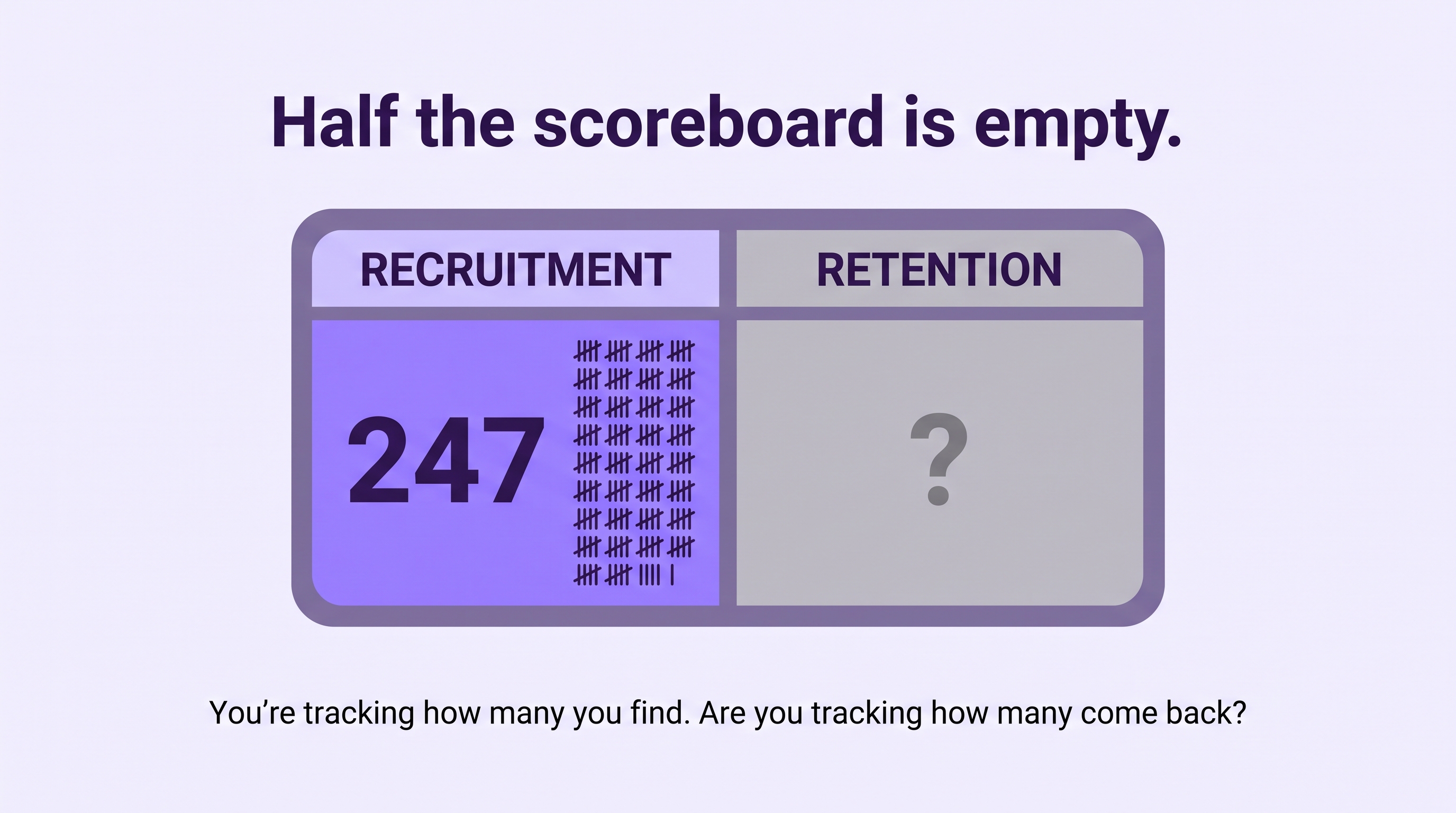
- The specialty-certified pool is small: In AANP's NP Fact Sheet, psychiatric/mental health accounts for 6.5% of NP certifications, pediatric primary care for 2.4%, and women's health for 2.2%, compared with 70.3% for family.
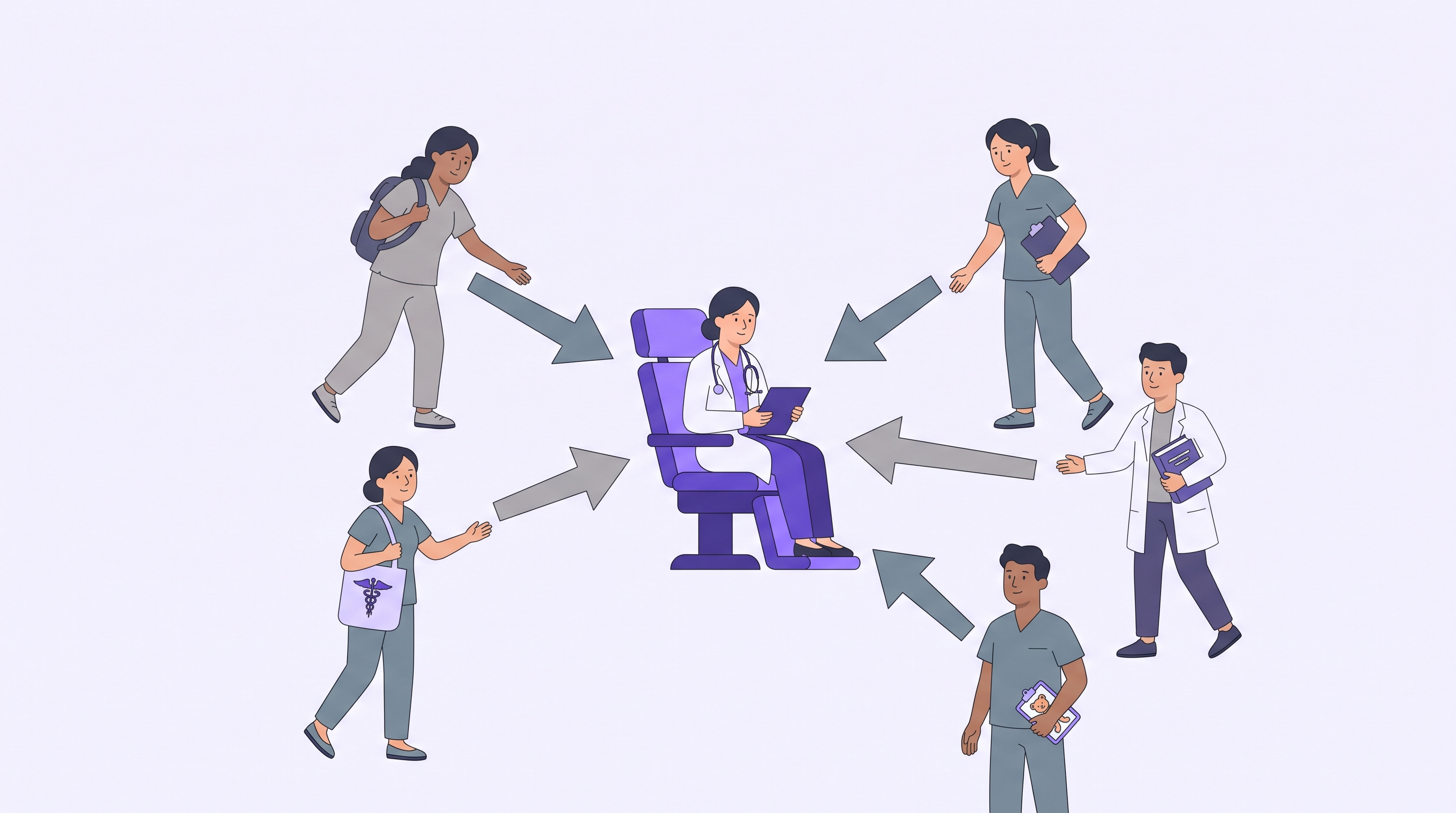
- Demand reaches past the specialty track: FNP students, specialty-track students, and students from medical and midwifery programs all draw on overlapping clinical sites.
- Sequencing should follow scarcity: The hardest rotations need the longest lead time, the earliest commitments, and a backup plan of their own.
- Durable capacity comes from dedicated pipelines and partnerships: Term-by-term outreach rebuilds the same relationships every cycle; a standing specialty network carries them forward.
Most conversations about the NP preceptor shortage describe it as one national number. Program directors and clinical coordinators experience it rotation by rotation. The family practice placements come together, and then a single psychiatric mental health or women's health rotation sits open while the term start date gets closer.
This article looks at where specialty bottlenecks come from, why each of these three specialties is hard to staff, and what that means for how NP programs sequence cohorts and build clinical capacity.
Fill your hardest rotations first. Talk with the NPHub university team about specialty capacity for your next cohort.
What are NP clinical placement bottlenecks?
An NP clinical placement bottleneck is the point where a program's demand for a specific type of rotation outruns the qualified preceptors and clinical sites available to meet it. It is narrower than the general NP preceptor shortage. A program can have enough preceptors overall and still come up short in one specialty, one setting, or one region.
National data show how much pressure lies beneath. AACN's latest enrollment survey found that nursing schools turned away 93,176 qualified applications in 2025, and nearly 17,000 of them were to graduate programs. AACN has named insufficient clinical placement sites, faculty, and preceptors among the primary barriers to admitting more students.
Growth keeps adding to the load. Research from the Columbia University School of Nursing, reported by The Hechinger Report, found the nurse practitioner workforce grew 10% a year between 2016 and 2023, compared with 1.1% for physicians. Each new nurse practitioner student needs at least 750 direct patient care clinical hours under the 2022 National Task Force Standards for Quality Nurse Practitioner Education.
Which NP specialty rotations are hardest to fill?
Psychiatric mental health, pediatric, and women's health rotations are the specialties where published research most consistently documents preceptor and clinical site shortages. Each one pairs a small specialty-certified workforce with competing demand and setting-specific limits.
See which specialties could slow your next cohort before the term starts. Talk with our university team.
Why are psychiatric mental health rotations so hard to secure?
Psychiatric mental health rotations are hard to secure because PMHNP program growth has outpaced the preceptor pool, and the PMHNPs who do precept already carry heavy teaching loads. Telehealth and payment pressure add two more layers that programs in other specialties rarely face.
Program growth has outpaced the clinical preceptor pool
Psychiatric mental health is the fastest-growing specialty choice among NP students, according to APEA. Universities added nearly 100 PMHNP tracks over the past decade, and AACN's 2023-2024 report counted 374 PMHNP programs.
The preceptor side moves more slowly. HRSA counted 39,354 psychiatric advanced practice registered nurses in practice in 2025, as cited in a 2026 study in the Journal of the American Psychiatric Nurses Association. APNA's 2022 workforce report found the average APRN in this specialty is 54 years old and that 27% plan to retire within six years.
The PMHNPs who precept are carrying heavy loads
That same 2026 study surveyed 93 practicing PMHNPs. Among those who precept, 86% support three to four PMHNP students a year, and 38% of respondents reported feeling burned out by the demands of precepting. The most frequently cited barriers were:
- Time constraints and competing clinical demands
- Paperwork and administrative burden
- Concerns about student professionalism
- Lack of support and lack of compensation
Respondents rated time as the most valuable incentive. The sample was small and weighted toward California, so the authors caution against broad generalization.
Telehealth changes where psych students train
According to the same study, 67% of mental health visits still occurred via telehealth through 2024, citing American Hospital Association data. Schools of nursing with mental health tracks frequently seek teleprecepting placements, and the authors note that programs competing for those placements further limit preceptor availability.
The rotation itself can also be harder to match. One PMHNP student profiled by The Hechinger Report needed preceptors licensed in both psychotherapy and medication management. She sent about 50 emails and calls before finding one, and the search delayed her graduation by a year.
Payment pressure is visible in psych
In a survey of 134 graduate NP students at one Midwestern university, nearly 60% of PMHNP students said a preceptor had asked them for payment, and almost 25% of all respondents had paid out of pocket. It is a single-site study, but it points to a pattern program leaders can watch for: when a program does not secure psych capacity, the cost of finding it, including paying preceptors out of pocket, can shift to students.
Where psych preceptor capacity lives
APNA's workforce report found that 70% of psychiatric mental health APRNs practice in outpatient settings, including mental health clinics, federally qualified health centers, and community health centers. Those settings are a practical starting point for building psych capacity.
Psych preceptors may also respond to a different pitch. In an Oregon survey of FNP, PMHNP, and PNP preceptors, PMHNP preceptors rated recruitment opportunities as a stronger motivator than FNP or PNP preceptors did. For a practice that is hiring, precepting doubles as a pipeline.
Add psych rotation capacity without adding faculty workload. Connect with our university team.
Why are pediatric rotations so hard to fill?
Pediatric rotations are hard to fill because the PNP preceptor pool is small and concentrated, many pediatric sites prioritize residents, and FNP students draw on the same pediatric settings as PNP students.
A small, concentrated specialist pool
A 2023 analysis in the Journal of the American Association of Nurse Practitioners traces the PNP shortage to several linked causes:
- Students interested in pediatrics are commonly advised to choose the FNP track instead
- Lower PNP enrollment contributed to program closures, and the authors cite research finding nearly 10% of PNP programs were shuttered or suspended over a decade, mostly outside urban areas
- Pediatric training shifted to urban centers, which raised workloads for urban PNPs and pediatricians and limited their capacity to mentor students
- Most PNPs receive no financial incentive to precept
Residents often come first
The same analysis notes that the shift in pediatric training led some pediatricians to prefer training pediatric residents over PNP students. Space is a second constraint. A 2026 National Association of Pediatric Nurse Practitioners session drew on a study of PNP program directors and named preceptor shortages and shared learning spaces as common challenges in PNP clinical training.
FNP students draw on the same pediatric settings
Family nurse practitioners (FNPs) make up about 70% of nurse practitioners, and FNP education standards focus on competency across the lifespan. FNP students preparing to care for children add to the demand on pediatric sites.
The supply side does not mirror that demand. The JAANP authors cite evidence that most FNPs spend under 25% of their time providing child health care. A family practice may not see enough children to anchor a full pediatric experience, which can push more students toward the same limited pool of pediatric clinicians.
Why are women's health clinical rotations so hard to fill?
Women's health rotations are hard to fill because women's health is one of the smallest NP certification groups, at 2.2%, and NP students share OB/GYN and women's health sites with midwifery students, medical students, and residents.
Several disciplines share the same sites
Medical schools have established rotation systems with financial incentives that prioritize their students' access to clinical sites, and that competition intensifies in specialized rotations like women's health. The funding gap is wide. The Hechinger Report notes that the U.S. spends roughly $20 billion a year training medical residents, while nursing receives around $300 million in federal workforce development funding, only part of which goes to clinical training.
Midwifery programs face the same squeeze. ACNM student reports describe midwifery students being declined by sites because of exclusivity contracts with other midwifery programs and name medical residents among the biggest barriers to securing clinical sites. When certified nurse midwives in training, OB/GYN residents, and NP students all need the same clinics, an NP program without a formal agreement competes against learners whose access is already arranged.
What a formal partnership looks like
In midwifery education, Frontier Nursing University and Ob Hospitalist Group formed a strategic partnership to expand clinical opportunities for nurse-midwifery students nationwide. The agreement streamlines the contracts and documentation needed to credential preceptors for student rotations. Women's health NP programs can use the same structure: one agreement with an organization that operates many sites, instead of separate negotiations with each clinic.
Create a dedicated pipeline for your pediatric and women's health rotations. Talk with our university team.
How should specialty bottlenecks change cohort sequencing?
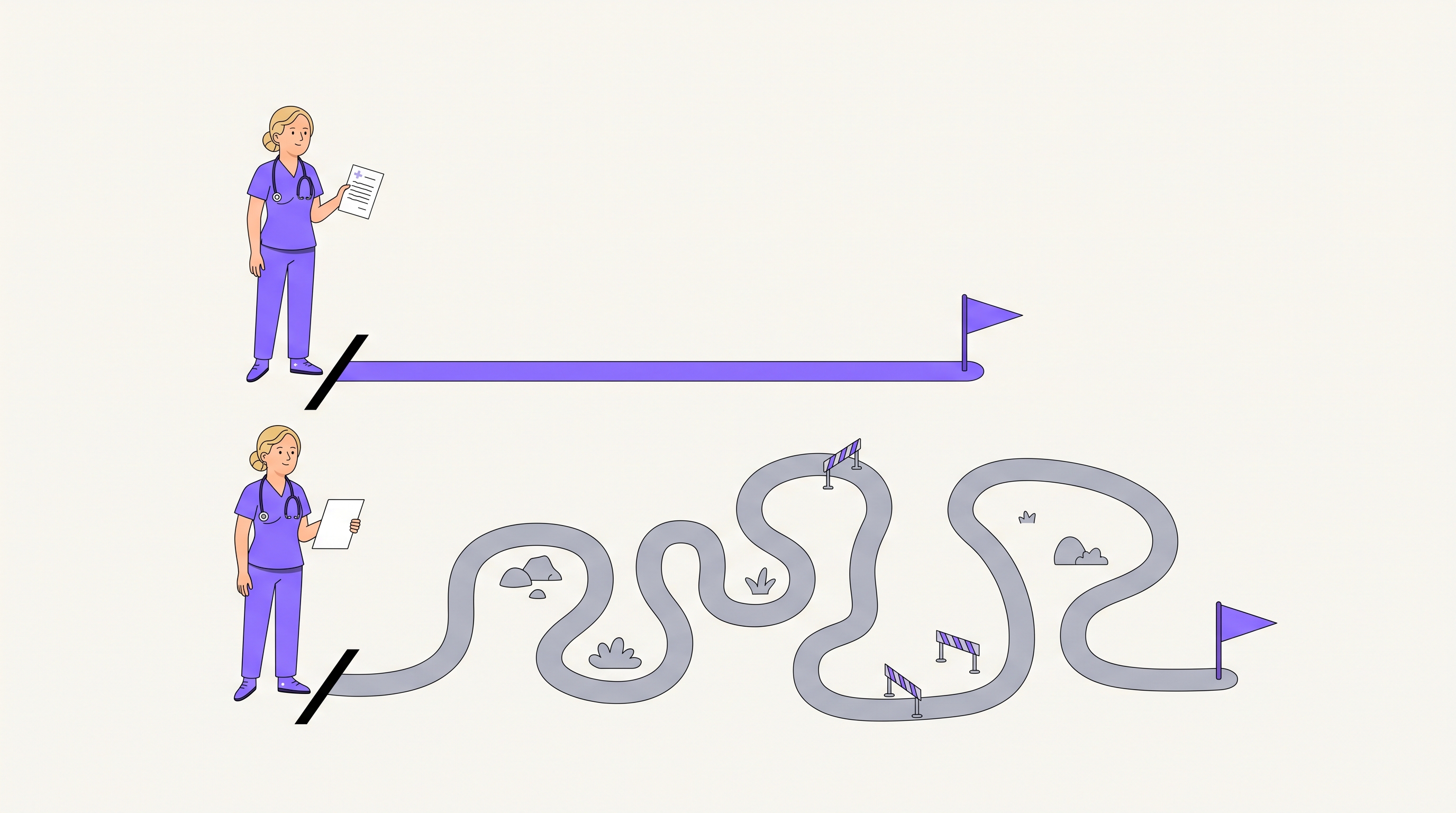
Specialty bottlenecks should change cohort sequencing by giving the scarcest rotations the longest lead time, the earliest commitments, and a backup plan of their own. A calendar built around the average placement will run late on the rotations that are hardest to replace.
Why uniform lead times fall short
One sourcing calendar for every rotation assumes every specialty fills at the same pace. The evidence above points the other way: psych, peds, and women's health rotations draw on smaller preceptor pools with more competition for each clinical site.
The stacking problem
When a full cohort needs the same scarce rotation in the same term, the program asks a small group of preceptors for many placements at once. In the 2026 PMHNP study, most active preceptors already supported three to four students a year. Every added request competes with that existing load.
One unfilled specialty rotation can hold a student back even when every other placement is confirmed. Our breakdown of the hidden cost of ad-hoc clinical placement covers what those delays cost a program in tuition timing, throughput, and reputation.
A specialty-weighted sequencing checklist
Curriculum and accreditation requirements limit what can move, so adapt these steps to your program's structure.
- Rank rotations by scarcity before the term calendar is set: Use your own fill history by specialty and region, plus time-to-match data from any placement partner.
- Source the scarcest rotations first: Psych, pediatric, and women's health requests go out ahead of family practice and adult primary care.
- Stagger student demand across terms: Where the curriculum allows, spread a cohort's pediatric and women's health rotations over more than one term so the same preceptors are not asked to take several students at once.
- Build flexibility into rotation order: Where course sequencing permits, let students complete a specialty rotation in whichever term a confirmed preceptor is available.
- Confirm specialty fit before assignment: For psych, check that the preceptor's mix of psychotherapy and medication management matches program requirements. For pediatrics and women's health, check that the clinical setting sees enough of the right patients to support the required clinical hours.
- Name a backup for every scarce rotation: Our guide to building a real contingency plan for NP clinical placements walks through how to set one up.
- Track fill dates by specialty every term: A few cycles of data turn next year's sequencing into a plan instead of an estimate.
Get your scarcest rotations confirmed first. Plan your next cohort with our university team.
How can NP programs expand capacity in hard-to-fill specialties?
NP programs expand capacity in hard-to-fill specialties by building lasting relationships with the organizations where those clinicians practice, making precepting easier to say yes to, and using policy incentives where they exist.
Academic practice partnerships with health systems and FQHCs
Academic practice partnerships move the conversation from individual clinicians to the organizations that employ them. That matters because employers shape who precepts. In a 2022 survey of 334 NPs, cited in the Oregon preceptor study, 60% were not precepting. Of those surveyed, 37.6% said no one had asked them, and 32.8% said their employer restricted precepting.
The Oregon authors recommend strategic academic-clinical partnerships, especially in rural and underserved areas. Federally qualified health centers are a natural fit for psych and pediatric capacity: about one in five preceptors in that study practiced at an FQHC. Tim Porter-O'Grady, a clinical professor at Emory's School of Nursing, told The Hechinger Report that nursing schools should build partnerships with health systems the way many medical schools do.
Sustaining regional preceptor partnerships
Regional networks let schools share preceptor recruitment and training instead of competing for the same clinicians alone. Two federally funded examples:
- A six-state Rocky Mountain partnership is developing and sustaining a regional effort to recruit, train, and support clinical nursing faculty and preceptors, including online training for rural nurses.
- The University of Nebraska Medical Center used a 2022 HRSA Preceptor Workforce Grant to launch the Midwest Clinical Instruction Regional Network, serving Nebraska, Missouri, Iowa, and Kansas.
Both focus on nursing preceptors broadly, but the model applies to NP specialties: a shared regional pool of trained, supported preceptors that no single school has to rebuild each term.
What motivates specialty preceptors
The research on what gets clinical mentors to say yes is more consistent than it looks. Time and clarity come up again and again.
- Oregon, 2025: Preceptors for FNP, PMHNP, and PNP programs rated student EHR access (4.53 out of 5), enjoyment of precepting, professional obligation, supportive coworkers, a clearly defined preceptor role, and protected teaching time as top motivators. Financial remuneration to the practice rated low, at 2.13.
- PMHNPs, 2026: Respondents named time as the most valuable incentive. The authors recommend protected time, a standard compensation structure, adjunct titles, access to continuing education, and a formal preceptor development program.
- Multi-setting preceptor incentive survey, 2015: Among 453 providers qualified to precept, leading incentives were credit toward recertification, program information, and remuneration. Leading barriers were time constraints and productivity demands.
- Vanderbilt, 2021: A survey of advanced practice providers surfaced protected teaching time, preceptor training, and organizational support among the major themes.
Formal preceptor training and a clearly defined preceptor role cost a program relatively little, and both answer what preceptors say they want.
Policy levers: preceptor tax credits and stipends
Several states already reward precepting. At least eight states have enacted preceptor tax credit statutes, though eligibility differs. Maryland, for example, offers a $1,000 credit per student for uncompensated preceptors, up to $5,000 a year. At the federal level, the PRECEPT Nurses Act would grant a $2,000 annual tax credit to nurses who precept at least 200 hours, according to the 2026 PMHNP study.
Tax credits are one of several preceptor incentives programs can point to, and they work best as one part of a broader package. The Oregon authors note that post-pandemic studies found tax credits to be a nice but unnecessary incentive, and in one study they were the lowest-rated motivator.
Where simulation fits
Simulation can prepare students before they reach a specialty site, but it cannot replace one. Under the 2022 NTF Standards, simulation is not direct patient care and does not count toward the 750-hour minimum. Our guide on whether NP programs should outsource clinical placements compares simulation and other alternatives in more detail.
Build specialty capacity that carries from one cohort to the next. Start a conversation with our university team.
How does NPHub approach specialty-specific preceptor recruiting?
The 2022 NTF Standards (Criterion 5) emphasize that the educational program, not the individual student, holds ultimate responsibility for securing, vetting, and evaluating clinical placements. Leaving students to navigate commercial brokerages or solicit preceptors independently introduces accreditation compliance risks and inequitable financial burdens.
NPHub’s university partnerships operationalize placement capacity at the institutional level, integrating directly into program-led affiliation agreements rather than student-side arrangements. Specialty-specific recruitment is executed through clinical vetting:
- NP-to-NP vetting interview: Every prospective nurse practitioner preceptor completes a structured 20-minute conversation with a board-certified NP covering practice location, scope, specialty alignment, patient population, and teaching readiness.
- Site approval separate from the preceptor: The clinical site is confirmed as able to host a student on its own merits, which matters in shared pediatric and women's health settings.
- 45-day re-verification: Active preceptors and sites are re-checked every 45 days, so a change in a preceptor's setting or caseload surfaces before it disrupts a rotation.
The standard is selective. NPHub has accepted over 2,600 preceptors from more than 18,000 applicants (a 13.3% acceptance rate) and has supported over 17,000 rotations for more than 10,000 students across 45 states.
For the full picture of how the recruiting function works, including credential and license integrity screening, see our guide to why preceptor recruiters sit at the center of NP program health.
See how specialty-matched preceptors fit your program's requirements. Talk with our university team.
Plan clinical capacity by specialty
NP clinical placement bottlenecks concentrate in psychiatric mental health, pediatrics, and women's health. In each one, a small specialty-certified preceptor pool meets demand from several student tracks and neighboring disciplines.
Programs that plan for that unevenness put their cohorts on steadier footing. They rank rotations by scarcity, source the hardest ones first, stagger demand across terms, and invest in partnerships that carry from one cohort to the next. Treated this way, specialty capacity becomes part of the program's clinical education infrastructure, planned with the same care as faculty lines and curriculum.
Plan your next cohort around the rotations that matter most. Contact the NPHub university team.
Frequently asked questions
What NP specialty is hardest to find preceptors for?
Psychiatric mental health, pediatrics, and women's health are the specialties where research most consistently documents preceptor shortages. Each accounts for a small share of NP certifications: 6.5%, 2.4% for pediatrics primary care, and 2.2%, compared with 70.3% for family. Which one is hardest for a given program depends on its region and requirements.
Why do FNP students compete for pediatric preceptors?
FNP education standards focus on competency across the lifespan, so FNP students preparing to care for children draw on pediatric sites alongside PNP students. FNPs make up about 70% of nurse practitioners, and research cited in JAANP found most FNPs spend under 25% of their time on child health care. That combination adds demand to a small pool of pediatric clinicians.
Do preceptors need to share the student's specialty?
There is no national standard for what makes a clinician qualified to precept, so each school sets its own requirements. Programs should confirm that a preceptor's scope and patient population support the rotation's learning objectives before a student is assigned.
How far ahead should programs source scarce-specialty rotations?
Lead time depends on specialty, region, and program requirements, so a program's own fill history by specialty is the best guide. As a rule, psych, pediatric, and women's health requests should go out before family practice requests.
Do preceptor tax credits help hard-to-fill specialties?
They can help at the margin. At least eight states have enacted preceptor tax credit statutes, and Maryland offers $1,000 per student up to $5,000 a year. Post-pandemic research, though, ranks tax credits low among preceptor motivators, so they work best alongside protected time, a clearly defined preceptor role, and program support.
Can simulation replace specialty rotation hours?
No. Under the 2022 NTF Standards, simulation is not direct patient care and cannot count toward the 750-hour minimum. It is useful for building skills before students reach a psych, pediatric, or women's health site.
What is an academic practice partnership?
An academic practice partnership is a formal agreement between a nursing school and a health system or clinical organization to place nursing students. One agreement can open many sites at once, as in the partnership between Frontier Nursing University and Ob Hospitalist Group, which streamlines contracts and preceptor credentialing for nurse-midwifery students.
Find a preceptor who cares with NPHub
Book a rotation