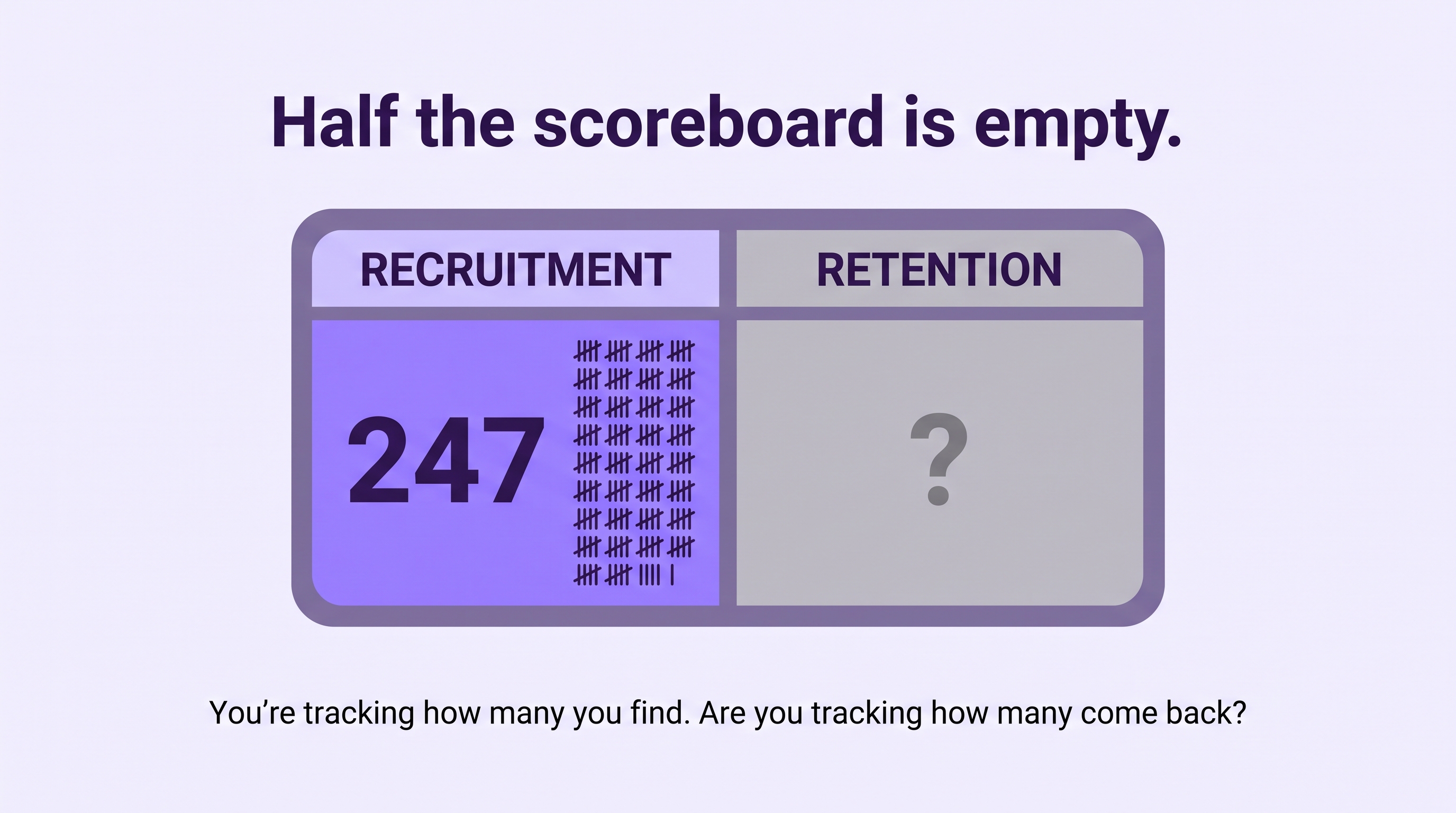


Nurse practitioner clinical placement models fall into three groups: program-arranged, where the school sources preceptors and clinical sites; student-arranged, where nurse practitioner students find their own; and hybrid models that split the work. The model matters for equity because, when students do the sourcing, their existing clinical network strength determines how quickly they place and how well the placement fits. In a 2018 national survey of NP program directors, almost 14% said students were required to find sites entirely on their own, and about 40% of NP students did all or most of the work to find their preceptors.
TL;DR
- Three models, one deciding variable: Program-arranged, hybrid, and student-arranged models differ most in who does the sourcing, and that decides who gets access.
- The network gap: When students find their own preceptors, those who already know clinicians, or work somewhere that allows precepting, tend to place faster.
- Thin networks are predictable: First-generation students, career changers, and rural and out-of-state students are the most likely to start without clinical connections.
- Responsibility sits with the program: The 2022 NTF Standards and CCNE both hold programs responsible for sufficient clinical sites, however a site is first identified.
- The gap can be measured: Splitting time to placement and on-time starts by sourcing method shows a program whether its model depends on student networks.
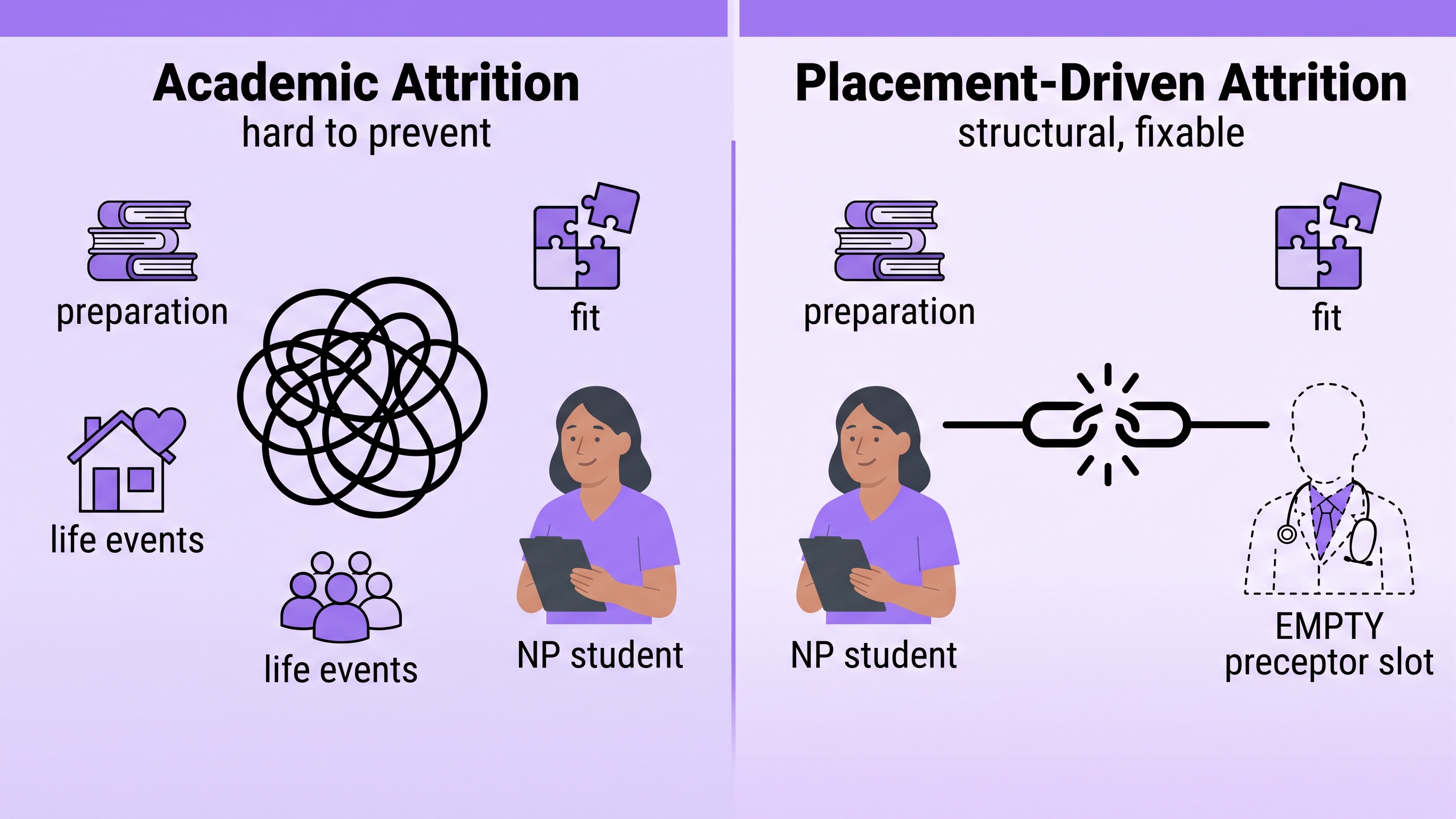
Admissions decides who enters a nurse practitioner program. The placement model decides who finishes on time.
An admissions decision is made once, against published criteria, and applied the same way to every applicant. Placement outcomes are decided every term. In a self-placement model, the criterion that decides it is rarely written down: who the student already knows.
This piece looks at nurse practitioner clinical placement models through that lens. It covers how each model works, why self-placement turns a student's network into the deciding factor, what accreditation standards say about responsibility, and how program leaders can measure the gap in their own data.
If you’re already seeing this pattern in your own cohorts, NPHub’s university team works with NP programs on placement access and is glad to compare notes.
What are the main nurse practitioner clinical rotation models?
NP programs source clinical placements in one of three ways. In a program-arranged model, faculty or a placement team secures the preceptor and the clinical site. In a student-arranged model, the student finds the preceptor and the program approves it. A hybrid model splits the work between them.
A common hybrid model is described in a 2021 review in the Online Journal of Issues in Nursing: the program sends the student a list of approved facilities, and the student makes the calls, introduces the program, and requests the placement.
How the work typically divides
The two survey figures from the opening are worth reading together. Formal self-placement policies were the minority, at about 14% of programs. Student-led sourcing was far more common, with about 40% of students doing all or most of the work.
One distinction keeps the rest of this piece clear. Block, longitudinal, and other clinical education models describe how clinical hours are scheduled across a term, and they can sit inside any of the three sourcing models. This article is about sourcing, because sourcing is where access is decided.
What is the network gap in "find your own preceptor" models?
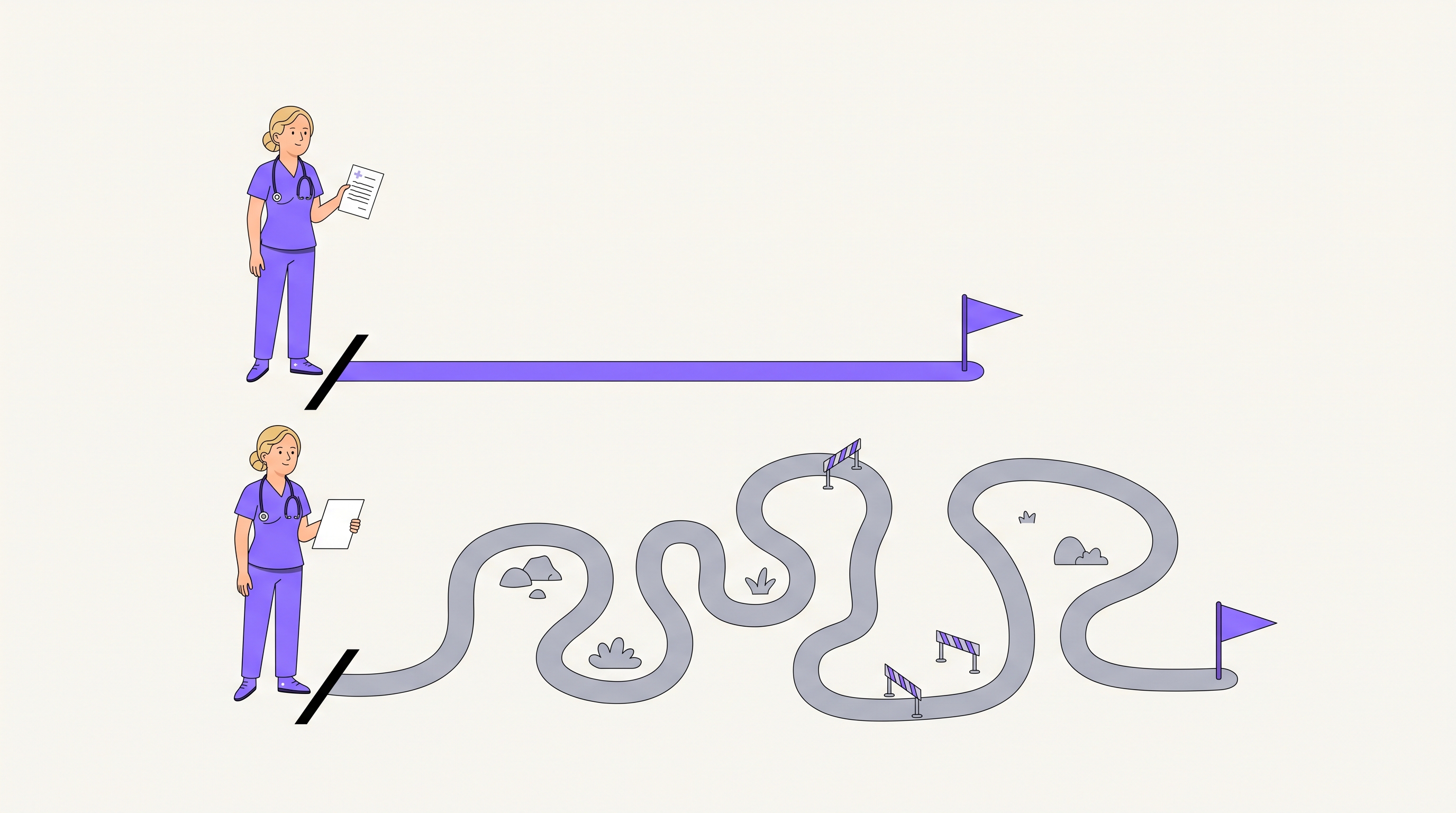
The network gap is the difference in placement outcomes between students who arrive with clinical connections and students who don't. Students with clinical networks place. Students without them stall.
No program designs it that way. The gap appears because self-placement makes the student's personal contacts the main sourcing channel. The same 2021 OJIN review notes that many graduate programs have no preceptor network of their own to call on, so students end up contacting anyone who might agree.
The gap forms in four places.
Knowing who to ask: In a 2021 survey of 334 practicing nurse practitioners, 46% said they had been required to find their own clinical placements as students. Among current NPs, 37.6% said they weren't precepting because no one had asked them. That is untapped capacity: qualified clinicians who were simply never approached. The students most likely to reach them are the ones who already know who to call.
Employer access: The same survey found that 32.8% of NPs said their employer restricted them from precepting. A registered nurse who already works inside a health system that allows students starts with a door open. A student whose employer restricts precepting, or who works outside the clinical setting the rotation requires, starts without one.
Program support: When students describe the barriers, the same themes recur: no preceptors in their specialty, long travel to the sites that do exist, and limited help from the program in securing one (Giddens et al., 2014; Nassar, 2019, as summarized in OJIN, 2021). In one regional survey of 232 graduate nursing students, 61% rated the difficulty of finding a preceptor an 8, 9, or 10 on a 10-point scale.
When the network runs out: Students then have a short list of options, ask faculty for a personal favor, turn to preceptor matching services, or delay the rotation. In that same student survey, 11% had used an online service to secure a preceptor. Each option can work. Each also shows that the program's model depended on a network the student may not have had.
Two students can make the same number of calls. Self-placement rewards the one whose calls land with someone they already know.
If your program wants every student starting from the same list, NPHub’s university team can walk you through how a program-level partnership works.
Which NP students tend to have the thinnest clinical networks?
Some students are more likely than others to start an NP program without clinical connections. No national dataset yet breaks NP placement outcomes out by these groups, so the descriptions below are structural. They describe what a self-placement model rewards, and which students are less likely to have it.
First-generation students
A first-generation student is generally the first in their immediate family to complete a four-year degree. In a self-placement model, that can mean no relative or family friend in health care to ask for an introduction. It can also mean learning the unwritten rules of placement, such as when to start calling and how to approach a practice manager, without anyone at home who has done it before.
Career changers
Students who came to nursing as a second career may have fewer years of nursing experience in their local market, and fewer former colleagues to call. Those not currently working in a clinical setting also miss the most direct route to a preceptor: an employer that already hosts students.
Rural students
Rural students often have fewer clinical sites within reach. WICHE's review of rural nursing education, which covers nursing programs broadly rather than NP programs specifically, identifies geographic isolation, financial strain, and limited flexibility around clinical training as common barriers. For an NP student, that can mean longer drives, fewer specialty options, and less room to choose.
The workforce stakes run the other way, too. The 2021 OJIN review notes that rural communities face a shortage of primary care providers that NPs can help fill, and that this depends on engaged, willing preceptors.
Out-of-state and online students
Online programs can enroll students from almost anywhere, but clinical hours happen where the student lives. When a program's clinical relationships sit near campus, a student several states away starts from zero.
How does network dependence affect clinical training quality?
When sourcing is student-led, the quality check on a placement depends partly on what the student knows to look for.
Typical preceptor requirements set a floor. Preceptors may be NPs, physician assistants, or medical doctors (MD or DO), with a current unencumbered license, board certification in the area they precept, and at least a year of clinical experience (APRN Clinical Training Taskforce, 2015, as summarized in OJIN, 2021). Above that floor sits the question of fit: whether the clinical setting has the patient population, case mix, and teaching time the rotation needs.
The program still approves the site. But approval can only choose among the options the student brought, and a student with one willing contact and a fast-approaching start date has little room to weigh fit. Network depth decides how many options exist in the first place. For how structured vetting handles fit, see our breakdown of what preceptor recruiters do.
Do accreditation standards require NP programs to secure clinical sites?
Yes. The 2022 National Task Force (NTF) Standards for Quality Nurse Practitioner Education and CCNE both place responsibility for adequate clinical sites on the program, however a site is first identified.
NTF Standards: Criterion II.G states that programs must "secure clinical sites and preceptors to ensure students enrolled in clinical courses have experiences to meet learning objectives and demonstrate expected course competencies." The evidence for that criterion includes enough appropriate placement sites to support "timely completion of the NP program," plus documentation of the faculty role in ensuring placement. The same standards raised the minimum to 750 direct patient care clinical hours, which means more placement hours to secure per student.
The NTF also named increased emphasis on diversity, equity, and inclusion as one of four needs shaping the 2022 standards. Placement access is where that emphasis meets day-to-day operations.
CCNE: In 2018, CCNE strengthened its language to state that the program is responsible for ensuring adequate clinical sites. As the American Journal of Nursing reported in 2022, accreditors still allow students to find their own preceptors. The program's responsibility for sufficient, appropriate, and available sites holds either way.
Put those together and the equity question becomes an accreditation question. If time to placement varies with a student's network, some students meet the expectation of timely completion and others do not.
How do medical schools and PA programs handle clinical placement differently?
In medical and PA education, the school generally owns sourcing. Medical students rotate through clerkships their school arranges, and PA accreditation standards bar programs from requiring students to find their own sites.
The difference matters because NP, medical, and PA students often compete for the same clinical sites (OJIN, 2021). An NP student working through a personal network may ask for the same slot a medical school requests, institution to institution.
How can NP programs measure their own network gap?
Programs can measure the gap by splitting placement metrics by sourcing method and student group. An average time to placement can look healthy while one group waits far longer, so the comparison is what reveals the gap, not the average.
- Time from placement request to confirmed preceptor, by sourcing method. If student-sourced placements take noticeably longer than program-sourced ones, the model depends on student networks.
- On-time rotation starts, by sourcing method and region. Shows where delays cluster.
- Share of students who sourced their own placement because the program had no option for them. Separates necessity from choice, since some students prefer a preceptor they already know.
- Students unmatched at the placement deadline. The earliest signal that progression is about to slip.
- Fill rate by specialty and region. Shows which specialties, such as mental health or women's health, lean most on student sourcing.
- How concentrated the program's own network is. The share of program-sourced placements that trace back to a few faculty contacts. If two faculty members account for most placements, the program's own capacity depends on their networks too.
- Student-reported placement difficulty. One end-of-rotation survey question, compared across groups. The 10-point difficulty scale from the student survey cited earlier is a simple model.
Start with whichever of these your placement records already capture.
If you’re reviewing how your placement process supports timely completion ahead of your next accreditation cycle, NPHub’s university team can share how other NP programs structure preceptor sourcing.
What makes a placement model less dependent on student networks?
A placement model depends less on student networks when the program, not the student, holds the relationships that produce placements. Each element below passes one test: it takes the network out of the deciding role.
Program-owned sourcing as the default: When the program sources first and students fill gaps by exception, every student starts from the same pool. See what a fully managed clinical placement model looks like.
A standing preceptor network built ahead of demand: A network that exists before the term starts means a first-generation student and a student with a physician parent draw from the same list. Someone has to own that network as their job. See why preceptor recruiters sit at the center of NP program health.
Hybrid models with guardrails: Students can still bring their own contacts. The guardrail is that every student-identified site goes through the same vetting and documentation as a program-sourced one, so a student's network can add options without lowering the bar.
A larger preceptor pool: 37.6% of surveyed NPs who had never been asked point to direct outreach as the first lever. Potential preceptors have also cited a lack of preceptor training as a barrier (Pleshkan, 2024), which makes training a second one. Preceptor incentives are a third.
An outside partner, chosen on access: If a program brings in a partner, the useful test is whether every student gets the same access regardless of who they know.
How NPHub supports program-level placement capacity
NPHub maintains a vetted network of nurse practitioner preceptors that students can reach without a personal connection. A university partnership makes that access program-owned and consistent for every student in a cohort.
The network is built to be selective. NPHub has accepted 2,435 preceptors out of 18,314 applicants, a 13.3% acceptance rate, across 45 states. More than 9,000 NP students have been placed through it. Vetting works the same way for every placement:
- Board-certified NPs on the recruiting team source and vet every preceptor.
- Each prospective preceptor completes a structured NP-to-NP vetting interview on scope, specialty, patient population, and teaching readiness.
- Licensure, board certification, and disciplinary history are screened for every preceptor.
- Clinical sites are approved separately from the individual preceptor.
- Active preceptors and sites are re-verified every 45 days.
For a student without clinical connections, that network is a starting point that doesn't depend on who they know. For a program, a partnership turns it into shared infrastructure: the same pool and the same vetting standard for every student, whether they grew up around clinicians or are the first in their family in health care.
If your placement data is starting to show a network gap, NPHub's university team, led by Director of Business Development Nicholas Carrizales, can walk through how a program-level partnership would fit your cohort sizes, specialties, and regions. Talk with the NPHub university team.
Placement policy is quietly an equity policy
Every nurse practitioner clinical placement model answers one question: whose job is it to find the preceptor? When the answer is the program, access depends on program capacity. When the answer is the student, access depends on who the student already knows.
That second answer doesn't have to be written policy to be the working one. It builds up term by term when sourcing has no other home. Programs that measure it can see it, and programs that see it can change it.
If you'd like a second set of eyes on your own placement data, NPHub's university team is glad to talk it through.
Frequently asked questions
Are NP students required to find their own preceptors?
It depends on the program. In a 2018 national survey of NP program directors, almost 14% said students had to find clinical sites entirely on their own, and about 40% of students did all or most of the sourcing work. Accreditation standards still hold the program responsible for sufficient clinical sites, however a site is first identified.
Why is self-placement considered an equity issue?
Self-placement makes a student's existing network the main way placements get found. Students who already know clinicians, or who work somewhere that allows precepting, tend to have more options. Students without those connections can face longer searches and fewer choices for the same required clinical hours.
Which NP students have the hardest time finding preceptors?
No national data breaks NP placement outcomes out by student group yet. Structurally, students with the thinnest clinical networks are the most exposed: first-generation students, career changers, rural students, and online students who live far from campus. Programs can check their own data by splitting time to placement by sourcing method and student group.
Do NP accreditation standards require programs to secure clinical sites?
Yes. The 2022 NTF Standards (Criterion II.G) require programs to secure clinical sites and preceptors so students can meet learning objectives and complete the program on time. CCNE also holds programs responsible for adequate clinical sites, even when students identify their own preceptors.
How is NP clinical placement different from medical school or PA programs?
Medical schools generally arrange clerkships for their students, and ARC-PA standards bar PA programs from requiring students to find their own clinical sites or preceptors. NP programs vary: some arrange placements, some leave sourcing to students, and others share the work.
How can NP programs track placement equity?
Split placement metrics by sourcing method and student group instead of reporting averages. Good starting points are time from request to confirmed preceptor, on-time rotation starts, students unmatched at the deadline, and the share of students who sourced their own placement because the program had no option. Any demographic segmentation should follow your institution's privacy and review requirements.
Is it ethical for NP students to pay for preceptors?
Paid preceptorship is an active debate in NP education, with thoughtful arguments on both sides. For some students, outside placement support is how they keep clinical training on schedule when their own network runs out. We examine both sides: Is it ethical to pay for an NP preceptor?
Find a preceptor who cares with NPHub
Book a rotation