
.png)



.webp)
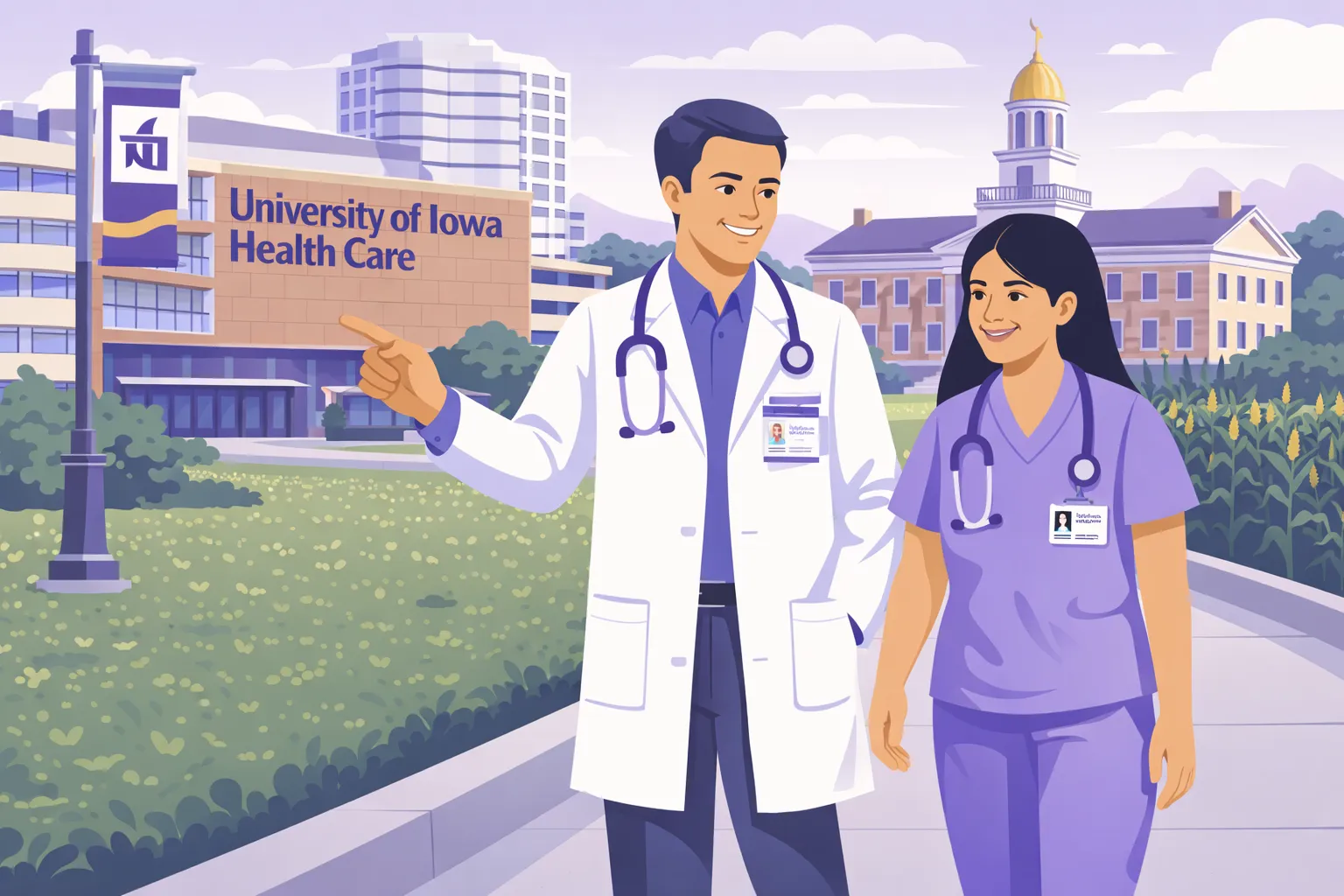
Covering every specialty, every region, and every honest truth about what this search actually takes.
TL;DR — Read This First
If you're an NP student in Iowa trying to figure out the preceptor puzzle, here is what this entire guide comes down to:
- Iowa became a full practice authority state in 2022 — your preceptors here practice with real clinical independence, and training under them will show you exactly what your future career looks like.
- Most of Iowa is rural. That changes everything about where preceptors are, how you find them, and what rotations actually look like — in ways that are often better than students expect.
- Your school will support you, but it almost certainly won't guarantee your placement. The search falls on you. This post walks you through it step by step.
- Starting at least six months early is the single most important thing you can do to protect your graduation date. For mental health and pediatric rotations, make that nine months.
- NPHub is here as your partner — not to push you through a system, but to walk with you all the way to graduation with vetted options, coordination support, and a backup when you need one.
.webp)
And one more thing before we get into it — Iowa is genuinely worth knowing. Des Moines has quietly become one of the Midwest's most livable cities, with a food scene that punches well above its weight. The Iowa State Fair in August is one of the great American experiences (butter sculptures are real, and they are magnificent). Iowa City carries the energy of a Big Ten university town with the University of Iowa health system right at its center. And when you need to decompress, the Loess Hills along the Missouri River give you some of the most unexpected landscape in the Midwest. You are training in a state that quietly does extraordinary things. So do you.
What NP Students in Iowa Are Actually Up Against
Iowa has 99 counties. The majority of them have far more farmland than physicians. The healthcare workforce challenges here are real, documented, and not going away anytime soon — and as an NP student, that context shapes your entire clinical training experience.
The good news is that Iowa recognized this problem and responded. In 2022, Iowa became a full practice authority state for nurse practitioners — meaning NPs can practice, diagnose, treat, and prescribe without a mandatory physician collaboration agreement. That was a significant shift. It means more NPs are practicing independently across the state, including in communities that previously had minimal provider access.
For you as a student, it means something specific: the NPs who precept you in Iowa are making real, independent clinical decisions. You're not watching a supervised practitioner route everything upward. You're watching — and participating in — autonomous practice. That clinical autonomy is genuinely formative in ways that supervised training environments can't replicate.
The harder truth is this: those same NPs are busy. Iowa's provider shortage means the NPs practicing here carry significant patient loads, often in under-resourced settings. Finding one who has the capacity and willingness to also supervise a student takes strategy, lead time, and — increasingly — the right support system. That's what this guide covers.
Not sure where to start your Iowa preceptor search?
Browse NPHub's vetted network of Iowa NP preceptors — free, no commitment required. Create your free NPHub account →
The NP Preceptor Landscape in Iowa
Before you start reaching out, it helps to understand what the landscape actually looks like. Iowa's clinical training environment has some distinct characteristics that affect where preceptors are, what settings they practice in, and who is most accessible to students.
Where Preceptors Are Concentrated
The largest concentrations of NP preceptors in Iowa are in Des Moines (Polk County), Iowa City (Johnson County), Cedar Rapids (Linn County), Davenport (Scott County), and Sioux City (Woodbury County). These metro areas hold the state's major health systems — UnityPoint Health, MercyOne, University of Iowa Health Care, and Genesis Health System — and represent the most accessible entry points for students pursuing urban or academic rotations.
Outside these centers, Iowa's rural counties present a different picture. Many counties have only a handful of active NPs, often practicing in critical access hospitals, rural health clinics, or solo practices. These settings have lower student competition and offer clinical experiences that are genuinely broad — providers in rural Iowa see everything. But they also require more lead time and logistical planning.
Common Practice Settings Hosting Preceptors
Iowa NP preceptors practice across a wide range of settings, each with different clinical exposure profiles:
- Primary care clinics (family medicine, internal medicine, and rural health clinics) — the most common and accessible preceptor settings statewide
- Urgent care and walk-in clinics — higher patient volume, strong acute care exposure, variable teaching depth
- Community mental health centers and outpatient behavioral health practices — limited availability but high clinical value for PMHNP students
- Critical access hospitals — common in rural Iowa, offering inpatient and outpatient exposure in underserved communities
- FQHCs and community health centers — mission-driven settings with receptive preceptor cultures and complex patient populations
- Veterans Affairs facilities in Iowa City and Des Moines — structured training environments with strong mentorship cultures
- University of Iowa Health Care outpatient clinics — academic settings with more formal preceptor-student frameworks
Typical Patient Populations
Iowa's patient mix has some distinctive characteristics that shape what you'll encounter in rotations. Agricultural workers bring occupational health presentations — injuries, pesticide exposure, musculoskeletal conditions — that are uncommon in urban training environments. The state's older rural population means significant chronic disease management: diabetes, COPD, heart failure, and hypertension in communities that have historically had inconsistent care. Underserved immigrant and refugee communities, concentrated in meatpacking corridors like Marshalltown, Storm Lake, and Postville, present social determinants of health complexity that most NP graduates never encounter until they're already in practice.
This breadth is one of Iowa's most underappreciated training advantages. The diversity of what you'll see in Iowa rotations — across age, condition, and social context — builds clinical judgment faster than higher-resource, lower-complexity environments.
How to Find an NP Preceptor in Iowa: Strategies That Actually Work
Here is the practical reality: there is no single directory you check, no one email you send, no one person you call who hands you a preceptor. The search is multi-channel, requires persistence, and rewards the students who start early and approach it strategically.
Start With What Your School Already Has
Before any independent outreach, talk to your program's clinical coordinator. Ask two specific questions: Which Iowa sites have active affiliation agreements right now? And which of those have hosted students within the last two years? An affiliation agreement that hasn't been used recently may be dormant. You want live relationships — and starting from an existing one saves you weeks of administrative setup.
Also ask whether your program has alumni in Iowa who've offered to precept future students. Alumni preceptors are warm leads — they know your program's requirements, they have a connection to your school's mission, and they often say yes more readily than cold contacts.
State-Level Directories and University Contacts
The Iowa Board of Nursing maintains licensure records you can search to verify any preceptor's active status. The University of Iowa College of Nursing and Drake University's College of Pharmacy and Health Sciences clinical education offices sometimes surface preceptor leads for students, particularly in the Iowa City and Des Moines corridors. Professional organizations — including the Iowa Nurses Association and the Iowa chapter of the AANP — maintain networks worth tapping through membership or event attendance.
Cold Outreach: How to Make It Work
Cold outreach is less glamorous than a warm referral, but it works — when done with specificity and genuine professionalism. The students who get responses are the ones who:
- Keep the initial message under 150 words and lead with who they are, their specialty, and their timeline
- Reference something specific about the preceptor's practice, patient population, or clinical setting — not a generic opener
- Make it easy to say yes: mention your program's affiliation agreement, your willingness to handle all paperwork, and your flexibility on scheduling
- Call the clinic directly when email doesn't receive a response within ten days — speaking to a clinical coordinator by phone converts at meaningfully higher rates than email alone
- Follow up once, professionally, after one week of silence — then move to the next contact on your list
The single phrase that gets the most traction in cold outreach, consistently: "I will handle all the administrative coordination with my school — all I need from you is your clinical expertise." Preceptors are busy. Removing their perceived burden is what opens the door.
Timing and Lead Times in Iowa
For primary care and FNP rotations in Des Moines and Iowa City, begin outreach five to six months before your intended rotation starts. These markets have the highest student competition in the state. For rural rotations across most of Iowa's 99 counties, four months is often sufficient — competition is lower and preceptors tend to be more accessible. For PMHNP and pediatric rotations anywhere in Iowa, plan for seven to nine months of lead time. Mental health preceptors are the most constrained resource in the state, and the waitlist dynamic is real.
Iowa also has some seasonal variation worth knowing. Academic calendars mean spring and fall rotation start dates see peak competition. If your program allows summer rotations, July and August placements often have more availability — particularly in rural settings where preceptors aren't managing multiple students simultaneously.
Ready to see who's available in Iowa right now?
NPHub's vetted preceptor network covers Des Moines, Iowa City, Cedar Rapids, and communities across the state. Create your free NPHub account →
Primary Care NP Preceptor Opportunities in Iowa
Primary care is where the majority of Iowa NP preceptorships happen — and for good reason. The state's primary care shortage means that FNP-trained providers are among the most needed in Iowa's healthcare workforce. Training in this environment is genuinely consequential.
Clinic Types and What They Offer
The most frequently accessible primary care preceptorship settings in Iowa include:
- Family medicine clinics — the broadest scope, cradle-to-grave patient panels, strongest FNP alignment
- Internal medicine practices — adult-focused, strong chronic disease management exposure, common in Des Moines and Iowa City
- FQHC and community health centers — mission-driven, complex patient populations, receptive to students, lower competition than major health systems
- Rural health clinics — critical access hospitals and independent rural practices offering broad, generalist exposure
- Walk-in and urgent care clinics — high patient volume, strong acute presentations, variable mentorship depth
The sweet spot for most FNP students is a combination: a primary care clinic for continuity of care and chronic disease management exposure, with some urgent care or acute exposure built in. If your program allows multiple rotation types, Iowa's clinical mix makes that combination genuinely achievable.
Patient Encounter Mix in Primary Care
In Iowa primary care rotations, expect a patient encounter mix weighted toward chronic disease management (diabetes, hypertension, COPD, heart failure), preventive care (annual wellness, immunizations, screenings), and acute presentations that are more complex in rural settings where patients have deferred care. Agricultural Iowa brings occupational health presentations — back injuries, respiratory issues, skin conditions — that add clinical texture most urban students don't encounter. Older patient panels in rural clinics mean polypharmacy management is a daily skill you'll build quickly.
Supervision Models in Iowa Primary Care
Iowa's 2022 full practice authority law changed the supervision landscape meaningfully. You'll encounter three models:
- Direct observation — preceptor present for all patient encounters, typical in early rotations and with newer preceptors
- Co-visits — student sees patient independently first, then preceptor joins for review and teaching, common in experienced preceptor practices
- Graduated autonomy — as your rotation progresses, increasing independent patient management with preceptor review, most common in full FPA practices
Graduated autonomy is the model that builds the most clinical confidence. When evaluating a preceptor, ask directly whether they move toward increased student independence as the rotation progresses — that answer tells you how much you'll actually grow.
FQHCs and Health Systems as Preceptorship Anchors
Iowa's FQHC network — including Primary Health Care Inc. in Des Moines, Community Health Centers of Southeastern Iowa, and Northeast Iowa Medical Education Foundation partner clinics — represents some of the most accessible and clinically rich preceptorship settings in the state. These organizations serve the state's most underserved patients, train students as part of their institutional mission, and tend to have clinical coordinators who are actively helpful to students making initial contact. Target them early.
Mental Health NP Preceptor Opportunities in Iowa
Iowa's behavioral health landscape is one of the most acute nursing workforce challenges in the Midwest. The state consistently ranks among the lowest for mental health provider access, with the vast majority of Iowa counties designated as mental health HPSAs. For PMHNP students, this creates both exceptional training opportunities and a genuinely difficult preceptor search.
Settings for PMHNP Preceptorships in Iowa
The primary settings where PMHNP preceptors practice in Iowa:
- Outpatient behavioral health clinics — the most common PMHNP rotation setting, covering mood disorders, anxiety, ADHD, and trauma
- Integrated primary care practices — NPs co-located with primary care, managing behavioral health needs within a medical home model
- Community mental health centers — organizations like Eyerly Ball in Des Moines, Foundation 2 in Cedar Rapids, and Hills & Dales in Dubuque serving complex, underserved populations
- Inpatient psychiatry units at University of Iowa Hospital, MercyOne, and UnityPoint psychiatric programs — higher acuity, strong diagnostic exposure
- Correctional and forensic mental health settings — available at select Iowa facilities, distinctive clinical population
- Substance use treatment programs — Iowa has a significant opioid and methamphetamine crisis in rural communities, creating meaningful PMHNP rotation opportunities
Competencies You'll Build in Iowa Mental Health Rotations
Iowa PMHNP rotations expose students to a clinical breadth that reflects the state's behavioral health crisis. Expect to develop:
- Diagnostic interviewing across mood, anxiety, psychotic, and personality disorders
- Psychopharmacology management — medication initiation, titration, monitoring, and deprescribing
- Suicide risk assessment and safety planning in both outpatient and crisis contexts
- Trauma-informed care practices with populations carrying significant adverse childhood experiences
- Co-occurring disorder management — mental health and substance use presenting together, extremely common in Iowa rural populations
Waitlist Reality and How to Navigate It
PMHNP preceptors in Iowa are among the most overextended providers in any specialty. Many desirable preceptors have informal waitlists — students who've been referred through academic channels or previous student relationships fill their slots before they're ever publicly advertised. This is exactly why the student who uses only school resources and cold outreach for PMHNP placement is at the highest risk of a delayed graduation.
The practical response: start earlier than everyone else, use every channel simultaneously, and treat NPHub as a primary search tool rather than a fallback. The students who secure Iowa PMHNP placements on time are almost always the ones who had multiple options in play at once.
Telepsychiatry Precepting in Rural Iowa
Iowa has been a meaningful early adopter of telepsychiatry, driven by necessity — rural counties with zero psychiatric providers can't wait for in-person access. Several Iowa health systems now offer telepsychiatry preceptorships where students observe and participate in remote psychiatric consultations alongside supervising NPs. This is a genuinely valuable clinical model to experience, particularly if you envision rural or telehealth practice. Check with your program whether telepsychiatry hours count toward your required clinical total — policies vary, but many programs now accept a portion of telehealth hours for PMHNP tracks.
Looking for PMHNP preceptors in Iowa?
Mental health placements are the hardest to secure independently. NPHub's network includes verified psychiatric NP preceptors across the state. Create your free NPHub account →
Next-Generation Preceptor Models in Iowa: What's Changing
The traditional one-student, one-preceptor rotation model is evolving. Iowa has been part of a broader national shift toward more structured, scalable, and innovative training models — and as a student, knowing these options exist can meaningfully expand your choices.
NP Residency and Fellowship Programs
Iowa has a small but growing number of NP residency and fellowship programs offering structured, competency-based training after graduation. University of Iowa Health Care and select MercyOne programs have offered NP fellowship tracks in primary care and specialty areas. These programs aren't clinical rotation placements — they're post-graduate training pathways — but they're worth knowing about for two reasons: the clinical coordinators who run them are connected to preceptor networks, and completing a rotation at a fellowship-hosting institution sometimes creates a pathway into the program itself.
Telehealth and Hybrid Preceptorship Models
Several Iowa health systems now offer hybrid preceptorship models — a combination of remote supervision via telehealth platforms and periodic in-person clinical days. These models emerged from rural access necessity and expanded significantly after 2020. For students in programs that accept hybrid rotation formats, these models can unlock preceptor access in Iowa communities that would otherwise be logistically difficult. The clinical value is real: you're observing genuine patient care, not simulations — the medium just changed.
Before pursuing a hybrid placement, confirm three things with your program: whether telehealth hours count toward your required clinical total, what the minimum in-person requirement is, and whether the preceptor's telehealth practice meets your accreditation's supervision standards.
Group Precepting and Longitudinal Models
Some Iowa practices — particularly in academic medical settings and larger FQHC organizations — use group precepting models where one experienced NP supervises two or three students in a structured rotation. This model optimizes preceptor time while giving students a richer learning environment: you observe your peers' clinical reasoning alongside your own, debrief cases together, and build collegial relationships that often extend beyond graduation.
Longitudinal preceptorship models — where a student returns to the same site and preceptor across multiple semesters — are less common but highly valuable when available. Continuity of preceptor relationship accelerates skill development in ways that single-rotation experiences don't. If you find a preceptor and setting you connect with, ask proactively whether a multi-semester arrangement is possible.
Simulation and Standardized Patient Adjuncts
Several Iowa nursing programs, including those affiliated with the University of Iowa and Des Moines University, use simulation labs and standardized patient encounters as supplements to clinical hours. While accreditation standards mandate preceptored patient care, these tools offer genuinely valuable preparation, not replacements. If your program uses simulation, engage with it fully. The skills you build in low-stakes simulation environments show up as confidence in your first real clinical encounters.
Eligibility, Approval, and Documentation Requirements in Iowa
Understanding what's required — from both you and your preceptor — before your rotation begins saves time and prevents the kind of administrative surprises that delay start dates. Here's what Iowa clinical sites typically require.
Preceptor Credential Requirements
Iowa NP preceptors must hold an active NP license through the Iowa Board of Nursing. Most programs require preceptors to have a minimum of one year of clinical experience post-graduation, though two or more years is preferred and some sites require it. Malpractice coverage is typically required at the site level. Some academic health system sites require preceptors to hold adjunct faculty status with a nursing school — confirm this early, as obtaining adjunct status takes additional lead time.
Institutional Onboarding Steps
Once a preceptor accepts you, the institutional onboarding process begins. What this looks like varies by site, but typically includes:
- Background check authorization and processing (allow two to four weeks at major health systems)
- Drug screening at some sites, particularly VA and hospital-based settings
- Completion of site-specific orientation modules — often online, ranging from one to eight hours depending on the system
- EMR access credentialing — if the site grants student access, this requires system-specific training and setup
- Affiliation agreement confirmation between your program and the site — initiate this immediately after preceptor acceptance
What Students Must Submit
Prepare this documentation packet before you begin outreach — having it ready to send immediately signals professionalism and accelerates the process:
- Current professional CV with clinical and educational experience
- Copy of current RN licensure (Iowa license or compact license, confirmed active)
- Up-to-date immunization records: Hepatitis B series, MMR, Varicella, Tdap, annual influenza, TB/PPD within the last year
- Current BLS/CPR certification — AHA certification specifically required at most Iowa hospital-based sites
- Malpractice/liability insurance documentation from your program
- Program-specific preceptor agreement forms and student clinical documentation packet
- Signed HIPAA training completion certificate
Preparation tip: Assemble your full documentation packet before you make your first preceptor contact. Students who can say 'I have everything ready to send today' move from acceptance to approved rotation start faster than anyone else.
Practical Considerations: Scheduling, Compensation, and Workload
The logistics of how a preceptorship actually works day-to-day matter as much as finding the right preceptor. Here's what to expect and what to clarify before your rotation begins.
Typical Precepting Schedules in Iowa
Iowa preceptor schedules vary significantly by setting:
- Primary care clinics: typically half-day (4 hours) or full-day (8 hours) blocks, Monday through Friday, with some Saturday morning clinics available
- Urgent care settings: evening and weekend shifts available, often preferred by working students who can't schedule weekday blocks
- Rural health clinics: schedule flexibility tends to be higher — rural preceptors often appreciate students who can adapt to the clinic's scheduling needs
- PMHNP outpatient practices: standard business hours, typically 3–4 patient slots per half-day session
- Hospital-based rotations: variable shift structures, including some evening and overnight options depending on the unit
When discussing a schedule with a prospective preceptor, be genuinely flexible if your life allows it. The preceptor who has a Wednesday afternoon slot available but needs you to commit consistently is far more valuable than one who can offer perfect scheduling with unreliable availability.
Compensation, Incentives, and Recognition
Most Iowa NP preceptors receive no direct financial compensation for supervising students — and it's important to acknowledge that openly in your relationship with them. What some receive through institutional arrangements:
- Adjunct faculty status through affiliated nursing programs, which provides academic credentials and sometimes library or professional development access
- Continuing medical education (CME) access or tuition benefits at some health systems
- Modest stipends at a limited number of academic-affiliated sites and VA settings
- Formal recognition through preceptor appreciation programs at organizations like the Iowa Nurses Association
The most important form of compensation you can offer is genuine engagement, preparation, and gratitude. Preceptors who feel their investment in students matters — who see the direct impact of their teaching — are the ones who keep making themselves available semester after semester. Be the student who earns that.
Patient Volume and Student Responsibilities
In Iowa primary care settings, expect patient panels of twelve to eighteen patients per full clinical day, with students typically managing eight to twelve with preceptor oversight as the rotation progresses. In PMHNP outpatient settings, patient sessions run longer — plan for four to eight patients per half-day with more time per encounter.
As a student, your role will evolve across the rotation. Early shifts are observational and co-participatory. By mid-rotation, most preceptors expect students to be taking the history, formulating an assessment, and presenting a plan before the preceptor joins the encounter. By the end, graduated autonomy means you're running the visit and presenting for review. If your preceptor isn't moving toward this model, ask for it — it's what you're there to develop.

How to Vet and Select Your Iowa NP Preceptor
Finding a name is not the same as finding the right preceptor. The relationship you build with your preceptor will shape how you think about clinical practice for years. Take the time to assess fit before you commit.
Verify Credentials and Licensure
Check active NP licensure through the Iowa Board of Nursing. Search by name and confirm active status, specialty designation, and any disciplinary actions. Confirm board certifications relevant to your rotation specialty — ANCC or AANP certification in the relevant practice area. Verify any site-specific privileging requirements for student supervision. This takes five minutes and protects potentially hundreds of clinical hours.
Assess Teaching Experience
Ask directly how recently they've precepted NP students and what their experience has been. A preceptor who says, "I had a student last semester and really enjoyed it" is different from one who says, "I think I had a student a few years ago." You want someone who is actively engaged with student education, not someone who is theoretically open to it. Ask what they find most rewarding about precepting — the answer tells you about their teaching motivation.
Confirm Patient Volume and Case Mix
Ask about the typical patient volume per shift and what diagnoses and presentations you'll reliably encounter. Cross-reference this against your program's required patient population and diagnosis mix. A preceptor who runs a concierge wellness practice may be a wonderful provider but the wrong fit for an FNP student who needs chronic disease management hours. Alignment between case mix and learning objectives is non-negotiable.
Check Affiliation Agreement Status
Before investing time in building a relationship with a preceptor at a new site, confirm with your program whether an affiliation agreement already exists. If it doesn't, starting one adds one to four weeks to your timeline — sometimes longer for VA, IHS, or large health system sites. Build this verification into your initial outreach, not after a preceptor has already said yes.
Questions to Ask Every Prospective Preceptor in Iowa
Your interview with them is as much a chance for you to assess them as it is for them to assess you. These questions get you the information you need and signal that you're a prepared, serious student:
- What patient populations and conditions will I reliably see during this rotation?
- How many hours per week will I be scheduled, and what does a typical student schedule look like?
- How do you structure clinical days with students — do you prefer debriefs at end of shift or real-time teaching?
- What are your expectations for student documentation — will I have EMR access, or will I use a separate template?
- Do you use formal mid-rotation and end-of-rotation evaluations with my university's required tools?
- What does graduated autonomy look like in your practice — how much independence do students typically have by the end of the rotation?
- Is there a backup preceptor or coverage plan if you are unexpectedly unavailable during my rotation?
- Have you precepted NP students before, and what made those experiences work well — or not?
Listen carefully to how a preceptor answers the last question. The ones who light up talking about past students are the ones who will invest in you. The ones who respond vaguely or focus primarily on the administrative burden are telling you something important.
Focusing your Iowa preceptor search on one city?
- NP Preceptors in Des Moines, Iowa: Your Complete Nurse Practitioner Preceptorship Guide
- NP Preceptors in Cedar Rapids, Iowa: Secure Your Clinical Rotation
What to Look for in an Iowa NP Preceptor
Consistent Availability
A preceptor who is present, scheduled, and reliable is worth more than a prestigious name at a high-profile institution who cancels frequently. Consistency of clinical hours means consistency of learning. Before committing, ask explicitly about their schedule stability and what happens to student rotations when they take time off.
Teaching Orientation, Not Just Clinical Excellence
Being a skilled NP and being a skilled teacher are related but different things. The best preceptors set clear daily learning objectives, debrief cases with specificity, and give feedback that challenges your thinking rather than just affirming it. If a preceptor never pushes back on your clinical reasoning during a rotation, they're not helping you grow. Honest, specific feedback — even when it's uncomfortable — is what you're paying tuition for.
Specialty Alignment With Your Learning Objectives
This one is simple but often overlooked: your preceptor's practice specialty must align with your rotation's required competencies and patient population targets. A wonderful PMHNP is not the right FNP rotation preceptor. An internal medicine NP focused on hospital consults is not the right fit for a student who needs outpatient primary care hours. Alignment is not optional — it's what makes your clinical hours count toward graduation.
Clarity About the Preceptor Relationship
A great preceptor is clear about expectations from day one — what they expect from you, what you can expect from them, and how the rotation is structured. Vague expectations at the start reliably produce friction mid-rotation. Look for a preceptor who can give you a concrete picture of what the first day, the first week, and the final evaluation will look like. That clarity is a signal of a preceptor who has done this before and takes it seriously.
Understanding Your Preceptor's Role and Responsibilities
Understanding what your preceptor is formally responsible for helps you get more from the relationship — and helps you advocate for yourself if something isn't working.
Direct Supervision and Competency Assessment
Your preceptor is responsible for direct oversight of your patient care during the rotation, providing formative feedback on your clinical reasoning, and completing the formal competency assessments your program requires. This is a structured educational role with documentation obligations — it's not informal mentorship, and the best preceptors approach it with that intentionality.
Formal Mid-Rotation and Final Evaluations
Most programs require preceptors to complete both a mid-rotation evaluation and an end-of-rotation evaluation using program-specific tools. Confirm early that your preceptor has these forms, understands the timeline, and is prepared to complete them on schedule. A missing or late evaluation can delay your credit — and chasing one down after your rotation ends is stressful and avoidable with one early conversation.
EMR Access and Documentation Oversight
Your preceptor supervises your documentation practice throughout the rotation. Whether you have full EMR access or are using shadow documentation templates, their oversight of your clinical notes is part of your training. Clarify the site's EMR policy and confirm your documentation role before your first shift so you're set up to practice the skill from day one.
Student Preparation Checklist for Iowa Clinical Rotations
The moment a preceptor accepts you, the administrative process begins. You should work through this complete preparation checklist at least four weeks before your rotation start date.
Documents to Have Ready
- Current professional CV with clinical experience, education, and any relevant certifications
- Copy of active Iowa RN licensure (or compact license with Iowa designation confirmed)
- Complete immunization records: Hepatitis B series, MMR, Varicella, Tdap, annual flu shot, TB/PPD within 12 months
- Current BLS/CPR certification — confirm AHA format is required at your site
- Malpractice and liability insurance documentation from your nursing program
- Program-issued student clinical packet including preceptor agreement forms and supervision documentation
- HIPAA training completion certificate
Administrative Steps (Start Immediately After Acceptance)
- Confirm affiliation agreement status between your program and the clinical site — initiate a new agreement immediately if one doesn't exist
- Submit background check authorization and any drug screening requirements
- Complete site-specific online orientation modules — most systems require this before credentialing is finalized
- Request EMR access credentialing if the site allows student documentation
- Confirm your weekly schedule, start time, parking or building access, and dress code requirements
Before Your First Day
- Review your program's rotation learning objectives and prepare to discuss them with your preceptor at your first meeting
- Confirm preferred communication methods, feedback frequency, and evaluation timeline with your preceptor
- Ensure your preceptor has your program's formal evaluation forms and understands when they're due
- Set up your clinical hour logging system — whether a program app or paper log — so you track from day one
- Send a brief, warm confirmation email to your preceptor the week before you start — confirm the date, time, and your genuine excitement
Discover how to transform your clinical rotations into successful career stepping stones with our exclusive guide!
Free Ebook: DOWNLOAD NOW
Using a Clinical Placement Partner: What to Know for Iowa
If you're evaluating placement services as part of your Iowa preceptor search, here is what actually distinguishes a partner worth using from one that just hands you a name.
What a Strong Placement Partner Does
A genuine clinical placement partner reduces your search time significantly by connecting you with preceptors who are pre-verified and actively open to students — not a directory of names who may or may not respond. Beyond the initial match, the best services handle site coordination and contract paperwork, and provide real support if your placement falls through mid-rotation. The distinction between a directory and a true partner is visible only when something goes wrong.
What to Ask Before Choosing a Service
- Are preceptors actively verified, or just listed? How recently was each preceptor's availability confirmed?
- What happens if my preceptor cancels — do you find a replacement, or am I on my own?
- Do you handle affiliation agreement coordination, or does that stay entirely on the student?
- What does your support look like mid-rotation, not just at placement?
- What does it cost, and what exactly is included at each level?
- Do you have coverage in rural Iowa, not just Des Moines and Iowa City?
How NPHub Works for Iowa Students
NPHub was built specifically for NP students — not generic healthcare staffing. Every preceptor in the network is verified for credentials, licensure, and confirmed readiness to take students. The matching process accounts for your specialty, geographic preferences, program requirements, and timeline. Coordination — including affiliation agreement support and site paperwork — is part of the process, not an afterthought.
If something falls through, NPHub works with you to find an alternative — you're not starting from zero with a compressed timeline. Creating a free account lets you browse available preceptors in Iowa before committing to anything.
See what's available across Iowa right now.
Browse NPHub's Iowa preceptor network — no commitment, no cost to start. Create your free NPHub account →
What a Strong Preceptorship in Iowa Actually Does for You
Clinical rotations aren't just a graduation requirement. They're the experience that shapes the kind of provider you become. Here's what strong preceptorships in Iowa actually produce — for students, and for the preceptors and communities involved.
Student Outcomes That Matter
Students who complete well-matched, well-supported rotations in Iowa consistently report higher competency scores, stronger clinical confidence at graduation, and faster time-to-independent-practice in their first NP jobs. The breadth of Iowa's patient mix — rural chronic disease, agricultural occupational health, underserved populations — means graduates who trained here tend to be more clinically adaptable than those who trained in narrower, higher-resource environments.
Iowa's healthcare workforce is actively recruiting NP graduates. Students who rotate in Iowa communities — and perform well — are often offered positions in those same settings. A rotation is sometimes the beginning of a career, not just a graduation checkbox.
What Preceptors and Practices Gain
The preceptors who invest in students aren't doing it out of obligation. They do it because it builds their practices' workforce pipelines — graduates who trained with them are more likely to join or refer to those practices. It deepens clinical reasoning through the teaching process — explaining clinical decisions forces a level of reflection that improves preceptor practice quality. And it connects Iowa healthcare organizations to the next generation of providers the state urgently needs.
Quality Metrics Worth Tracking
Strong preceptorships produce measurable outcomes: competency attainment rates against program checklists, student confidence scores at mid-rotation versus end-of-rotation, and longer-term retention rates of NP graduates in Iowa communities. If your program tracks these metrics, pay attention to them — they're the evidence that your rotation was genuinely formative, not just hours served.
.webp)
Resources, Contacts, and Networks in Iowa
These are the organizations, directories, and contacts most useful for Iowa NP students navigating the preceptor search:
- Iowa Board of Nursing - licensure verification for all Iowa NPs
- Iowa Nurses Association — professional network, events, and preceptor referral connections
- Iowa AANP Chapter — connect via membership owner — regional events and peer network
- University of Iowa College of Nursing Clinical Education — preceptor leads in the Iowa City corridor
- Iowa Primary Care Association — FQHC network contacts across the state
- UnityPoint Health Clinical Education — largest health system in Iowa, clinical coordinator contacts
- MercyOne Clinical Education — statewide system with preceptor partnership programs
- Health Resources & Services Administration HPSA Finder — identify shortage areas relevant to your rotation site targeting
- NPHub Iowa Preceptor Network — vetted preceptors across Iowa specialties and regions
Practical Tips for a Successful Preceptorship Match in Iowa
What Predicts a Successful Match
The preceptorship matches that work best — where students grow the most and preceptors stay engaged — share a few common factors:
- Aligned patient population: the clinical site's typical patient mix matches the student's required competencies and learning objectives
- A clear supervision plan established before day one: both student and preceptor know what the structure, expectations, and evaluation timeline look like
- Realistic student expectations: students who arrive understanding that clinical learning is uncomfortable, nonlinear, and sometimes humbling get more from their rotations than those who expect immediate competence
- Genuine mutual respect: preceptors who feel appreciated and students who feel supported produce better clinical education than either party can alone
Sustaining the Relationship After Your Rotation Ends
The preceptor relationship doesn't have to end when the rotation does — and for many students, the connections built during clinical training become some of the most valuable professional relationships of their careers.
After your rotation:
- Send a genuine, specific thank-you note — not a template, not an email, an actual note that references specific moments or teachings that mattered to you
- Complete your program's preceptor evaluation thoroughly and honestly — preceptors value knowing what worked and what didn't
- Stay connected through the Iowa Nurses Association, LinkedIn, or regional AANP events — the Iowa healthcare community is small enough that these relationships compound over time
- If you join a practice or health system in Iowa, refer students to preceptors who helped you — pay the support forward into the same pipeline that carried you through
The preceptors who shaped your clinical identity deserve to know it. Tell them.
The Part Nobody Puts in the Syllabus
Everything above is tactical. Timelines, checklists, questions to ask, models to understand. That's all real and it matters.
But the preceptor search is also emotionally hard in a way that's difficult to prepare for. You're mid-program, probably working, possibly managing a family, definitely anxious about boards and clinical hours simultaneously. You're sending outreach into silence and watching your classmates seem like they have everything figured out.
They mostly don't. They're just quiet about it.
Iowa's provider shortage is a structural problem that has been building for decades. The difficulty of finding a preceptor in this state is not a reflection of your worth, your preparation, or your readiness for this career. It's a predictable outcome of a healthcare system that has not kept pace with the demand it created.
The students who come through it with their timeline and their confidence intact are almost always the ones who asked for help before they absolutely needed it. That is not a weakness. That is the most efficient decision available to you.
NPHub exists to be that help — not a shortcut, not a system you get pushed through, but a genuine partner who walks with you from the first anxious search all the way to graduation. You don't have to carry this alone.
You've read the whole guide. Here's your next step. Browse vetted NP preceptors across Iowa — free account, no obligation, just options. Create your free NPHub account →
You're Closer Than You Think
Finding an NP preceptor in Iowa takes strategy, lead time, and — more than anything — the willingness to ask for help before the pressure becomes unbearable. You now have the strategy. You have the timeline. You have the questions to ask, the checklist to follow, and the context to understand why this search is hard and what actually makes it easier.
The rest is yours.
NPHub is here to walk with you — through the search, the coordination, the inevitable surprises, and all the way to the day you start your rotation with confidence and a clinical bag that's finally, actually full. We don't make the decisions for you. We make sure you have real options to choose from.
→ Create your free NPHub account and browse Iowa preceptors today
No commitment. No pressure. Just your next step, waiting.
Key Definitions
Clinical Preceptor: A licensed, credentialed healthcare provider who supervises NP students during hands-on clinical rotations — providing direct patient supervision, formative feedback, and formal competency evaluations required by the student's program.
Full Practice Authority (FPA): Iowa's NP practice model since 2022, allowing nurse practitioners to assess, diagnose, treat, and prescribe independently after completing graduate education — without mandatory physician oversight or collaboration agreements.
Affiliation Agreement: A formal legal contract between a nursing school and a clinical site authorizing student placements. Without one, most Iowa sites cannot host students regardless of preceptor willingness. Processing typically takes one to four weeks.
FQHC (Federally Qualified Health Center): Safety-net clinics federally funded to serve low-income and underinsured populations. Among the most accessible and mission-aligned preceptorship settings in Iowa.
HPSA (Health Professional Shortage Area): A federally designated area with insufficient healthcare providers relative to the population. The majority of Iowa counties carry HPSA designations — context that directly explains preceptor scarcity and competition across the state.
Critical Access Hospital (CAH): A small rural hospital certified under Medicare to maintain essential healthcare services in underserved communities. Iowa has over 80 CAHs — more than almost any other state — and many host NP preceptors.
Graduated Autonomy: A supervision model where student independence increases progressively throughout the rotation — from observation-heavy early shifts to semi-independent patient management by the end. The gold standard for NP clinical training.
Telepsychiatry Preceptorship: A rotation model where a student observes and participates in psychiatric care delivered via telehealth, supervised by an NP preceptor. Increasingly common in rural Iowa due to behavioral health provider shortages.
NP Residency/Fellowship: A structured, post-graduate training program that provides competency-based clinical education for new NP graduates. Distinct from student clinical rotations — these are entered after graduation.
Clinical Placement Partner: A service that connects NP students with vetted, available preceptors and handles coordination logistics — affiliation agreements, site paperwork, and replacement support. NPHub is a clinical placement partner.
Frequently Asked Questions (FAQs)
How early should I start searching for an NP preceptor in Iowa?
For primary care rotations in Des Moines and Iowa City — the most competitive markets — start five to six months out. For rural Iowa rotations, four months is usually sufficient. For PMHNP and pediatric specialties, plan for seven to nine months minimum. The earlier you start, the more options you have and the less timeline pressure you carry.
Iowa just got full practice authority. Does that change anything for NP students?
Yes, meaningfully. Iowa's 2022 FPA designation means the NPs who precept you are practicing with genuine clinical independence — no mandatory physician co-signature, no collaboration agreement overhead. You're observing and participating in fully autonomous NP practice, which gives you a more realistic and empowering model of what your own career will look like. It also means more NPs are opening independent practices, which gradually expands the preceptor pool in communities that previously had minimal NP presence.
Is rural Iowa actually a good place to do rotations, or is it a last resort?
Rural Iowa rotations are often the most clinically formative experiences available in the state — not a consolation prize. The patient complexity is high, the breadth of what you'll see is genuinely broad, and competition for placements is significantly lower than in urban markets. Students who do rural Iowa rotations tend to graduate with stronger generalist clinical skills and more confidence managing undifferentiated presentations. If your program allows it and your logistics permit, rural Iowa placements are worth pursuing proactively, not just as a fallback.
What if my school doesn't have an affiliation agreement with the Iowa site I want?
You can still pursue that preceptor — but initiate the affiliation agreement process immediately after the preceptor expresses interest. Agreements typically take one to four weeks to process through standard health systems. VA and IHS sites take longer. If you're working with NPHub, the coordination team helps navigate this process. Don't let a missing affiliation agreement stop you from pursuing the right preceptor — just build the lead time into your plan.
How do telehealth and hybrid preceptorships work in Iowa?
Several Iowa health systems offer hybrid models combining remote telehealth supervision with periodic in-person clinical days. Telepsychiatry preceptorships are increasingly available due to rural mental health access challenges. Before pursuing either format, confirm three things with your program: whether telehealth hours count toward your required clinical total, what the minimum in-person requirement is, and whether the supervision model meets your accreditation standards.
What do I do if my preceptor cancels after we've already started?
Notify your program coordinator immediately. If you're working with NPHub, contact your support person right away — they work with you to identify an alternative rather than leaving you to restart from scratch. This is one of the most concrete reasons to maintain an active placement partner relationship throughout your rotation, not just at the initial match. Having support already in place when something goes wrong is what protects your timeline.
Is NPHub available in rural Iowa or only in Des Moines and Iowa City?
NPHub's network includes coverage across Iowa's major clinical markets and extends into rural and smaller community settings. For rural placements specifically, browse the platform and filter by region — availability varies but the matching capability makes it the most efficient tool for identifying what's accessible in your target area. Creating a free account costs nothing and immediately expands your visible options.
Does creating an NPHub account commit me to using the service?
No. Creating a free account lets you browse available preceptors across Iowa, see what specialties and regions are covered, and make an informed decision about whether and how to engage further. There is no commitment, no pressure, and no obligation just to look. The goal is to give you more information and more options — what you do with them is entirely your choice.
About the author
- NPHub Staff
At NPHub, we live and breathe clinical placements. Our team is made up of nurse practitioners, clinical coordinators, placement advisors, and former students who’ve been through the process themselves. We work directly with NP students across the country to help them secure high-quality preceptorships and graduate on time with confidence.
- Last updated
September 12 2026
- Fact-checked by
NPHub Clinical Placement Experts & Student Support Team
- Sources and references
- nursing.iowa.gov
- iowanurses.org
- aanp.org
- iowapca.org
- nursing.uiowa.edu
- mercyone.org
- data.hrsa.gov
- idph.iowa.gov
- bls.gov/ooh/healthcare/nurse-anesthetists-nurse-midwives-and-nurse-practitioners.htm
- nphub.com
- https://dial.iowa.gov/licenses/health-professions/nursing-professional-midwifery/nursing-practice/arnp-role-and-scope
- https://nursing.uiowa.edu/academics/dnp-programs/family-nurse-practitioner
- https://www.va.gov/central-iowa-health-care/locations/
- https://www.aanp.org/advocacy/state/state-practice-environment#:~:text=State%20practice%20and%20licensure%20laws,NP%20to%20provide%20patient%20care.
- https://namiiowa.org/making-iowa-no-1-mental-health/
- https://uihc.org/news/kalona-helps-pioneer-mental-health-telemedicine
- https://www.mcirn.com/
- https://hhs.iowa.gov/initiatives/healthy-hometowns-iowas-rural-health-transformation-plan
- https://www.nphub.com/blog/build-preceptor-relationships#:~:text=At%20NPHub%2C%20we%20understand%20that,to%20your%20journey%20in%20healthcare.
- https://research.com/careers/how-to-become-a-nurse-practitioner-in-iowa#:~:text=To%20become%20a%20licensed%20nurse,ANCC%20or%20AANP%20certification%20exams.
Find a preceptor who cares with NPHub
Book a rotation.webp)
.jpeg)

.webp)


%20(3)%20(2).svg)
.webp)