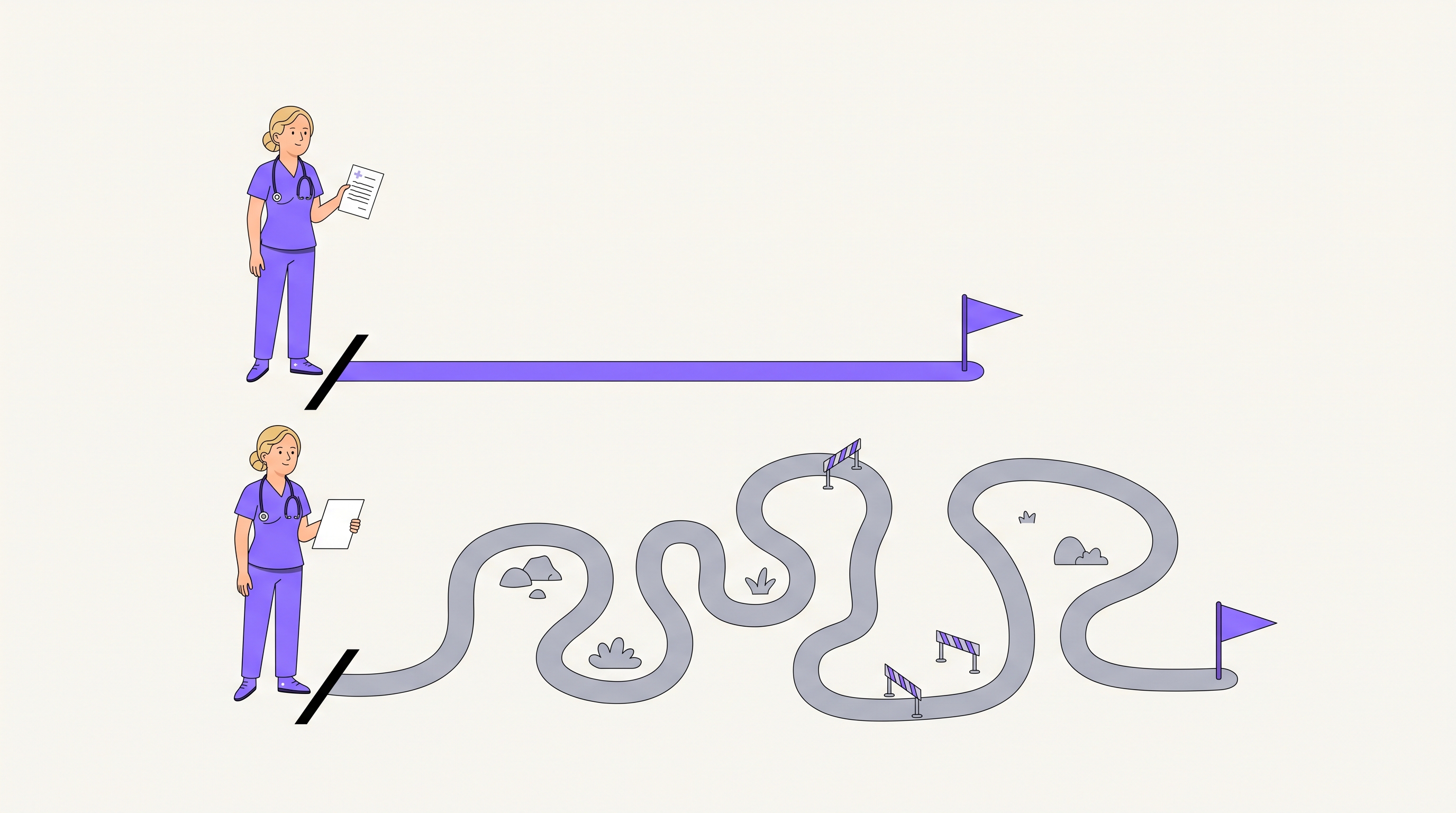


Clinical placement delays affect nursing student retention because a student who cannot start a required rotation cannot move forward in the program. When a placement falls through, that student can lose a full semester, and a student who has paused is one decision away from stopping out. CCNE measures program completion against a 70% benchmark, but that number reflects a delay a reporting cycle or more after it happens. The metric that shows the risk while there is still time to act is the on-time rotation start rate: the share of students in clinical coursework who begin their rotation on the scheduled date.
TL;DR
- A delayed rotation is a retention risk: Clinical hours are a fixed graduation requirement, so a placement that falls through can hold a student in place for an entire semester.
- Retention data registers placement problems late: Completion rates are calculated by calendar year or cohort, and none of the exclusion examples in CCNE's completion standard name placement unavailability.
- The research mostly studies undergraduate nursing students: A 2025 scoping review of attrition research excluded associate and graduate programs by design, which leaves placement-driven NP attrition largely unmeasured.
- Leading placement metrics can flag at-risk students before they leave: Time to placement, on-time rotation start rate, fall-through rate, and placement-related deferrals all move before completion rates do.
- The clinical learning environment shapes persistence: Studies link supervisor and co-worker support during clinical placements to a lower intention to leave nursing education.
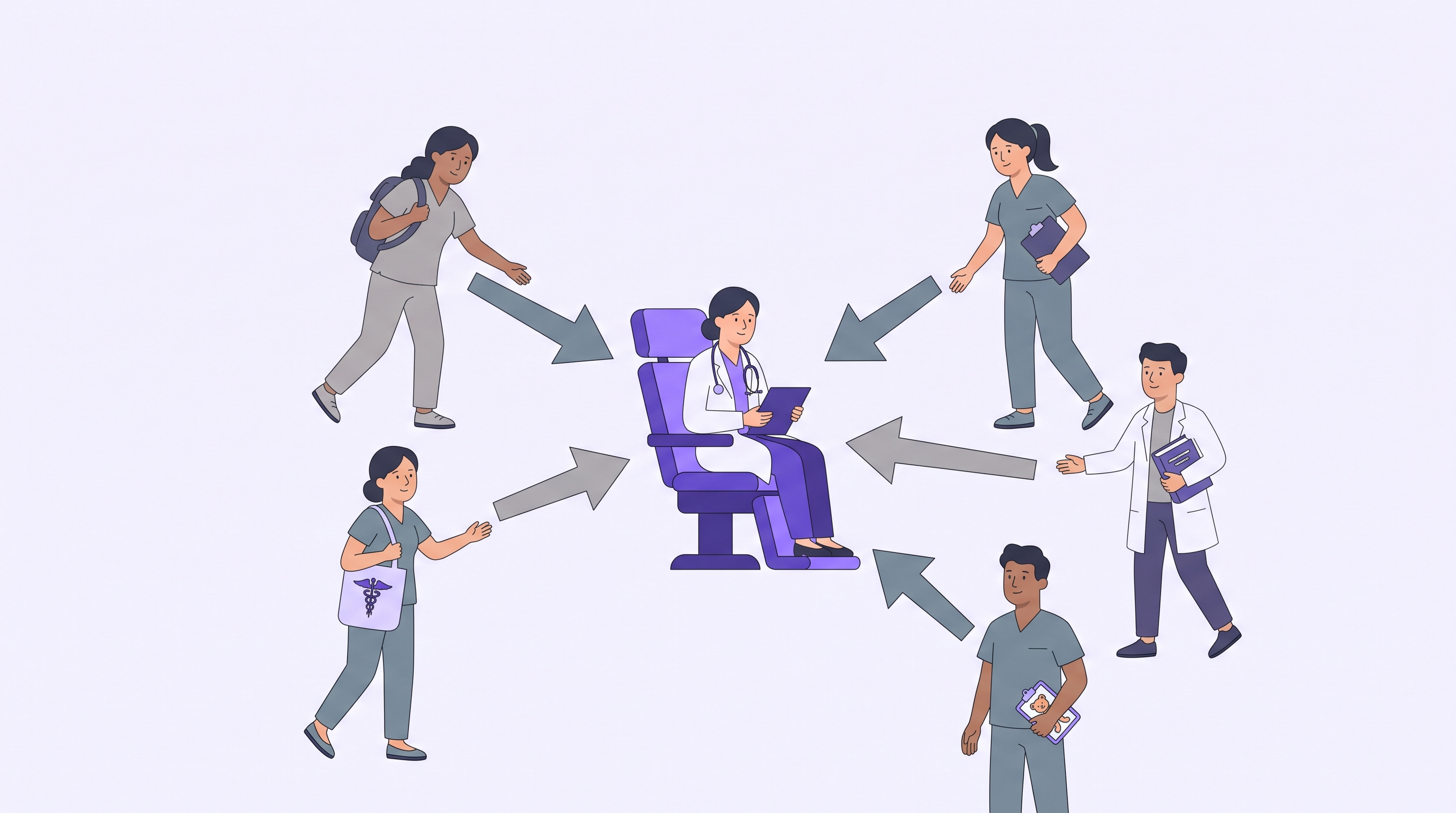
Most conversations about clinical placement focus on capacity: how many sites a program has and how many students it can admit. This piece looks at what happens after admission. As the Hechinger Report observed, the placement bottleneck for nurse practitioner programs arrives after students have already enrolled. That timing turns a capacity problem into a retention problem, and it is the part most retention dashboards were never built to see.
Want to see how placement timing connects to your program's completion rates? Talk to the NPHub university team.
What is nursing student retention, and how do NP programs measure it?
Nursing student retention is the share of students who stay enrolled and progress toward completing their program. Completion is one of the outcomes CCNE measures for accredited NP programs, with an expected level of 70%. Retention describes the path, and completion is the number accreditors see at the end.
The terms get used loosely, so it helps to separate them:
- Retention: students who remain enrolled from one term to the next.
- Student attrition: students who leave before finishing, whether by withdrawal, dismissal, or academic failure.
- Student persistence: a student's continued progress toward the degree, often measured term over term.
- Stop-out: a student who leaves without a credential and is no longer enrolled, but may return.
- Completion: students who finish the program, usually measured against a defined time window.
The national nursing standard most NP programs answer to on this is CCNE Key Element IV-B, which states that program completion rates demonstrate program effectiveness. A program meets the expectation in one of four ways:
- A completion rate of 70% or higher for the most recent calendar year.
- A completion rate of 70% or higher over the three most recent calendar years.
- A completion rate of 70% or higher for the most recent calendar year after excluding students who left for identified factors such as family obligations, relocation, financial barriers, a change of major, or transfer.
- A completion rate of 70% or higher over the three most recent calendar years after excluding students who left for those same identified factors.
Under either exclusion option, the program names the factors it used and reports the total number of students excluded. That detail matters later in this piece, because the reason recorded for a departure shapes what the data can tell you.
Why do nursing students leave? Examining factors from the research
Research sorts the reasons nursing students leave into four categories: academic factors, institutional and social support, personal factors, and economic challenges. Institutional and social support comes up most often. Clinical training pressures weigh more heavily on students who leave late in a program than on those who leave early.
That summary comes from a 2025 scoping review by researchers at Oslo Metropolitan University's Faculty of Health Sciences and the University of Agder. It mapped 19 studies on attrition among baccalaureate nursing students published between 2010 and 2024. A few findings stand out for program leaders:
- Institutional and social support was the most reported factor, appearing in 16 of the 19 studies. It included limited faculty support, weak clinical supervision, and a low sense of belonging.
- Academic factors appeared in 14 studies, including weak study skills, heavy workload, and difficulty applying theory in clinical settings.
- Psychosocial factors run through the evidence. Outcomes studied included psychological distress, psychosocial stressors, and self-esteem.
- Reported attrition rates vary widely, from roughly 10% to over 30% depending on the country, with about 20% cited for the United States.
The review also notes that early attrition tends to follow unmet expectations, while later attrition is more often tied to clinical training and personal circumstances. In its discussion, the authors point to a UK study in which 40% of students who considered dropping out named negative clinical placement experiences as a key factor.
On the solution side, an earlier scoping review of retention strategies examined 112 papers. Mentorship, study skills, literacy and language support, and tutoring were the most common components. The authors also found those strategies were inconsistently evaluated, so programs have a long list of retention strategies and limited evidence on which ones work.
Where does clinical placement fit in the retention research?
Clinical placement shows up in the research mainly as a learning environment, measured by how supported students feel once they are on site. Whether a student gets a placement on time at all is rarely studied. That gap matters most for NP programs, because their students depend on finding preceptors in a way undergraduate nursing students usually do not.
The strongest placement evidence comes from a prospective cohort study in Nurse Education Today. Researchers analyzed one-year follow-up data from 363 third-year participants in a Dutch Bachelor of Nursing program. They examined psychosocial work characteristics during clinical placements, including psychological demands, supervisor and co-worker support, and exposure to offensive behavior.
- The authors note that reasons for late dropout appear tied more to the clinical placement than to the academic program.
- Supervisor support and co-worker support were each associated with a lower intention to leave in the adjusted univariate models.
- In the full multivariate model, co-worker support remained the significant protective factor.
The study also shows why this topic is hard to measure. Actual dropout in the cohort was too low to analyze, so the researchers used distress and intention to leave as stand-ins. Students who were behind in their program or considering leaving may have been less likely to respond at follow-up, so the students at highest risk are the hardest to study.
What are the identified research gaps?
The 2025 scoping review lists its own research gaps, and they line up with the NP problem:
- No standard definition of attrition: Some studies count only voluntary withdrawal, while others include academic failure or dismissal.
- Single-institution studies: Many findings come from one program, which limits how far they generalize.
- Underrepresented student groups: Students with family responsibilities or financial strain are studied less, even though they carry higher risk.
- Few longitudinal or intervention studies: The authors call for research that follows students over time and tests whether targeted interventions work.
There is one more gap the review creates by design. It excluded diploma, associate, and graduate nursing programs. In the sources reviewed for this article, we found no national dataset that separates NP students who stop out because a placement fell through from those who leave for other reasons. Until that data exists, programs have to look for the pattern in their own records.
How does a clinical placement delay turn into a stop-out?
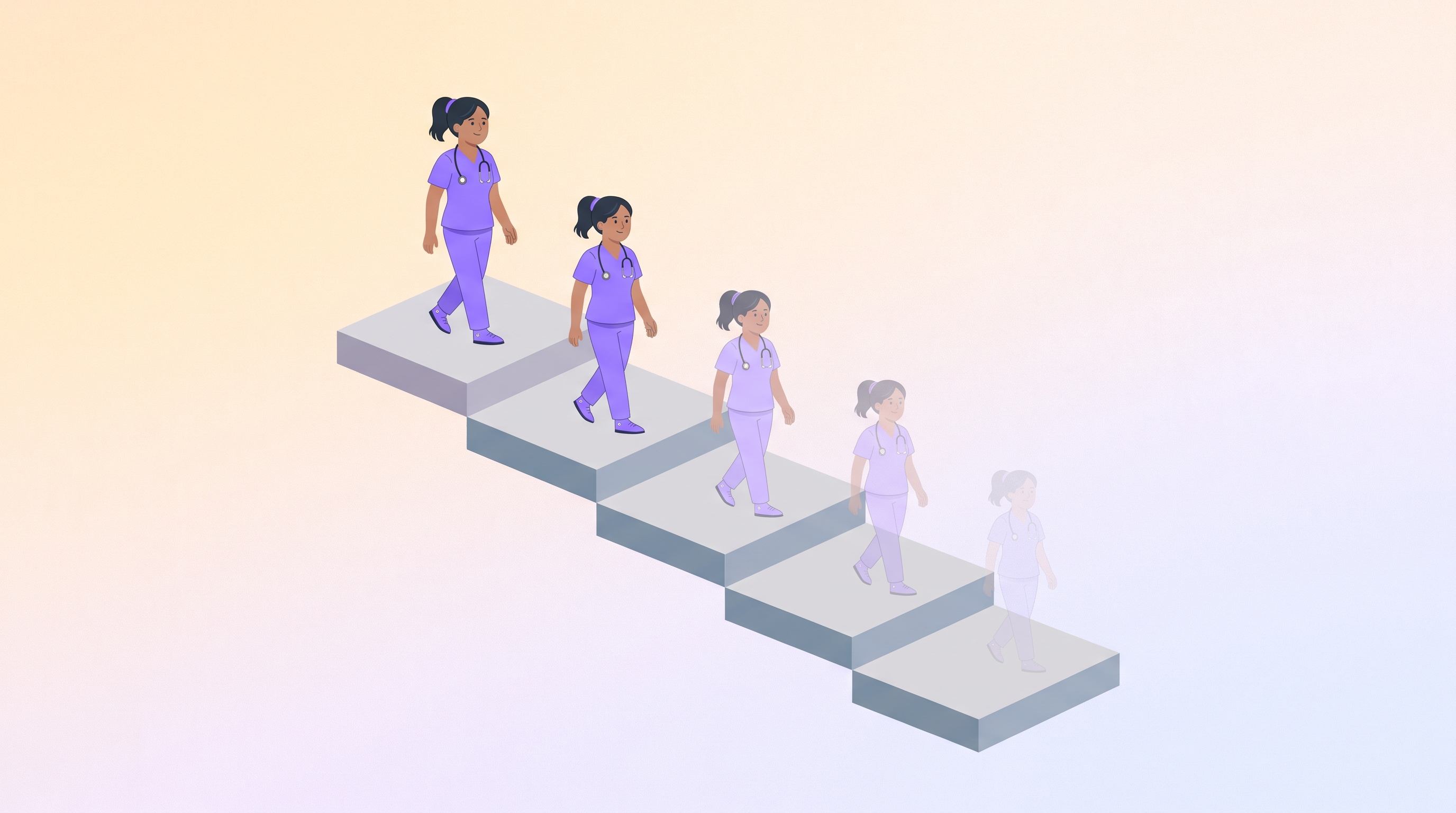
A placement delay becomes a stop-out when a student cannot start a required rotation, loses the semester, and does not come back. Each step is small on its own, which is why the pattern is easy to miss.
The sequence usually runs like this:
- A preceptor cancels, or a site agreement stalls, and the placement is not confirmed before the term begins.
- The rotation start date passes. Because clinical hours are required, the student cannot progress in clinical coursework.
- Courses that depend on that rotation pause, and the student sits out the semester.
- During the gap, work, family, and finances fill the space that school occupied.
- Re-enrollment becomes a decision rather than a default, and some students decide not to return.
The early steps are common. A 2019 analysis of NP preceptor incentives in the Journal of the American Association of Nurse Practitioners, later submitted as testimony to the Vermont legislature, cited Massachusetts data showing only 68.3% of NP students had a placement confirmed for the semester they needed in the 2017-18 academic year. A 2018 survey of Massachusetts colleges of nursing, cited in the same analysis, named affiliation and clinical clearance paperwork and cancellations by committed preceptors among the top reasons for delays.
The later steps show up in student stories. The Hechinger Report followed a 45-year-old mother of four in an online psychiatric NP program who delayed graduation by a year after struggling to find a preceptor. She described being "so ready to give up." The same reporting describes a rural student who took out a $16,000 loan to cover preceptor and travel costs and had considered dropping out.
Those stories share a profile. Most NP students are already registered nurses, and the students in that reporting were balancing careers and families alongside school. A lost semester costs them time, income, and momentum, and the reasons to keep going have to outweigh all three.
Once a student stops out, coming back is hard. Across U.S. higher education, the National Student Clearinghouse Research Center counted 43.1 million people who had stopped out without a credential at the start of the 2023-24 academic year. Just over one million re-enrolled that year, the most the Clearinghouse has recorded. Those figures are mostly undergraduate, but they point every program toward the same priority: keeping a student enrolled is far easier than winning one back.
Keep more students starting their rotations on schedule. Get in touch with the NPHub university team.
Why don't placement delays show up in retention data until months later?
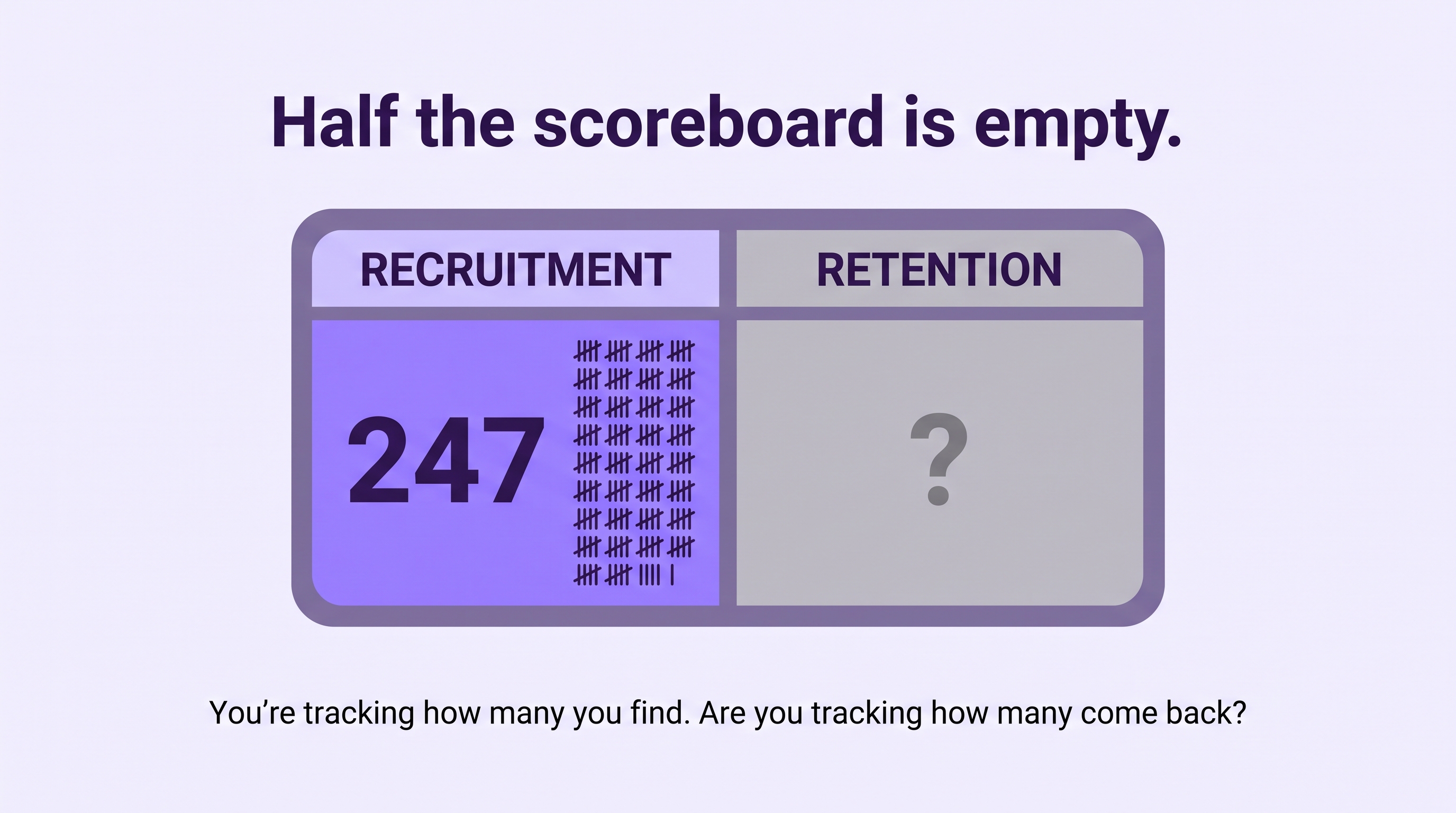
Placement delays surface late because completion is a lagging measure. It is calculated by calendar year or cohort, and it counts students against a generous time window. A semester lost in one term may not register until a future reporting cycle, if it registers at all.
Three features of how retention is reported create that lag:
- The time window absorbs delays: Some programs define on-time completion against a window longer than the program itself.
- The departure reason may not say "placement:" CCNE's exclusion examples include family obligations, relocation, and financial barriers. None of them name placement unavailability. A student who paused for a placement and then left over money can be recorded under financial barriers, and the root cause disappears from the data.
- Placement data and retention data often live apart: Clinical coordinators track sites and start dates, while institutional research tracks enrollment and completion. If no one joins the two, the connection between a fall-through in one term and a withdrawal the next goes unseen.
The third point is worth checking in your own program. Ask who owns each dataset and whether a withdrawal record can be traced back to that student's placement history. If it cannot, your completion rate can tell you that students left but not whether placement was the reason.
Which placement metrics predict student attrition?
The placement metrics most likely to predict attrition are the ones that move before a student leaves: time to placement, on-time rotation start rate, placement fall-through rate, and placement-related deferrals. Completion and attrition rates confirm the outcome afterward. Tracking both sets, side by side, shows where students are stalling while there is still time to help.
One change makes the whole table more useful: add a reason code for "clinical placement unavailable" to every leave, deferral, and withdrawal form. Reviewing those codes each semester alongside the leading metrics shows whether placement problems in one term line up with departures in the next. Over time, that gives your program the NP-specific evidence the published research does not yet provide.
Start tracking the placement metrics that predict attrition. Talk to the NPHub university team about where to start.
How can programs identify at-risk students before a delay becomes attrition?
Programs can identify at-risk students early by watching placement status, not just grades. A student with no confirmed site a few weeks before term is at risk regardless of GPA. Early identification gives faculty and coordinators time for early intervention while the semester can still be saved.
The 2025 scoping review found that early identification of at-risk students based on psychosocial factors allowed programs to offer tailored support. For NP programs, placement status belongs on the same watch list. Useful flags include:
- No confirmed placement by a set cutoff, such as four to six weeks before the rotation start date. Each program should set its cutoff based on how long its affiliation paperwork usually takes.
- A rotation in a hard-to-staff specialty, such as psychiatric mental health, pediatrics, or women's health. Our piece on why psych, peds, and women's health rotations are the hardest to fill covers capacity planning for these.
- A student sourcing their own preceptor, especially one without existing clinical contacts in the area.
- A prior preceptor cancellation, which means the student has already lost time once.
- A student who has already deferred once, since a second pause puts them further behind their cohort.
Once a student is flagged, targeted interventions work best when they reach the student quickly and come from someone who can act. That can mean a referral pathway from nursing faculty to the clinical placement team, a check-in from student support services, or a backup placement option held in reserve. Raising placement plans during orientation helps too. Students learn early who to contact when a preceptor falls through, before the problem has a deadline attached.
Catch placement risk before it turns into a stop-out. Talk to the NPHub university team.
What retention strategies address the clinical side of attrition?
The retention strategies that address clinical attrition work on two fronts: getting students into placements on time, and making sure the placement itself supports them. Most published retention strategies target academics. For NP programs, the clinical side often decides whether a student finishes.
1. Build placement capacity ahead of demand
A placement secured before the term starts cannot fall through at the last minute in the same way. Programs that maintain a vetted pipeline of preceptors and a backup option for each rotation remove the first step in the stop-out sequence. Our guides to what a fully managed clinical placement model looks like and building a contingency plan for when placements fall through go deeper on both.
2. Protect the quality of clinical supervision
Supervisor support affects whether students want to stay. A 2024 study in BMC Nursing of 531 nursing students in their final clinical practicum found that abusive supervision significantly predicted intention to leave the nursing profession, with emotional exhaustion explaining much of that effect. A trusting nurse-patient relationship weakened the link. The 2025 scoping review also ties attrition to the wider workforce, noting its effect on patient safety and care quality. Supervision that keeps students in programs also shapes the clinicians those programs graduate.
3. Vet preceptors for teaching readiness
A license confirms that someone can practice. It does not confirm that they can teach, or that their setting fits a given rotation. Clinician-led vetting looks at scope, patient population, and teaching readiness, so students land with preceptors prepared to support them.
4. Strengthen belonging, peer relationships, and professional identity
Students who feel they belong in clinical settings are more motivated and more confident. A 2024 study of 682 nursing interns found that professional identity had a direct effect on clinical belonging, which the authors link to learning motivation and confidence. The 2025 scoping review adds that a weak professional identity makes it harder for students to integrate into clinical settings. It also points to peer mentoring and learning communities as ways to strengthen belonging. In the Dutch cohort study, co-worker support was the factor most consistently linked to a lower intention to leave. Programs can build on these findings with cohort check-ins during rotations, peer mentoring between students further along, and clear contact points for students who feel isolated at a site.
5. Keep the academic supports in place
Academic retention strategies still matter. The scoping review highlights tutoring, faculty mentoring, and courses on time management, coping, and critical thinking. It also cites a study of 4,472 undergraduate nursing students in which those who sought academic support were more than seven times as likely to persist. These supports work best alongside placement planning, because a student who is doing well academically can still leave over a placement that never starts.
Retaining students over the long run depends on building what the review calls a "culture of retention," where support is easy to reach. For NP programs, that culture has to reach into clinical placements, where the research says much of the late-stage risk sits.
Build clinical capacity ahead of demand instead of rebuilding it each term. Connect with the NPHub university team.
How NPHub supports placement-related retention
NPHub works with NP programs as a clinical placement partner, sourcing and vetting preceptors so students start rotations on time and stay supported once they do. Since 2017, NPHub has supported over 17,000 rotations for more than 10,000 NP students across 45 states.
The process is built around the leading metrics in this article:
- Clinician-led vetting: Board-certified nurse practitioners source and vet every preceptor. Of 18,314 preceptor applicants, 2,600+ have been accepted, a 13.3% acceptance rate.
- NP-to-NP interviews: Each prospective preceptor completes a structured 20-minute conversation covering scope, specialty, patient population, and teaching readiness.
- Credential and license screening: Active licensure and board certification are verified, and any license restriction disqualifies a preceptor.
- Separate site approval: Each clinical site is approved on its own merits, apart from the individual preceptor.
- Re-verification every 45 days: Active preceptors and sites are re-checked, because practice settings change during a term.
- Check-ins at the start, midpoint, and end of each rotation, so problems surface while there is time to fix them.
- A replacement commitment: If a site does not meet expectations or a student feels unsafe, NPHub provides a replacement at no additional cost.
NPHub's university team, led by Director of Business Development Nicholas Carrizales, offers programs a free consultation to look at where their placement process holds up and where students are stalling.
Give your faculty their time back and your students a clear path to graduation. Talk to the NPHub university team.
Conclusion: Retention is a placement metric
For NP programs, many retention outcomes are decided in clinical placement. A rotation that starts on time keeps a student moving. One that slips can cost a semester, and a lost semester gives a working nurse time to reconsider the whole degree.
Completion rates will always matter for accreditation, but they report on students who are already gone. On-time rotation start rate, time to placement, fall-through rate, and placement-related deferrals show the risk while a student is still enrolled. Programs that track those numbers, record placement as a departure reason, and invest in supportive clinical environments will know where their attrition comes from. That knowledge helps protect the students in the program and the professional growth they enrolled for.
Protect your completion rates where they begin: in clinical placement. Get in touch with the NPHub university team.
Frequently asked questions
Does clinical placement affect nursing student retention?
Yes. A student who cannot start a required rotation cannot progress, and a lost semester raises the risk of stopping out. Research on bachelor's nursing programs also links late-stage dropout to the clinical placement environment, including supervisor and co-worker support.
What is the difference between student attrition and a stop-out?
Student attrition covers any student who leaves before completing, including withdrawal, dismissal, and academic failure. A stop-out is a student who leaves without a credential and is no longer enrolled, but may return. A stop-out can begin as a single paused semester.
What completion rate does CCNE expect?
CCNE Key Element IV-B expects a program completion rate of 70% or higher. Programs can meet it using the most recent calendar year or the three most recent calendar years, either as an overall rate or as a rate that excludes students who left for identified factors such as family obligations, relocation, or financial barriers.
What metrics predict NP student attrition?
Leading placement metrics move first: time to placement, on-time rotation start rate, placement fall-through rate, share of students self-placing, and placement-related deferrals. Completion and attrition rates confirm the outcome later. Adding a "clinical placement unavailable" reason code to withdrawal and deferral records connects the two.
How does supervisor support affect nursing student retention?
Supervisor support during clinical placements is associated with a lower intention to leave. A cohort study in Nurse Education Today found supervisor and co-worker support were protective in its adjusted univariate models. A 2024 study found abusive supervision predicted intention to leave the nursing profession.
How can NP programs reduce attrition linked to clinical placements?
Secure placements ahead of the term, flag students without a confirmed site early, and keep a backup option for cancellations. Vetting preceptors for teaching readiness and checking in during rotations help students stay supported once they start. Tracking placement as a departure reason shows whether those steps are working.
Find a preceptor who cares with NPHub
Book a rotation