
.png)




.webp)
Nursing has a lot going for it. People trust nurses, see the profession as stable, and recognize the sense of purpose that comes with caring for others. Most nurses surveyed would even choose the career again if they were starting over. So what keeps more people from pursuing it? NPHub surveyed 1,015 nurses, other healthcare workers, and students/early-career adults outside healthcare to find out.
Nursing's appeal is strong, but concerns around burnout, staffing, schedules, and the path into the profession can make the career feel harder to choose. Respondents also shared practical changes that could help more people see nursing as a career worth pursuing.
Key Takeaways
- Nurses rank as the most trusted profession, named by 65% of people surveyed.
- 83% of people surveyed say nursing is safer from AI than office jobs with similar pay.
- 70% of nurses would choose nursing again if they could start over.
- 82% of nurses say higher pay (42%) or safer staffing ratios (40%) is the one change that would most make them recommend nursing.
Nurses Stand Out for Trust and Stability, but Career Interest Varies
Nursing has a strong reputation. Among respondents, 65% selected nurses as one of the country’s most trusted professions, and 83% said nursing offers more protection from AI than office jobs with similar pay.
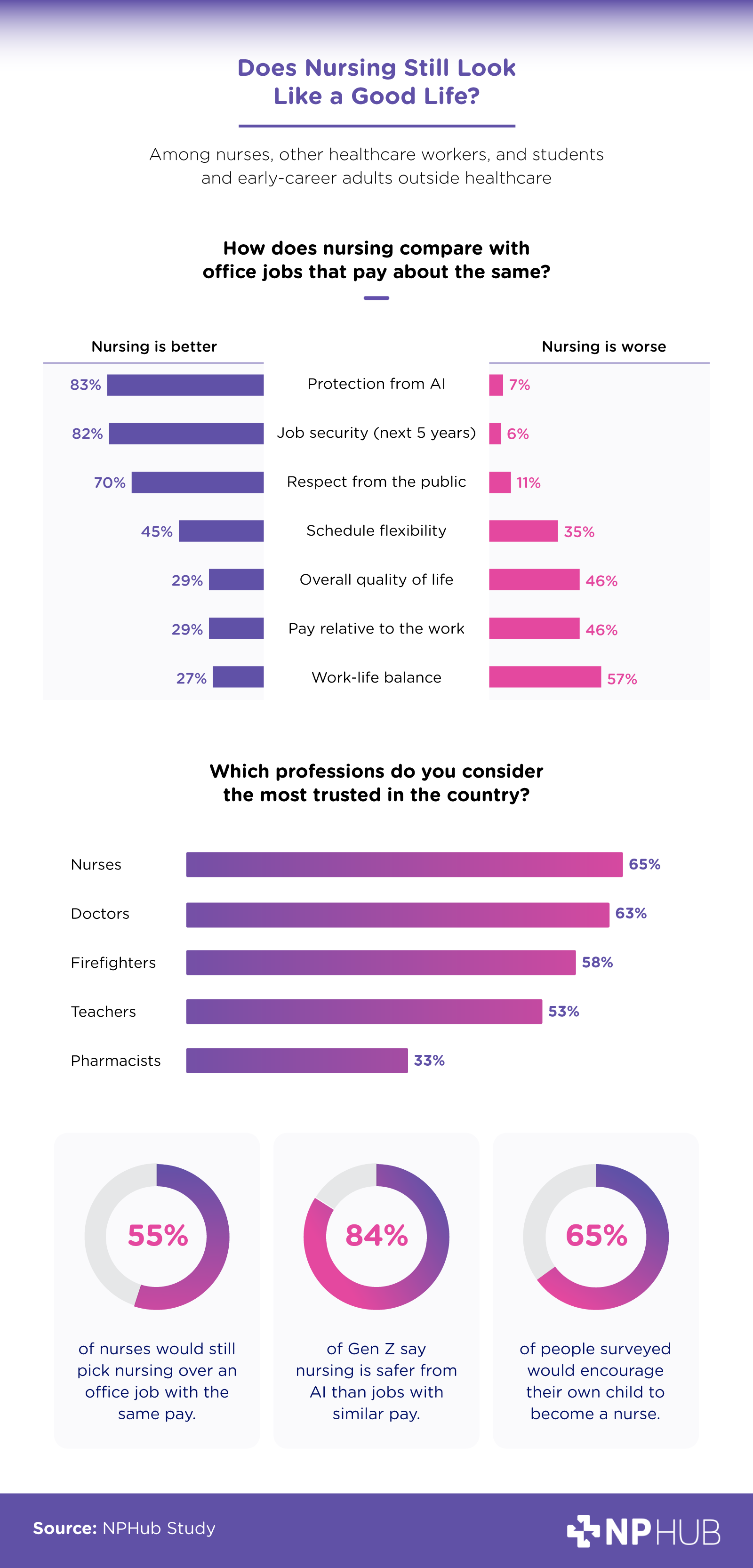
The picture gets more nuanced when people consider nursing for themselves. At equal pay, 52% of respondents said they would choose a traditional office job, compared with 39% who would choose nursing.
Familiarity with healthcare made a big difference. Nurses were the most likely to choose nursing over an equally paid office job, followed by other healthcare workers:
- Nurses: 55%
- Other healthcare workers: 46%
- Students and early-career adults outside healthcare: 15%
Quality of life may be part of what shapes those choices. Nearly half of respondents (46%) said nurses have a worse quality of life than people in similarly paid careers. That leaves nursing with a strong foundation of trust and stability, while also highlighting an opportunity to address the working conditions that can make the career feel less attainable or appealing.
Why Some Students and Early-Career Adults Hesitate to Choose Nursing
Students and early-career adults outside healthcare were the least likely group to choose nursing over an equally paid office job. For those not pursuing nursing, the biggest barriers centered on the demands of the work, including its emotional toll, burnout, schedules, and training requirements.
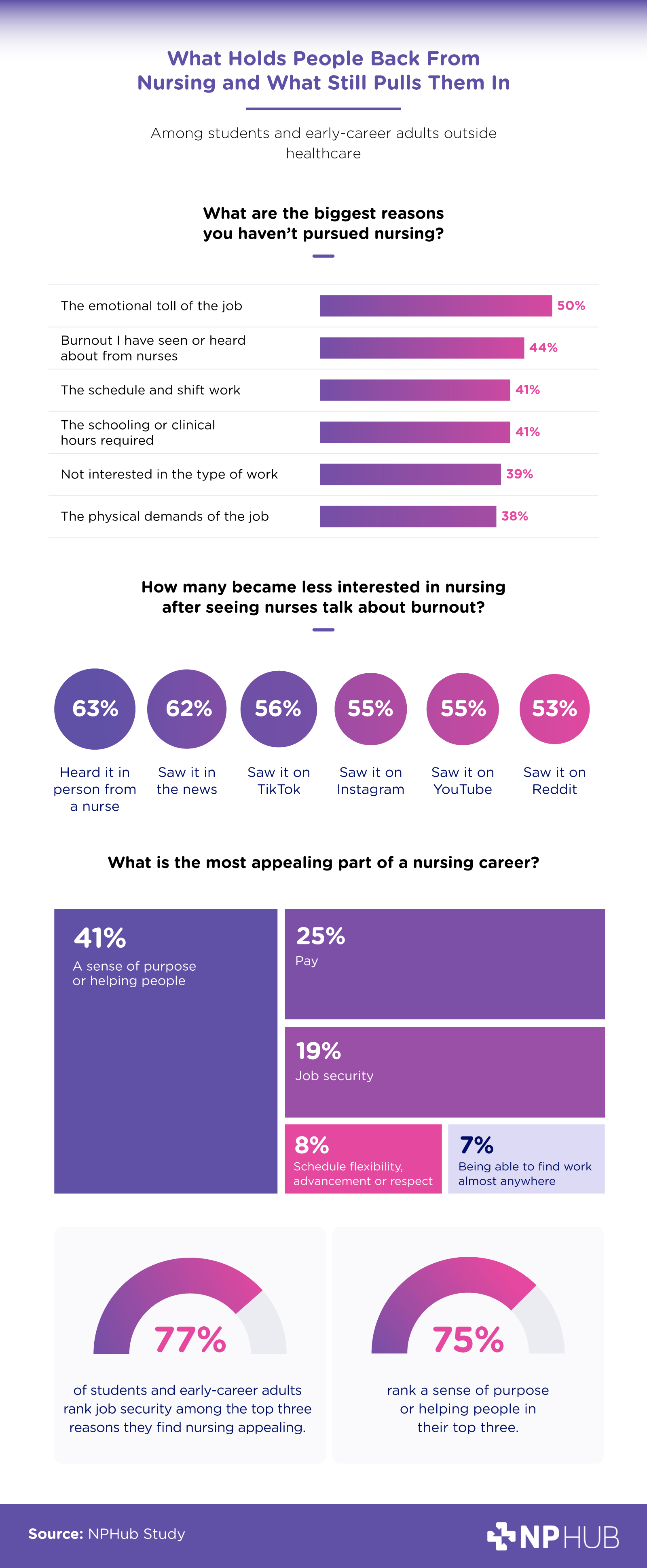
Top reasons students and early-career adults aren't pursuing nursing:
- The emotional toll of the job: 50%
- Burnout they've seen or heard about from nurses: 44%
- The schedule and shift work: 41%
- The amount of schooling or clinical hours required: 41%
- No interest in the type of work: 39%
- The physical demands of the job: 38%
Those concerns don't erase what people find meaningful about the profession. When this group ranked what appealed to them most about nursing, a sense of purpose and helping others came first (41%), ahead of pay (25%) and job security (19%).
Half of the respondents in this group (50%) said no amount of extra pay would lead them to consider nursing. Another 22% said a nursing job wouldn't need to pay more for them to consider it. The remaining 28% named a price. On average, they said nursing would need to pay $47,401 more a year to earn a second look.
Most Nurses Would Choose It Again, but They Want Change
The people doing the job paint a more hopeful picture. Among nurses surveyed, 70% would choose nursing again if they could start over.
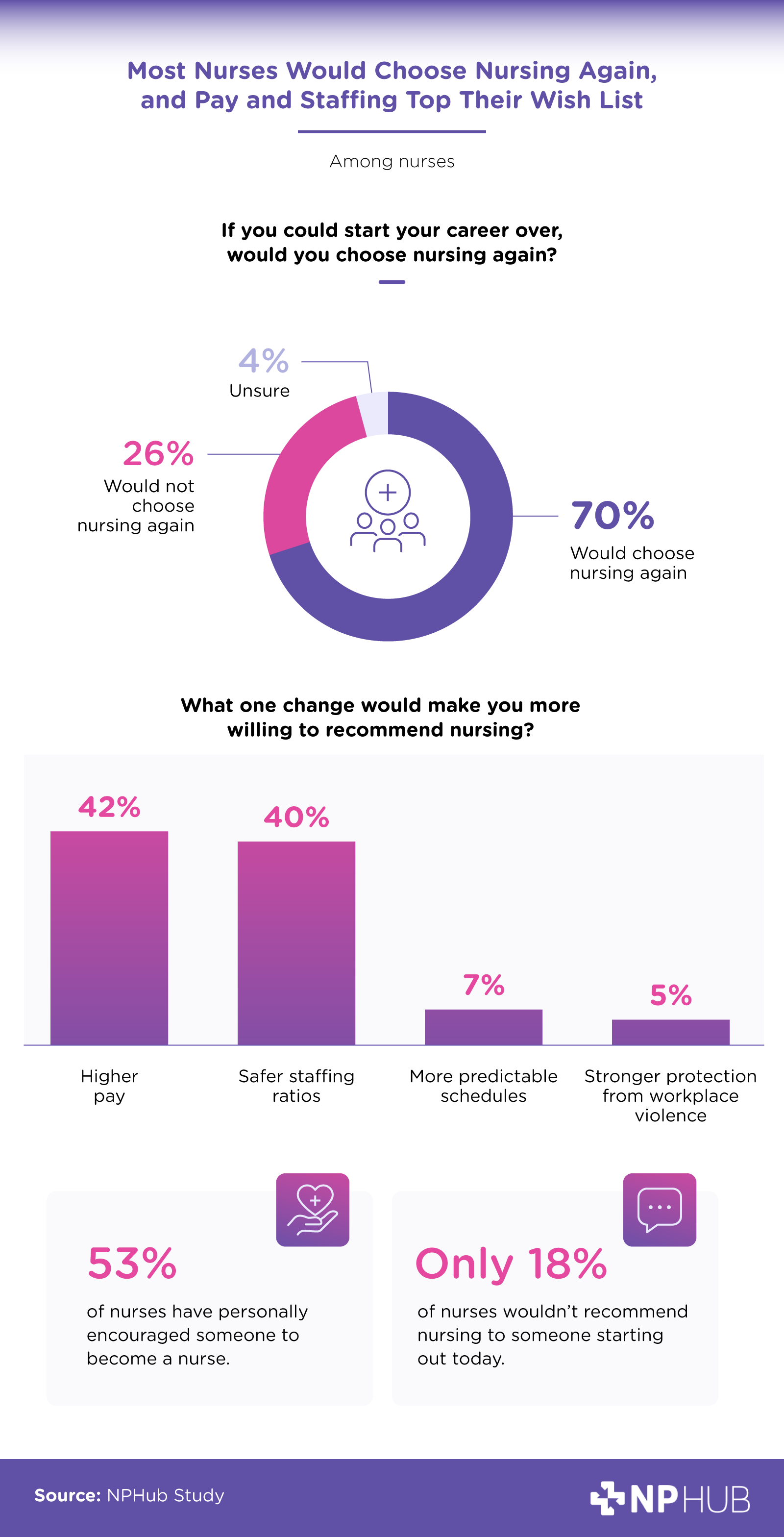
Commitment to nursing doesn't mean nurses see no room for improvement. Nearly 1 in 5 (18%) said they wouldn't recommend nursing to someone starting out today. When nurses were asked what single change would make them more likely to recommend the career, 82% chose one of two priorities:
- Higher pay: 42%
- Safer staffing ratios: 40%
Those priorities connect closely with the concerns raised by people outside healthcare. Better pay speaks to the demands of the work, while safer staffing addresses one of the conditions that can affect nurses' day-to-day experience. These findings point to ways the profession could build on the trust, purpose, and commitment it already has.
What It Will Take to Bring More People Into Nursing
Respondents expressed high trust in nurses, but concerns about working conditions made the career less appealing. Americans trust nurses, see the career as stable, and value its purpose. What holds them back from pursuing nursing is burnout, emotional strain, demanding schedules, and the long road to get there. The nurses who stay show that the career is worth it. Fair pay and safer staffing could help more people see that, too.
Many nurses grow their careers by becoming nurse practitioners. NPs help ease the primary care shortage and expand healthcare access in communities that need it most. Getting there takes hundreds of clinical hours, and NP students are the only healthcare students who must secure their own clinical placements. Some specialties are harder to place than others.
This is where NPHub comes in. We match NP students with vetted preceptors and handle the paperwork, so students can graduate on time and focus on becoming amazing NPs. When NP students have the support they need to complete their training, they can stay focused on becoming the providers their communities need.
Methodology
We surveyed 1,015 people, including 418 nurses (RNs, LPNs/LVNs, and NPs), 283 other healthcare workers, and 314 students or early-career adults working outside healthcare, about how nursing is seen today: whether it still feels stable, respected, and worth choosing, what holds people back from the field, what still draws them in, and what would make nurses recommend the job to someone starting out. The generational breakdown was 48% millennials, 42% Gen Z, 8% Gen X, and 2% baby boomers. Data was collected in September 2026.
About NPHub
Since 2017, NPHub has helped nurse practitioner students secure the clinical placements they need to graduate on time. Our vetted network of 2,400+ preceptors connects students with quality clinical rotations across specialties, from Family Practice to Mental Health/Psychiatric. With a team of 90+ clinical placement experts handling the paperwork and school-specific requirements, students can stop stressing about their rotations and focus on becoming amazing NPs.
Fair Use Statement
The data and findings on this page are free to use for noncommercial purposes. If you share them, please credit NPHub with a link so others can view the full study.
Find a preceptor who cares with NPHub
Book a rotation.webp)
.jpeg)

.webp)

%20(3)%20(2).svg)
.webp)