
.png)



.webp)
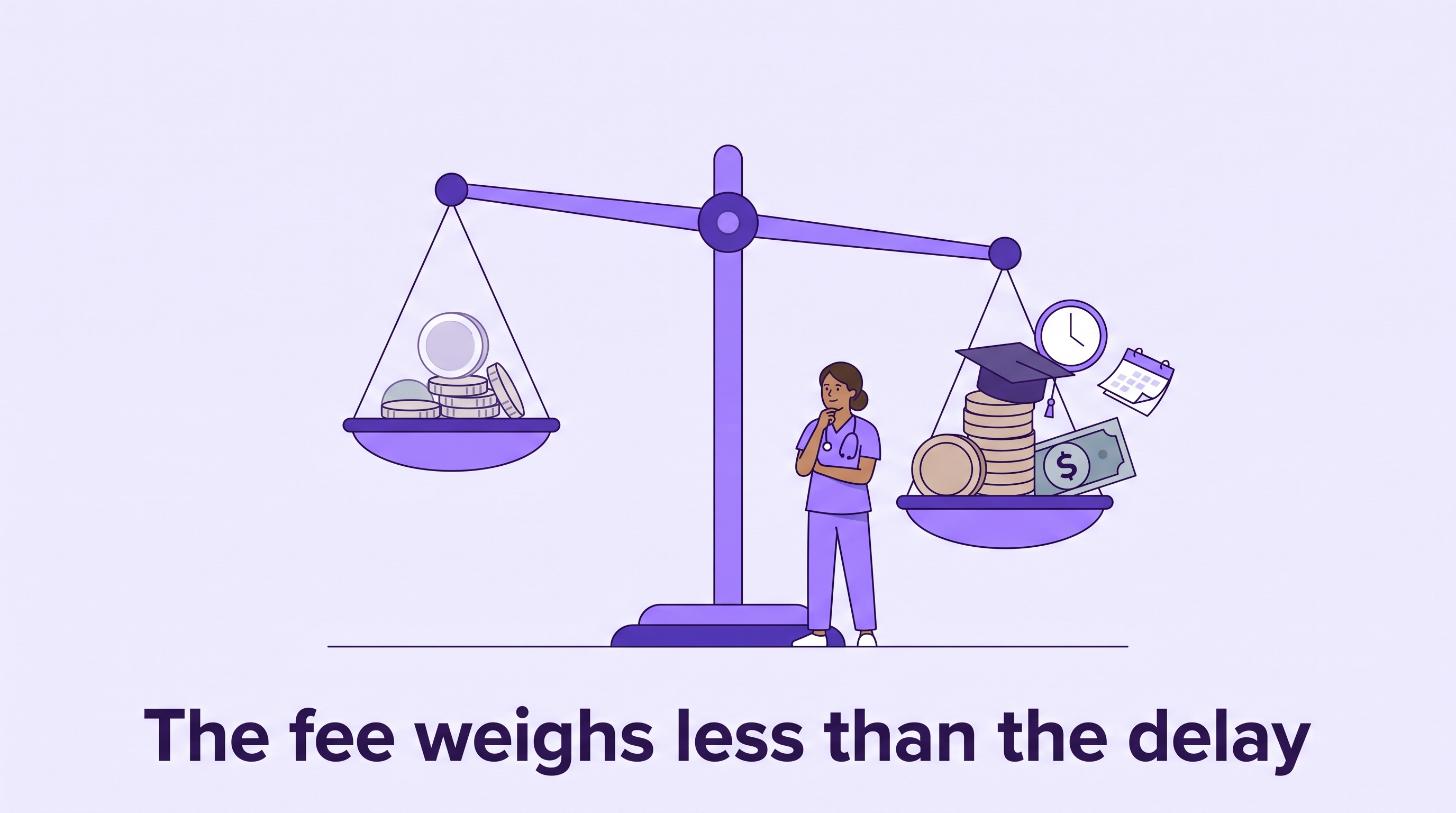
Paid NP preceptors are worth it for many NP students when two conditions are true. First, their program allows paid placements. Second, the cost of a delayed clinical rotation (extra tuition, a later graduation, and postponed NP income) is higher than the placement fee. Paying makes the most sense when you've tried your school's channels and your own network without success, your start date is approaching, and you choose a transparent service that vets its preceptors, handles paperwork, and puts its refund and replacement terms in writing. It makes less sense if your program prohibits paid placements, or if you still have enough time to secure a qualified site on your own.
TL;DR
- Paid NP preceptors are clinicians who are compensated for supervising you, usually through a preceptor matching service that finds, vets, and coordinates the placement.
- Check your program's policy first. Some NP programs restrict or prohibit paid placements, and every clinical site still needs your school's approval.
- Paying for a placement changes how you find a preceptor. It does not change the standards you're held to: your hours, competencies, and evaluation forms stay the same.
- Costs are usually charged per clinical hour or as a flat fee per rotation. Compare that cost against what a delayed rotation would cost you.
- Vet any service on preceptor screening, published pricing, written refund terms, paperwork support, and verified third-party reviews.
- See your options before you decide: Creating an NPHub account is free. Browse vetted preceptors by specialty and location, and see what's available near you before you spend anything.
What are paid NP preceptors?
Paid NP preceptors are licensed clinicians who receive compensation for supervising nurse practitioner students during clinical rotations. They are typically nurse practitioners, physicians, or other qualified providers. In most cases, students don't pay the preceptor directly. They pay a preceptor matching service, which recruits and screens preceptors, matches students to them, and coordinates the paperwork, and then compensates the preceptor.
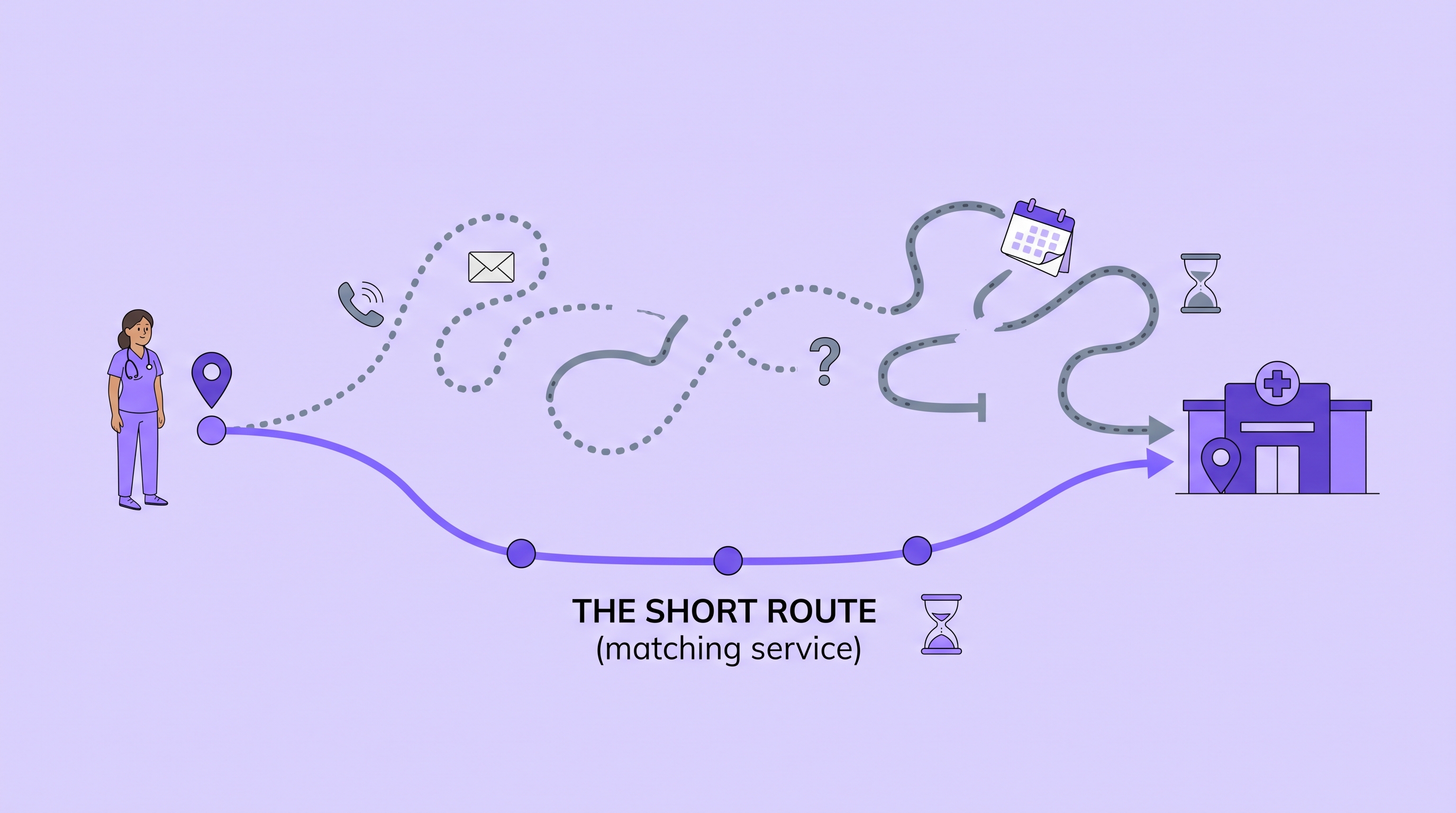
That distinction matters. Paying a clinician you found yourself is a private arrangement, with no one checking credentials, drafting agreements, or stepping in if the rotation falls through. A matching service adds a layer of screening and accountability, which is a large part of what you're paying for.
Here's how the three most common routes to a clinical placement compare:
Why are more NP students paying for clinical placements?
More NP students pay for placements because the number of students needing supervised hours has grown faster than the number of clinicians available to supervise them. Many programs also expect students to find their own sites.
The profession is growing quickly:
- AANP now represents the interests of more than 461,000 licensed NPs in the United States.
- The Bureau of Labor Statistics projects employment of nurse anesthetists, nurse midwives, and nurse practitioners to grow 35 percent from 2024 to 2034, much faster than the average for all occupations.
Clinical capacity hasn't kept pace. AACN reports that nursing schools turned away 92,672 qualified applications from baccalaureate and graduate nursing programs in 2025, citing insufficient faculty, clinical sites, classroom space, clinical preceptors, and budget constraints.
At the same time, hour requirements are substantial. Under the National Task Force Standards for Quality Nurse Practitioner Education, each NP population-focused track requires a minimum of 750 direct patient care clinical hours, and simulation hours can't be counted toward that total. That's a lot of supervised time to secure, often across several rotations and specialties.
On the preceptor side, the reasons clinicians decline students are practical ones:
- Concern about slowing down patient care in a busy practice
- Past experiences with unprepared students
- Heavy workloads
- The administrative work that comes with every student
For online and hybrid students, there's an added layer. Your program may enroll you from anywhere, but your clinical site has to be near where you live, and your school may have no local relationships there.
Why many NP programs don't find preceptors for students →
Will your program approve a paid preceptor?
Many programs accept placements arranged through a matching service, but some restrict or prohibit them. Every clinical site still needs your program's approval. Before you pay anything, read your clinical handbook and confirm your program's policy with your clinical coordinator or faculty advisor.
Approval usually depends on a few things:
- The preceptor's qualifications: Their licensure, certification, specialty, and years in practice must meet your program requirements.
- The practice setting: The patient population has to match your track. A pediatric NP rotation needs pediatric patients; a psychiatric mental health rotation needs a behavioral health setting.
- The affiliation agreement: Most academic institutions require a signed agreement between the school and the clinical site before your first shift.
- Timing: Approval takes time, so late paperwork can delay your start date even after a match is confirmed.
Questions worth asking your clinical coordinator:
- Does our program allow placements arranged through a preceptor matching service?
- What preceptor credentials and practice settings qualify for this course?
- Does the program already have an affiliation agreement with this site, or will a new one be needed?
- What is the deadline for submitting placement paperwork this term?
- Which evaluation forms and hour logs will my preceptor need to complete?
Getting these answers in writing first protects your time, your money, and your standing with your program.
With a free account, you can view preceptor profiles, including specialty, practice setting, and location. That gives you something specific to ask your program about. Browse Preceptor Profiles Free →
Is paying for a preceptor ethical?
Paying for a preceptor is a legitimate and openly debated question in nursing education. It's generally considered acceptable when your program permits it and the academic standards stay the same. Nursing scholars have described paid preceptorship as an ethical dilemma, noting that placement rates of ten to more than twelve dollars per clinical hour can push a student's total for required rotations above $5,000. The concern is fairness: students who can afford placements may move faster than students who can't.
Here's the part that often gets lost. A paid arrangement compensates a clinician for their time and teaching. It doesn't purchase a passing grade or a signed evaluation. Your preceptor still:
- Supervises your patient care
- Completes the same evaluation forms your faculty require
- Reports honestly on your clinical performance
Your faculty still grade you against the same competencies. If a service or preceptor suggests otherwise, treat that as a serious warning sign.
Precepting also has a real cost for clinicians. Teaching a student while seeing a full schedule takes time and energy. Compensation is one way to keep experienced preceptors willing to train the next generation of nurse practitioners.
When does paying for a nurse practitioner preceptor make sense?
Paying for a preceptor makes the most sense when free options are exhausted, your deadline is close, and your program allows it. It makes less sense when you still have time and leads to pursue.
Create a free account to see which preceptors are available for your track and area right now. You can reserve one only if the timing and fit work for you.
What are you actually paying for?
With a reputable preceptor matching service, you're paying for:
- Access to preceptors who have already agreed to teach students.
- Screening, so you aren't the one checking credentials.
- Coordination, so you aren't handling the paperwork alone.
- A plan if something falls through.
In practice, that usually includes:
- Preceptor vetting: Credentials, licensure, and experience are reviewed before a preceptor is accepted into the network.
- Matching by specialty and location: You're matched to a preceptor whose practice setting fits your track and course objectives.
- Paperwork and documentation: Affiliation agreements, preceptor CVs, licenses, and program-specific forms are prepared for submission to your school.
- A support team: A coordinator or placement team answers questions and helps with your program's forms.
- Replacement or refund terms: There are written terms for what happens if a preceptor can't precept.
What payment does not guarantee:
- Your program's approval of the site
- A passing evaluation
- A specific preceptor's teaching style
Rather than searching for a perfect preceptor, look for a strong fit on three things: the right patient population, enough patient volume to complete your hours, and a preceptor who has chosen to teach. See how NPHub's matching and paperwork support works →
How much do paid NP preceptors cost?
Paid NP preceptors are usually priced in one of two ways: per clinical hour, or as a flat fee per rotation. Your total depends on the rate and the number of hours your course requires.
The math for hourly pricing is simple: rate × required hours = rotation cost.
For example, NPHub rotations start at $12.75 per clinical hour. At that rate:
- A 160-hour rotation comes to $2,040.
- A 15% deposit of $306 reserves the placement.
- Rotations have a $1,000 minimum.
When comparing services, look at:
- The total for your required hours, not just the headline rate.
- What's included. Paperwork support, replacement, and a coordinator can vary widely.
- Deposit size and when it's refundable.
- Payment plans. For example, NPHub offers payment in full, in three installments, or spread over up to 12 months.
Create a free account to find available preceptors for your specialty, then estimate your rotation total and pick the payment plan that fits your budget.
How to evaluate a preceptor matching service
Evaluate a preceptor matching service on how it screens preceptors, how clearly it publishes pricing and refund terms, how much paperwork it handles, and what verified students say about it. These questions work for any service:
- How are preceptors vetted, and what share of applicants are accepted? A selective process is a meaningful quality signal.
- Is pricing published before you talk to sales? You should be able to calculate your total cost yourself.
- What are the deposit and refund terms, in writing? Look specifically at what happens if a preceptor cancels and if your school rejects the site.
- Who prepares the paperwork? Confirm whether the service handles affiliation agreements and program-specific forms.
- What happens if a rotation falls through mid-term? Ask whether there's a replacement process and how fast it works.
- Can you see preceptor details before you commit? Credentials, specialty, practice setting, and location should be visible.
- Are reviews on independent platforms, and how many are there? A large volume of third-party reviews is harder to fake than testimonials on the company's own site.
- Does it cover your specialty in your state? Coverage for FNP students in a metro area can look very different from PMHNP coverage in a rural county.
Comparing NP preceptor matching services →
How NPHub's preceptor matching works
NPHub is a clinical placement marketplace. The platform connects nurse practitioner students with vetted preceptors, and a student coordinator supports each student from reservation through rotation. Here's the process:
- Create a free account and browse available preceptors by specialty and location. If an available preceptor in your specialty and area is already in the network, you can often find and reserve them in under 30 minutes.
- Reserve with a deposit. The preceptor then has up to 7 business days to accept.
- Your coordinator prepares the paperwork. This includes a standard affiliation agreement and any program-specific forms, and usually takes up to 14 business days, often less. NPHub doesn't contact your school on your behalf. You submit the paperwork through your program's approval process.
- Complete your rotation. Your coordinator stays available if questions come up.
A few numbers that describe the network:
- Selectivity: 2,435 preceptors accepted from 18,314 applicants, a 13.3% acceptance rate.
- Volume: 14,251 rotations completed for 9,249 students, totaling more than 1.8 million clinical hours across 45 states.
- Reviews: 4.9 out of 5 on Trustpilot across more than 1,609 reviews.
On refunds: if a preceptor can't precept and no alternative is available, your balance is refundable. If a school rejects a site, a refund depends on the reason. It applies when the rejection stems from information that wasn't in the preceptor's profile or wasn't shared by NPHub staff. Read the full policy before you reserve.
The bottom line
Paid NP preceptors can keep your clinical timeline on track when free options run out. The best decisions follow a clear order:
- Confirm your program's policy.
- Weigh the fee against the cost of a delay.
- Choose a service that is transparent about vetting, pricing, and refunds.
Once those pieces are in place, you can put your energy where it belongs: learning from an experienced preceptor and completing your hours.
Create a free account to see available preceptors in your specialty and area →
Frequently asked questions
Do clinical hours with a paid preceptor count the same as unpaid hours?
Yes, provided your program has approved the site and preceptor. Hours count based on your program's rules for direct patient care and supervision, not on whether the preceptor was compensated. Your preceptor completes the same evaluation forms either way.
Can I pay a preceptor directly instead of using a service?
Some students arrange direct compensation with a preceptor, but it's important to check your program's policy first. Without a service, you are responsible for verifying credentials, coordinating the affiliation agreement, and finding a replacement if the rotation falls through.
What happens if my school rejects the clinical site?
That depends on your program's reasons and the service's written policy. Ask before you pay whether a school rejection is refundable and under what conditions. Confirming your program's preceptor and site requirements in advance lowers the risk.
How far in advance should I look for a paid placement?
Start as soon as you know your free options aren't working. Leave time for the preceptor to accept, for paperwork, and for your program's approval process. Starting one to two months before your rotation gives you room to handle surprises.
Are paid NP preceptors available for every specialty?
Availability varies by specialty and location. Primary care and family practice preceptors are generally easier to find than specialties like psychiatric mental health, women's health, or pediatrics. Check a service's current availability for your track in your area before committing.
Article details
- Last updated
September 29, 2026 - Fact-checked by
NPHub Clinical Placement Experts & Student Support Team- https://www.aanp.org/about/about-the-american-association-of-nurse-practitioners-aanp
- https://www.bls.gov/OOH/healthcare/nurse-anesthetists-nurse-midwives-and-nurse-practitioners.htm
- https://www.aacnnursing.org/Portals/0/PDFs/Fact-Sheets/Faculty-Shortage-Factsheet.pdf
- https://www.aacnnursing.org/Portals/0/PDFs/CCNE/NTFS-NP-Final.pdf
- https://nursology.net/2024/07/16/paid-preceptorship-and-the-nurse-practitioner-preceptor-shortage-an-ethical-dilemma/
- https://www.nphub.com/how-it-works
- https://www.nphub.com/pricing
- https://www.nphub.com/blog/best-preceptor-matching-service
- https://www.nphub.com/refunds-cancellations-policy
Find a preceptor who cares with NPHub
Book a rotation.webp)

.webp)
.jpeg)

%20(3)%20(2).svg)
.webp)