

To find a nurse practitioner preceptor in Minnesota, most NP students combine three routes: networking through the Minnesota Nurse Practitioner Association, program alumni, and RN colleagues; applying to structured programs such as Mayo Clinic's Nurse Practitioner Clinical Education Program (NPCEP) when their school is affiliated; and using a preceptor matching service such as NPHub, which connects students with vetted preceptors and handles affiliation agreements and paperwork. Starting 4 to 6 months before the rotation leaves time for credentialing and site approvals.
TL;DR: Key Takeaways for Minnesota NP Students
- Minnesota faces a severe preceptor shortage with nursing programs projected to graduate 30,000 fewer nurses than needed by 2030, creating intense competition among NP students for the limited clinical placements available across all specialties.
- Geographic and seasonal challenges unique to Minnesota include limited rural clinical sites, weather-related accessibility issues, and reduced patient volumes during harsh winters that complicate rotation scheduling and clinical experience opportunities.
- Traditional preceptor search methods fail because they rely on cold outreach to overwhelmed clinics and outdated university lists, while the best clinical placements are filled through professional networks that individual students struggle to access independently.
- Quality preceptors require specific qualifications beyond basic credentials, including strong communication skills, direct supervision capabilities, professional development commitment, and genuine motivation for student mentorship rather than reluctant acceptance of teaching duties.
- NPHub provides immediate solutions by connecting Minnesota NP students with vetted preceptors who actively seek students, handling all administrative logistics from background checks to affiliation agreements, and ensuring successful completion of clinical hour requirements for timely graduation.
Across Minnesota, from the Twin Cities to Duluth and Rochester, NP students are searching for preceptors while working full-time as nurses and managing family responsibilities. Research on clinical education describes students "navigating uncertainty" during this stage, especially when their graduation date depends on securing a placement.
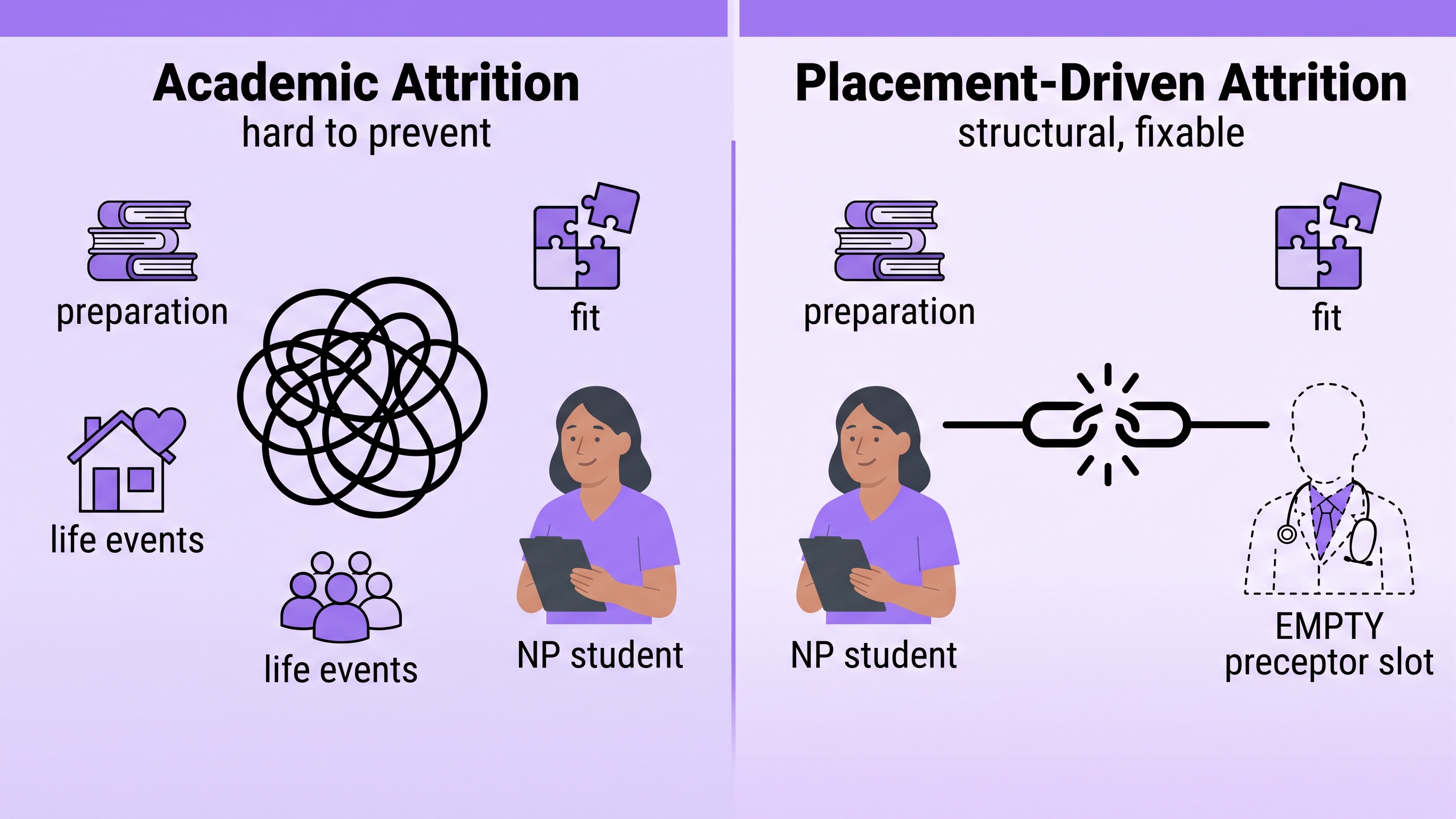
The difficulty is structural, not personal: Minnesota's clinical training capacity has not kept pace with the number of NP students who need it. This guide covers why preceptors are hard to find in Minnesota, which placement types are available, what to look for in a preceptor, how to search on your own, and how NPHub can help. If you'd rather start by browsing available preceptors, creating a free account takes just 2 minutes.
Why Finding Preceptors in Minnesota is So Challenging
The struggle you're experiencing isn't just bad luck – it's the result of systemic issues that have created a perfect storm for NP students across Minnesota. Understanding these challenges helps explain why your inbox is full of rejections and why securing clinical placements feels nearly impossible.
Wondering where to start your search?
- Finding NP Preceptors in Minneapolis: Your Complete Guide to Securing Clinical Rotations in the Twin Cities
- Finding NP Preceptors in Saint Paul: Your Complete Guide to Securing Clinical Placements Fast
- How to Find NP Preceptors in Rochester, Minnesota: Your Complete Guide to Clinical Rotations
How large is Minnesota's nursing workforce gap?
Minnesota's nursing education programs are projected to graduate 30,000 fewer nurses than the state needs by 2030, according to data from the University of Minnesota and Minnesota State systems. That gap means existing nurses are overworked and understaffed, with little bandwidth to take on students.
The Coalition for Nursing Equity and Excellence acknowledges that "there simply aren't enough clinical training opportunities" to meet current demand, and this was before the pandemic made things worse. When experienced nurse practitioners are already stretched across their patient loads, mentoring becomes hard to fit in.
What makes the preceptor search different in Minnesota?
Minnesota adds geographic and seasonal barriers on top of the national preceptor shortage. Rural sites are scarce, and the Twin Cities metro, which has the most sites, also has the most competing NP programs.
- Geographic isolation: Rural areas like Duluth, Bemidji, and Rochester have limited clinical sites, forcing students to compete for fewer opportunities.
- Weather-related accessibility: Minnesota winters can complicate clinical rotations, making some sites hesitant to commit to student placements.
- Urban concentration: The Twin Cities metro has the most opportunities, but also the highest concentration of competing Minnesota school programs.
- Seasonal patient flow: Many clinics see reduced patient volumes during harsh winters, limiting meaningful clinical experience opportunities.
Why do Minnesota preceptors turn down NP students?
Most preceptors who decline do so because of workload, not lack of interest: paperwork, productivity targets, and unpaid supervision time all compete with patient care. NPHub's guide on Why NP Preceptors Refuse Students covers each reason in depth.
- Administrative burden: Complex paperwork and affiliation agreement processes discourage participation.
- Productivity pressure: Healthcare systems prioritize patient volume over education, making precepting seem like a liability.
- Lack of compensation: Most preceptors receive no financial incentive, viewing student supervision as additional unpaid work.
- Technology barriers: Electronic health record systems make training students more complex and time-consuming.
How much do Minnesota NP programs help with placements?
Most Minnesota NP programs provide lists of potential clinical sites but leave the outreach and coordination to students. Institutions like the University of Minnesota are working through the Coalition for Nursing Equity and Excellence on broader workforce issues, yet individual students usually handle these steps alone:
- Initial outreach and relationship building
- Negotiating placement terms and schedules
- Managing rejection follow-up
- Coordinating paperwork and compliance requirements
What does a delayed clinical placement cost an NP student?
A delayed placement can push back graduation, which adds tuition and keeps students in RN-level pay longer. NPHub's breakdown of the cost of delaying NP graduation covers the numbers. The main effects:
- Extended timelines: Each semester delay costs thousands in additional tuition
- Career stagnation: Remaining in your current RN role longer delays salary advancement
- Increased stress: Financial and emotional pressure affects academic performance and professional development
- Weaker placements: Students running out of time may accept a site that doesn't fit their specialty goals.
What Types of NP Clinical Placements are Available in Minnesota?
Minnesota offers NP clinical placements in primary care, psychiatric mental health, acute care, pediatrics, women's health, and community health. Most sites cluster in the Twin Cities metro and around Mayo Clinic in Rochester, while rural Greater Minnesota has fewer sites but broader patient exposure.
Primary Care Opportunities in Minneapolis-St. Paul Metro
The Twin Cities metropolitan area provides the richest concentration of primary care clinical placements in Minnesota. Major healthcare systems actively participate in nurse practitioner education:
- Family Nurse Practitioner (FNP) rotations through established systems like Allina Health, Fairview, and CVS MinuteClinic locations.
- Adult-Gerontology Primary Care NP placements in both clinic and community-based settings.
- Preventive care focus in outpatient clinics serving diverse patient populations.
- Chronic disease management opportunities in diabetes, hypertension, and cardiac care centers.
Mayo Clinic's NP Clinical Education Program (NPCEP) offers prioritized placement for students from affiliated programs, providing structured clinical experience in Rochester with some metro area opportunities. However, these competitive spots often require early application and strong academic standing.
Mental Health and Psychiatric Placements (Growing Demand)
Minnesota's mental health landscape reflects national trends toward integrated behavioral health care, creating expanding opportunities for Psychiatric-Mental Health Nurse Practitioner (PMHNP) students:
- Community mental health centers serving diverse populations across age groups.
- Integrated primary care settings combining physical and mental health services.
- Veteran affairs programs through the Minneapolis VA Health Care System's robust psychiatric and behavioral health services.
- Telehealth platforms offering innovative approaches to mental health delivery.
The demand for mental health providers in Minnesota has surged, particularly in rural areas where access remains limited. This creates more preceptor opportunities but also increases competition among students seeking these valuable placements.
Acute Care Settings in Major Minnesota Hospitals
Acute care clinical rotations provide intensive, high-acuity experience essential for Acute Care NP (ACNP) specialty preparation:
- Mayo Clinic Health System's acute care departments, including cardiology, neurology, and surgical units.
- Minneapolis VA Medical Center provides inpatient services across medical, surgical, and rehabilitation units.
- Level I trauma centers in the Twin Cities offering critical care experience.
- Specialty units, including ICU, emergency departments, and cardiac care units.
These competitive placements often require students to demonstrate strong clinical skills and academic performance before acceptance. The complex nature of acute care environments means preceptors carefully select students who can handle high-pressure situations.
Specialty Rotations: Pediatrics, Women's Health, and Community Health
Minnesota's specialty rotations include pediatrics through Children's Minnesota, women's health through Mayo Clinic and community OB/GYN clinics, and community health through FQHCs and public health departments.
Pediatric Opportunities:
- Children's Minnesota participates in clinical education programs, offering both credit-bearing and observer rotations across pediatric specialties
- Developmental and behavioral pediatrics through specialized clinics
- Pediatric urgent care and primary care settings
Women's Health Rotations:
- OB/GYN clinics through Mayo Clinic and community partnerships
- Reproductive health services including contraception and family planning clinics
- Maternal-fetal medicine in high-risk pregnancy settings
- Women's health across the lifespan from adolescence through menopause
Community Health Focus:
- Federally Qualified Health Centers (FQHCs) serving underserved populations
- Nurse-managed health centers emphasizing health promotion and chronic care models
- Public health departments offering population health perspectives
- Rural health clinics addressing access challenges in greater Minnesota
Should You Choose a Rural or Urban Clinical Rotation in Minnesota?
Choose an urban Twin Cities rotation for more preceptors and specialty variety, or a rural Greater Minnesota rotation for broader scope of practice and closer mentorship. The best fit depends on your specialty goals and how far you can travel. Community-based preceptors outside large systems like Mayo Clinic often provide more hands-on experience.
Urban Advantages (Twin Cities Metro):
- Higher concentration of preceptors and clinical sites
- Greater specialty diversity and advanced technology access
- More structured educational programs and resources
- Better transportation and housing options for students
Rural Benefits (Greater Minnesota):
- More comprehensive patient care experience with broader scope of practice
- Stronger preceptor-student relationships due to smaller settings
- Greater autonomy and decision-making opportunities
- Potential for future employment connections in underserved areas
Rural Challenges:
- Limited specialty options and advanced diagnostic capabilities
- Fewer preceptors willing or able to take students
- Transportation and housing logistics
- Potential isolation from academic support systems
What Should NP Students Look for in a Minnesota Preceptor?
A good Minnesota preceptor holds current NP licensure in your specialty and also has the communication skills, clinical competence, and genuine motivation to teach. Credentials qualify someone to precept; mentorship qualities determine whether the rotation prepares you for practice.
What Qualifications Do NP Preceptors in Minnesota Need?
Minnesota preceptors must hold current NP licensure in their specialty area with at least one year of post-graduation experience. Most healthcare systems require additional credentials like board certification and facility-specific training. However, qualifications alone don't guarantee effective mentorship.
Key Mentorship Qualities Research Reveals
Recent studies on preceptor selection identify critical attributes for successful completion of clinical rotations:
- Communication and relational skills: Ability to provide direct supervision while fostering open, assertive dialogue with students.
- Reflective capabilities: Capacity to analyze both their own practice and student performance for continuous improvement.
- Technical-scientific competence: Mastery of clinical practice combined with ability to transfer theoretical knowledge to real-world application.
- Emotional intelligence: Empathy, assertiveness, and conflict management skills essential for challenging clinical situations.
Individual Characteristics That Matter
Beyond technical skills, ideal preceptors demonstrate:
- Perceptiveness: Keen observation skills to identify student learning needs and performance gaps.
- Motivation: Genuine enthusiasm for teaching and sharing knowledge with the next generation.
- Professional initiative: Commitment to ongoing professional development and staying current with best practices.
- Responsibility: Dedication to patient safety while creating meaningful learning opportunities.
Effective Minnesota preceptors understand the state's diverse healthcare landscape, from urban academic centers to rural community resources. They're familiar with varying patient populations and can adapt their teaching style to different clinical environments.
The challenge isn't just finding qualified preceptors; it's connecting with those who actively want to mentor students and have the availability to provide quality nursing practice education. Create your free account to access detailed profiles of Minnesota preceptors who've been specifically vetted for these essential mentorship qualities.
How Do You Find an NP Preceptor in Minnesota on Your Own?
To find a Minnesota preceptor on your own, prioritize warm introductions over cold outreach: professional associations, program alumni, and colleagues from your RN job. Start 4 to 6 months before your rotation, because many of Minnesota's best placements are filled through professional relationships and are never publicly advertised.
Why Traditional Methods Fall Short
Most students attempt cold outreach through:
- Generic emails to clinic administrators
- Phone calls to overwhelmed office staff
- Online application systems with weeks-long response times
- University-provided lists with outdated contact information
These approaches yield low response rates because preceptors receive dozens of similar requests weekly, and busy practices lack time to evaluate individual students.
Strategic Networking Approaches
Successful completion requires leveraging Minnesota's nursing practice community resources:
- Professional organizations: Minnesota Nurse Practitioner Association events and networking sessions.
- Alumni connections: Reach out to recent graduates from your program who completed rotations in Minnesota.
- Clinical contacts: Leverage relationships from your current RN position or previous clinical experiences.
- Social media: LinkedIn networking with Minnesota NPs in your target specialty.
Timeline Management Strategy
Start your search at least 4 months before your intended rotation start date. Minnesota's seasonal patient flow patterns mean some specialties have limited availability during winter months, requiring earlier planning.
The reality is that successful preceptor placement often depends on relationships and timing that individual students struggle to navigate alone. Rather than spending months managing this complex process, create your free account to connect directly with vetted Minnesota preceptors who are actively seeking students and have already completed all necessary credentialing requirements.
Take Action: Secure Your Minnesota Preceptor Today
You've read the challenges, understood the barriers, and learned what makes an ideal preceptor. Now it's time to stop struggling alone and take decisive action toward completing your degree and advancing your nursing career.
Why NPHub is Your Solution for Minnesota Clinical Success
Unlike traditional methods that leave you competing against hundreds of other students for limited spots, NPHub connects you directly with Minnesota preceptors who are actively seeking motivated students.
Here's what sets us apart:
- Vetted preceptors who've committed to student mentorship
- Streamlined placement process, eliminating weeks of back-and-forth communication
- End-to-end support from initial matching through successful rotation completion
- Specialty-specific matching ensures alignment between your goals and preceptor expertise
Our Guarantee: Your Success is Our Mission
We understand the financial and emotional investment you've made in your nursing education. That's why we stand behind our services with comprehensive support throughout your clinical journey. From handling complex affiliation agreements to coordinating schedules, we manage the logistics so you can focus on learning and excelling in your practice environment.
Take the Next Step Today
Your future as a nurse practitioner shouldn't depend on luck or outdated networking approaches. While Minnesota's healthcare system works toward long-term solutions, you need immediate results that get you back on track toward graduation.
Create your free NPHub account now and access our complete network of Minnesota clinical preceptors within minutes. Stop letting the broken preceptor search system control your timeline – take charge of your education and secure the clinical placements you need to complete your degree successfully.
Your graduation depends on the choices you make today. Don't let another semester slip away.
Frequently Asked Questions
How far in advance should I start looking for a preceptor in Minnesota?
Start your search at least 4-6 months before your intended rotation start date. Minnesota's seasonal patient flow patterns mean some specialties have limited availability during winter months, requiring even earlier planning. Many clinical placements require extensive paperwork, including background checks, affiliation agreements, and health clearances that can take 4-6 weeks to process.
Can I complete clinical rotations with preceptors outside the Twin Cities metro area?
Yes. Rural Minnesota offers excellent clinical experience opportunities, often with more comprehensive patient care exposure and stronger preceptor-student relationships. Areas like Duluth, Rochester, Bemidji, and smaller community clinics throughout greater Minnesota welcome NP students. However, consider logistics like housing, transportation, and potential isolation from academic support systems. Many students find that rural placements provide a broader scope of practice experience that's invaluable for future nursing careers.
What should I do if my university doesn't have established relationships with Minnesota preceptors?
If your university has no established Minnesota preceptor relationships, build your own through professional networking, alumni connections, and your current RN contacts, or use a preceptor matching service like NPHub. Many successful NP students secure excellent clinical placements through alternative approaches, including professional networking, alumni connections, and specialized platforms like NPHub. Focus on building relationships within Minnesota's nursing practice community through events, social media networking, and leveraging your current RN position contacts. The key is demonstrating professionalism and a genuine interest in learning rather than relying solely on institutional services.
How long does it take to get matched with a Minnesota preceptor through NPHub?
If a preceptor in your specialty is available in NPHub's network, you can find and request them in under 30 minutes. The preceptor then has up to 7 business days to accept, and rotation paperwork takes up to 14 business days, often less.
Ready to get the support you deserve for your clinical placements? Create your NPHub account and experience the difference comprehensive service makes →
Article details
- Last updated
September 16, 2026 - Fact-checked by
NPHub Clinical Placement Experts & Student Support Team - Sources and references
- https://pmc.ncbi.nlm.nih.gov/articles/PMC11270303/
- https://nursing.umn.edu/news-events/cnee-becomes-minnesotas-official-nursing-workforce-center
- https://nursing.umn.edu/news-events/minnesota-nursing-schools-join-together-address-nursing-workforce-crisis
- https://www.nphub.com/blog/the-hefty-cost-of-delaying-np-graduation
- https://www.nphub.com/blog/securing-family-nurse-practitioner-preceptors-and-clinical-rotations
- https://college.mayo.edu/academics/health-sciences-education/nurse-practitioner-clinical-education-collaboration-minnesota/#:~:text=The%20Nurse%20Practitioner%20Clinical%20Education%20Program%20(NPCEP)%20collaborates%20with%20select,and%20adult%20gerontology%20acute%20care
- https://www.nphub.com/blog/finding-psychiatric-mental-health-nurse-practitioner-pmhnp-preceptors-and-clinical-rotations
- https://www.va.gov/minneapolis-health-care/
- https://www.nphub.com/blog/finding-acute-care-preceptors-and-clinical-rotations
- https://pmc.ncbi.nlm.nih.gov/articles/PMC10064778/
- https://www.nphub.com/rotation-paperwork-process
- https://mnnp.enpnetwork.com/
- https://www.nphub.com/blog/why-np-preceptors-refuse-students-whats-behind-the-no-and-how-to-get-to-yes
Find a preceptor who cares with NPHub
Book a rotation