
.png)



.webp)
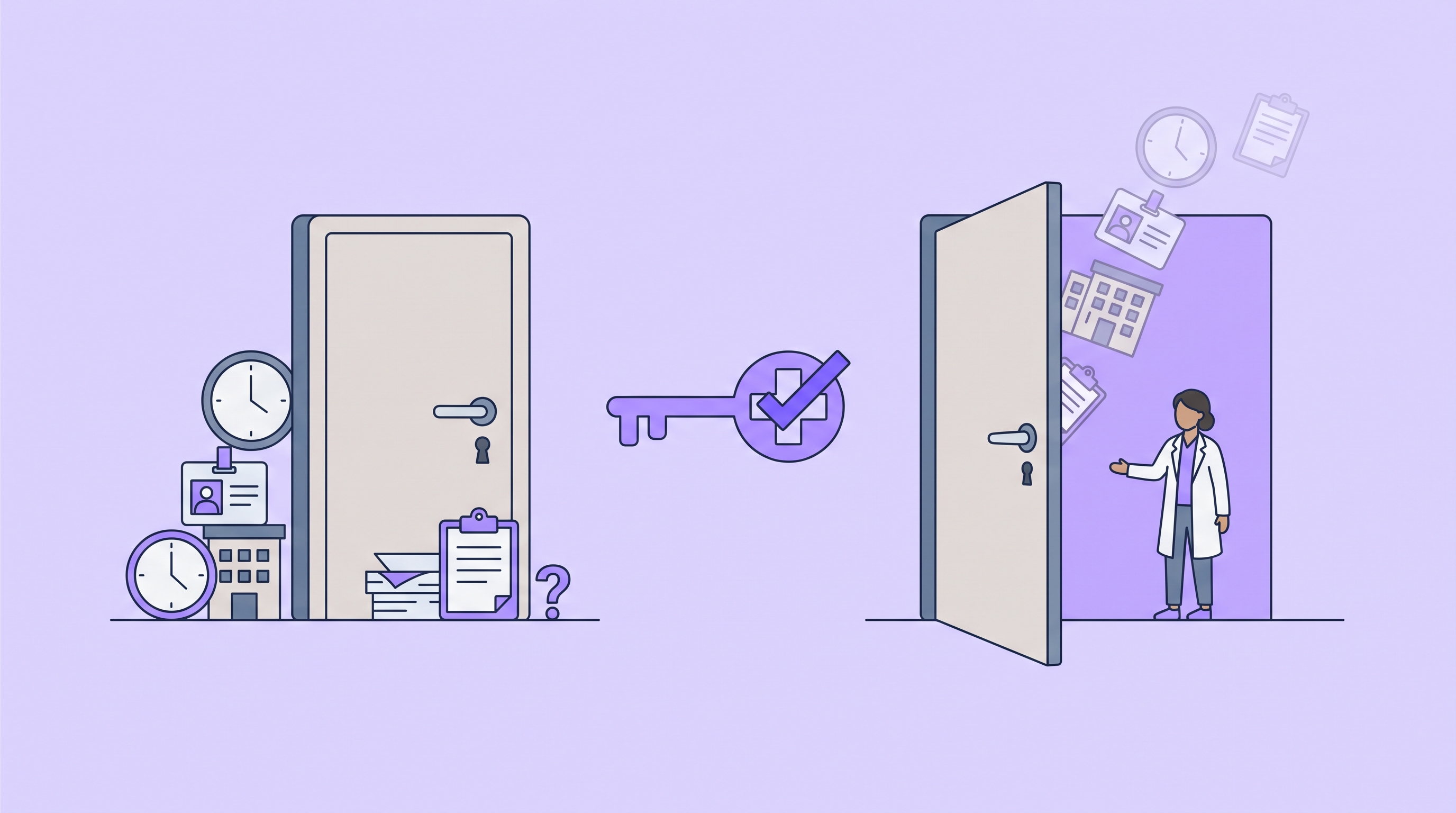
Why do NP preceptors refuse students? Most refusals come down to cost and risk for the clinician. Precepting takes time away from patient care, many employers restrict or discourage it, and every rotation brings affiliation agreements, school forms, and evaluations. Preceptors also weigh specialty fit and student readiness. Some of these factors are outside your control, and several can be addressed with a better-targeted, more complete request.
If you are one of the many nurse practitioner students searching for NP clinical rotations while working shifts and keeping up with coursework, a string of polite no's can feel personal, especially when graduation depends on finishing your hours. Research suggests it usually isn't. Knowing why clinicians decline helps you decide where to spend your limited outreach time.
TL;DR
- The most common barriers to precepting are time, productivity pressure, employer restrictions, and administrative load. In one survey of 334 NPs, 60% were not currently precepting.
- Some refusals trace back to a specific school's process, such as slow affiliation agreements, unclear objectives, or heavy evaluation paperwork.
- The 2022 National Task Force Standards set a minimum of 750 direct patient care hours per NP track, which increases the demand on a limited preceptor pipeline.
- A complete request (specialty, dates, required hours, objectives, your school's requirements, and a paperwork contact) lowers the effort a clinician has to spend to say yes.
- In the same survey, 37.6% of NPs who were not precepting said no one had asked them, so well-targeted preceptor outreach and vetted clinical placements support both still have real value.
Why do NP preceptors refuse students?
NP preceptors usually refuse students because hosting one costs time and attention that their clinical practice may not have to spare. Studies of NP preceptors point to time constraints, productivity expectations, employer restrictions, limited institutional support, and past experiences with underprepared students as the leading barriers.
Precepting takes time from patient care
A preceptor keeps their full patient panel while teaching. That means explaining clinical reasoning, reviewing student notes, co-signing documentation, and giving feedback, often in a clinical setting measured on visits per day. In a 2024 study of 60 NPs that included current, former, and never-preceptors, the barriers named included time constraints, specialty, negative student characteristics, lack of institutional support, and discomfort in the clinical teaching role.
Burnout is part of the picture too. A 2024 national AHEC survey found that 58% of preceptors believe precepting contributes to burnout, according to North Carolina AHEC. Not every clinician has had formal preparation to teach effectively, so a first student can feel like a second job layered on top of the first.
For clinicians reading this: if you want to host students without managing the coordination yourself, you can [INTERNAL LINK: see how precepting with NPHub works → Become a Preceptor page].
Many clinicians need employer permission
In the same 334-NP survey, 32.8% of NPs said their employer restricted them from precepting, and 12.4% said they did not precept because it decreased their productivity. A clinician may be willing and still unable to say yes.
Larger health systems and hospitals often route student requests through a central education or student placement office, and some accept students only from affiliated schools. If you hear "we don't take students," it may be an institution-level policy rather than a judgment about you. Asking the practice manager whether the site has a student policy can save weeks of follow-up.
Some clinicians were simply never asked
The most encouraging finding in that survey: 37.6% of NPs who were not precepting said the reason was that no one had asked them. That is a large, untapped group. Specific, respectful preceptor outreach still works, especially when it targets clinicians whose specialty and patient population match your rotation.
If you'd like to start with clinicians who have already said yes to teaching, every preceptor on NPHub has opted in to host students. Create a free account to see who's available →
Why would a preceptor turn down students from a specific NP program?
A preceptor may decline a particular program's students when an earlier rotation with that school created extra work. Common causes include affiliation agreements that required repeated back-and-forth, long or confusing evaluation forms, objectives shared for the first time on day one, and a clinical coordinator who was hard to reach. Those experiences shape a clinician's placement decisions the next time that school's name appears in a request.
The research supports this. Both current preceptors and NPs who had never precepted identified clear expectations from schools and ongoing, open communication with clinical faculty as important facilitators. When a school makes the role clear for both the student and the preceptor, the rotation is easier to say yes to.
Program-level friction preceptors tend to remember:
- Affiliation agreements that stall in legal review
- Evaluation forms that are long, unclear, or due with little notice
- Rotation objectives the preceptor never saw before the student arrived
- Last-minute changes to dates or required hours
- No single faculty or coordinator contact when a problem comes up
You can't fix your program's process on your own, and you can use it. Before outreach, ask your clinical coordinator which clinical sites already have affiliation agreements with your school and whether the school has worked with a site before. An existing agreement removes one of the biggest sources of delay. Program staff is also stretched: nursing schools continue to cite faculty shortages as a top constraint on capacity, which can limit how much placement support a coordinator can offer.
Why your NP program may not find your preceptor →
Is a refusal ever about the student?
Student readiness
Clinicians who have supervised an underprepared student tend to become more selective. Research lists negative student characteristics as barriers and positive ones as facilitators. As an experienced RN, you likely bring strong assessment and clinical skills, and a preceptor can't see that unless you say so. A brief summary of your nursing practice, current clinical environment, and completed courses (such as advanced health assessment, advanced pharmacology, and advanced pathophysiology) signals student readiness quickly.
Specialty and patient population fit
Some refusals are practical. An internal medicine clinic that sees only adults can't cover the pediatric hours a family nurse practitioner program may require. A women's health rotation needs a site whose patient population and the preceptor's scope of practice match your objectives. Most programs also set preceptor requirements, such as credential type or years in practice. Check your program's requirements before reaching out, so the clinicians you contact can actually serve your rotation.
One terminology note: "nurse preceptor" often refers to an RN who orients new nurses. NP students typically need an NP, physician, or other qualified clinician whose credentials meet what the program requires.
Checking fit is easier when you can see it up front. With a free NPHub account, you can review preceptor profiles before you request a rotation. Browse preceptor profiles for your rotation →
How many clinical hours do NP students need, and why does it matter here?
Under the 2022 Standards for Quality Nurse Practitioner Education, developed by a National Task Force convened by NONPF and the American Association of Colleges of Nursing, each NP population-focused track must include at least 750 direct patient care clinical hours. Simulation does not count toward that total. Programs have been phasing this in, so confirm the required hours for your own accredited program.
The standard matters for placement because more hours per student means more preceptor time per student. For context, the Pediatric Nursing Certification Board noted that as of 2022, single-track master's NP programs required an average of 620 clinical hours. Moving toward 750 direct patient care hours asks more of the same preceptor pipeline.
Capacity across nursing education was already tight. In 2025, nursing schools did not accept 93,176 qualified applications, including nearly 17,000 to graduate programs, and AACN named insufficient clinical placement sites, faculty, and preceptors among the primary barriers.
[INTERNAL LINK: NP clinical hour requirements by specialty → Blog: NP clinical hours guide]
What should a preceptor request include?
A strong request tells the clinician exactly what they would be agreeing to, in one message. The less they have to ask, the easier it is to say yes.
- Specialty and rotation type, for example, FNP primary care or a women's health rotation.
- Exact dates, days per week, and required hours for the semester.
- Learning objectives and the evaluation schedule, including when forms are due.
- Your program's preceptor requirements, such as credential type and years in practice.
- Affiliation agreement status and the name and contact of your clinical coordinator.
- A three-line professional summary: RN years, current clinical setting, and completed courses.
- What you will handle, such as tracking your own hours and sending forms early.
Send it to clinicians whose patient population matches your objectives, and to practices known to host students. Keep follow-ups short and spaced about a week apart. See preceptors who already host students in your specialty →
What should you do after a preceptor says no?
A no still gives you information. These steps turn it into your next lead.
- Thank them and ask one question: was it timing, site policy, or fit? The answer tells you whether to try again later.
- Ask for a referral to a colleague who precepts. Clinicians often know who in their network takes students.
- Tell your clinical coordinator which site declined and why, so the program's records stay current.
- Adjust the next request. Shift dates, or ask your program whether hours can be split between two different preceptors.
- Set a decision date. Pick a point in your semester when you will add placement support if outreach hasn't produced a match.
How long it typically takes to find an NP preceptor →
When does placement support make sense?
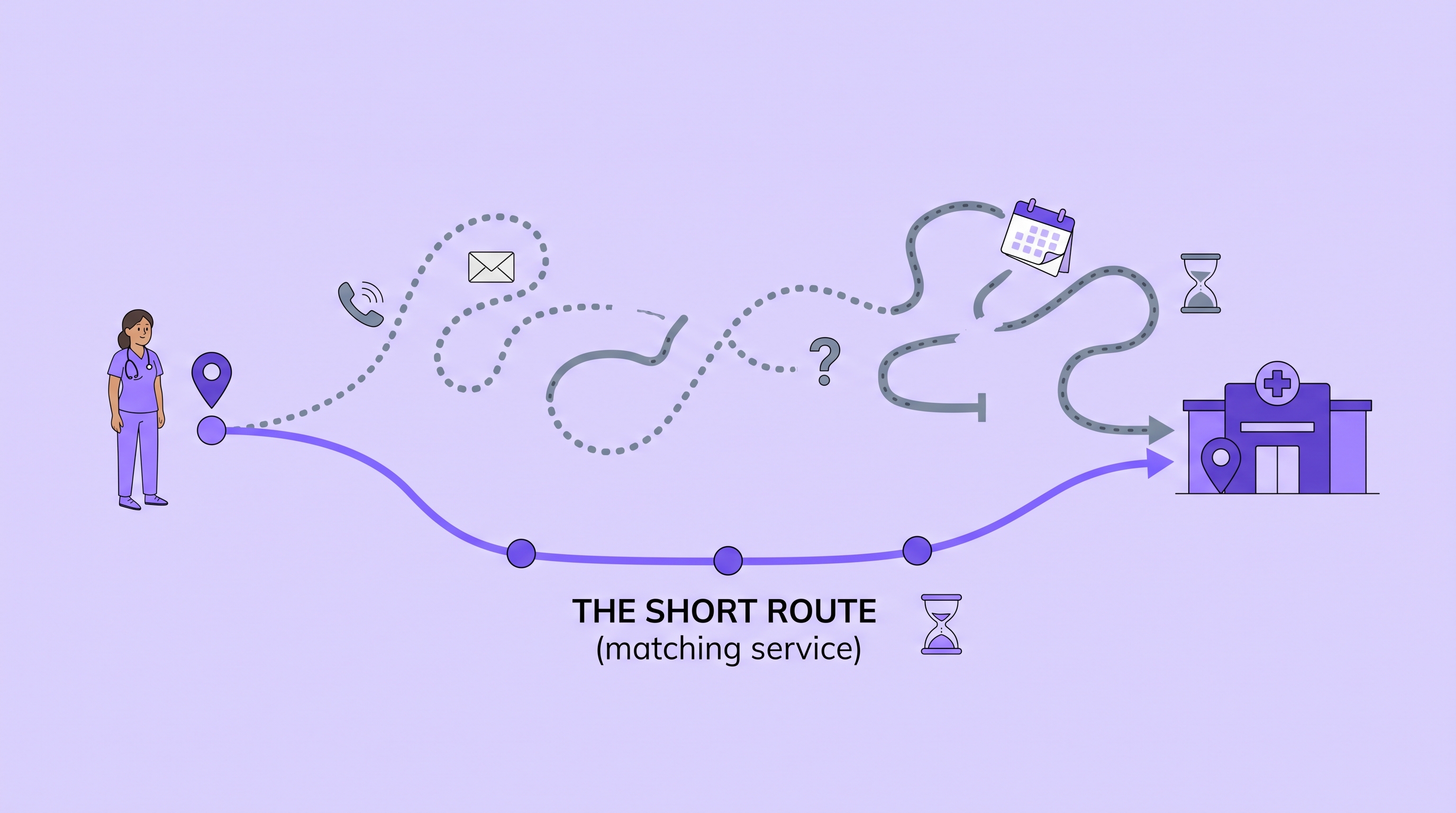
Placement support makes sense when your program does not place students, your outreach has stalled, or your work schedule leaves little time to keep searching. The main value is access to clinicians who have already chosen to host students, plus help with the paperwork that slows many rotations down.
When evaluating any placement service, look for:
- A published preceptor vetting process
- Clear pricing and refund terms before you pay
- A defined paperwork scope
- Third-party reviews, not only testimonials on the company's own site
NPHub is one option. Preceptors apply to join and are vetted before acceptance: 2,435 of 18,314 applicants, a 13.3% acceptance rate. To date, NPHub has supported 14,251 rotations for 9,249 students across 45 states and holds a 4.9/5 rating on Trustpilot across 1,609+ reviews. Students can browse available preceptors online, and if a match is available in the network, finding one can take under 30 minutes. The preceptor then has up to 7 business days to accept. Student coordinators handle the paperwork, including a standard affiliation agreement template and any program-specific forms, which typically takes up to 14 business days and is often faster.
That structure addresses several reasons preceptors decline: they have opted in, the fit is visible before you book, and the administrative work is managed for them.
One caveat: some NP programs restrict or prohibit paid preceptor-matching services. Confirm your school's policy with your clinical coordinator before booking any service.
The bottom line
Most preceptor refusals reflect the real cost of teaching in a busy practice, and many of those costs can be reduced. Target clinicians whose practice fits your rotation, send a complete request, and treat each no as a source of referrals and information. If your program leaves the search to you and time is short, a vetted network of preceptors who already host students is a practical next step.
Create your free account and browse available preceptors →
Frequently asked questions
How many clinical hours do NP students need?
The 2022 NTF Standards require a minimum of 750 direct patient care clinical hours for each NP population-focused track, and simulation hours do not count toward that minimum. Individual programs may require more, so check your program's published requirements.
Can I split my clinical hours between two different preceptors?
Often, yes, if your program approves it. Each preceptor and site typically needs school approval, an affiliation agreement, and their own evaluation. Splitting hours can make a request easier for a busy clinician to accept.
Do preceptors refuse students from online NP programs more often?
No reliable data show that delivery format alone drives refusals. The barriers preceptors report most often are time, employer policy, institutional support, and clarity of expectations, and those apply to online and campus-based programs alike.
Can a preceptor back out after agreeing?
Yes. Staffing changes, new employer policies, or personal circumstances can end a commitment. Tell your clinical coordinator immediately, confirm whether your dates or hours can shift, and restart outreach with your request packet ready.
Is it allowed to use a placement service for my NP rotations?
It depends on your program. Many allow it, and some restrict or prohibit paid preceptor-matching services. Ask your clinical coordinator in writing before you book.
How long does it take to find an NP preceptor?
It varies widely by specialty, location, and timing. On NPHub, students can often find an available preceptor in under 30 minutes when one is in the network; the preceptor has up to 7 business days to accept, and paperwork takes up to 14 business days.
Article details
- Last updated
September 30th, 2026 - Fact-checked by
NPHub Clinical Placement Experts & Student Support Team- https://pubmed.ncbi.nlm.nih.gov/39259202/
- https://www.ncahec.net/wp-content/uploads/2025/02/AHEC-Report-on-Preceptors-02.03.25-1.pdf
- https://journals.lww.com/jaanp/fulltext/9900/nurse_practitioner_preceptors__perceived.309.aspx
- https://www.nphub.com/blog/why-your-program-wont-find-your-np-preceptor-and-what-pa-students-get-instead
- https://www.aacnnursing.org/Portals/0/PDFs/CCNE/NTFS-NP-Final.pdf
- https://cdn.ymaws.com/www.nonpf.org/resource/resmgr/2022/ntfs_/20220616_ntfs_faq_.pdf
- https://www.pncb.org/sites/default/files/resources/PNCB_Statement_NTF_Standards_6th_Edition_June_2022.pdf
- https://www.nphub.com/blog/how-long-does-it-take-to-find-an-np-preceptor-in-2026
Find a preceptor who cares with NPHub
Book a rotation.webp)

.webp)
.jpeg)

%20(3)%20(2).svg)
.webp)