
.png)



.webp)
TL;DR: Key Highlights
- Martinsburg, WV sits in the Eastern Panhandle — a clinically active region with real placement opportunities, but a preceptor pool that fills up fast, especially for students starting mid-year.
- West Virginia grants full practice authority to NPs, meaning your preceptor can supervise you independently — a significant advantage for your clinical learning experience.
- The way you find your preceptor matters as much as who you find: vetting credentials, confirming teaching style, and establishing clear expectations protects both your time and your program timeline.
- A structured matching process — one that puts your specialty needs, schedule, and emotional readiness first — leads to better clinical outcomes and less last-minute stress.
- You have more leverage than you think: asking the right questions before committing to a preceptor is not just acceptable, it is professionally expected.
- Ready to stop searching and start your rotation? Create your free NPHub account and connect with vetted preceptors in West Virginia — on your terms, at your pace.
Local Snapshot for Nurse Practitioner Students
What Preceptor Availability Actually Looks Like in Martinsburg
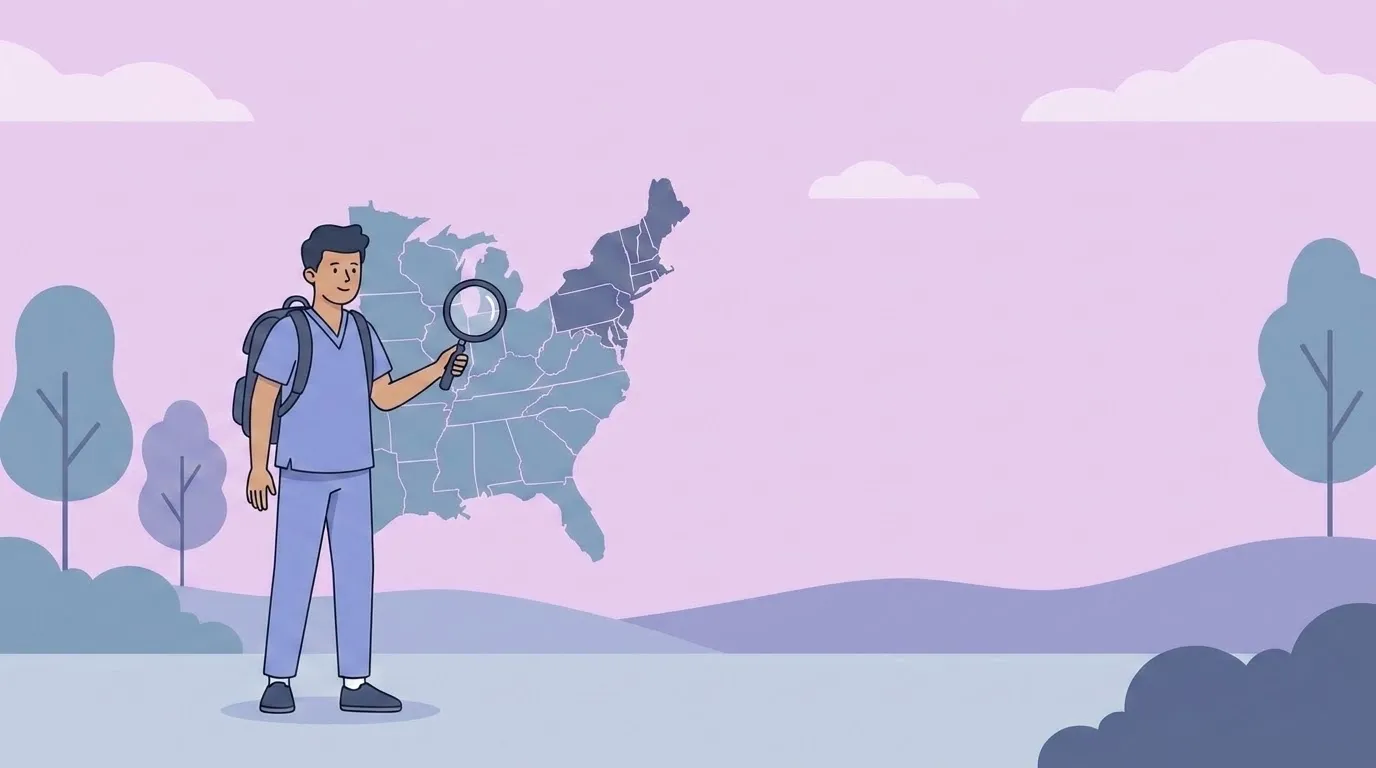
Martinsburg is the largest city in Berkeley County and the economic and healthcare hub of West Virginia's Eastern Panhandle. Because it sits at the intersection of West Virginia, Virginia, and Maryland, the area draws a clinically diverse provider community — and that diversity can work in your favor as a student seeking a preceptor.
That said, availability is not unlimited. The Eastern Panhandle serves a growing population, and many experienced NPs and physicians carry full patient panels. Preceptors who are willing and able to take students are genuinely valuable, and their capacity fills quickly — particularly for fall and spring semester starts. If you are planning a rotation in Martinsburg, beginning your search at least three to four months in advance is not overcautious. It is realistic.
Common Clinic Types in the Area
Students searching for preceptors in Martinsburg will most commonly find opportunities in the following settings:
- WVU Medicine Berkeley Medical Center and its affiliated outpatient practices — a major regional anchor for primary care, specialty services, and hospital-based rotations
- Community health and primary care clinics serving Berkeley and Jefferson County residents, including underserved and rural populations
- Behavioral and mental health outpatient practices, which have grown significantly in response to regional need
- Private family medicine and internal medicine offices — often smaller, relationship-driven settings where preceptors have more direct time with students
- Urgent care and occupational health clinics for students seeking fast-paced, high-volume exposure
- Women's health and OB/GYN offices for students in applicable specialty tracks
Each of these settings offers a different pace, patient population, and learning culture. The right fit depends on your specialty, your learning style, and what you want to walk away knowing how to do.
West Virginia Licensure Basics for NP Students
West Virginia is a full practice authority state, which means licensed NPs can assess, diagnose, treat, and prescribe independently — without a required physician collaboration agreement. For students, this has a practical implication: your preceptor does not need to be a physician. A licensed, board-certified NP with an active West Virginia APRN license can supervise your clinical hours.
If you are enrolled in an out-of-state nursing program, confirm that your university has State Authorization Reciprocity Agreement (SARA) approval for West Virginia clinical placements before pursuing any site. Most accredited programs do, but it is your responsibility to verify this with your clinical coordinator.
Out-of-state preceptors holding licenses from other states cannot supervise you at a West Virginia clinical site — West Virginia does not participate in the APRN compact. Every preceptor you consider must hold an active, unencumbered West Virginia license.

Benefits for Nurse Practitioner Preceptors in Martinsburg
Precepting is not a one-way exchange. If you are an NP student reaching out to a potential preceptor, understanding what they gain from the relationship will make your outreach more genuine — and more effective.
The Mentoring Advantage for Local Clinicians
Experienced clinicians often describe precepting as one of the most professionally energizing things they do. Having a student in the room asks them to articulate their clinical reasoning in real time — which sharpens their own thinking. It reconnects them to the "why" behind practices that may have become automatic. Many preceptors in community settings also describe a meaningful sense of contribution: they are actively shaping the next generation of providers who may one day serve the same communities they do.
For clinicians working in underserved areas of the Eastern Panhandle, that sense of purpose is not abstract. It is personal.
Professional Development Incentives
Depending on the institution and the nursing program involved, preceptors may receive:
- Adjunct faculty appointments from the student's university, which can support academic career goals
- Continuing education credits recognized by some state nursing boards and professional organizations
- Letters of recognition from program directors that carry weight in academic promotion processes
- Access to university library resources during the affiliation period
Not every program offers all of these. But when you reach out to a potential preceptor, mentioning that your school provides formal recognition — and then following through by connecting them with your clinical coordinator — demonstrates that you take the relationship seriously.
How Schools Recognize Preceptors
Many NP programs formalize their appreciation through end-of-semester preceptor recognition programs, annual awards, and acknowledgment in program communications. Some schools issue certificates of appreciation suitable for professional display. These gestures matter more than they might seem — especially for clinicians in private practice who do not receive institutional recognition through an employer.
If your school has a formal preceptor appreciation process, mention it. If it does not, ask your clinical coordinator whether one can be arranged. The clinicians giving their time to your education deserve to feel that their contribution is seen.
How to Use an NP Preceptor Finder for Martinsburg WV Placements
Choosing the Right Tool for Your Search
There are several ways to search for preceptors in Martinsburg and the broader Eastern Panhandle. These range from informal outreach through professional networks to structured matching platforms that manage the entire process on your behalf.
When evaluating any search tool or platform, ask yourself:
- Does it show me verified preceptors, or simply a directory of names I still have to cold-call?
- Can I filter by specialty, location, and availability — or do I have to manually sort through irrelevant results?
- Does it protect my time by handling initial outreach, or does all of the legwork still fall on me?
- If a match does not work out, does the platform help me recover — or am I starting over alone?
The answers to those questions will tell you a great deal about whether a tool is built around your needs or around volume.
Filtering by Specialty and Start Date
Whatever platform or method you use, always apply two filters before anything else: your specialty track and your intended rotation start date. Reaching out to a family medicine preceptor when you need psychiatric hours — or contacting someone who is only available in the fall when you need a spring start — wastes both your time and theirs. Precision in your search signals professionalism before you have even introduced yourself.
Verifying Preceptor Credentials Before Outreach
Before you reach out to any preceptor, verify the following independently:
- Active West Virginia APRN or MD/DO license (searchable through the WV Board of Nursing or WV Board of Medicine)
- Current board certification in their specialty area
- No pending disciplinary actions or license restrictions
This step is not about distrust. It is about protecting your clinical hours. If a preceptor's license lapses or carries a restriction, hours you complete under their supervision may not be accepted by your program. Taking five minutes to verify credentials before you invest weeks in building a relationship is simply good practice.
Tracking Communications and Deadlines
Preceptor searching is a project with real deadlines. Treat it like one. Keep a simple log — even a spreadsheet — that tracks every preceptor you have contacted, the date of contact, the response status, and any follow-up needed. Your school's clinical coordinator will also have deadlines for affiliation agreement submission, and those deadlines are typically non-negotiable. Knowing your program's paperwork timeline before you begin your search helps you work backwards and set realistic outreach goals.
.webp)
NP Preceptor Matching Process for Martinsburg Clinics
What Realistic Timelines Look Like
If you are using a structured matching service, expect the process from profile submission to confirmed placement to take two to four weeks under normal circumstances. Specialty-specific searches — particularly for psychiatric mental health or women's health rotations — may take longer depending on regional availability.
If you are conducting your own outreach, budget significantly more time. Independent searches in smaller markets like Martinsburg frequently take six to eight weeks or longer, particularly when preceptors are unresponsive or unavailable.
Build your timeline around your school's deadlines, not around optimistic assumptions.
Required Paperwork for School Approval
Every NP program handles clinical paperwork slightly differently, but most require the following before a rotation can be officially approved:
- A completed preceptor credentials form (name, license number, specialty, NPI number)
- A signed affiliation agreement between your school and the clinical site
- Your own malpractice insurance certificate
- Immunization and health screening documentation
- BLS/CPR certification (current)
- Background check results
Gather your personal documents before you begin your search. Having them ready allows you to move quickly when a preceptor says yes — and a slow response on your end can cost you a slot.
Requesting Preceptor References Proactively
If you are self-sourcing your preceptor, it is entirely appropriate to ask for a professional reference from a colleague or program director who can speak to their experience working with students. Most experienced preceptors will not be surprised by this request — and those who are resistant to it are themselves a data point worth considering.
You are entrusting this person with a significant portion of your clinical education. Asking a few careful questions is not overstepping. It is due diligence.
What to Do When an Initial Match Fails
Matches fall through. A preceptor accepts you and then has a family emergency, changes practices, or realizes their schedule has shifted. This is disappointing — and it is also common enough that you should have a contingency plan before it happens.
If you are using a structured matching platform, ask explicitly what their process is when a match is not secured or falls through. If you are searching independently, maintain a second-tier list of preceptors you have already contacted so that recovery does not mean starting from zero.
A failed match is a setback, not a failure. How quickly you recover depends largely on how prepared you were before the first match was made.
Sample Intro Email to a Clinical Preceptor
The first email you send to a potential preceptor sets the tone for everything that follows. Keep it respectful, specific, and brief. A long, generic email signals that you are sending the same message to everyone. A short, tailored one signals that you chose them intentionally.
Subject: NP Student Rotation Request — [Your Specialty] | [Proposed Start Month, Year]
Dear [Preceptor Name],
My name is [Your Name], and I am a nurse practitioner student in the [Specialty Track] program at [University Name]. I am currently securing clinical placements for my upcoming rotation beginning [Month, Year] and am reaching out because your work in [specific practice area or clinic name] aligns closely with my clinical learning goals.
I am looking for a preceptor who can offer [number] hours of supervised clinical experience in [specialty area]. I have attached my CV and current immunization documentation for your review.
I am available to begin as early as [Date 1], with flexibility for [Date 2] or [Date 3] if that better suits your schedule. I am happy to discuss your availability and any requirements your site may have for students.
Thank you sincerely for considering this request. I understand your time is limited, and I would be glad to answer any questions that would make this decision easier for you.
Warm regards, [Your Full Name] [Program | University] [Phone Number] [Email Address]
A follow-up email is appropriate if you have not received a response within seven to ten business days. Keep the follow-up even shorter — one or two sentences referencing your original message and restating your interest. Don’t send more than 2 follow-ups email.
Finding the Perfect Preceptor in Martinsburg, WV
What "Perfect" Actually Means
The perfect preceptor is not necessarily the most credentialed one, or the one at the most prestigious institution. The perfect preceptor for you is someone whose teaching style matches how you learn, whose clinical environment exposes you to the patient population your specialty requires, and who has the availability and genuine willingness to invest in your growth.
A preceptor who is technically qualified but perpetually too busy to give you feedback will not serve your learning — regardless of their credentials.
A Short Interview Checklist
Before committing to a preceptor, consider asking the following during an introductory call or email exchange:
- How do you typically structure the first few shifts with a new student?
- What does a typical patient day look like in your practice?
- How do you prefer students to ask questions during patient encounters?
- Have you worked with NP students before, and from which programs?
- How many hours per week are you realistically able to offer?
- What do you find most rewarding about working with students?
That last question is worth noting carefully. Preceptors who light up when they talk about teaching students are different from those who treat student supervision as an obligation. You will feel that difference every week of your rotation.
Assessing Teaching and Feedback Style
Ask directly: "How do you typically give feedback to students — during the encounter, after, or at the end of the shift?" There is no universally right answer, but the response tells you a great deal about how intentional a preceptor is about your learning. The best preceptors have thought about this. They have a method, and they can describe it.
Local Clinical Preceptor Opportunities by Specialty
Martinsburg and the Eastern Panhandle offer placement opportunities across several specialty areas, though availability varies by semester and preceptor capacity.
Family Practice: Family medicine is the most accessible entry point for NP students in Martinsburg. The area's primary care infrastructure — anchored by WVU Medicine Berkeley Medical Center and a network of independent family practices — creates consistent opportunities for students in FNP programs. Expect exposure to chronic disease management, preventive care, and acute visits across the lifespan.
Primary Care and Internal Medicine: Several internal medicine and general adult primary care practices in the Martinsburg area accept NP students, particularly for students in adult-gerontology tracks. The area's aging population creates a clinically rich environment for students interested in complex chronic condition management.
Behavioral Health and Psychiatric Preceptorships: Demand for behavioral health services in the Eastern Panhandle is high, and the preceptor pool in this specialty is more limited relative to that demand. Students pursuing PMHNP tracks should begin their Martinsburg search earlier than students in other specialties and should be prepared to expand their radius to include Shepherdstown, Charles Town, or Ranson if needed.
Pediatrics and Women's Health: Pediatric and women's health rotations are available in Martinsburg, though the preceptor pool is smaller than in primary care. Coordination with your school's clinical placement office — and early outreach — is especially important for these tracks.
Specialty Referral Areas: Students interested in cardiology, neurology, or other specialty areas may find limited direct preceptor availability in Martinsburg itself. In these cases, WVU Medicine's network and proximity to the broader Washington, D.C. metropolitan area can expand your options. Discuss with your clinical coordinator whether specialty hours can be completed at a site slightly outside your primary location.
How Clinical Preceptors Enhance Patient Care and Student Competence
What Supervised Patient Care Actually Looks Like
In a well-functioning preceptor relationship, you are not watching from a corner — you are progressively participating. In the first weeks, you observe and assist. By mid-rotation, you are conducting patient assessments and presenting findings independently, with your preceptor available to redirect. By the final weeks, you are functioning with increasing autonomy, and your preceptor is stepping back to observe rather than lead.
That arc of increasing independence is what transforms supervised hours from a compliance requirement into genuine clinical preparation.
Bedside Teaching Techniques That Work
The best preceptors use patient encounters as live teaching moments — pausing after an exam to ask what you noticed, using the "one-minute preceptor" model to probe your reasoning, and narrating their own clinical decision-making in real time so you can see how experience shapes judgment. If your preceptor does not naturally do this, it is entirely appropriate to ask: "Would you be open to talking through your reasoning after patient encounters? That kind of debrief helps me a lot."
Most preceptors respond well to students who advocate for their own learning.
Constructive Feedback as a Professional Practice
Feedback should be specific, timely, and connected to a behavior — not a personality. The best preceptors distinguish between what you did and who you are. "Your differential was strong, but your physical exam sequence skipped the cardiovascular assessment — let's talk about why that step matters in this population" is useful. Vague praise or vague criticism teaches you nothing. If feedback feels consistently unclear, it is appropriate to ask: "Could you help me understand specifically what I should do differently next time?"
Step-by-Step Plan to Secure a Clinical Preceptor
This process is designed to keep you in control at every step — so that when your rotation begins, you feel prepared, not just placed.
- Identify your program's preceptor requirements. Know your specialty, required hours, approved supervision types, and school deadlines before you contact anyone. Your clinical coordinator is your primary resource here.
- Compile your personal documents. Gather your RN license, enrollment verification, malpractice certificate, immunization records, BLS/CPR card, and background check results now — before you need them.
- Contact targeted preceptors with tailored messages. Use the email template above. Personalize it. Send to no more than three to five preceptors at a time so you can manage responses and follow-ups carefully.
- Confirm schedule and supervision expectations. Before you consider a match confirmed, verify weekly hour availability, shift structure, and whether the preceptor's site can accommodate the specific clinical experiences your program requires.
- Submit affiliation paperwork to your school promptly. The moment a preceptor agrees, initiate the affiliation agreement process. Do not wait. Processing can take one to three weeks, and delays here can push back your start date.
- Set measurable learning objectives with your preceptor. In your first week, discuss what you want to accomplish by the end of the rotation. Write it down. Revisit it at the midpoint evaluation. This conversation signals seriousness and gives your preceptor a framework for your growth.
Common Challenges and Practical Solutions in West Virginia
Limited Rural Clinic Capacity
Martinsburg is an urban anchor in a largely rural region. If local capacity is full, expanding your search to communities like Shepherdstown, Inwood, Hedgesville, or Falling Waters can open meaningful options. These smaller communities often have dedicated primary care providers who are deeply invested in their patient populations — and in the students who may one day join them.
Teleprecepting for Remote Supervision
Some NP programs accept teleprecepted clinical hours under defined conditions — typically for a limited portion of your total required hours. If in-person options in the Martinsburg area are exhausted, ask your clinical coordinator whether your program has a teleprecepting policy. Not all programs do, and requirements vary significantly. Confirm the specifics before pursuing this option, as hours completed under an unauthorized arrangement may not be counted.
Expanding Your Radius
The Eastern Panhandle's geography works in your favor for radius expansion: Hagerstown, Maryland and Winchester, Virginia are both within 30 to 45 minutes of Martinsburg and offer substantially larger clinical markets. If your school permits out-of-state rotations — and most do, with appropriate documentation — these markets can meaningfully expand your preceptor options while keeping your commute manageable.
.webp)
Resources and Contacts for Nurse Practitioner Preceptors in Martinsburg
- West Virginia Board of Examiners for Registered Professional Nurses — the authoritative source for verifying preceptor licensure and understanding APRN scope of practice in WV. Visit wvrnboard.wv.gov for license lookup and regulatory guidance.
- WVU Medicine Berkeley Medical Center (Martinsburg) — the region's primary academic-affiliated hospital. Contact their education or clinical affairs office to inquire about student placement protocols and affiliated preceptors.
- West Virginia Nurses Association (WVNA) — joining or attending WVNA events, including those hosted in the Eastern Panhandle chapter, is one of the most efficient ways to build professional relationships that can lead to preceptor connections.
- American Association of Nurse Practitioners (AANP) — AANP's state chapter network and annual conference are valuable for networking with NPs who are actively engaged in the profession and often open to mentoring students.
- National preceptor matching services — if local outreach has not yielded a confirmed placement, structured matching platforms that maintain vetted preceptor networks across West Virginia provide a reliable safety net. Look for services that verify credentials independently, offer specialty filtering, and have a defined process for when a match falls through.
Next Steps for NP Students and Preceptors in Martinsburg
For Students: Your Action List for This Week
The gap between knowing what to do and actually doing it is where rotations get delayed. If you are reading this and your search has not started yet, here is what to do before the end of the week:
Create a prioritized list of target preceptors. Using the specialty categories above and any verified sources available to you, identify five to eight preceptors in or near Martinsburg who match your specialty and start date. Do not contact them yet — research them first.
Schedule introductory calls or send outreach emails within the next seven days. Use the email template in this guide. Personalize each one. Keep a log of who you contacted and when.
Prepare your required documents for immediate submission. If a preceptor says yes tomorrow, you should be able to respond with your documentation the same day. That readiness communicates professionalism — and it prevents the anxiety of scrambling while a confirmed placement waits.
Your rotation is one of the most important experiences of your NP education. You deserve to enter it feeling prepared, supported, and genuinely ready — not relieved that it finally came together at the last minute.
Create your free NPHub account today and connect with vetted clinical preceptors in Martinsburg and across West Virginia. Your next step forward starts here.
FAQs & Key Definitions
Martinsburg WV NP Preceptor Article
Frequently Asked Questions
1. How early should I start looking for an NP preceptor in Martinsburg, West Virginia? Start your search at least three to four months before your intended rotation date. Martinsburg's preceptor pool is active but limited — especially for mid-year starts and specialty tracks like psychiatric mental health. Beginning early gives you time to vet candidates carefully, complete affiliation paperwork, and recover if an initial match falls through without putting your program timeline at risk.
2. Can an out-of-state NP preceptor supervise my clinical hours at a Martinsburg site? No. West Virginia does not participate in the APRN Compact, which means preceptors must hold an active, unencumbered West Virginia APRN or physician license to legally supervise clinical hours at a WV site. Always verify licensure independently through the West Virginia Board of Examiners for Registered Professional Nurses before committing to a preceptor.
3. What should I do if I cannot find a preceptor in Martinsburg? First, expand your search radius to nearby communities — Shepherdstown, Inwood, Hedgesville, and Falling Waters are all within a reasonable commute. If local options remain limited, Hagerstown, MD and Winchester, VA are 30 to 45 minutes away and offer larger clinical markets. Ask your program whether out-of-state rotations are permitted. If they are, a structured matching service with a verified WV and regional preceptor network can serve as a reliable backup.
4. Does West Virginia allow NP students to complete hours through teleprecepting? Some programs accept a limited number of teleprecepted hours under specific conditions, but this varies significantly by school. Confirm your program's teleprecepting policy with your clinical coordinator before pursuing this option. Hours completed under an arrangement your program has not approved will not count toward your required total — and that is a risk not worth taking.
5. What is the difference between a preceptor finder and a preceptor matching service? A preceptor finder typically gives you a searchable directory of names and contact information — the outreach, vetting, and coordination are still entirely your responsibility. A matching service manages the process more comprehensively: verifying credentials, filtering by specialty and availability, handling initial contact, and providing a defined recovery path if a match falls through. The right choice depends on how much time you have, how comfortable you are with independent outreach, and how much risk you are willing to carry if your first option does not work out.
Key Definitions
NP Preceptor A licensed, board-certified nurse practitioner, physician, or other qualified clinical provider who supervises an NP student during a required clinical rotation. In West Virginia, preceptors must hold an active WV license and practice within their area of competency to supervise student hours.
Full Practice Authority (FPA) A state designation that allows nurse practitioners to assess, diagnose, treat, and prescribe independently — without a required physician collaboration or supervision agreement. West Virginia is a full practice authority state, meaning your preceptor can be an NP rather than a physician if your program permits it.
Affiliation Agreement A formal contract between a nursing school and a clinical site that authorizes students to complete rotations at that location. Most schools require a signed affiliation agreement before any clinical hours can officially begin. Processing can take one to three weeks, so initiating this paperwork immediately after a preceptor confirms is essential.
APRN Compact A multistate licensure agreement that allows Advanced Practice Registered Nurses to practice across participating states under a single license. West Virginia does not currently participate in the APRN Compact, meaning out-of-state APRN licenses do not extend supervision rights to WV clinical sites.
SARA (State Authorization Reciprocity Agreement) A national framework that allows students enrolled in online or distance education programs to complete clinical placements in states other than where their school is located. If you are enrolled in an out-of-state NP program and need a Martinsburg placement, your school must have SARA authorization for West Virginia before your rotation can be approved.
Clinical Rotation A supervised, hands-on learning experience at an approved clinical site, required for NP licensure and board certification. Rotations are typically measured in hours (500–1,000+ depending on the program and degree level) and must be completed under the supervision of a qualified preceptor in the student's specialty track.
Preceptor Matching Service A structured platform or service that connects NP students with vetted, available preceptors based on specialty, location, and start date. Unlike a simple directory, a matching service verifies credentials, manages communications, and provides support if a placement falls through.
NPI Number (National Provider Identifier) A unique 10-digit identification number assigned to healthcare providers by the Centers for Medicare & Medicaid Services (CMS). When submitting preceptor documentation to your school, you will typically be required to include your preceptor's NPI number. It can be verified through the NPPES NPI Registry at npiregistry.cms.hhs.gov.
Teleprecepting A supervision model in which a licensed preceptor oversees a student's clinical activities remotely, typically through video technology. Acceptance of teleprecepted hours varies widely by program and state. Students must confirm with their clinical coordinator whether teleprecepting is permitted before pursuing this option.
Scope of Practice The procedures, actions, and processes that a healthcare provider is legally permitted to perform based on their license, education, and state regulations. Understanding your preceptor's scope of practice — and how it aligns with your specialty track — ensures that your supervised hours expose you to the clinical experiences your program and certifying board require.
About the author
- NPHub Staff
At NPHub, we live and breathe clinical placements. Our team is made up of nurse practitioners, clinical coordinators, placement advisors, and former students who’ve been through the process themselves. We work directly with NP students across the country to help them secure high-quality preceptorships and graduate on time with confidence. - Last updated
April 20, 2026 - Fact-checked by
NPHub Clinical Placement Experts & Student Support Team - Sources and references
- https://health.wvu.edu/eastern-campus/#:~:text=The%20West%20Virginia%20Eastern%20Panhandle%20Eastern%20Campus,WVU%20Center%20for%20Diabetes%20and%20Metabolic%20Health
- https://wvtourism.com/places-to-go/travel-regions/eastern-panhandle/
- https://wvumedicine.org/locations/berkeley-medical-center/
- https://dch.georgia.gov/federally-qualified-health-centers-fqhcs-community-health-centers-chcs
- http://www.wvlegislature.gov/joint/perd/perdrep/APRN_1_2014.pdf
- https://nc-sara.org/sara-states/
- https://www.nphub.com/blog/find-free-preceptors
- https://www.nphub.com/blog/preceptorship-guide
- https://www.nphub.com/blog/find-preceptors-yourself-vs-agencies
- https://wvumedicine.org/locations/berkeley-medical-center/
- https://www.nphub.com/blog/build-preceptor-relationships
- https://www.nphub.com/blog/find-np-clinical-rotation-tips
- http://wvrnboard.wv.gov
- https://wvumedicine.org/locations/berkeley-medical-center/
- https://wvnurses.nursingnetwork.com/nursing-events
- https://www.aanp.org/
Find a preceptor who cares with NPHub
Book a rotation.webp)
.jpeg)

.webp)


%20(3)%20(2).svg)
.webp)