
.png)



.webp)
Both NPHub and Preceptor Tree help nurse practitioner students find clinical preceptors when a program leaves placement up to the student. For many NP students, securing clinical rotations is one of the biggest challenges of the educational journey, and a good matching service can reduce the stress of finding a preceptor on your own. The two take different approaches. Preceptor Tree runs a smaller, more personal service. NPHub runs a larger platform with broader specialty and state coverage, more third-party reviews, and a fully managed paperwork process. This guide lays out the factors that actually matter when choosing a service, then shows how the two compare on each one, so you can decide which best fits your specialty, timeline, and budget.
TL; DR – Preceptor Tree vs NPHub
- Both services are legitimate. Preceptor Tree and NPHub both place NP students with clinical preceptors and both have positive student reviews.
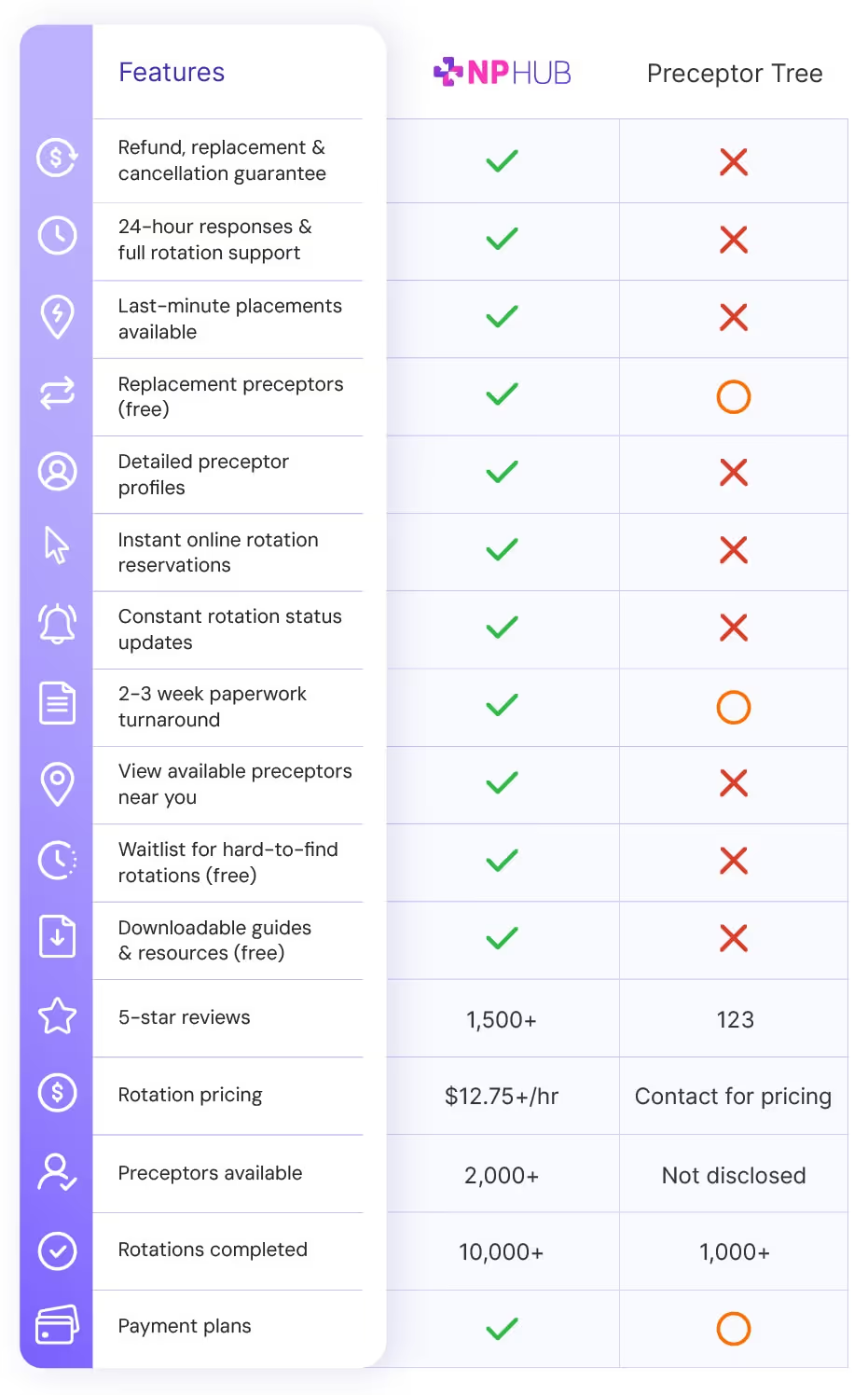
- NPHub is the larger operation: 14,000+ placements secured, 9,000+ students supported over 9 years, 2,400+ active preceptors, and 10+ specialties across 45 states. Preceptor Tree states it has helped 2,000+ students across 5 specialties and does not publicly list its network size.
- Preceptor Tree publishes a pricing range (it states most students pay $12.50 to $17.50 per clinical hour) and advertises a refund if it cannot place you. NPHub charges from $12.75 per clinical hour (service fee included) with a $1,000 rotation minimum. You secure a match with a 15% deposit that counts toward your total, and the only extra charge is a 20% rush fee for urgent starts, with payment plans up to 12 months.
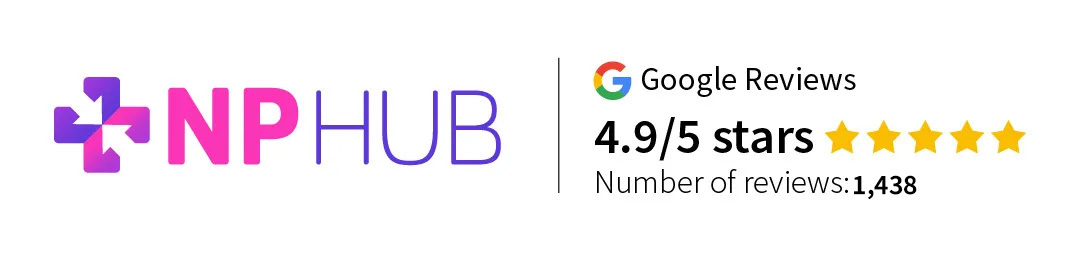
- On third-party validation, NPHub has 2,000+ reviews at 4.9 across Google and Trustpilot. Preceptor Tree's independently verifiable review volume is smaller.
- Neither service is automatically the right one. Preceptor Tree can suit students who want a small, personal, fast-moving service. NPHub tends to fit students who want the widest specialty and state coverage, a fully managed process, and the reassurance of a large review base and a refund-and-replacement policy.
Preceptor Tree vs NPHub at a glance
NPHub's figures are our own first-party numbers. Preceptor Tree's figures are drawn from its public website and are marked as its own stated claims, because several details it does not publish independently (network size, exact fee structure) cannot be verified externally. Where we could not confirm something, we say so rather than guess.
About Preceptor Tree
Preceptor Tree is a nurse practitioner clinical placement service that connects students with preceptors across the United States. It positions itself as a small, personal, fast-moving service, with named coordinators, paperwork support, and a stated goal of timely responses within one business day. According to its site, it covers five specialties: family medicine, internal medicine, pediatrics, psychiatry, and women's health.
On pricing, Preceptor Tree states that most students pay between $12.50 and $17.50 per clinical hour depending on specialty and location, which it frames as roughly $1,800 to $2,400 per rotation, and it advertises a full refund if it cannot place you. It also states it has helped 2,000+ students and describes its network as nationwide, though it does not publish the number of preceptors in that network or in a given specialty.
If a personal, boutique experience is your priority, that is a genuine strength of Preceptor Tree's operation. The main open questions a careful student will want answered before committing are network depth in their specific specialty and location, and the exact refund terms in writing.
Is Preceptor Tree Right for You? Watch This Quick Review Before You Decide
This short review breaks down everything you need to know about Preceptor Tree—from their speed and paperwork help to limitations around pricing and specialty options. If you’re still comparing platforms for your clinical placements, this video offers a helpful reality check before you commit.
About NPHub
NPHub is a clinical placement platform built by practicing nurse practitioners. Since 2017, it has supported 9,000+ NP students and secured 14,000+ placements, working with a network of 2,400+ active preceptors across 10+ specialties in 45 states. It also works with hundreds of accredited NP programs, which helps with the school-approval side of placement.
The model is a fully managed process. You create a free account and browse available preceptors by specialty, state, and start date before paying anything. Once you accept a match, NPHub handles the paperwork your school requires, including affiliation agreements, so you can focus on your clinical training rather than administrative work. A dedicated student coordinator stays with you through the end of the rotation. Preceptors are experienced professionals vetted through clinician-led interviews, license and credential verification, and background checks, a quality-assurance process built to match you with the right preceptor for your program requirements.
NPHub is not the lowest-cost option in the category, and it is transparent about that below. What the price covers is scale, specialty breadth, and a hands-on process rather than a list of contacts.
You can create a free NPHub account and explore preceptors across various specialties in your state before you pay anything.
How much do NPHub and Preceptor Tree cost?
Cost is where the two services differ most in structure, so it is worth understanding both before you compare a single starting rate.
Preceptor Tree states that most students pay $12.50 to $17.50 per clinical hour, which it frames as roughly $1,800 to $2,400 per rotation, and it describes this as a flat-fee model. It advertises a full refund if it cannot place you. It does not publish a detailed fee breakdown beyond the hourly range.
NPHub pricing starts at $12.75 per clinical hour with a $1,000 rotation minimum, and that rate already includes NPHub's service fee, so it is not added on top of it. To secure a confirmed match, you pay a 15% deposit that counts toward your total rather than adding to it, with the balance due afterward. The only extra charge is a 20% rush fee, which applies to rotations starting within roughly eight weeks and activates dedicated VIP matching support. Flexible payment options run up to 12 months, creating an account and browsing preceptors is free, and you pay only after you accept a match. The full breakdown is on the NPHub pricing page.
Flat rate or hourly: which is cheaper for your rotation?
This is the single most useful cost question, and the honest answer is that it depends on how many hours you need.
Hourly pricing can be cheaper on shorter rotations and can add up on longer ones. As an illustration, a 150-hour rotation on NPHub at the starting rate is about $1,912. A 250-hour rotation is about $3,187, and more if a rush fee applies. A flat-rate model tends to look better the more hours you need, because the per-hour cost decreases as hours increase.
The practical takeaway: if you need a short rotation and are not in a rush, hourly pricing is competitive. If you need a long rotation, run the flat-rate math too. Whichever service you consider, get the all-in number in writing, including any deposit, service, or rush fees, so nothing important sits in the fine print. On NPHub, the clearest way to see this is to create a free account: it calculates your full cost with every fee included and shows exactly how much of that total is the deposit you pay up front, alongside live preceptor options for your specialty and schedule. You can also review the pricing page before making a decision.
Specialty and geographic coverage
Coverage matters most to exactly the students who have the hardest time placing.
Preceptor Tree states it covers five specialties: family medicine, internal medicine, pediatrics, psychiatry, and women's health. NPHub covers 10+ specialties, which adds harder-to-place areas such as adult-gerontology acute care alongside the common primary-care rotations. If you are in a high-demand specialty like PMHNP or women's health, or you need acute care, the size and breadth of the network is often the deciding factor, because availability in your specific specialty and state is what determines whether you place on time. In competitive metros and rural areas alike, being able to find preceptors and clinical sites in your specialty is what keeps you on track to graduate on schedule.
On geography, NPHub reports active coverage across 45 states. Preceptor Tree describes itself as nationwide but does not publish state-level detail. If you are in a rural area or a competitive metro, ask any service for specifics on availability where you actually need to be, not just a general nationwide claim. To see what is realistically available where you need it, you can create a free NPHub account and view preceptors in your specialty and state, with no payment required to look.
Is Preceptor Tree legit? What the reviews say
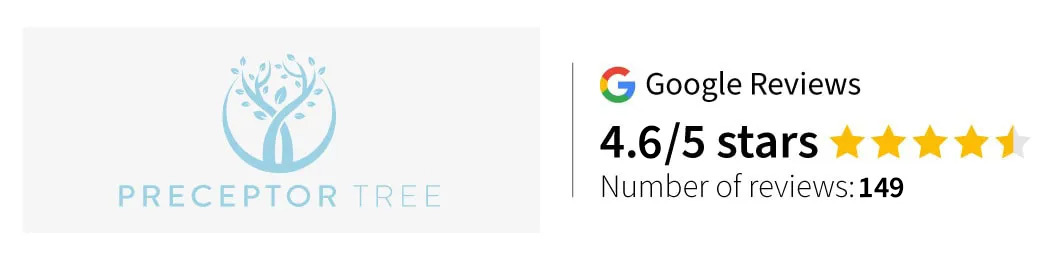
Yes. Preceptor Tree is a legitimate service. When students search for Preceptor Tree reviews, they find positive testimonials on its website, and the company states that it has been featured in Forbes. It places real nurse practitioner students with real preceptors. As with any service in this category, student experiences vary by specialty, region, and timing, which is normal for anything that depends on real people and tight deadlines.
Where the two services differ is the volume of independent, third-party validation you can check yourself. NPHub has 2,000+ reviews across Google and Trustpilot at a 4.9 rating. Preceptor Tree's independently verifiable review volume is smaller and less centralized. Neither of those facts makes a service good or bad on its own, but a large, public review base is one more thing you can verify before you pay, so it is worth weighing.
Whatever service you choose, the same due diligence applies: read recent reviews, ask for specifics about availability in your specialty and location, and get the refund terms in writing.
Guarantees, refunds, and what happens if a placement falls through
Both services offer financial protection, and the details are worth reading closely.
Preceptor Tree states it will refund you if it cannot place you. NPHub's Perfect Preceptor Guarantee means that if a placement cannot be arranged, or a confirmed placement falls through or does not meet your school's requirements, you receive a replacement or a full refund. NPHub also lets you request your deposit back within five days if your preceptor has not yet accepted the rotation request. You can read the full terms on the NPHub refund and cancellation policy page.
A guarantee is only as good as its written terms, so with any service, confirm exactly what triggers a refund versus a replacement, and what happens if your school denies a placement after you have paid.
Support, process, and technology
This is where a large managed platform and a small personal service feel most different, and different students value different things here.
Preceptor Tree leans into a personal, hands-on style with named coordinators and quick responses, which some students specifically prefer.
NPHub's process is built around a managed platform: you browse and reserve preceptors online; a dedicated student coordinator handles your case; you receive status updates throughout the process; and NPHub handles the full paperwork burden, including school affiliation agreements. The result is a streamlined process where a real team confirms and documents your clinical match and communicates with your school on your behalf. For urgent timelines, the rush option activates dedicated VIP matching support. Many NPHub reviews name the individual coordinators students worked with, which is worth noting if you are weighing whether a bigger platform still feels personal.
If a hands-on, fully supported process is what you are after, you can create a free NPHub account to start a placement request and see available preceptors in your specialty.
After graduation
Clinical placement is not the end of the NP journey, and post-graduation support is a real differentiator here.
Preceptor Tree mentions job matching after graduation. NPHub operates NPHire, a recruiting platform built exclusively for nurse practitioners, which connects nurse practitioner graduates and practicing NPs with employers. If continuity from your first rotation through your first job matters to you, that is worth factoring in.
Who should choose Preceptor Tree?
Preceptor Tree may be the better fit if you:
- Want a small, personal service with named coordinators and a boutique feel.
- Are in one of its five core specialties (family medicine, internal medicine, pediatrics, psychiatry, women's health).
Who should choose NPHub?
NPHub tends to be the stronger fit if you:
- Need the widest specialty coverage, especially harder-to-place areas like PMHNP, women's health, or acute care.
- Want the reassurance of a large, verifiable track record: 14,000+ placements, 9,000+ students, and 2,000+ third-party reviews.
- Want a fully managed process, including full paperwork and school-approval handling, and a dedicated coordinator.
- Want the option of a 12-month payment plan, a refund-and-replacement guarantee in writing, and support that continues into your job search through NPHire.
The honest bottom line
If your priority is a small, personal, fast-moving service and you are in one of Preceptor Tree's core specialties, it is a reasonable choice, and you should ask it for specifics on network depth in your area and its refund terms in writing.
For most students weighing scale, specialty breadth, state coverage, verifiable reviews, and a fully managed process with financial protection, the evidence points to NPHub as the stronger overall option. It is not the cheapest service, and if the lowest sticker price on a long rotation is your only priority, run the flat-rate math on every option first. But on the factors most students say matter most- the size and breadth of the network, the depth of third-party validation, and the completeness of the support- NPHub is built to carry more of the process for you.
You can create a free NPHub account to see which preceptors are available in your specialty and location before deciding anything, or join the free waitlist for hard-to-find rotations.
Still Exploring Your Options?
No two NP journeys are the same. If you are weighing several services, these breakdowns can help:
- Precept Me NP vs NPHub
- Clinical Match Me vs NPHub
- Preceptor Point vs NPHub
- MatchNP vs NPHub
- Clinical Preceptor Rescue vs NPHub
- Preceptor Link vs NPHub
- Best Nurse Practitioner Placement Agencies
Frequently asked questions
Is Preceptor Tree legit?
Yes. Preceptor Tree is a legitimate clinical placement service that connects NP students with preceptors across the U.S. It has positive testimonials on its own site. As with any service in this category, experiences vary by specialty, region, and timing, so read recent reviews and confirm availability in your specialty before committing.
What is the main difference between NPHub and Preceptor Tree?
Scale and approach. NPHub is a larger platform with 14,000+ placements, 2,400+ preceptors, 10+ specialties, and 45-state coverage, plus a fully managed process. Preceptor Tree is a smaller, more personal service covering five specialties that states it has helped 2,000+ students.
How much does Preceptor Tree cost compared to NPHub?
Preceptor Tree states most students pay $12.50 to $17.50 per clinical hour. NPHub starts at $12.75 per clinical hour (service fee included), with a $1,000 minimum per rotation. You secure a match with a 15% deposit that counts toward your total, and the only extra charge is a 20% rush fee for urgent starts, with payment plans up to 12 months. Ask any service for the all-in total in writing before you commit.
Does Preceptor Tree offer a refund?
Preceptor Tree states it will refund you if it cannot place you. NPHub's Perfect Preceptor Guarantee offers a replacement or full refund if a placement cannot be arranged or cannot be used. Confirm the exact written terms with either service.
Which service is better for PMHNP or women's health rotations?
These are among the hardest specialties to place, so network breadth matters most. NPHub covers 10+ specialties across 45 states, which generally gives more options in high-demand areas. Preceptor Tree covers psychiatry and women's health among its five specialties but does not publish network size.
How fast can I get matched?
Timelines vary by specialty, location, and how far ahead you start. Preceptor Tree states it responds within one business day. Most NPHub students secure a rotation within two to three weeks, and NPHub offers a rush option with dedicated support for urgent starts.
Do these services help with school paperwork?
Both offer paperwork help. NPHub handles the full set of documents your school requires, including affiliation agreements, as part of the managed process. Preceptor Tree states it provides paperwork assistance.
Is NPHub worth the cost if it is not the cheapest?
It depends on your priorities. NPHub is not the lowest-priced option. What the price covers is a large vetted network, broad specialty and state coverage, full paperwork and school-approval handling, a dedicated coordinator, and a refund-and-replacement guarantee. For a student whose only priority is the lowest sticker price, a lower-cost service may be a better fit.
Key definitions
Preceptor: A licensed clinician, usually an NP, MD, or PA, who supervises NP students during clinical rotations.
Clinical rotation: A supervised, hands-on clinical experience in a specialty such as family medicine, psychiatry, or women's health, required by NP programs for graduation and board certification.
Preceptorship: The period of supervised clinical training a nurse practitioner student completes under a preceptor during a rotation.
Preceptor matching service: A company that helps NP students find and secure preceptors, usually for a fee, when a school or personal network cannot.
Affiliation agreement: A formal contract between a clinical site and a school that allows students to complete rotations there.
Vetted preceptor: A preceptor screened for licensure, qualifications, and experience. NPHub vets through clinician-led interviews, license and credential verification, and background checks.
Refund and replacement policy: The written terms for when a service refunds you or finds a replacement if a placement falls through or is denied by your school.
Article details
- Last updated
August 3rd, 2026 - Fact-checked by
NPHub Clinical Placement Experts & Student Support Team - Sources and references
- https://www.nphub.com/testimonials
- https://www.nphub.com/
- https://maps.app.goo.gl/jmgD8rZ4VtGZ83p27
- https://www.nphub.com/refunds-cancellations-policy
- https://www.nphub.com/pricing
- https://go.nphub.com/waitlist/?_gl=1*110qkgv*_gcl_aw*R0NMLjE3MjY1ODQ1NDQuQ2p3S0NBancwYVMzQmhBM0Vpd0FLYUQyWlVNbkdjb18tdXphLW5TUTBjQUxISFRyZDhuV3k3b0hhY1J2dkdlZnpYRWlNR2NPSVo5ZzRSb0M5Q3NRQXZEX0J3RQ..*_gcl_au*MTM0NDcxMTI3MC4xNzI2MjQzNzUw
- https://www.nphub.com/blog/clinical-match-me-vs-nphub
- https://www.nphub.com/blog/precept-me-np-vs-nphub-which-np-preceptor-matching-service-gives-you-the-edge
- https://www.nphub.com/blog/preceptor-point-vs-nphub
- https://www.nphub.com/blog/preceptorlink-vs-nphub
- https://www.nphub.com/blog/best-preceptor-matching-service
Find a preceptor who cares with NPHub
Book a rotation.webp)
.jpeg)

.webp)



%20(3)%20(2).svg)
.webp)