
.png)



.webp)
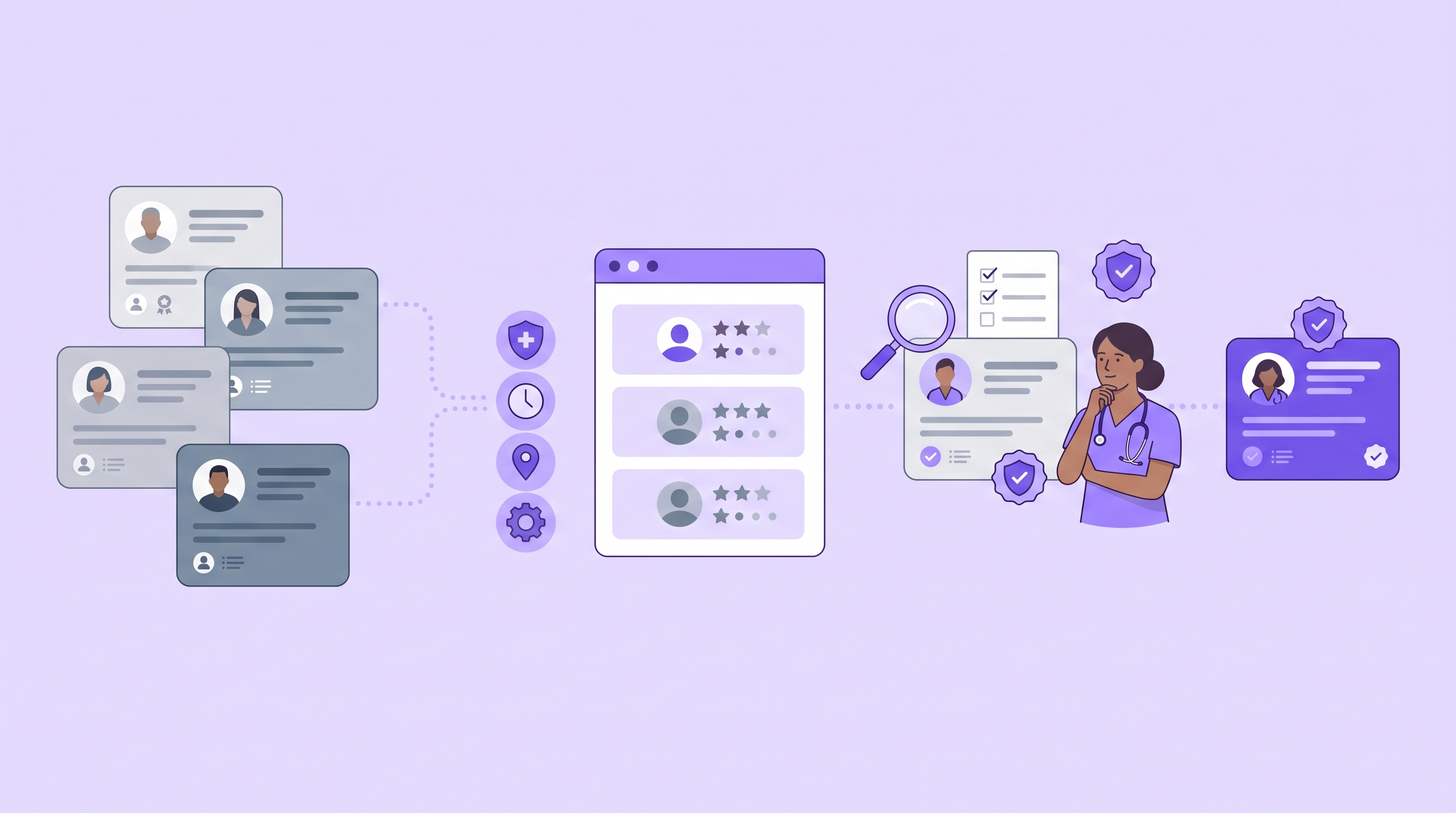
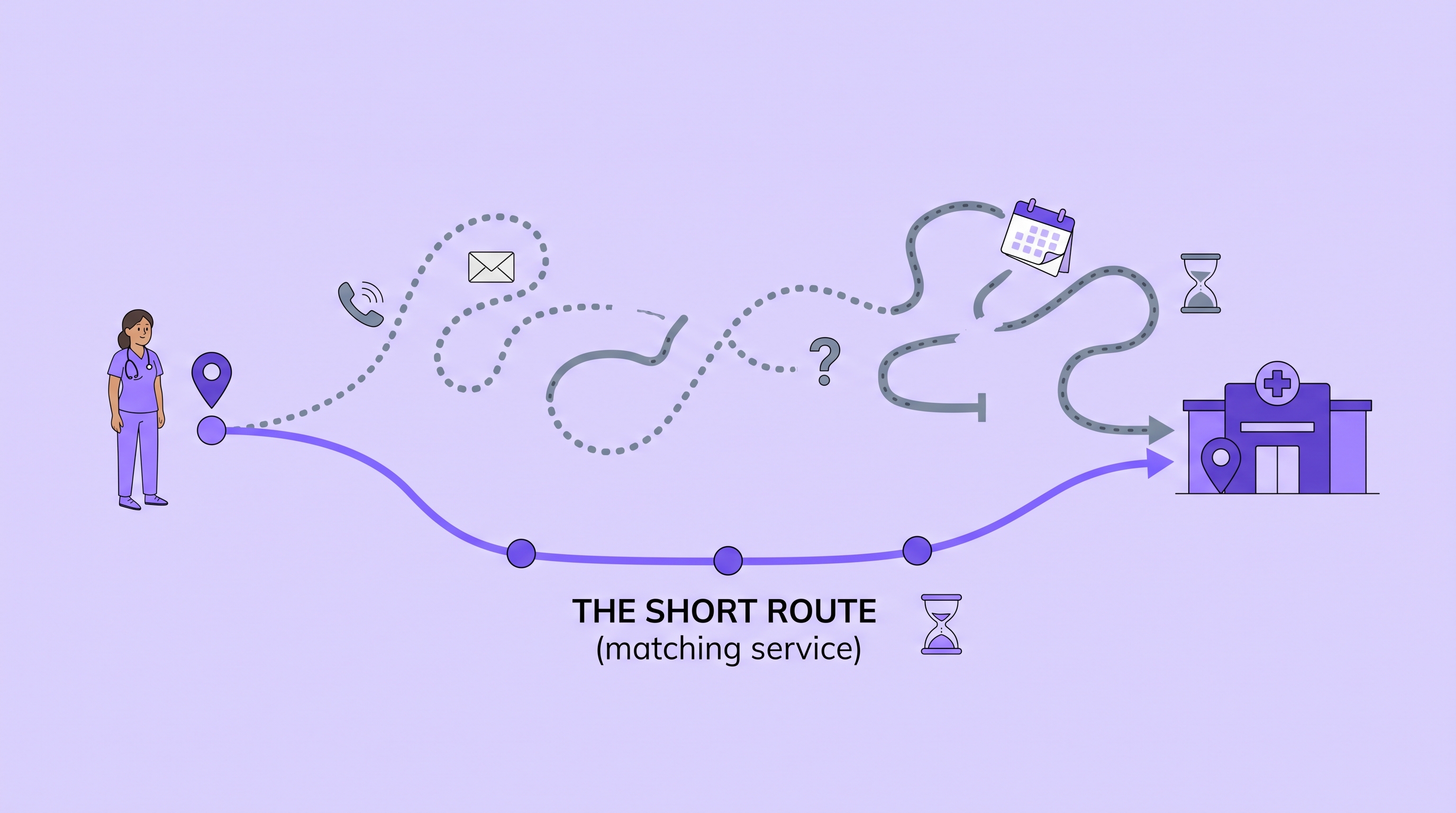
AI preceptor matching for NP students uses software to compare your program requirements, specialty, location, and schedule with a database of preceptors, then ranks the best fits. It can shorten a search that often takes months of emails and phone calls. A match is only as reliable as the vetting behind that database, though, so the final decision should still rest on your program's requirements, your school's approval, and your own judgment about the clinical setting.
TL;DR
- AI matching filters and ranks preceptors using the information you and the preceptor provide. It does not replace preceptor vetting or school approval.
- A match score reflects fit on measurable factors such as specialty, hours, location, and schedule. It cannot measure teaching quality on its own.
- Prepare a one-page match brief with your non-negotiables and preferences before you start, so you judge every option against the same standard.
- Choosing a lower-ranked match makes sense when it fits your real life, your specialty goals, or offers stronger mentorship.
- Before paying any preceptor matching service, ask how it vets preceptors, what it costs in total, what its refund terms are, and who handles school paperwork.
What is AI preceptor matching?
AI preceptor matching pairs nurse practitioner students with clinical preceptors by having software compare student requirements against preceptor profiles and rank the closest fits. A preceptor is a licensed clinician, usually an NP, physician, or PA, who supervises an NP student during clinical rotations.
It helps to separate three models you will see:
AI can sit inside either of the last two models. What changes the experience most is who checks the preceptors before they reach you and who carries the administrative work after you say yes.
What can AI assess in a nurse practitioner preceptor match, and what can't it?
AI is strong in structured data and weak at anything nobody has measured. That means it can quickly tell you whether a preceptor matches your specialty, hours, and commute, but it still needs human vetting to confirm the preceptor is reliable and willing to teach.
When you compare preceptor matching services, ask about the people behind the database as much as the technology. A large pool of unscreened contacts ranked by an algorithm can still produce a match that falls through. A smaller pool of vetted preceptors who have agreed to teach students gives the algorithm better material to work with.
Want to see what a vetted network looks like in practice? A free NPHub student account lets you browse active preceptor profiles, including specialty, credentials, and location, before you commit to anything.
Create my free student account →
Build a one-page match brief before you start
A match brief is a short document listing what your rotation must include and what you would like it to include. Writing it once, before you open any tool, keeps you from changing your criteria every time a new option appears.
Non-negotiables
- Program requirements: specialty track, rotation type, minimum clinical hours, patient population, and any setting your school requires or excludes.
- Preceptor credentials your school accepts: some programs accept only NPs or physicians for certain rotations.
- Dates: start date, end date, and any hours your school needs logged by a deadline.
- Location: the states where you can complete hours, plus your realistic commute ceiling.
- Schedule limits: shifts you cannot move because of your job or family.
Preferences
- Specialty location within a region, such as a clinic close to work rather than home
- Pace of the clinical setting and patient volume
- Telehealth comfort, if your program allows telehealth hours
- How much hands-on responsibility you want early in the rotation
- The kind of guidance that helps you learn, whether that is direct feedback or more gradual coaching
Keep the brief to one page. If something does not change your decision, leave it off.
How to evaluate a preceptor match in 5 steps
Once you have options in front of you, review them the same way each time.
- Check every non-negotiable first: A high ranking does not matter if the site misses a program requirement. Rule out anything that fails here before reading further.
- Read the profile, not just the score: Look at the preceptor's credentials, specialty, years in practice, typical patient mix, and schedule. A score summarizes these; the profile shows you what it summarized.
- Compare your top three, not your top thirty: Narrowing early prevents you from re-running the search every evening and second-guessing options you have already ruled out.
- Ask about the learning environment: Patient volume, how students are typically introduced to the practice, and how feedback is given all shape whether the rotation becomes a fulfilling clinical experience.
- Confirm school approval before you treat it as final: Your program has the last word on whether the site counts toward your hours.
The goal is the right preceptor for this rotation, in this semester, for your program.
When you're ready, bring your match brief and compare your options. With a free NPHub student account, you can browse active preceptors in your specialty and state, request the one who fits, and let your student coordinator take it from there.
Create my free student account →
When should you choose a lower-ranked match?
Choose a lower-ranked match when it fits something the algorithm could not weigh. Rankings reflect the inputs, and some of the most important parts of your life never make it into a form.
A lower-ranked option may be the better choice when:
- It sits much closer to home, and a long commute would cut into sleep, family time, or work shifts.
- The preceptor has a strong record as a teacher and role model, even if the schedule is less ideal.
- The clinical setting gives you experience in the specialty you plan to practice in after graduation.
- The schedule works around a job you cannot reduce.
The reverse also applies. Pass on a top-ranked option if the setting conflicts with your career goals, the schedule would be unsustainable during the semester, or something in your conversation with the site raises concerns. Your experience as an RN counts here. You already know which practice environments support learning and which do not.
How does matching change by specialty?
The same algorithm weighs factors differently depending on your track, so adjust your brief to the specialties you are training in.
PMHNP
A PMHNP student should confirm whether the program accepts telehealth hours and in what proportion, and whether the patient mix covers the age ranges required. Psychiatric settings vary widely, from outpatient medication management to community mental health, so the setting description matters as much as the score.
Pediatrics
A pediatric NP student, or an FNP student completing a pediatrics rotation, should check the age range of patients seen and the balance of well-child visits and acute visits. Some family practice sites see few children, which can make hour targets harder to reach.
Women's health
For women's health rotations, confirm the scope of the practice, such as gynecology, prenatal care, or both, and whether the preceptor's credentials meet your program's rules for that rotation.
Family practice
Family practice and primary care rotations usually have the widest pool of qualified preceptors. The deciding factors tend to be location, schedule, and patient volume across the lifespan.
Acute care
Acute care students need hospital-based or high-acuity settings, which often bring credentialing steps and longer onboarding. Build extra time into your dates.
Where school approval and paperwork fit in
A match is not a confirmed rotation until your school approves the site and preceptor. Most programs require an affiliation agreement, preceptor credentials, and program-specific forms before your hours can count.
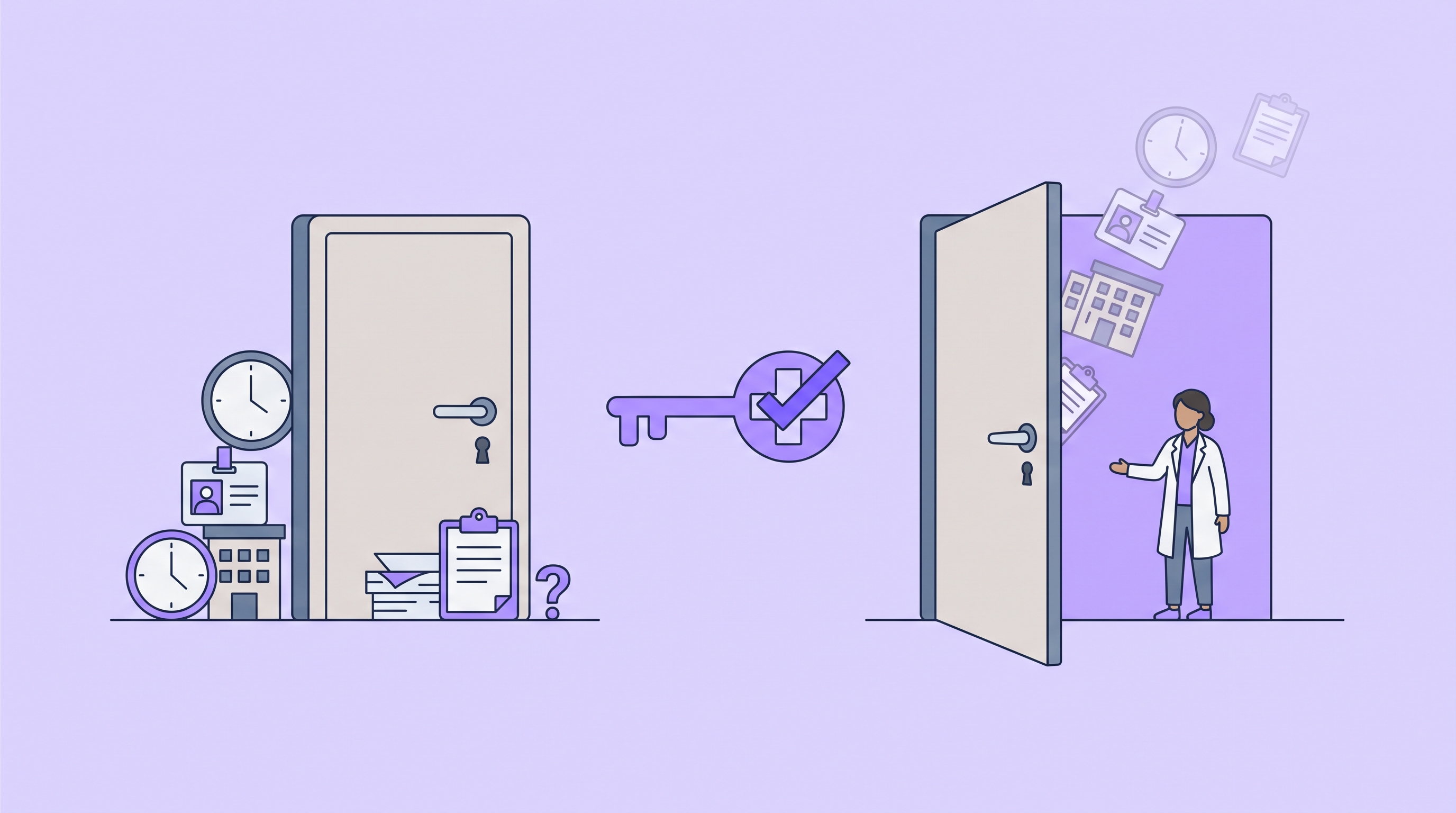
This is the stage where many searches stall. The preceptor has agreed, and then the school paperwork sits unsigned between offices. When comparing services, ask exactly which documents they prepare, who follows up with the site, and what happens if your school does not approve the placement.
One more check: some NP programs restrict or prohibit students from using paid preceptor matching services. Confirm your school's policy with your clinical coordinator before you pay for anything.
What should you ask a preceptor matching service?
Ask questions that show how the service performs when something goes wrong, not only when everything goes right.
- Vetting: How are preceptors screened? What share of applicants are accepted?
- Coverage: Do you have preceptors in my state and specialty right now, or a nationwide network on paper only?
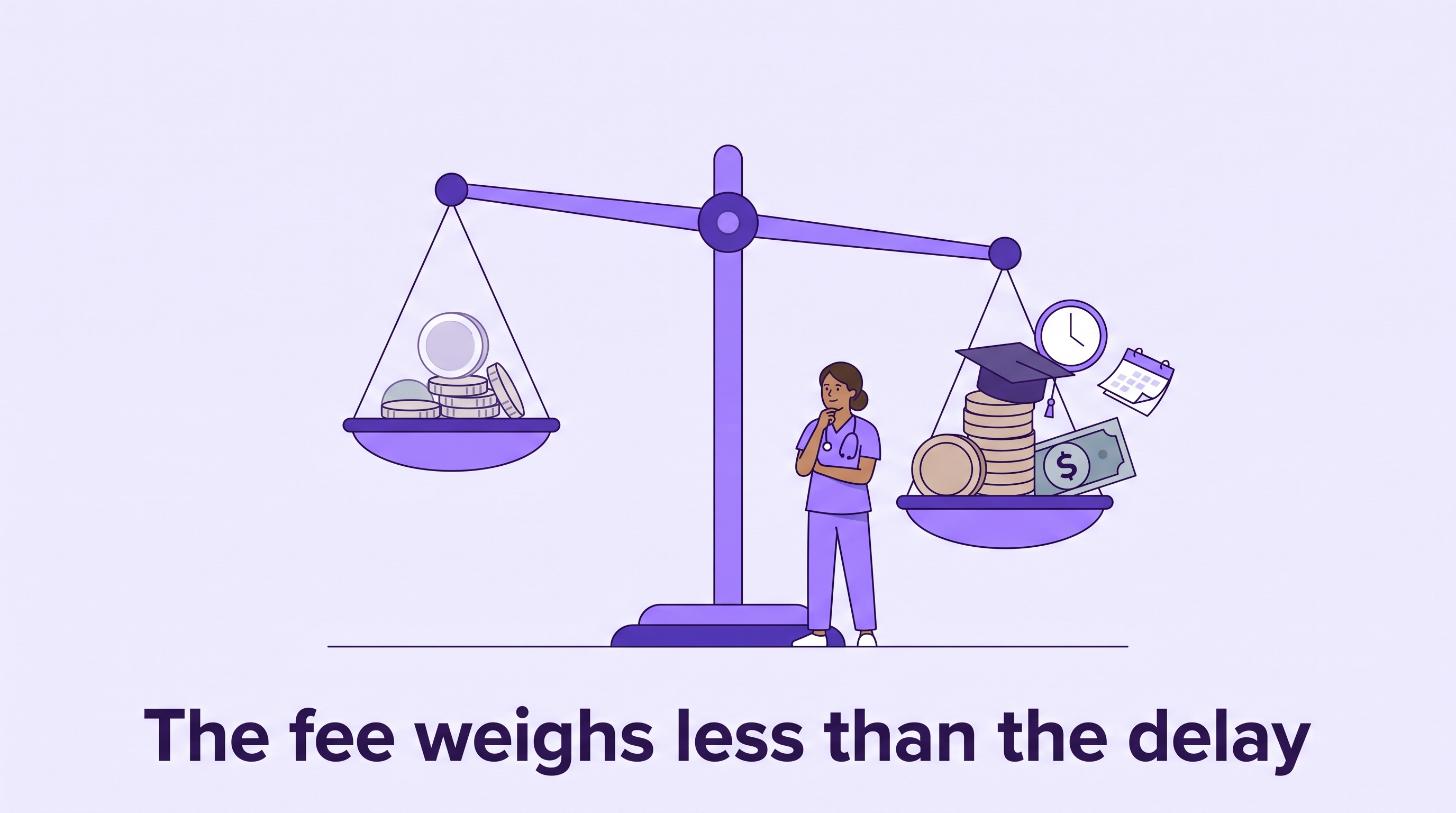
- Pricing: Is the total cost published? Are there hidden fees beyond the rotation price? Do you offer payment plans?
- Deposits and refunds: When is a deposit refundable, and when does it stop being refundable? Is a full refund available if the preceptor cannot precept?
- Replacement: If a preceptor cancels, will you find a replacement?
- Paperwork: Who prepares the affiliation agreement and school forms?
- Support: Will I have a named coordinator to contact during the rotation?
- Reviews: Where can I read reviews from real students on a third-party platform?
See how NPHub answers these questions →
How long does NP preceptor matching take?
With NPHub, the matching process happens in three stages. Students can find an available preceptor in the network in under 30 minutes when one fits their criteria. The preceptor then has up to 7 business days to accept the request. Paperwork takes up to 14 business days, and often less.
Your school's approval timeline comes after that and varies by program. Leave room for it when you plan your start date. For a fuller breakdown of timelines, see how long it takes to find an NP preceptor →
How NPHub approaches preceptor matching
NPHub is a clinical placement marketplace that connects NP students with vetted preceptors and handles the coordination and paperwork for each rotation. Students browse NPHub's own network of active preceptors, request the one who fits, and work with a student coordinator through approval and the rotation itself.
The vetting is where the numbers matter. NPHub has accepted 2,435 preceptors out of 18,314 applicants, a 13.3% acceptance rate. Those preceptors have supported 14,251 rotations for 9,249 students across 45 states, totaling more than 1.8 million clinical hours. NPHub holds a 4.9 out of 5 rating on Trustpilot across more than 1,609 reviews.
On cost, NPHub publishes its pricing, asks for a 15% deposit to request a preceptor, and offers payment plans. If the preceptor does not accept your request, the deposit is refunded. Once a preceptor accepts or paperwork is submitted, the deposit is no longer refundable.
NPHub's student coordinators prepare the affiliation agreement and any additional program paperwork your school requires, so you can spend your time on coursework, work, and family rather than chasing signatures.
Create your free NPHub student account and browse available preceptors →
Frequently asked questions
Can AI tell whether a preceptor is a good teacher?
Not reliably on its own. AI can rank preceptors on specialty, hours, and location, but teaching quality depends on screening interviews, preceptor experience, and student feedback collected by people. Ask any service how it assesses mentorship before trusting a ranking.
Is AI preceptor matching better than finding a preceptor on my own?
It can help because it narrows your options and reduces cold outreach to clinicians who aren't taking students. Many other factors still shape the outcome, including how preceptors are vetted, availability in your specialty and location, your program requirements, and how quickly your school approves the site. Searching on your own costs less in money but often more in time. Many students combine both by asking their own network while using a service.
Do I still need my school's approval after I get matched?
Yes. Your NP program must approve the site and preceptor before your clinical hours count. A preceptor match is the first step toward a confirmed rotation.
Why do preceptors join matching networks?
Most preceptors are busy clinicians first. A network that sends pre-screened students and handles paperwork reduces the administrative time of precepting, which makes teaching the next generation of nurse practitioners easier to fit into clinical practice.
What if my matched preceptor cancels?
Ask the service before you pay. A strong replacement or refund policy matters more than a high match score, because it determines what happens to your timeline if plans change.
Article details
- Last updated
September 25, 2026 - Fact-checked by
NPHub Clinical Placement Experts & Student Support Team- https://www.nphub.com/blog/best-preceptor-matching-service
- https://www.nphub.com/blog/how-nphub-verifies-preceptors
- https://www.nphub.com/blog/how-long-does-it-take-to-find-an-np-preceptor-in-2026
- https://www.aacnnursing.org/Portals/0/PDFs/CCNE/NTFS-NP-Final.pdf
- https://usuniversity.smartcatalogiq.com/en/current/family-nurse-practitioner-clinical-handbook/office-of-field-experience/selection-criteria-for-fnp-clinical-preceptors
- https://www.apna.org/resources/apna-guidance-regarding-precepting-and-mentorship/
- https://pubmed.ncbi.nlm.nih.gov/39259202/
Find a preceptor who cares with NPHub
Book a rotation.webp)

.webp)

%20(3)%20(2).svg)
.webp)